
Why Auckland housing developments are turning to packaged sewage treatment plants
Auckland's Unitary Plan has enabled medium- and high-density residential typologies across the region, accelerating dwelling construction in growth cells where reticulated sewer has not yet caught up (per academic analysis of Auckland urban intensification, Informa/Taylor & Francis, 2003, and 2011). The operational reality in 2026 is that subdivisions in Pukekohe, Dairy Flat, Warkworth, Paerata, and parts of the Northwest sit outside Watercare's trunk sewer network, so developers must choose between (a) extending trunk sewer at very high cost — often $1,500–$3,000 per metre for deep gravity mains — or (b) installing a buried WSZ A/O package plant sized for the dwelling count and consented for discharge to land, irrigation field, or stream. Both pathways must satisfy Taumata Arowai, New Zealand's national water services regulator established under the Water Services Act 2021, and Watercare Services Limited, which holds Auckland's regional Network Discharge Consent. For a project manager specifying a 50–500 dwelling subdivision in 2026, that consenting stack is the gating decision, not the equipment catalogue.
Sizing a packaged plant for an Auckland subdivision: the per-capita method
The defensible sizing method for an Auckland residential subdivision starts with the standard domestic design load of 180 L/person·day and a planning default of 2.7 persons per dwelling (typical NZ assumption; cross-check against the current Watercare Code of Practice for Land Development and Subdivision, Chapter 6). Average dry-weather flow (ADWF) for 100 dwellings is therefore 100 × 2.7 × 180 L = 48.6 m³/day. Apply a peak wet-weather factor (Pe) of 2.5–3.0× to size hydraulic capacity, because package plant suppliers rate units on peak hourly flow, not ADWF: 48.6 × 2.5 = 121.5 m³/day peak, or roughly 5 m³/h, which sits inside the 1–80 m³/h envelope of a standard WSZ buried unit. Influent load is the second check — typical domestic sewage runs BOD₅ ~250 mg/L, TSS ~250 mg/L, NH₃-N ~30 mg/L, and TN ~40 mg/L, and these are the values the engineer should confirm with Watercare before committing to tankage. The decision rule is straightforward: ADWF below 20 m³/day points to a buried WSZ A/O unit as the most economic option; ADWF between 20 and 200 m³/day makes an MBR or MBBR competitive; ADWF above 200 m³/day usually means multiple parallel trains or a purpose-built conventional WWTP.
Packaged plant options for residential sewage: WSZ vs MBR vs MBBR

Three technology families cover almost every Auckland subdivision application in 2026, and the right choice depends on footprint, effluent quality, and consent pathway rather than brand.
A WSZ underground A/O package plant combines anoxic and aerobic contact oxidation with sedimentation and disinfection inside a single buried tank, runs fully automated on PLC with no on-site operator, and delivers BOD/TSS typically below 30/30 mg/L — adequate for discharge to irrigation field or stream under most Auckland Council resource consents. A skid-mounted MBR system integrates activated sludge with submerged PVDF ultrafiltration membranes at under 1 μm pore size, produces near-reuse effluent (BOD <5 mg/L, TSS <1 mg/L, NH₃-N <1 mg/L), and reduces footprint by roughly 60% versus conventional activated sludge at the same flow. MBBR (moving-bed biofilm reactor) and SBR (sequencing batch reactor) sit in the middle — competitive in the 50–500 m³/day range but typically requiring an operator visit and a concrete or steel tank above grade. Avoid packaged septic tanks and simple contact-oxidation units without disinfection; they will not satisfy Taumata Arowai discharge expectations for new housing developments in 2026, and Watercare's network trade-waste pre-treatment limits will reject them at the boundary.
| Parameter | WSZ buried A/O | MBR (skid/containerised) | MBBR / SBR |
|---|---|---|---|
| Flow range (residential) | 1–80 m³/h | 10–2,000 m³/day | 50–500 m³/day |
| BOD in effluent (mg/L) | <30 | <5 | <20 |
| TSS in effluent (mg/L) | <30 | <1 | <30 |
| NH₃-N in effluent (mg/L) | <15 | <1 | <10 |
| Footprint (relative, same flow) | 1.0× (buried) | 0.4× | 1.5× |
| Operator hours/week | <1 (remote) | 2–4 | 5–10 |
| Burial vs above grade | Buried | Above grade (acoustic enclosure) | Above grade |
| Best Auckland use case | Subdivision ≤300 dwellings, land discharge | Space-constrained site, tight consent, near-reuse | Mid-size scheme with budget buffer for civils |
For deeper treatment-process detail and a side-by-side effluent quality review, see the MBR system process explainer and the MBR effluent quality comparison. Membrane cassette selection matters at this flow band — the DF-series flat-sheet MBR cassettes are the typical retrofit and skid-build choice.
Auckland consenting stack: Taumata Arowai, Watercare, and Building Code G14
Three regulators gate every packaged plant installation in Auckland, and they must be sequenced correctly or the project stalls. Taumata Arowai registers all water service providers in New Zealand: schemes serving fewer than 25 people may qualify as small drinking-water or wastewater suppliers with reduced reporting, while larger schemes require full registration with drinking-water quality and environmental performance reporting. Watercare Services Limited holds the regional Network Discharge Consent (NDC) for the Auckland wastewater network, and any new discharge to the Watercare network must satisfy the Watercare Code of Practice for Land Development and Subdivision, including the trade-waste pre-treatment limits on BOD, TSS, ammonia, pH, and fats/oils that govern what crosses the boundary into the trunk sewer. Where the package plant discharges to land or to a stream instead of the network, an Auckland Council resource consent is required, supported by hydraulic loading, nutrient loading, and soakage test data. NZ Building Code G14 (Industrial Liquid Waste) governs the on-site drainage and treatment installation and the work must be carried out by a registered drainlayer. Practical tip for 2026: confirm network capacity with Watercare early — capacity tests in the Northwest and northern growth cells are running 6–12 months, and that wait can decide whether the package plant is the primary treatment train or a bridging solution.
Footprint, burial, and site-installation considerations for residential projects
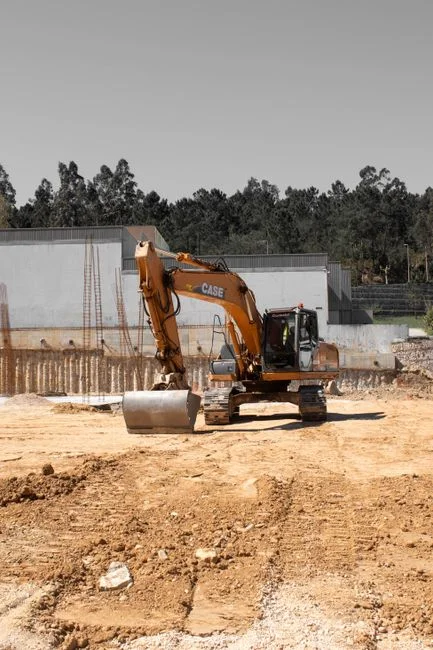
The site realities a developer or contractor will actually face are dominated by footprint, burial depth, and setback geometry. A WSZ buried unit sits below finished grade with landscaping on top, leaving zero above-grade footprint — the relevant number for a residential subdivision where usable lot area and streetscape aesthetics matter. A skid-mounted MBR is installed above grade inside a small acoustic enclosure or containerised unit, with the 60% footprint reduction versus conventional activated sludge at the same flow translating to a typical 40–80 m² envelope for a 100 m³/day unit. Setback distances for buried package plants in residential subdivisions are typically a minimum 3 m to the nearest dwelling and 50 m to the nearest potable bore (confirm against Auckland Unitary Plan rules, Chapter E8). WSZ buried units require a concrete cover slab rated for the load above — driveway, footpath, or garden — and the tank itself must be specified for the groundwater and seismic conditions on the site. Both WSZ and MBR produce surplus sludge requiring periodic removal at a typical 3–6 month desludging interval, and a developer who wants to avoid carting liquid sludge can dewater on-site with a plate-and-frame filter press after screening through a GX rotary mechanical bar screen.
Procurement checklist and CAPEX comparison for Auckland housing projects
A defensible procurement sequence for a 50–500 dwelling Auckland subdivision runs as follows: (1) confirm the dwelling count and design occupancy with the planner; (2) calculate ADWF and peak wet-weather flow using 180 L/person·day, 2.7 persons/dwelling, and a Pe of 2.5–3.0×; (3) request a Watercare network capacity letter at the proposed discharge point; (4) decide between a buried WSZ A/O unit, a skid-mounted MBR, and an MBBR based on footprint and consent limits; (5) engage a registered drainlayer and a resource consent consultant before final plant selection; (6) request factory acceptance test (FAT) data and ISO 9001 documentation from the supplier; (7) confirm PLC control, remote-monitoring telemetry, and alarm escalation paths before purchase order. CAPEX benchmarks in 2026 (HydropureWater field data, indicative): for ADWF below 20 m³/day a buried WSZ unit is typically lowest CAPEX per m³/day of treatment capacity; for 50–200 m³/day a single skid MBR is competitive on turnkey cost; above 200 m³/day the MBR's higher unit price is offset by eliminating the clarifier and tertiary filter civil works. OPEX items to budget are power (MBR aeration plus membrane scouring typically 0.8–1.2 kWh/m³ treated), chemical dosing for pH correction and disinfection (consider a chlorine dioxide generator for non-MBR trains, paired with an automatic chemical dosing system), sludge hauling, and remote-monitoring telemetry. Request seismic and corrosion documentation with the bid pack — Auckland's volcanic soils and coastal air in many growth cells are aggressive on buried steel and unprotected concrete, and a passive corrosion allowance will save a rework claim later. For supplier selection criteria beyond the technical check, the package plant supplier selection guide covers the commercial due-diligence items that often get missed.
| Decision dimension | WSZ buried A/O | MBR skid | MBBR / SBR |
|---|---|---|---|
| Best flow range (residential) | ≤80 m³/h (≤300 dwellings) | 10–2,000 m³/day | 50–500 m³/day |
| Footprint | Zero above-grade | 0.4× conventional | 1.5× conventional |
| Effluent BOD (mg/L) | <30 | <5 | <20 |
| Operator required | Remote monitoring only | 2–4 h/week | 5–10 h/week |
| Indicative CAPEX band (turnkey, NZD) | $ | $$ | $$ |
| Best Auckland use case | Greenfield subdivision, land discharge available | Tight consent, small site, near-reuse required | Mid-size scheme with operator on call |
Frequently Asked Questions
What packaged sewage treatment plant fits a housing development in Auckland, New Zealand?
For subdivisions up to roughly 300 dwellings, a buried WSZ-series A/O integrated unit (1–80 m³/h) is the most economic fit where the discharge is to land or stream and consent limits are BOD/TSS below 30/30 mg/L. For sites with tight consent limits, near-reuse requirements, or footprint constraints, a skid-mounted MBR (10–2,000 m³/day, sub-1 μm filtrate) is the better fit. Both must satisfy Watercare's Network Discharge Consent, Taumata Arowai's wastewater standards, and NZ Building Code G14.
How do I size a packaged sewage treatment plant for a 100-dwelling Auckland subdivision?
Use 180 L/person·day and 2.7 persons/dwelling to get 48.6 m³/day ADWF, then apply a peak wet-weather factor (Pe) of 2.5–3.0× to size hydraulic capacity — 48.6 × 2.5 = 121.5 m³/day peak, or about 5 m³/h. That sits inside the WSZ 1–80 m³/h envelope and is small enough for a single buried unit without parallel trains.
Do I need a resource consent to install a package sewage treatment plant in Auckland?
Yes, in almost all cases. If the plant discharges to the Watercare network, the discharge must meet Watercare's Code of Practice trade-waste limits and the network must have capacity (a network capacity test). If it discharges to land or stream, an Auckland Council resource consent is required, supported by soakage, hydraulic, and nutrient loading data. Taumata Arowai registration applies to the operator of the scheme above small-supplier thresholds.
How long does Watercare network capacity approval take in 2026?
Watercare network capacity tests in the Northwest, Dairy Flat, Warkworth, and Pukekohe growth cells are commonly running 6–12 months in 2026. Developers should request the capacity letter before committing to a final plant selection, because a delayed capacity response can push the project onto a package plant as the primary treatment train instead of a network connection.
Related Equipment
- skid-mounted MBR system — specifications, capacity range, and technical data