

What "Biologics Plant Wastewater" Actually Means
Biologics plant wastewater is the combined liquid effluent from facilities that manufacture monoclonal antibodies, recombinant proteins, vaccines, and other large-molecule therapeutics. It is fundamentally different from the clinical-pharmacology sense of "biologics" that dominates search results for the same word. The engineering question here is: what comes out of the drains of an upstream fermentation suite, a downstream chromatography skid, a fill-finish line, and a clean-in-place (CIP) skid — and how do you treat it before discharge or reuse?
A biologics train typically produces four distinct waste streams: high-strength fermentation off-spec batches and media residuals (COD often 5,000–15,000 mg/L), chromatography eluents loaded with chaotropes and buffer salts, CIP rinses alternating between acidic and caustic plumes at 70–80 °C, and lower-strength process washwater from filling and packaging. When these streams are characterized, you see variable pH (3–11 swings), TDS pushed to 5,000–20,000 mg/L by phosphate, Tris, and citrate buffers, residual sugars, antifoams (silicone or polyol-based), trace solvents, and occasional antibiotic carryover.
Co-mingling these streams with domestic sewage destabilizes municipal biological treatment — shock loads, recalcitrant dissolved protein, and inhibitory salts knock out nitrification and degrade sludge settleability. That is why every tier-1 biologics manufacturer runs a dedicated on-site treatment train. The same FDA and EMA oversight that governs the drug substance also governs waste consent compliance, a point the Springer 2016 regulatory framing for biologics (Morton & Buchanan, in Biologics to Treat Substance Use Disorders, Springer 2016) establishes for product licensure and which carries through to environmental permits at manufacturing sites.
Why Biologics Effluent Is Harder to Treat Than Small-Molecule Pharma Waste
Small-molecule API plants deal with defined organic solvents and a relatively narrow product mix. Biologics plants deal with the opposite: dilute, highly variable, salt-heavy streams containing molecules biology was never meant to break down quickly.
Five specific factors make biologics effluent non-trivial. First, residual recombinant proteins, peptide fragments, and host-cell DNA contribute persistent dissolved COD (typically 800–3,000 mg/L in segregated fermentation waste) that resists conventional activated-sludge metabolism and tends to pass through as slowly biodegradable material. Second, buffer salts push TDS into the 5,000–20,000 mg/L range, which raises osmotic pressure in downstream RO cells, suppresses biological kinetics, and produces a brine stream that often dictates whether ZLD is required. Third, CIP cycles alternate acid (nitric or phosphoric, pH 1–2) and caustic (NaOH, pH 12–13) plumes with temperature spikes to 70–80 °C; sending these spikes straight to a bioreactor kills biomass, so equalization is non-negotiable.
Fourth, cleaning agents such as urea (used at 6–8 M for elution) and guanidine HCl (4–6 M) act as chaotropes that disrupt enzyme structure in the activated-sludge or MBR biomass, reducing nitrification and COD removal by 20–40% if not neutralized and diluted. Fifth, antibiotic carryover — even at µg/L levels from process residuals — exerts selective pressure on downstream biomass and can violate site consent limits; the standard response is dedicated inactivation (alkaline hydrolysis at pH ≥10 for 1–2 hours) or stream segregation away from the biological stage. Together, these factors rule out the "pretreat and send to sewer" model that some small-molecule sites use.
The Typical Treatment Train at a Tier-1 Biologics Plant
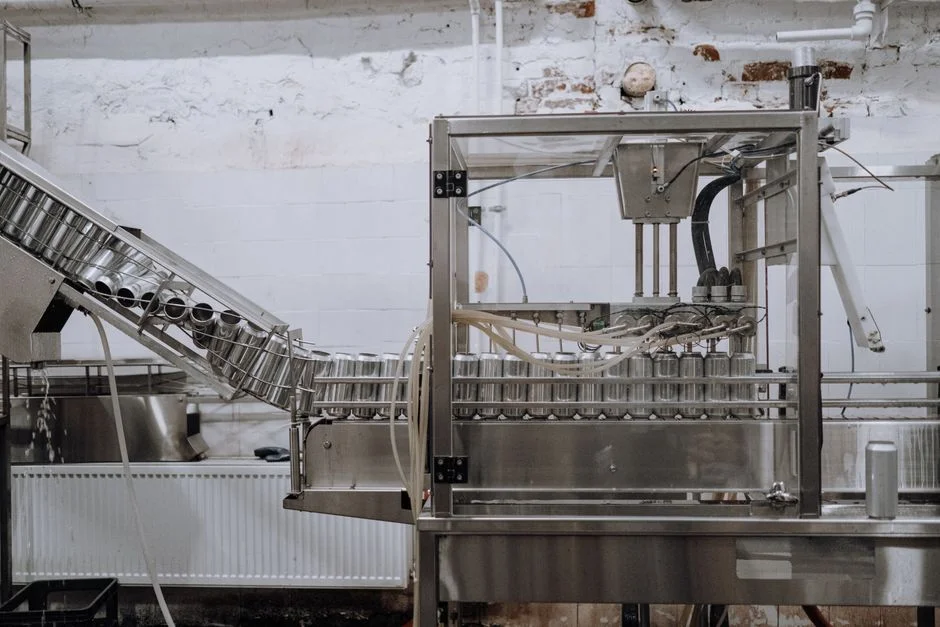
A Roche-scale biologics facility deploys a six-stage train designed to handle the variability and inhibitory load described above. The stages run in sequence, each one conditioning the stream for the next.
Stage 1 — Source segregation. High-COD fermentation off-spec and chromatography eluents are kept in separate, smaller equalization tanks, while dilute CIP rinses and process washwater are routed to a larger balancing basin. Segregation prevents shock loading and lets the plant dose nutrients only into the stream that needs them. Stage 2 — Equalization and pH correction. A 24–48 hour equalization basin with mechanical mixing and automatic acid/caustic dosing stabilizes influent to within pH 6.5–8.0 and dampens temperature swings before biology. Stage 3 — Physico-chemical primary treatment. A DAF primary treatment unit removes suspended solids, emulsified oils, antifoam residues, and colloidal protein, typically achieving 60–90% TSS reduction and 30–50% COD reduction when paired with coagulant dosing (polyaluminium chloride or ferric chloride at 50–200 mg/L). Stage 4 — Biological treatment. Either conventional activated sludge (CAS) at MLSS 3,000–5,000 mg/L, or — increasingly the choice at biologics sites — an MBR membrane bioreactor system operated at MLSS 8,000–12,000 mg/L. MBR is preferred for biologics because the higher biomass tolerates inhibitory loads and the membrane barrier retains slow-growing nitrifiers and suspended protein that CAS would lose in the clarifier. Stage 5 — Membrane polishing. UF pre-filters the MBR permeate to protect the RO, which then achieves 95–99% salt rejection and drives conductivity below 500 µS/cm for reuse loops. Stage 6 — Disinfection. A chlorine dioxide disinfection system at 0.5–1.0 mg/L residual, or UV at 30–40 mJ/cm², before discharge or reuse. ClO₂ is favored over chlorine because it maintains residual through long distribution piping and does not form trihalomethanes with residual organics.
| Stage | Unit Operation | Primary Removal Target | Typical Removal Efficiency |
|---|---|---|---|
| 1 | Source segregation | Load balancing | Prevents 3–10× shock events |
| 2 | Equalization + pH correction | pH, temperature, flow | pH within ±0.5 of setpoint |
| 3 | DAF (with coagulant) | TSS, FOG, colloidal COD | 60–90% TSS; 30–50% COD |
| 4 | Biological (MBR preferred) | Soluble COD, NH₃-N | 85–95% COD; >95% NH₃-N |
| 5 | UF + RO | TDS, residual organics | 95–99% salt rejection |
| 6 | ClO₂ or UV | Microbial counts | 3–5 log reduction |
Influent and Effluent Targets by Process Stage
Engineers spec'ing a biologics train need a reference table that tracks COD, BOD₅, TSS, TDS, pH, and conductivity from raw influent to final discharge. The table below uses industry-typical ranges for tier-1 biologics facilities; exact Roche values are not public, but the design envelope shown is consistent with EU UWWTD 91/271/EEC compliance and the World Bank Group EHS Guidelines for Pharmaceuticals and Biotechnology. Site-specific permits often tighten these further — biologics sites in water-stressed basins (Roche Vacaville, Kaiseraugst, and Singapore) typically run tighter consent limits than the directive baseline.
| Parameter | Raw Influent (segregated) | After DAF | After MBR | After RO | Discharge Limit |
|---|---|---|---|---|---|
| COD (mg/L) | 1,000–10,000 | 500–5,000 | 50–250 | <20 | <50 |
| BOD₅ (mg/L) | 400–4,000 | 200–2,000 | 5–30 | <5 | <10 |
| TSS (mg/L) | 200–1,500 | 30–200 | <5 | <1 | <10 |
| TDS (mg/L) | 5,000–20,000 | 5,000–20,000 | 5,000–20,000 | 50–500 | Site-specific |
| pH | 3–11 | 6.5–8.5 | 7.0–8.0 | 6.5–7.5 | 6.5–8.5 |
| Conductivity (µS/cm) | 8,000–30,000 | 8,000–30,000 | 8,000–30,000 | <500 | Site-specific |
For reuse loops feeding cooling-tower makeup, the typical envelope tightens to conductivity <500 µS/cm, silica <30 mg/L, and hardness <50 mg/L as CaCO₃. Boiler-feed reuse pushes conductivity below 10 µS/cm and requires a mixed-bed polisher after RO. The brine concentrate from RO is the operational pain point: at 15–25% recovery loss, a 1,000 m³/day facility generates 150–250 m³/day of brine that must be either evaporated, crystallized, or hauled off-site, depending on local disposal cost.
Regulatory Framework Governing Biologics Effluent Discharge
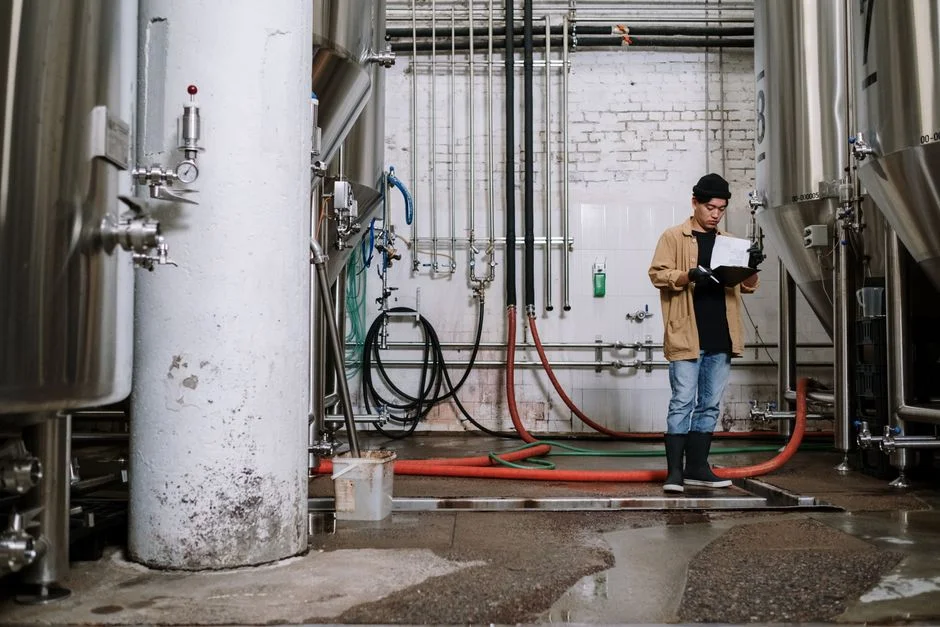
Four overlapping frameworks govern biologics effluent discharge. The EU Urban Waste Water Treatment Directive 91/271/EEC sets the baseline — 125 mg/L COD, 25 mg/L BOD₅, 35 mg/L TSS for discharges from biological treatment — but site-specific consents for pharmaceutical manufacturers routinely tighten COD to <50 mg/L and add parameters for total nitrogen, total phosphorus, and specific AOX (adsorbable organically bound halides) limits. FDA 21 CFR Parts 210/211 and EMA GMP Annex 1 govern the manufacturing process itself, but licensure includes the waste consent compliance audit; an environmental non-conformance can delay product approval.
Outside the EU, the World Bank Group EHS Guidelines for Pharmaceuticals and Biotechnology provide a globally cited benchmark: 50 mg/L COD, 10 mg/L BOD₅, 10 mg/L TSS as discharge targets, with performance-based consent values for sites above 10,000 m³/day capacity. Water-stressed jurisdictions add reuse mandates: California's State Water Resources Control Board, Singapore's Public Utilities Board (PUB), and Switzerland's federal water protection act all incentivize or require partial reuse for facilities above certain intake thresholds. Roche's water-stressed sites (Vacaville in California, Kaiseraugst in Switzerland, and the Singapore biologics hub) operate with internal reuse rates of 30–60% for cooling and boiler feed, well above the industry average.
Where HydropureWater Equipment Fits a Biologics Wastewater Train
A mid-scale CDMO or biosimilar manufacturer rarely has Roche's capital envelope, but it can deploy the same unit operations at smaller scale. The MBR membrane bioreactor system delivers near-reuse effluent in roughly 60% less footprint than a CAS train of equivalent capacity, with rated flow from 10 m³/day up to 2,000 m³/day — the right envelope for a clinical-to-commercial biologics facility. The DAF primary treatment unit covers 4–300 m³/h across 13 models and slots in upstream of the MBR for TSS, FOG, and colloidal protein removal, the same configuration used at tier-1 sites.
For polishing to reuse quality, an industrial RO polishing system achieves up to 95% recovery with multi-stage rejection, suitable for cooling-tower makeup where conductivity <500 µS/cm is the target. The chlorine dioxide disinfection system meets WHO, EPA, and EU Drinking Water Directive residual standards and provides the persistent residual needed for long reuse distribution piping. For sites with high brine volume, the engineering logic in our high-salinity industrial wastewater treatment guide translates directly to biologics buffer-salt management, and the sludge dewatering engineering guide covers the downstream solids handling that biologics MBRs generate at 0.3–0.5 kg DS/kg COD removed.
Frequently Asked Questions
What discharge parameters must a biologics wastewater plant meet?
Typical consent limits for tier-1 biologics facilities in the EU and at World Bank-aligned sites are COD <50 mg/L, BOD₅ <10 mg/L, TSS <10 mg/L, and pH 6.5–8.5, per EU UWWTD 91/271/EEC and the World Bank Group EHS Guidelines for Pharmaceuticals and Biotechnology. Site-specific permits often add total nitrogen (<15 mg/L), total phosphorus (<2 mg/L), and AOX limits.
Can biologics effluent be reused for cooling or boiler feed?
Yes, after RO polishing that drops conductivity below 500 µS/cm, the permeate is suitable for cooling-tower makeup. Boiler-feed reuse requires additional mixed-bed polishing to push conductivity below 10 µS/cm and silica below 0.02 mg/L. Water-stressed sites (Roche Vacaville, Singapore) achieve 30–60% reuse rates using this envelope.
How is sludge from a biologics MBR handled?
MBR sludge is typically wasted at 0.3–0.5 kg DS per kg COD removed, thickened to 2–4% DS, and dewatered via centrifuge or belt press to 18–25% DS cake. The cake is usually incinerated or sent to hazardous waste landfill depending on residual solvent and metal content, as detailed in standard sludge dewatering engineering practice.
What is the smallest viable biologics wastewater train for a 50 m³/day CDMO?
A 50 m³/day clinical-scale facility can run a four-stage train: equalization (24-hour HRT), DAF, packaged MBR (10–100 m³/day rated), and ClO₂ disinfection for discharge. RO polishing is added only if a reuse loop is needed; for sewer discharge with COD <50 mg/L, the MBR alone is typically sufficient. A compact MBR system in this flow range delivers the same discharge quality as a tier-1 train at 5–10% of the civil cost.