Why Pharmaceutical Effluent Needs Its Own Treatment Train
Pharmaceutical effluent carries 1,000–5,000 mg/L COD from active pharmaceutical ingredients (APIs), excipients, fermentation residues, and cleaning solvents, plus 200–800 mg/L TSS, emulsified oils, and trace antibiotics that resist conventional activated sludge (HydropureWater field data, 2026). Global pharmaceutical consumption keeps rising — metabolic-disease therapies alone made up the fifth-largest pharma market segment by 2021, and the fastest-growing forecast through 2026 (González Peña et al., 2021, Int. J. Environ. Res. Public Health). That volume growth tightens the regulatory loop: API residues are now detected in surface water at ng/L–µg/L concentrations, and discharge is capped under EU Directive 91/271/EEC for urban treatment, US EPA categorical standards 40 CFR 439 for pharmaceutical manufacturing, and WHO guidance on pharmaceutical residues in drinking-water catchments. The first engineering decision, before any unit operation is sized, is source segregation: process streams (solvents, mother liquors, CIP rinses) are kept separate from sanitary and storm streams because co-mixing them dilutes recoverable solvents and overwhelms downstream biology with toxic shocks. This separation allows the rest of the train to be transferable; a process engineer can map a known unit operation to each segregated stream and reuse the same blueprint for any API or formulation site. Comparable effluent-limit benchmarks for Latin American operators are summarised in this Brazil CONAMA 2026 colour and discharge compliance guide.
Stage 1 — Screening, Equalization and Primary Clarification
Rotary mechanical bar screens with 1–5 mm apertures remove rags, tablet fragments, and packaging debris from formulation washdowns before they foul downstream pumps or membranes — a configuration identical to the rotary mechanical bar screen used in municipal and industrial headworks. Flow then enters an equalization basin with mechanical aeration, sized for 6–12 hours of retention to dampen the diurnal COD and pH swings typical of batch API production; without this buffer, biology downstream sees shock loads of 2–3× design COD during campaign changes. The third step is primary clarification, with two common choices: lamella clarifiers for simple settleable solids, or a dissolved air flotation unit where emulsified solvents, oils, and low-density API intermediates are present. Typical pre-treatment performance: pH normalised to 6–9, TSS reduced by 50–70%, and FOG removal exceeding 90% in DAF (HydropureWater field data, 2026). The clarified stream leaving this stage is buffered, near-neutral, and stripped of the floatables that would otherwise coat aeration diffusers.
Stage 2 — Biological Treatment: Activated Sludge and MBR
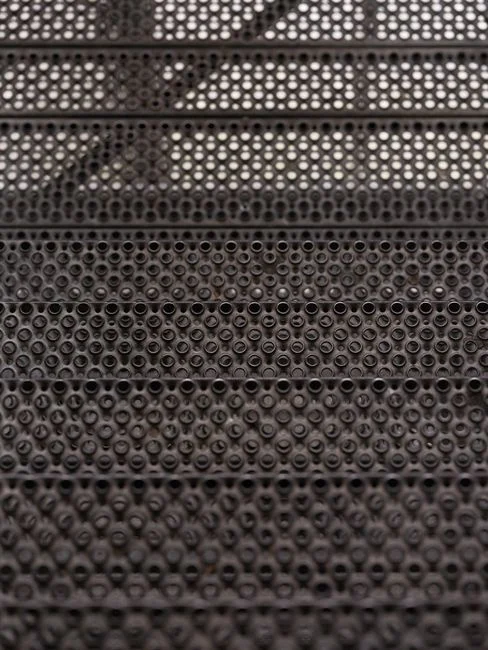
Biology functions as the workhorse of the pharma treatment train, with the design choice typically between conventional activated sludge (CAS) and a membrane bioreactor (MBR). CAS handles 1,000–5,000 mg/L COD at 90–95% removal efficiency, with a solids retention time (SRT) of 15–25 days giving the biomass enough residence to co-metabolise readily degradable solvents like methanol, ethanol, and acetone. MBR combines the same activated-sludge biology with submerged ultrafiltration membranes — typically PVDF flat-sheet modules at 0.1–0.4 µm pore size — delivering effluent turbidity below 1 NTU and cutting the clarifier-and-media footprint by roughly 60%. Operating envelope for an MBR: mixed liquor suspended solids (MLSS) 8,000–12,000 mg/L, hydraulic retention time 12–36 h, and sustained flux 10–20 LMH at −10 to −30 kPa suction, with periodic relax and in-line chemical cleaning (HydropureWater field data, 2026). Sites with space constraints, tight discharge TSS limits, or a reuse intent downstream normally pick an integrated MBR membrane bioreactor system with submerged PVDF MBR modules from the DF series. Engineers must inform clients that biology alone does not remove recalcitrant APIs, as molecules like carbamazepine persist in environmental systems (Zita et al., 2023, Animals). Engineers comparing biological options against capital and lifecycle cost can benchmark against this MBR cost and compliance reference for South African sites; for oily industrial streams the same design logic is extended in this MBR sizing guide for compressor oily condensate.
Stage 3 — Tertiary Polishing: Activated Carbon, Oxidation and Membranes
Tertiary polishing removes residual COD and trace APIs that pass through biological treatment. Granular activated carbon (GAC) contactors adsorb these trace elements; typical operating dose is 2–10 g of carbon per litre of effluent with 30–60 min empty-bed contact time, and carbon is replaced or thermally reactivated when breakthrough is observed. Advanced oxidation processes (AOPs) sit alongside or downstream of GAC to break down recalcitrant molecules: ozone alone at 2–5 mg/L achieves partial oxidation for readily cleaved APIs, while O₃/H₂O₂ or UV/H₂O₂ at 10–20 mg/L O₃ is required for mineralisation of stubborn molecules like sulfamethoxazole and diclofenac. Reverse osmosis is the final dissolved-species barrier, rejecting 95–99% of dissolved organics and monovalent salts and producing reuse-quality permeate at 70–85% recovery — well within the operating envelope of an industrial RO polishing train. RO feed must be protected by a multi-media pre-filter that brings the silt density index below 3, extending membrane life in both CIP and process reuse loops (HydropureWater field data, 2026). Polishing is necessary for any site reusing water for cooling or boiler feed, as it effectively closes the API mass balance from the plant.
Stage 4 — Disinfection and Water Reuse
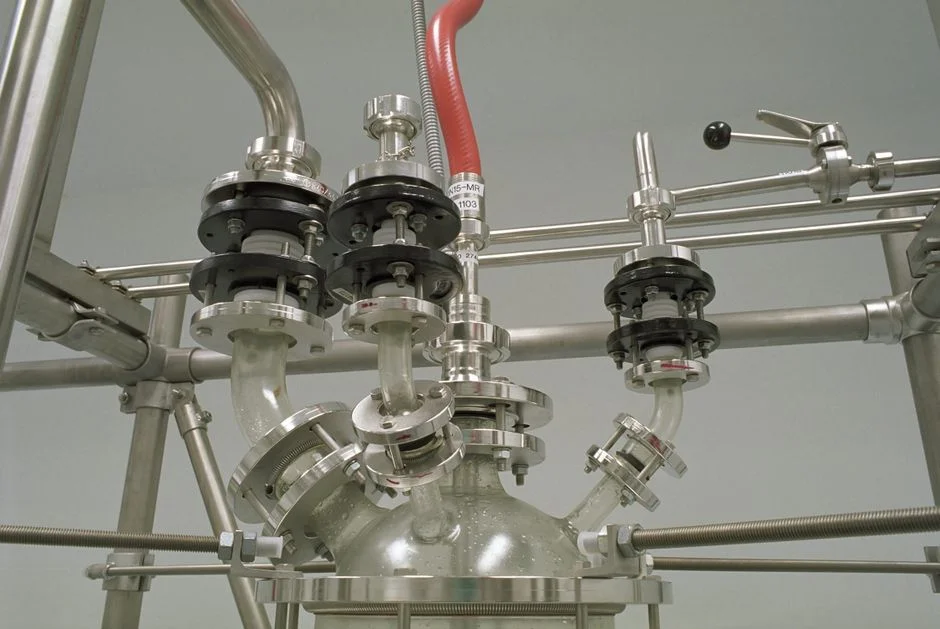
Pharma reuse loops require a disinfectant that handles resistant spores and biofilm without producing trihalomethanes, making chlorine dioxide (ClO₂) the default choice. A chlorine dioxide disinfection system delivers 1–5 mg/L ClO₂ for a 15–30 min contact time, inactivating Cryptosporidium oocysts and bacterial spores at doses where free chlorine fails, and it does not form THMs at typical operating residuals. Reuse destinations on a pharma site include cooling-tower makeup, boiler-feed pretreatment, and CIP rinse water, with quality targets commonly set at TDS below 500 mg/L, TOC below 1 mg/L, and conductivity below 1,000 µS/cm. Operators in the Novartis supplier ecosystem report water reuse and recycling rates in their annual sustainability disclosures, and the 2026 commitments push multi-site programmes toward circular-water designs for non-hazardous streams. Zero liquid discharge (ZLD) is reserved for high-strength or hazardous waste streams (mother liquors, spent solvents, API-containing process water); mainstream combined effluent is generally treated to discharge-and-reuse quality, as the energy and capex of crystallisers and brine concentrators only pay back on the most concentrated cuts.
Pharma Wastewater Treatment Train at a Glance
The table below condenses the full train into a single process-flow reference, with typical influent and effluent parameters drawn from HydropureWater field data (2026) and 40 CFR 439 discharge benchmarks. Use it as the front-page summary when you brief a client or an EPC reviewer.
| Stage | Unit Operation | Typical Influent | Typical Effluent | Key Design Parameter |
|---|---|---|---|---|
| 1. Screening | Rotary bar screen (1–5 mm) | Raw pharma effluent | Debris-free | Aperture, peak flow |
| 2. Equalization | Aerated buffer basin | Variable COD/pH | COD swings <20%, pH 6–9 | 6–12 h HRT |
| 3. Primary clarification | DAF or lamella | 500–1,500 mg/L TSS | 150–450 mg/L TSS | FOG >90% removal |
| 4. Biological | CAS or MBR | 1,000–5,000 mg/L COD | 50–250 mg/L COD | SRT 15–25 d, MLSS 8,000–12,000 mg/L (MBR) |
| 5. GAC / AOP | Carbon contactor + O₃/H₂O₂ | 50–250 mg/L COD | 10–40 mg/L COD | GAC 2–10 g/L, O₃ 2–20 mg/L |
| 6. RO polishing | UF pretreatment + RO | 500–2,000 µS/cm | <50 µS/cm | Recovery 70–85%, rejection 95–99% |
| 7. Disinfection | ClO₂ generator | Any bioburden | <1 CFU/100 mL | ClO₂ 1–5 mg/L, CT 15–30 min |
Two equipment families anchor the train end-to-end: the MBR integrated system handles organics and TSS down to reuse-grade clarity, and the industrial RO polishing train finishes the job on dissolved salts and trace APIs.
Regulatory and Sustainability Drivers for 2026
Three regulatory instruments govern every pharmaceutical wastewater design review. US EPA 40 CFR 439 sets categorical limits for direct and indirect pharmaceutical dischargers on BOD₅, TSS, COD, and total suspended solids, with the metal-bearing and fermentation subcategories imposing tighter ceilings. EU BAT conclusions for common waste water and waste gas treatment in the chemical sector (Decision 2016/902) cap AOX, TOC, and heavy-metal concentrations, and are the reference used in plant upgrade permits. The 2026 ESG reporting cycle adds parallel pressure: manufacturers disclose water withdrawal, discharge quality, and reuse rates in their public sustainability filings, which feeds directly into supplier audits. Pretreatment compliance for indirect dischargers is documented in this US industrial pretreatment compliance guide, and the same enforcement logic applies to pharma sites discharging to municipal POTWs. The engineering consequence is that polishing, disinfection, and reuse are now the compliance baseline.
Frequently Asked Questions
What treatment stages does Novartis use for pharma wastewater?
Source segregation, screening, equalization, DAF or primary clarification, biological treatment (activated sludge or MBR), GAC plus advanced oxidation, RO polishing, and ClO₂ disinfection — with the final effluent discharged to a POTW or reused for cooling and utilities.
Why does pharma wastewater need an MBR instead of conventional activated sludge?
An MBR combines activated sludge with submerged 0.1–0.4 µm PVDF membranes, producing <1 NTU effluent at roughly 60% smaller footprint than CAS with a separate clarifier, and it lets the site hit reuse-grade TSS limits for cooling-tower or boiler-feed makeup without tertiary media filters.
Which APIs survive biological treatment and require advanced oxidation?
Recalcitrant molecules such as carbamazepine, diclofenac, and sulfamethoxazole persist through CAS and MBR and require O₃/H₂O₂ or UV/H₂O₂ advanced oxidation, often paired with GAC adsorption, before discharge or RO polishing.