

Why Deinking Reject Water Breaks a Standard MBR Design
Deinking reject water is the heavy fraction pulled out after flotation and washing on a recycled-fiber line—the stream with the highest fibre loss, the highest filler loading, and the highest contaminant concentration. Typical influent to any downstream biological step sits at COD 1,500–4,000 mg/L, TSS 800–3,000 mg/L, and contains long fibres, fines, mineral fillers (kaolin, CaCO₃), residual inks, hot-melt and PSA stickies, plus dissolved organics from surfactants and dispersants (HydropureWater field data, 2026). That composition breaks the design assumptions most MBR vendors quote, because those vendors built their reference plants on textile or municipal feed, not on a 2,000 mg/L TSS slurry of fibre, filler, and sticky-coated fines.
The failure mode is rapid, often irreversible, fouling. Hollow fibres in a sidestream loop shed their cake easily under cross-flow, but the same hydrodynamic shear that scours the membrane also breaks long fibres into fragments that wrap around individual filaments. Once fibres bridge between fibres in the bundle, backflush pressure cannot dislodge them, and chemical clean-in-place (CIP) only partially restores flux. The Springer 2024 review of MBR applications in high-strength industrial wastewater confirms that membrane fouling is the principal operating constraint on these streams, and that pre-treatment discipline—not membrane chemistry—is the dominant lever (S1, Springer 2024).
The practical consequence is that a generic MBR selection guide cannot answer a deinking question. The variables that matter—fibre length distribution, sticky concentration, ink particle size, surfactant load—are feed-specific, and they determine whether the MBR can run at all. Engineers who skip the feed characterization end up buying the wrong geometry and rebuilding the pre-treatment chain under commissioning pressure.
Submerged Flat-Sheet vs Sidestream Hollow-Fiber MBR: Configuration Trade-Offs
Submerged flat-sheet PVDF at 0.1 μm pore size is the 2026 reference configuration for deinking reject water. The flat-sheet geometry presents a rigid, easily scoured surface to the mixed liquor; coarse-bubble aeration under the modules provides continuous air-scour at 10–20× lower energy than the recirculation pump on a sidestream loop. Submerged flat-sheet modules tolerate MLSS of 8,000–12,000 mg/L without flux collapse, which is what a high-solids deinking feed demands. Elements can be replaced one at a time, so a single ruptured sheet or a stuck-on mat does not force a full-train shutdown.
Sidestream hollow-fiber (typically 0.2–0.4 μm PVDF or PP) pushes feed through a recirculation loop at high cross-flow velocity, which keeps long fibres in suspension and sustains higher nominal flux. The trade-off is energy: 10–20× more pumping kWh per cubic metre of permeate than a submerged module, plus a dedicated pump room and external piping. Hollow fibres are also vulnerable to entanglement and plugging when the upstream load includes fibre clumps, stickies, or undispersed ink residues. On reject-strength feeds, sidestream fibres usually require chemical CIP every 1–2 weeks versus monthly for submerged flat-sheet (HydropureWater field data, 2026).
Flux tells the same story. Submerged flat-sheet modules on deinking feeds run at 10–25 L/m²·h, which is conservative but stable. Sidestream modules can be rated 30–60 L/m²·h, but only after aggressive pre-filtration that strips the very contaminants—long fibres, stickies—that make reject water difficult in the first place. For a 50–500 m³/day reject stream at a mid-size recycled paper mill, a typical submerged train uses PVDF flat-sheet MBR modules (DF series) with 80–225 m² of active area per skid, producing 32–135 m³/day per train at the design flux. Multiple trains are added for higher flows rather than over-speccing a single large membrane area.
| Parameter | Submerged Flat-Sheet PVDF (0.1 μm) | Sidestream Hollow-Fiber (0.2–0.4 μm) |
|---|---|---|
| Pore size | 0.1 μm | 0.2–0.4 μm |
| MLSS tolerance | 8,000–12,000 mg/L | 4,000–8,000 mg/L on reject feed |
| Nominal flux (deinking reject) | 10–25 L/m²·h | 30–60 L/m²·h (after pre-filtration) |
| Specific energy | 0.3–0.6 kWh/m³ | 2–5 kWh/m³ |
| Footprint vs CAS + clarifier | ~40% of conventional | ~55% of conventional (excludes pump room) |
| CIP frequency on reject feed | Monthly | Every 1–2 weeks |
| Element replacement | Per cassette, no crane | Per bundle, often full-train |
| Vulnerability to fibre/stickies | Low (rigid sheet, air-scour) | High (fibre wrap, bundle plugging) |
The decision is rarely close on a reject stream. Sidestream wins only when the upstream has already cut TSS below ~200 mg/L, removed the bulk of stickies, and stabilized the flow—in other words, when the feed no longer looks like deinking reject.
Pre-Treatment Chain That Makes MBR Work on Reject Streams
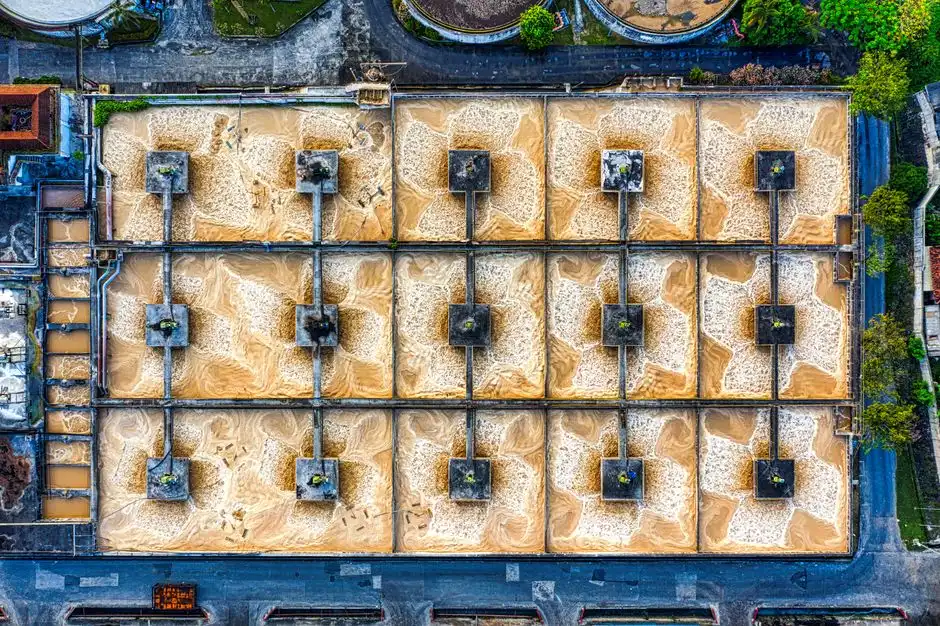
MBR performance on deinking reject is determined by the upstream pre-treatment. The membrane is the polishing step, not the workhorse. Four pre-treatment stages are the minimum bar for a 50–500 m³/day reject stream:
- Rotary mechanical bar screen (≤3 mm aperture). Strips plastic wrap, rags, rags-sized fibre clumps, and any macro-contaminant that would shred or pin a membrane. Without this stage, a single rag can take out a full MBR cassette during a backflush cycle. A rotary mechanical bar screen at 2–3 mm aperture is the standard opening unit for paper-recycling reject water.
- Equalization basin (≥12 h HRT). Deinking lines swing on grade-change cycles, broke dumps, and surfactant batch dosing. A 12-hour basin cuts the peak-to-average ratio on TSS and COD to roughly 1.5:1, which keeps MLSS swings inside the MBR's tolerable envelope. Shorter HRT is the most common reason for chronic MLSS excursions in retrofits.
- Dissolved air flotation (DAF). A well-tuned DAF removes 80–95% of suspended solids and a meaningful fraction of colloidal ink before the biological stage, using micro-bubbles in the 30–50 μm range at recycle ratios of 20–40%. This is the step that decides whether the MBR runs at design flux or collapses within weeks. The DAF pre-treatment for pulp and paper wastewater is sized for exactly this TSS window.
- Optional anoxic stage. A 2–4 h anoxic basin ahead of the aerobic MBR cuts surfactant-bound COD and reduces the membrane-fouling organics that reach the membrane. It is cheap insurance on reject streams with high dispersant loading.
Skipping any of these stages does not fail the MBR on day one—it fails it on day ninety, when the irreversible fouling that built up during the first month of operation cannot be reversed by CIP.
Reuse vs Discharge Effluent Specifications: 2026 Numbers
Submerged flat-sheet PVDF MBRs deliver a complete solids retention cut, ensuring no TSS carryover, biomass washout, or clarifier failure. The numbers below are the typical 2026 envelope on a deinking reject feed after the pre-treatment chain above (HydropureWater field data, 2026).
| Parameter | Reuse target (process water back to pulping) | Discharge target (typical EU/China P&P effluent) |
|---|---|---|
| TSS | <5 mg/L | <30 mg/L (per GB 3544 / EU BREF Pulp & Paper) |
| Turbidity | <1 NTU | Not typically regulated; report <5 NTU |
| COD | <100 mg/L | <150 mg/L |
| BOD | <10 mg/L | <30 mg/L |
| Color removal | >90% | Color regulated separately; MBR typically >80% |
| Conductivity | Site-specific; NF/RO polish for closed loop | Site-specific |
Reuse targets apply when the permeate returns to the deinking line as pulping dilution water, wash water, or shower water. The TSS <5 mg/L and turbidity <1 NTU envelope protects sprays, felts, and head-box consistency from fouling. Discharge targets apply when permeate goes to a municipal sewer or receiving water body; the relevant standard families are GB 3544 in China and the EU BREF for Pulp and Paper in Europe. Color and residual surfactants are the parameters that most often fail discharge tests after biological treatment alone, and complete solids retention is the main reason MBR outperforms conventional activated sludge (CAS) on this metric. For highest-purity reuse—boiler feed or high-pressure showers—an MBR-NF or MBR-RO polish step is the standard configuration; the S1 review notes that nanofiltration concentrate recirculation in an MBR-NF hybrid is the most studied route to high-recovery reuse on high-strength industrial wastewater.
Sizing, Footprint, and Energy: 2026 Selection Decision Framework
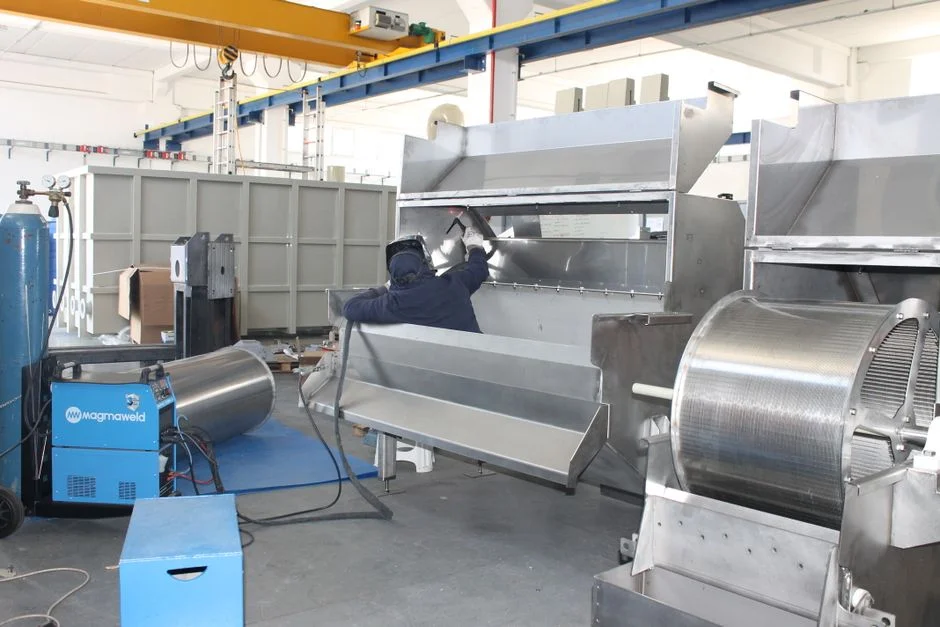
Packaged MBRs cover 10–2,000 m³/day, with deinking reject streams at mid-size recycled paper mills typically sitting in the 50–500 m³/day band. Footprint is roughly 40% of a CAS + secondary clarifier train of the same throughput, which is critical in older mills where the wastewater room was sized for a 1980s layout. Specific energy is 0.3–0.6 kWh/m³ for submerged flat-sheet versus 2–5 kWh/m³ for sidestream hollow-fiber on reject-strength feed—the pumping loop dominates sidestream OPEX.
The decision rule for 2026:
- Choose submerged flat-sheet PVDF when TSS to MBR is >200 mg/L, when power cost exceeds $0.05/kWh, when the site has limited floor area, or when maintenance staff are not MBR-specialists. This covers the majority of deinking reject retrofits.
- Consider sidestream hollow-fiber only when upstream has already cut TSS <200 mg/L, removed the bulk of stickies, and stabilized flow—i.e., the feed no longer looks like reject.
An integrated MBR wastewater treatment system packages the screens, equalization, biological stage, and membrane skid into a single delivery, which shortens commissioning on reject streams where the pre-treatment chain is non-negotiable. Waste activated sludge from the MBR is typically thickened and dewatered on a plate and frame filter press for land application or incineration; the cake solids at 22–28% DS are consistent with downstream paper-mill energy recovery. For OPEX planning, see the 2026 MBR membrane bioreactor cost and buyer's guide, which benchmarks installed cost and consumables against sidestream and CAS alternatives.
Frequently Asked Questions
Which MBR configuration treats deinking reject water best?
Submerged flat-sheet PVDF at 0.1 μm pore size. The flat, rigid sheet geometry tolerates long fibres, fillers, and stick