Why Abuja Hospital Effluent Demands a Dedicated Treatment System in 2026
Hospital wastewater in Abuja in 2026 must satisfy two stacked legal instruments: Nigeria's National Environmental (Sanitation and Wastes Control) Regulations (S.I. No. 28 of 2009) and the 2024 FMEnv hospital sector revision, which caps BOD₅ at 30 mg/L, COD at 80 mg/L, TSS at 30 mg/L, total coliform at 100 CFU/100 mL, and residual chlorine at 0.5–1.0 mg/L. The FCT Public Health Law adds civil liability for any off-site discharge that contaminates storm drains in Wuse, Garki, or Asokoro. The binding compliance framework is therefore tighter than for a typical office block, and a packaged municipal-style unit sized for domestic sewage will not clear the pathogen and pharmaceutical benchmarks.
The AMR risk is no longer theoretical. A 2024 genomic study of Nigerian hospital wastewater isolated VIM-2-producing Pseudomonas aeruginosa ST235/O11, an internationally high-risk clone carrying metallo-β-lactamase resistance (source: ScienceDirect, 2024). With this clone documented in FCT sewersheds, terminal disinfection is the only credible barrier between the hospital drain and the receiving FCT drain or, in peripheral sites, an unlined soakaway. Treating effluent to "looks clear" is not a defensible position for a hospital administrator in 2026.
Three Abuja climate factors make the design envelope harsher than temperate references suggest. Influent temperature sits at 28–33°C year-round, which depresses dissolved oxygen and pushes activated-sludge systems toward bulking. The May–October rainy season drives 2–4× stormwater ingress into sewer laterals, so equalization must absorb hydraulic peaks. Abuja's national grid averages 4–8 hours of outage per day, which forces buffer volume sizing and a dedicated diesel genset sized for the MBR's recirculation pumps. Any vendor proposal that ignores these three numbers is non-compliant by construction.
Penalties now extend beyond FMEnv fines. The Medical and Dental Council of Nigeria's facility accreditation review examines environmental compliance, and a 2025 audit failure can defer license renewal by 12–18 months. Insurance carriers serving FCT tertiary hospitals have begun requiring evidence of compliant effluent before renewing professional indemnity cover. A dedicated treatment train, sized to Nigerian limits and Abuja's climate, is therefore a board-level risk control — not a discretionary line item.
How Hospital Wastewater Differs From Municipal Sewage
Hospital effluent is not "stronger domestic sewage" — it is a different pollutant matrix. Lab characterization of Nigerian hospital wastewater reports BOD₅ of 192 ± 8.62 mg/L, COD of 245 ± 9.15 mg/L, and a BOD₅:COD ratio of 0.78, values that confirm the stream is highly biodegradable in the bulk carbon sense (source: Springer Bioresources and Bioprocessing, 2024). What municipal treatment misses is the micro-pollutant and pathogen fraction layered on top of that carbon load.
Four pollutant classes are essentially absent from domestic sewage. Cytotoxic drugs and antibiotics enter the drain from oncology infusion suites and pharmacy washouts, and conventional biological treatment removes only 20–60% of them. Iodine-131 and technetium-99m from nuclear medicine departments require decay storage before discharge, typically 60–180 days of separate holding. Glutaraldehyde, formaldehyde, and peracetic acid from CSSD sterilization are toxic to nitrifying bacteria at concentrations above 5 mg/L and will crash a CAS or MBBR if routed directly. Dental amalgams contribute mercury at 0.1–1.0 mg/L, which fouls membranes and accumulates in sludge.
Pathogen loading is also an order of magnitude above domestic sewage. Abuja tertiary hospitals routinely measure 10⁴–10⁶ CFU/100 mL total coliforms and 10³–10⁵ CFU/100 mL fecal streptococci in raw effluent, with periodic spikes during diarrheal disease admissions. Standard municipal screening targets 10⁶–10⁷ CFU/100 mL because it expects a much larger diluting flow; a hospital serving 200 beds at 400 L/bed/day generates only 80 m³/day, so the pathogen load per litre is higher and the receiving environment is closer. This is the engineering justification for a dedicated train rather than a tie-in to a municipal interceptor.
The 2026 Process Train: From Influent to Compliant Discharge
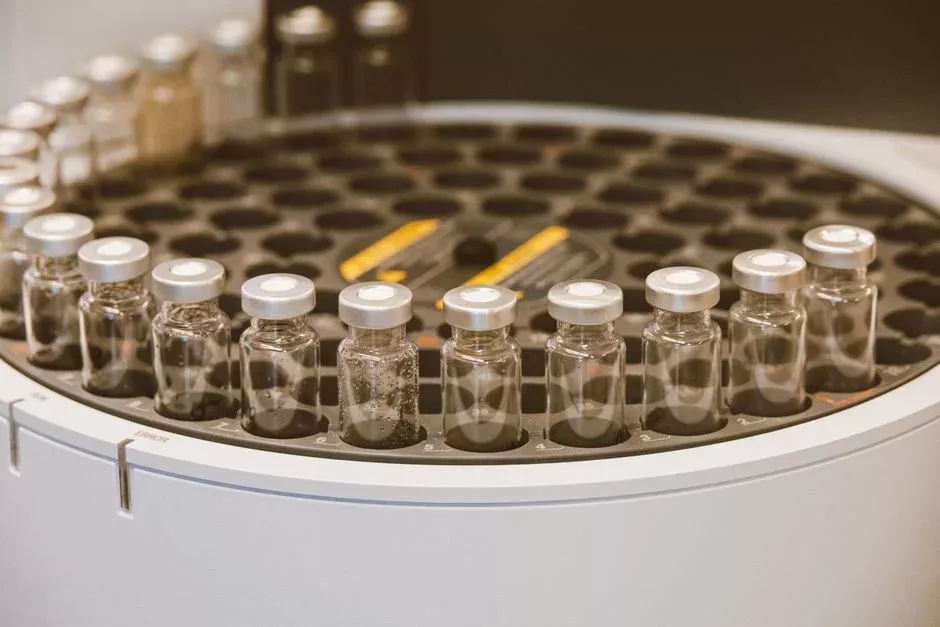
A six-step train delivers the 2024 FMEnv limits reliably for a 50–500-bed Abuja hospital. The blocks are specified below in flow order so a procurement officer can map each item to a single line on the BOQ.
Step 1 — Influent screening. A GX series rotary mechanical bar screen with 5–10 mm aperture removes rags, syringes, PPE, and surgical gauze before they reach the biological stage. For a 200-bed facility, a 600 mm drum running at 5–8 rpm is typical.
Step 2 — Equalization. An EQ tank sized at 8–12 hours HRT and 1.2× average daily flow buffers diurnal peaks (theater washouts, laundry discharges) and absorbs May–October stormwater ingress. A 100 m³/day plant needs a 50–60 m³ EQ, which doubles as genset ride-through volume during a 6-hour outage.
Step 3 — Anoxic + aerobic biological stage (A/O or A²/O). Operate at HRT 18–24 hours, MLSS 3,500–4,500 mg/L, F/M ratio 0.10–0.15 kg BOD/kg MLSS·day, and DO 1.5–2.5 mg/L in the aerobic zone. This stage removes 90–95% of BOD and COD, and the anoxic zone delivers TN ≤20 mg/L without a separate denitrification filter.
Step 4 — MBR with PVDF membrane. A MBR membrane bioreactor system using DF series PVDF flat-sheet membrane modules at 0.1–0.4 μm pore size and 15–25 L/m²·h flux produces an effluent with TSS typically <1 mg/L and a log-4 to log-5 reduction in total coliforms before disinfection. Flat-sheet geometry handles the higher Abuja mixed-liquor temperature better than hollow-fiber in our field experience (HydropureWater field data, 2025).
Step 5 — ClO₂ disinfection. A chlorine dioxide generator dosing 2–5 mg/L with 30 minutes contact time delivers a residual of 0.5–1.0 mg/L and a log-3 to log-4 pathogen kill. ClO₂ is preferred over NaOCl for hospital effluent because it does not react with ammonia to form chloramines and is effective at the higher Abuja pH (7.5–8.5) where free chlorine loses efficacy.
Step 6 — Sludge handling. Waste activated sludge at 0.8–1.2% DS is dewatered by a plate-and-frame filter press to 55–65% DS cake. The cake is sealed in HDPE bags and routed to a NESREA-licensed secure landfill; supernatant returns to the head of the plant.
Process Comparison: CAS, SBR, MBBR, and MBR for Abuja Hospitals
Finance directors in Abuja hospital boards typically push back on MBR CAPEX with the question "why not cheaper concrete tanks?" The table below answers that question with a 2026 cost-and-compliance audit for a 100 m³/day plant.
| Process | CAPEX (USD, 100 m³/day) | Footprint | TSS compliance without tertiary filtration | Pathogen log reduction | Behavior at 30°C+ influent | Best fit |
|---|---|---|---|---|---|---|
| Conventional Activated Sludge (CAS) | 60,000–90,000 | 1.5–2× MBR | Marginal (often 20–40 mg/L) | Log 1–2 | Sludge bulking common | Existing sites, non-urban discharge |
| Sequencing Batch Reactor (SBR) | 65,000–95,000 | 1.2–1.5× MBR | Marginal (15–30 mg/L) | Log 1–2 | Decanting sensitive to peaks | Intermittent-power sites, <50 beds |
| Moving Bed Biofilm Reactor (MBBR) | 80,000–120,000 | 0.8–1.0× MBR | Requires downstream settler | Log 1–2 | Robust to thermal load | Retrofit of existing aeration basin |
| Membrane Bioreactor (MBR) | 120,000–180,000 | 0.4–0.5× CAS | Consistently <5 mg/L (typ. <1 mg/L) | Log 4–5 (membrane) + ClO₂ | Stable with flat-sheet modules | New tertiary hospitals, FCT sites |
The CAPEX premium of 30–80% for MBR over CAS is recovered within 4–7 years through avoided tertiary filtration, smaller land take in high-cost FCT districts, and eliminated cesspool-hauling exposure. For new builds in Wuse, Asokoro, or Jabi where land runs above USD 800/m², footprint savings alone justify the MBR choice.
Abuja Discharge Limits and Operating Parameters at a Glance
The table below pairs the 2024 FMEnv/FCT hospital effluent limits with the operating values a properly sized MBR + ClO₂ train delivers. It is designed to be printed and pinned next to the SCADA panel so the operator can read headroom at a glance.
| Parameter | FMEnv/FCT 2024 limit (hospital sector) | Typical MBR + ClO₂ treated value | Headroom |
|---|---|---|---|
| pH | 6.5–8.5 | 7.0–7.6 | Within band |
| BOD₅ | ≤30 mg/L | ≤5 mg/L | 6× under |
| COD | ≤80 mg/L | ≤30 mg/L | 2.6× under |
| TSS | ≤30 mg/L | ≤1 mg/L | 30× under |
| Total nitrogen | ≤20 mg/L | ≤15 mg/L | 25% under |
| Total phosphorus | ≤5 mg/L | ≤2 mg/L | 2.5× under |
| Total coliform | ≤100 CFU/100 mL | ≤10 CFU/100 mL | 10× under |
| Residual ClO₂ | 0.5–1.0 mg/L | 0.6–0.8 mg/L | Within band |
FMEnv inspectors typically apply WHO 2022 Safe Management of Wastes from Healthcare Activities as the secondary benchmark when limits are silent. WHO targets E. coli <1 CFU/100 mL for irrigation reuse, which the MBR + ClO₂ train also clears — useful if the hospital plans to use treated effluent for landscape irrigation on campus.
2026 Cost Benchmarks for Abuja Hospital Wastewater Plants
CAPEX scales roughly linearly with capacity once the MBR skid is the cost driver. The figures below are FOB-China-plus-Abuja-install benchmarks and align with our 2025–2026 Nigerian project book (HydropureWater field data, 2026). For a deeper breakdown of pharmaceutical-grade plant costs, see the pharmaceutical wastewater plant CAPEX/OPEX guide.
| Plant size (m³/day) | Indicative bed count | CAPEX range (USD) | CAPEX range (NGN, parallel market ref.) | Footprint (m²) |
|---|---|---|---|---|
| 50 | 50–80 beds | 70,000–110,000 | ₦105–165m | 60–80 |
| 100 | 100–150 beds | 120,000–180,000 | ₦180–270m | 90–120 |
| 200 | 200–300 beds | 220,000–320,000 | ₦330–480m | 140–180 |
| 500 | 400–500+ beds | 480,000–680,000 | ₦720m–₦1.02bn | 250–320 |
OPEX at 100 m³/day sits in a narrow band: power 0.35–0.55 kWh/m³ at Abuja's ₦120–160/kWh industrial tariff (≈USD 0.08–0.10/kWh landed), ClO₂ chemical cost at 1.5–2.5 mg/L dose, and sludge hauling at 8–12% of total operating cost. Total OPEX lands at USD 0.55–0.90 per m³, or ₦800–1,350 per m³ at current rates. Add 15–20% contingency for Apapa port clearance, FCT backfill, and the genset sized for 6–8 hour daily grid gaps. Cesspool hauling is the most common "cheap" alternative at USD 1.20–1.80 per m³, but FMEnv's manifest requirements and FCT traffic restrictions on night tankers make it operationally fragile for anything above 50 m³/day.
Choosing an Abuja Hospital Wastewater Equipment Supplier
The right supplier protects the project from the four failure modes that derail Nigerian healthcare projects: customs clearance delays, genset undersizing, membrane fouling, and operator abandonment post-commissioning. A short checklist is below; for the live-monitoring side of compliance, the real-time water quality monitoring guide covers the SCADA layer that should sit on top of any vendor's offer.
- Certifications. ISO 9001:2015 quality system, CE marking on the MBR and ClO₂ skids, and SONCAP conformity for Nigeria customs. Without SONCAP, cargo sits at Apapa for 4–8 weeks.
- Pre-shipment evidence. A recorded Factory Acceptance Test (FAT) video, a wet-test report on the MBR using a synthetic feed, and a hydraulic balance sheet signed by a chartered engineer.
- Warranty and commissioning. 24–48 month warranty on membranes and ClO₂ generator cells, on-site commissioning included in the CAPEX, and a commissioning engineer who speaks English (French is a plus for francophone West African clients).
- After-sales footprint. Spare parts depot in Lagos with 48-hour dispatch on membranes, chemical-feed pumps, and DO probes. Remote SCADA option over 4G with quarterly data logging for FMEnv audit packets.
- Operator training. A 2–5 day structured program covering start-up, MBR cleaning-in-place, ClO₂ generator calibration, and sludge press operation, with printed SOPs in English.
Frequently Asked Questions
What is hospital wastewater? Hospital wastewater is the combined liquid effluent from a healthcare facility, including black water from wards and toilets, grey water from kitchens and laundries, and process water from laboratories, radiology, CSSD, and dental suites, characterized by higher pathogen counts, pharmaceutical residues, and disinfectants than domestic sewage.
Which authority regulates hospital wastewater in Abuja? The Federal Ministry of Environment (FMEnv) regulates discharges under S.I. No. 28 of 2009 and the 2024 hospital sector revision, with enforcement delegated to the FCT Environmental Protection Board for sites inside Abuja Municipal Area Council.
What is the standard process train for a 100–500 bed hospital in Abuja? The standard 2026 train is rotary screening → equalization → anoxic + aerobic biological stage → MBR with PVDF flat-sheet membranes → ClO₂ disinfection → plate-and-frame sludge dewatering, sized for 400–600 L/bed/day.
What CAPEX should a 200-bed Abuja hospital budget for wastewater treatment in 2026? Budget USD 220,000–320,000 (₦330–480m at current parallel rates) for a 200 m³/day MBR plant, FOB China plus Abuja install, plus 15–20% logistics and genset contingency.
How often must an MBR membrane be cleaned? In Abuja's 28–33°C mixed liquor, a maintenance clean every 7–14 days with 1,000–2,000 mg/L NaOCl plus a recovery clean every 3–6 months is typical; a fully plugged membrane should not occur if routine CIP is logged (HydropureWater field data, 2025).
How long does installation take? From PO to handover, a Nigerian hospital MBR project typically runs 14–18 weeks: 6–8 weeks for fabrication and shipping, 3–4 weeks for Apapa clearance and FCT delivery, 3–4 weeks for civil and erection, and 2 weeks for commissioning and FAT.