Why Valparaiso Hospital Wastewater Cannot Ride the Municipal System Alone
The Valparaiso Elden Kuehl Pollution Control Facility (EKPCF) is a Class IV single-stage activated-sludge WWTP rated at 8.0 MGD average and 18.0 MGD peak, discharging treated effluent to Salt Creek — a salmonid-designated Lake Michigan tributary (per the 2012 EPA Indiana Energy Management Pilot fact sheet). Because Salt Creek feeds directly into Lake Michigan, any institutional contributor — including hospitals — is regulated by IDEM under the NPDES program as a tributary discharger, with limits tighter than a typical inland POTW. Sending untreated hospital effluent down the sewer is not a compliance shortcut; it shifts the burden onto EKPCF and exposes the hospital to enforcement under 327 IAC 5 (Indiana Pretreatment Program) if categorical pollutants exceed local discharge limits.
Hospital effluent is not dilute domestic sewage. It carries pharmaceuticals, iodinated X-ray contrast media, antibiotics, cytotoxics, and pathogens that conventional primary/secondary treatment only partially removes — a gap the Springer 2017 review Hospital Wastewaters: Characteristics, Management, Treatment and Environmental Risks documents across hundreds of full-scale plants worldwide. Mercury from dental amalgam waste, formaldehyde from pathology, and radiopharmaceuticals trigger categorical pretreatment duties the moment they cross the monitoring manhole. At the same time, the 2024 Bioresources and Bioprocessing Chlorella study reported a BOD₅:COD ratio of 0.77 in hospital wastewater, with raw BOD₅ of 192 ± 8.62 mg/L and COD of 245 ± 9.15 mg/L — proof that the stream is biodegradable but heavily loaded. That profile justifies a dedicated on-site biological polishing step ahead of municipal discharge, not reliance on EKPCF alone.
2026 Effluent Targets Hospital Operators Must Hit in Indiana
IDEM NPDES permits issued to Indiana POTWs in 2024–2025 set domestic-equivalent discharge limits of BOD₅ ≤30 mg/L, TSS ≤30 mg/L, summer NH₃-N ≤1.5 mg/L, total residual chlorine ≤0.01 mg/L, and fecal coliform ≤200 CFU/100 mL. For hospitals, the binding layer is usually 40 CFR 403 plus 327 IAC 5, which add categorical ceilings for cyanide, phenols, and heavy metals (mercury in particular), and require pH to stay inside 6.0–9.0 at the monitoring manhole before the city sewer.
Pharmaceuticals of emerging concern — sulfamethoxazole, diclofenac, carbamazepine — do not yet have numeric Indiana limits, but IDEM guidance updated in 2023–2025 requires monitoring for facilities discharging more than 100 beds. Hospitals that ignore that monitoring trigger routinely get a categorical permit re-opened, so the monitoring program should be budgeted from day one. The table below compares raw hospital wastewater, the MBR + ClO₂ polish recommended in the next section, and the IDEM discharge envelope a Valparaiso hospital must hit.
| Parameter | Raw hospital effluent (typical) | MBR + ClO₂ polish | IDEM / 40 CFR 403 limit |
|---|---|---|---|
| TSS (mg/L) | 150–350 | ≤5 | ≤30 |
| BOD₅ (mg/L) | 150–250 | ≤10 | ≤30 |
| COD (mg/L) | 200–500 | ≤50 | — (report only) |
| NH₃-N, summer (mg/L) | 20–45 | ≤1.0 | ≤1.5 |
| Fecal coliform (CFU/100 mL) | 10⁴–10⁶ | ≤10 (post-ClO₂) | ≤200 |
| Total residual Cl₂ (mg/L) | — | ≤0.01 (dechlorinated) | ≤0.01 |
| pH | 6.5–8.5 | 6.5–7.5 | 6.0–9.0 |
Recommended 2026 Process Train for Valparaiso Hospitals
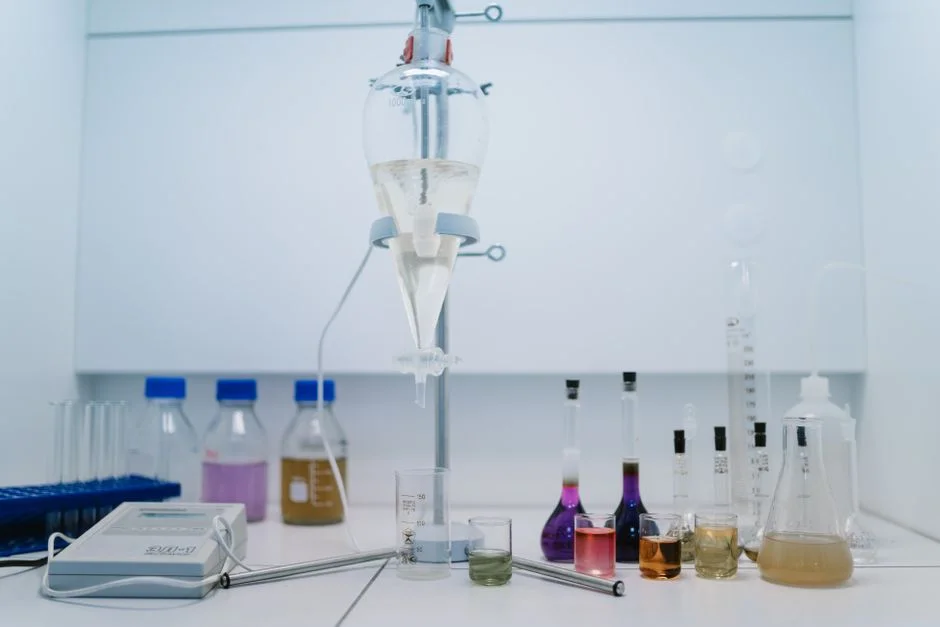
A defensible 2026 train for a 50–500-bed Porter County hospital stacks five stages: headworks → equalization → MBR biological → disinfection → sludge dewatering. The 2012 EKPCF model demonstrates that mechanical screening and grit removal ahead of biological treatment protect downstream equipment; the same logic applies to a packaged hospital plant.
Stage 1 — Headworks. A rotary mechanical bar screen with 3–5 mm aperture (matching the GX-series mechanical bar screen operating envelope) and a grit chamber protect downstream membranes from lint, gauze fibers, and surgical disposables that routinely show up in hospital collections.
Stage 2 — Equalization. An 8–12 hour buffer tank sized at 30–40% of daily flow dampens the morning rounds, OR-flushing, and laundry surges that drive diurnal BOD peaks. Without EQ, an MBR sees shock loads that drop removal efficiency and foul membranes.
Stage 3 — MBR biological step. Submerged PVDF flat-sheet membranes at 0.1 μm pore size operate at 10–20× lower energy than cross-flow designs. Design envelope: HRT 8–12 h, SRT 20–30 d, MLSS 8,000–12,000 mg/L, and flux 12–18 L/m²·h. A packaged MBR membrane bioreactor system in this envelope reliably hits effluent COD <50 mg/L and TSS <5 mg/L from hospital-strength feed.
Stage 4 — Disinfection. An on-site chlorine dioxide generator sized 50–2,000 g/h, dosed at 1.5–2.5 mg/L with CT ≥30 min, achieves 99.9% inactivation of antibiotic-resistant organisms per WHO/EPA hospital effluent guidance. UV at 40 mJ/cm² is the right alternative for sites that want to avoid any chemical storage on campus.
Stage 5 — Sludge dewatering. A plate-and-frame filter press producing cake at <65% moisture handles the wasted biological solids; typical yield is 0.05–0.08 kg dry solids per kg BOD removed. The table below maps each stage to its primary equipment and key operating parameter.
| Stage | Primary equipment | Key design parameter | Typical value |
|---|---|---|---|
| 1. Headworks | Rotary bar screen + grit chamber | Aperture | 3–5 mm |
| 2. Equalization | EQ tank | HRT | 8–12 h (30–40% of daily flow) |
| 3. MBR | Submerged PVDF flat-sheet | MLSS / SRT / Flux | 8,000–12,000 mg/L / 20–30 d / 12–18 L/m²·h |
| 4. Disinfection | ClO₂ generator or UV | Dose / CT or fluence | 1.5–2.5 mg/L, CT ≥30 min; or UV 40 mJ/cm² |
| 5. Sludge | Plate-and-frame press | Cake moisture | <65% |
Equipment Sizing by Hospital Bed Count
Flow per bed is the cleanest sizing lever. For combined inpatient + outpatient loads, plan 0.4–0.6 m³/bed/day. That puts a 30-bed critical-access hospital at roughly 15 m³/day, a 100-bed community hospital at 50 m³/day, a 300-bed regional facility at 150 m³/day, and a 500-bed academic medical center near 250 m³/day. Each tier has a different packaged solution.
Under 50 beds, a skid-mounted medical wastewater system with ozone disinfection fits inside a 0.5 m² equipment footprint and carries documented compliance with EU 91/271/EEC — CAPEX typically lands at $35K–$70K. From 50–200 beds, a WSZ underground package plant paired with a dedicated ClO₂ polishing skid runs $90K–$220K and is fast to install in tight Porter County footprints. From 200–500 beds, the full MBR + ClO₂ + sludge dewatering line in the previous section runs $260K–$620K with OPEX of $0.45–$0.85/m³. Above 500 beds, a centralized on-site MBR with UV tertiary and thermal sludge treatment is the norm, often co-sited with satellite laundry and kitchen pre-treatment trains. The table consolidates these tiers.
| Bed count | Daily flow (m³/d) | Recommended package | CAPEX (USD) | OPEX (USD/m³) |
|---|---|---|---|---|
| <50 | ≤25 | Compact skid + ozone | $35K–$70K | $0.35–$0.60 |
| 50–200 | 25–100 | WSZ underground + ClO₂ polish | $90K–$220K | $0.40–$0.70 |
| 200–500 | 100–250 | Full MBR + ClO₂ + filter press | $260K–$620K | $0.45–$0.85 |
| >500 | >250 | Centralized MBR + UV + thermal sludge | $700K+ | $0.50–$0.95 |
2026 Cost Reality for Valparaiso Hospital Projects
CAPEX in the sizing table includes skids, installation, civil works, and IDEM permitting at 12–18% of equipment cost. For a 150 m³/day MBR + ClO₂ system, OPEX breaks down approximately as: power $0.18/m³, chemicals (ClO₂ precursor and antiscalant) $0.12/m³, membrane replacement $0.08/m³ amortized, and labor $0.15/m³ — a total of $0.53–$0.65/m³. At 150 m³/day, that is roughly $29K–$36K per year in operating cost before sludge hauling.
Energy is the single largest controllable line item. The EKPCF 2010 retrofit installed two 200-HP premium-efficiency motors with variable frequency drives plus blower modifications, saving an average of $30,000/year — about 8–10% of the plant's electrical budget (per the 2012 EPA fact sheet). A hospital MBR running VFD-driven blowers and IE4/IE5 motors on the same principle typically captures 25–35% aeration savings versus constant-speed designs. Indiana hospitals can pursue comparable state and federal incentives in 2026, including the Energy Efficiency and Conservation Block Grant (EECBG) program that funded the EKPCF project, and parallel IRA-funded efficiency rebates. The table below gives a board-ready budget snapshot for a representative 150 m³/day project.
| Cost line | Low (USD) | High (USD) | Basis |
|---|---|---|---|
| Equipment (MBR + ClO₂ + filter press) | $230K | $450K | Per sizing table, 200–500 bed tier |
| Installation & civil works | $40K | $90K | ~15% of equipment |
| IDEM permitting & engineering | $30K | $80K | 327 IAC 5 application + engineer of record |
| Total CAPEX | $300K | $620K | Turnkey |
| Annual OPEX | $29K/yr | $36K/yr | At 150 m³/day, $0.53–$0.65/m³ |
Procurement, Commissioning and Compliance Checklist
Permit path. File the 327 IAC 5 categorical discharge application with IDEM, secure a local POTW discharge permit from the Valparaiso Water Reclamation Department, and notify EPA Region 5 if radiopharmaceutical thresholds apply under 40 CFR 403. Expect 90–150 days for IDEM review on a new categorical permit.
Vendor evaluation. Require NSF/ANSI 350 or EU 91/271/EEC compliance evidence, on-site ClO₂ generation (not bulk hypochlorite — bulk hypochlorite forms regulated disinfection byproducts with hospital organics), PVDF membrane warranty of at least 5 years, and SCADA-ready controls that feed a real-time water quality monitoring system for IDEM reporting.
Commissioning milestones. Run a 14-day biomass seeding period, then a 30-day performance test against every IDEM limit in the effluent table, and validation sampling for sulfamethoxazole and diclofenac if IDEM's emerging-contaminant monitoring trigger applies.
Ongoing O&M. Follow a 12-step monthly medical wastewater maintenance protocol (documented in the medical wastewater maintenance guide), schedule an annual membrane integrity test, and calibrate ClO₂ yield quarterly. Operators familiar with the comparable hospital wastewater treatment in Virginia Beach deployment will already know the rhythm.
Frequently Asked Questions
What are the IDEM effluent limits for hospitals in Valparaiso? IDEM NPDES permits in 2024–2025 set BOD₅ ≤30 mg/L, TSS ≤30 mg/L, summer NH₃-N ≤1.5 mg/L, total residual chlorine ≤0.01 mg/L, and fecal coliform ≤200 CFU/100 mL, with pH 6.0–9.0 (per 40 CFR 403).
Why can't a Valparaiso hospital send all wastewater to EKPCF? EKPCF discharges to Salt Creek, a Lake Michigan tributary, and 327 IAC 5 requires categorical pretreatment when pollutants like mercury, formaldehyde, or radiopharmaceuticals exceed local limits.
What is the right disinfection dose for hospital effluent in 2026? Chlorine dioxide at 1.5–2.5 mg/L with CT ≥30 min achieves 99.9% inactivation of antibiotic-resistant organisms per WHO/EPA hospital guidance.
How much does a packaged hospital wastewater plant cost in Indiana? For a 100–300-bed facility producing 50–200 m³/day, packaged MBR + ClO₂ systems land at $180K–$420K CAPEX with OPEX around $0.45–$0.85/m³.
What flow rate should I size for per hospital bed? Plan 0.4–0.6 m³/bed/day for combined inpatient and outpatient loads, which is the basis for the medical wastewater system sizing envelope.
Are pharmaceuticals regulated in Indiana hospital discharge? Sulfamethoxazole, diclofenac, and carbamazepine are not numeric-limited in Indiana as of 2026, but IDEM requires monitoring for hospitals above 100 beds under 2023–2025 guidance.