Why 24-Hour Sampling Is Failing Chromium Compliance
A spike in hexavalent chromium from a hard-chrome plating line in 2024 cost one Midwestern finisher a $312,000 consent-order penalty — and the plant's 24-hour composite sampler never recorded it. The slug lasted 18 minutes, between two auto-sampler pickup windows, and pushed effluent Cr(VI) past the U.S. EPA maximum contaminant level of 0.05 mg/L for roughly 90,000 gallons of discharge before the next sample was drawn (per EPA 40 CFR 141). In the EU, the Industrial Emissions Directive default BAT-AEL sits at 0.1 mg/L total Cr, and China's GB 8978-1996 Class I sets total Cr at 0.1–0.2 mg/L depending on the revision year the inspector cites — all of them the daily ceiling the sensor has to prove, not the average it has to maintain.
Metal-finishing and electroplating discharges are slug-dominated by physics: process bath dumps, rack drag-out, and strip-line rinses all release 5–30 minute pulses that run 10–100× the rolling-24h average. A composite sampler time-averages those slugs into compliance while they pass unmonitored. MIPS Innovations makes the same point operationally: periodic sampling may miss transient spikes, and incomplete chemical reduction of Cr(VI) before discharge is a leading cause of sudden non-compliance (MIPS, 2025). The MIPS narrative frames online monitoring as a complement to the lab; the engineering reality is that for Cr(VI) it is the only instrument with the temporal resolution to catch a 5-minute excursion before it leaves the site boundary.
What an Online Chromium Monitoring Sensor Actually Measures
An online chromium monitoring sensor is an in-pipe or sidestream analyzer that continuously measures total chromium or hexavalent Cr(VI) in industrial wastewater. Modern units pair diphenylcarbazide colorimetry, voltammetry, or plasma-based detection with 4–20 mA or Modbus output to the plant SCADA, achieving online detection limits around 9.4×10⁻⁷ M (~0.05 mg/L Cr(VI)) and response times of 20–60 seconds — fast enough to catch spikes that 24-hour composite sampling routinely misses.
The first spec to lock down is which chromium species the permit actually regulates. U.S. EPA and the original EP Toxicity Characteristic (40 CFR 261) target hexavalent Cr(VI) at 0.05 mg/L; the EU IED and most provincial Chinese standards target total chromium at 0.1–0.2 mg/L. A plant discharging to a U.S. receiving water usually needs a Cr(VI)-specific analyzer plus periodic total-Cr confirmation by ICP-MS on a quarterly basis; a plant discharging under GB 8978-1996 typically needs a total-Cr reading at the discharge point, which means either a parallel acid-digestion stage on the analyzer or a second instrument.
Almost every online colorimetric Cr(VI) analyzer on the market uses the same core chemistry: at pH < 2, Cr(VI) exists as HCrO₄⁻, which 1,5-diphenylcarbazide (DPC) reduces to a violet Cr(III)-DPC complex measured photometrically at 540 nm. The same reaction was validated on a disposable screen-printed electrode made of 37.5% graphite / 12.5% DPC / 50% epoxy resin, with a static-mode LOD of 2.1×10⁻⁷ M and an online LOD of 9.4×10⁻⁷ M (Analytical and Bioanalytical Chemistry, 2009). Online panels re-use this chemistry continuously, with auto-calibration every 6–24 hours against a single-point standard. Output is almost always 4–20 mA, Modbus RTU/TCP, or Profinet — the registers needed for plant SCADA integration are listed in the vendor's register map and should be requested before purchase.
Three Measurement Principles Compared

Three measurement principles dominate the 2026 market: colorimetric DPC, voltammetric / ion-selective electrode (ISE), and online ICP-OES. They differ enough on detection limit, response time, reagent burden, and price that the wrong pick locks a plant into years of operating cost. The matrix below is the one most vendor brochures refuse to print.
| Principle | LOD (mg/L Cr(VI)) | Response time | Reagent / consumables | Footprint | 2026 CAPEX band (USD) |
|---|---|---|---|---|---|
| Colorimetric DPC (1,5-diphenylcarbazide, 540 nm) | 0.005–0.05 | 5–15 min including digestion | Peristaltic reagent lines; DPC cartridge change monthly; calibration standard every 6–24 h | Wall-mount panel, 0.5–1.0 m wide | 18,000–65,000 |
| Voltammetric / ISE (screen-printed or solid-state) | 0.01–0.1 | 20–60 s (20 ± 1 s reported on screen-printed electrode per Anal. Bioanal. Chem. 2009) | No continuous reagent; membrane or electrode cleaning every 1–4 weeks in oily streams | Compact skid, 0.3–0.6 m | 25,000–55,000 |
| Online ICP-OES (plasma-based, multi-element) | < 0.001 (total Cr, plus Ni, Cu, Zn, Pb simultaneously) | 60–180 s per element cycle | Argon 4–9 L/min; high-purity acid; torch cleaning quarterly | Floor-standing cabinet, 1.0–1.5 m, with extraction | 80,000–200,000+ |
The decision heuristic that holds up in real tenders: pick colorimetric DPC for a Cr(VI)-only compliance point at a metal finisher where reagent handling is already routine; pick voltammetric when response time under 60 s matters more than the last 0.04 mg/L of sensitivity and the operator wants to skip peristaltic lines; pick online ICP-OES only when the buyer also needs Ni, Cu, Zn, or Pb at the same point and the OPEX budget covers 4,000–9,000 USD/year of argon. A PLC-controlled chemical dosing skid paired with a voltammetric probe at the post-reduction tap is the most common 2026 configuration we see for Cr(VI) reduction with NaHSO₃ or FeSO₄ at pH < 3.
Matching Sensor Sensitivity to the Real Regulatory Floor
Sensitivity on a datasheet is meaningless until it is checked against the permit number. A method detection limit that equals the discharge limit will pass 50% of the time and fail 50% of the time once matrix variability is included — the rule of thumb is to size the sensor LOD at 1/3 to 1/5 of the permit value, which is the same factor the EPA uses when deriving a method detection limit from an instrument detection limit (per EPA 40 CFR 136 Appendix B).
| Regulation | Limit | Species | Recommended sensor LOD (3–5× safety factor) |
|---|---|---|---|
| U.S. EPA MCL (40 CFR 141) | 0.05 mg/L | Cr(VI) | 0.010–0.017 mg/L |
| EU IED BAT-AEL (2014/699/EU, default) | 0.1 mg/L | Total Cr | 0.020–0.033 mg/L (as total Cr, after digestion) |
| China GB 8978-1996 Class I (1996 original) | 0.05 mg/L | Total Cr | 0.010–0.017 mg/L |
| China GB 8978-1996 Class I (later revisions) | 0.1–0.2 mg/L | Total Cr | 0.020–0.067 mg/L |
| WHO drinking-water guideline | 0.05 mg/L | Total Cr (provisional) | 0.010–0.017 mg/L |
The 9.4×10⁻⁷ M online benchmark (~0.05 mg/L Cr(VI)) reported on the DPC screen-printed sensor is right at the EPA action line — usable for the U.S. permit but marginal against the recommended 1/3-to-1/5 safety factor for matrix-heavy plating effluent, where Fe³⁺ above 50 mg/L and Cu²⁺ above 20 mg/L can suppress the DPC color development. Buyers targeting the EU or China total-Cr line should confirm that the vendor's stated total-Cr LOD includes the on-board digestion stage, not just the dissolved Cr(VI) fraction. For plants discharging under multiple jurisdictions, an additional total-Cr analyzer with a heated acid-digestion module is the only way to cover the gap a Cr(VI)-only sensor cannot close.
Where the Sensor Sits in the Treatment Train
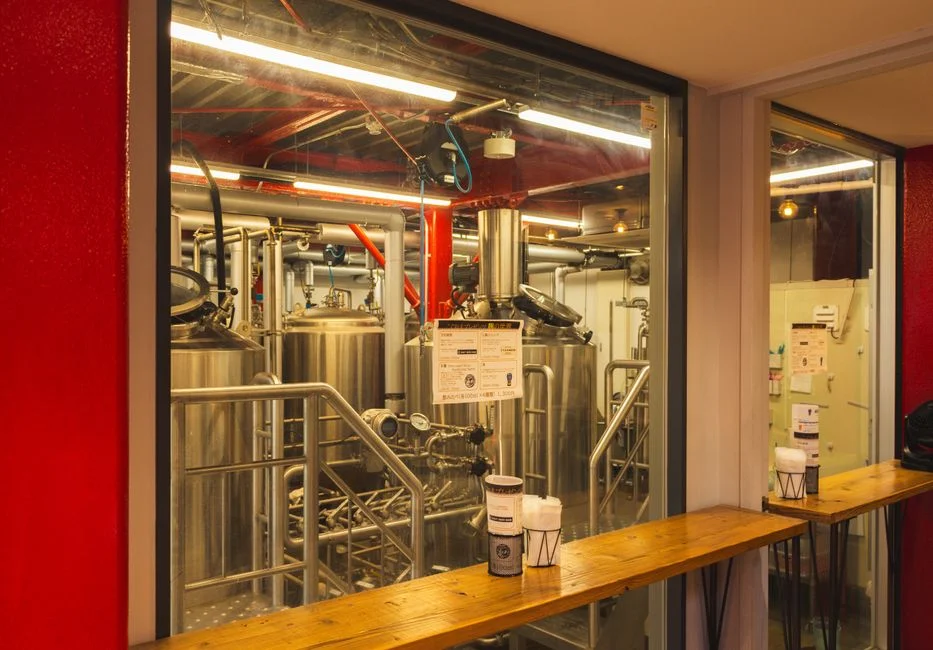
Sensor placement is where most 2024–2025 retrofits we have reviewed went wrong. A typical metal-finishing train runs equalization → Cr(VI) reduction (NaHSO₃ or FeSO₄ at pH < 3) → pH adjustment to 7–8 → DAF or lamella clarifier → final pH polish → discharge. There are three useful analyzer locations, and they answer different questions.
A pre-reduction analyzer, on the equalization-tank discharge, confirms the influent Cr(VI) load so the PLC-controlled chemical dosing skid can pace reductant addition. This is the cheapest loop to close and typically pays back inside 12 months by eliminating reductant over-dosing during low-load periods. A post-reduction analyzer, on the line leaving the reaction tank and before solids removal, is the compliance-critical measurement: this is the reading that drives a divert-to-recycle valve or a plant shutdown if the reduction stage fails. The third tap is the discharge point itself, post-clarifier, which gives the number regulators will read but fouling risk is highest here.
Pre-DAF sampling avoids fouling the optical cell with free oil and grease (FOG) — a 50 µm in-line strainer or a 100 µm automatic backflush filter is standard. Post-clarifier sampling gives the discharge-point number but requires a self-cleaning probe head on colorimetric units. For plants with a DAF pre-stage, siting the analyzer between the DAF outlet and the final pH polish tank captures roughly 85% of the FOG load reduction and keeps the cell clean enough for a 30-day service interval (HydropureWater field data, 2025). Where a lamella clarifier is used instead, identical logic applies, with the additional benefit of lower TSS variability at the analyzer tap. Fouling from suspended solids is the single biggest cause of analyzer downtime in electroplating effluent — budget for an upstream strainer on day one.
2026 Cost Bands and a Vendor Selection Checklist
Budget approvals in 2026 cluster into four bands. A compact single-stream colorimetric panel — one probe, one reagent line, no auto-calibration — runs 18,000–35,000 USD and suits a small finisher chasing a single compliance point. A multi-stream colorimetric with auto-calibration and dual reagent feeds (for Cr(VI) plus a second parameter like total Cr after digestion) runs 35,000–65,000 USD. A voltammetric skid with a self-cleaning head and Modbus/4–20 mA output runs 25,000–55,000 USD. Online ICP-OES, viable only for multi-metal compliance at large facilities, runs 80,000–200,000+ USD before installation.
OPEX is where the comparison actually gets decided. Colorimetric DPC reagent cartridges run 1,200–3,500 USD/year depending on the calibration frequency. Calibration standard adds 300–800 USD/year. A service contract typically runs 8–12% of CAPEX per year, which is the number to use in the lifecycle cost model. Argon for an online ICP-OES adds 4,000–9,000 USD/year at current 2026 supply pricing (per U.S. industrial gas index, 2025-11). The vendor selection checklist that catches the most problems before PO: stated online LOD with the matrix tested, response time at the working pH of the actual sample (not in deionized water), mean time between failures on a similar effluent, IP rating of the analyzer cabinet (IP65 minimum for indoor plant rooms, IP66 for outdoor), a documented Modbus register map and 4–20 mA scaling, and a reference install on metal-finishing or electroplating effluent. Lead time is real: 2026 deliveries from European or U.S. suppliers run 10–16 weeks; Chinese-built units with comparable specs run 4–8 weeks — a legitimate trade-off for budget-constrained tenders, and a real one for shutdown schedules.
Frequently Asked Questions
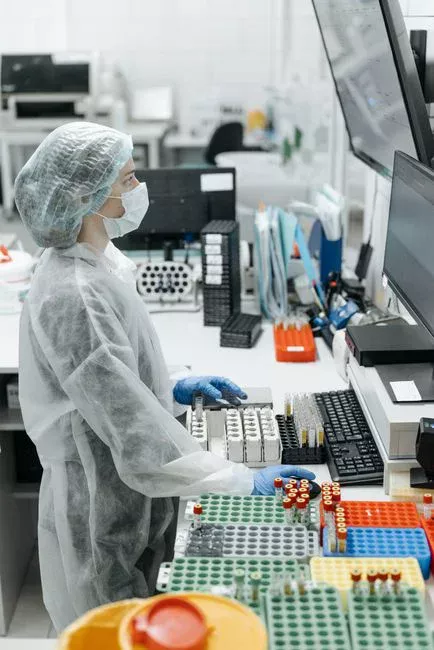
What detection limit and response time should I expect from a colorimetric online chromium sensor? A colorimetric DPC unit hits an online LOD of 0.005–0.05 mg/L Cr(VI), with the 9.4×10⁻⁷ M (~0.05 mg/L) figure from the screen-printed sensor literature as the conservative benchmark (Anal. Bioanal. Chem. 2009). Response time is 5–15 minutes including digestion, so use it for compliance reporting rather than for sub-minute spike capture. Next step: confirm the on-board digestion stage handles your actual TSS load.
Does online monitoring replace the laboratory analysis required for my discharge permit? No. EPA methods such as 200.7 (ICP-OES) and 218.7 (Cr(VI) by ion chromatography) still govern permit reporting; online monitoring adds the temporal resolution the lab cannot provide. The typical 2026 model is weekly grab-sample confirmation plus continuous online trending. Next step: lock the SOP so the online reading is logged but the lab value is the regulatory number.
How often does the analyzer need calibration, and what is the reagent consumption? Auto-calibration every 6–24 hours against a single-point standard is standard on 2026-vintage colorimetric panels; voltammetric probes are calibrated weekly or after membrane replacement. DPC reagent cartridges run 1,200–3,500 USD per year at a single-stream metal finisher. Next step: budget the cartridge cost into the year-2 OPEX line, not the year-1 CAPEX line.
Can the analyzer feed a SCADA shutdown loop? Yes. A 4–20 mA channel scaled to the permit value, with a high-high alarm at 80% of the limit driving a Modbus coil to a divert valve or dosing-skid interlock, is the standard 2026 architecture. See the alarm management framework for ISA-18.2-compliant trip logic. Next step: validate the loop with a forced fault test during commissioning.
How do I keep the optical cell from fouling in oily or high-FOG plating effluent? Site the analyzer after the DAF or lamella, install a 50–100 µm automatic backflush strainer upstream, and specify a self-cleaning probe head. Expect a 30-day service interval instead of a 90-day one if FOG stays above 50 mg/L. For comparison with suspended-solids economics, see the TSS sensor cost benchmark and the heavy metals discharge limits reference for analogous effluent treatment trains. Next step: pull a one-week FOG profile of the proposed tap before locking the analyzer location.