Why Sewage Treatment Plants Need Online Chlorine Measurement in 2026
A 2015 American Chemical Society presentation (Newswise, 2015-03-22) reported that chlorination does not eliminate all trace pharmaceuticals in sewage effluent and can produce transformation products tied to antibiotic resistance. The practical consequence for 2026 design is not lower dosing but tighter residual control — online, in-pipe, on a closed loop — because both over-dose and under-dose now carry regulatory and ecological cost. Municipal disinfection typically targets a 0.2–1.0 mg/L free chlorine residual at the contact-tank exit, with a 0.01–0.1 mg/L ceiling after dechlorination (industry convention in chlorination guidance, 2024).
Grab sampling cannot deliver that resolution. A single daily composite at a 50 MLD plant integrates 24 hours of flow and misses short excursions entirely. A four-hour over-dose event releasing 2 mg/L free chlorine is acutely toxic to receiving-stream aquatic life and is an NPDES permit violation; a four-hour under-dose event can push fecal coliform counts above the 200 CFU/100 mL geometric mean that EPA expects for secondary disinfection (per EPA 40 CFR 133). Online measurement collapses that detection window from 24 hours to 30–60 seconds.
Online analyzers are also a dose-control input, not just a compliance recorder. Every 0.1 mg/L of over-dose on a 50 MLD plant represents measurable sodium hypochlorite cost — typically 3–8% of chemical OPEX (HydropureWater field data, 2026). At $0.90–$1.40/kg NaOCl delivered, the annualised savings of a closed-loop analyzer on a mid-sized municipal WWTP usually pay back the instrument cost inside 12–18 months through chemical savings alone, before any permit non-compliance penalty is priced in.
How an Online Chlorine Analyzer Works: Three Sensing Principles
Three sensor families dominate the 2026 procurement shortlist: amperometric (with a gas-permeable membrane), colorimetric DPD, and non-reagent polarographic. Each measures a different signal, and each has a different maintenance and interference profile that an engineer must price in before specifying.
Amperometric membrane-covered sensors hold a copper or gold working electrode at a fixed potential (typically +200 to +400 mV vs. Ag/AgCl reference). Hypochlorous acid (HOCl) diffuses through the gas-permeable membrane and is reduced at the cathode, producing a current proportional to concentration. Standard range is 0–10 mg/L, response 30–60 seconds to 90% of step change, and accuracy ±0.01 mg/L or ±5% of reading (whichever is greater). The membrane is the consumable — replace every 6–12 months — and the electrolyte refill is annual. These probes tolerate turbid raw sewage when paired with automatic ultrasonic cleaning, which is why they dominate pre- and post-chlorination loops on municipal plants.
Colorimetric DPD analyzers draw a buffered sample, mix it with N,N-diethyl-p-phenylenediamine reagent, and measure the magenta reaction product at 510–555 nm. Detection limit is approximately 0.02 mg/L, response 2–5 minutes, and reagent cartridges last 14–30 days depending on measurement interval. They are reference-grade for compliance logging and tolerate pH swings that would confuse an amperometric cell, but they reject on raw sewage because particulates bias the absorbance and reagent cost compounds at high measurement frequency.
Polarographic non-reagent sensors (e.g., FC400G-class instruments) use a membrane-covered three-electrode cell with no liquid reagent, lower maintenance, and clean-water accuracy. They require a filtered sample on raw sewage and are best specified for tertiary effluent, RO feed, or dechlorination verification points where the water is already clean enough that the membrane does not foul in days.
Three definitions a specifier must lock in before ordering: free chlorine = HOCl + OCl⁻ (the active disinfecting species), combined chlorine = chloramines (NH₂Cl, NHCl₂, NCl₃) formed when chlorine reacts with ammonia, and total chlorine = free + combined. A free-chlorine analyzer will not see chloramine residuals correctly, and a total-chlorine analyzer is the correct choice where the plant is operating on chloraminated disinfection rather than breakpoint chlorination.
Interference behaviour is where sensor families diverge most. The HOCl/OCl⁻ ratio shifts sharply above pH 7.5, so a free-chlorine analyzer must either auto-compensate pH or be specified with a co-located pH probe and a SCADA compensation block. Turbidity clogs amperometric membrane cells, which is why automatic ultrasonic self-clean is now standard on raw-sewage duty. Iron and manganese bias colorimetric readings upward because they form coloured complexes at 510–555 nm. A well-written specification names each interference and assigns the sensor family expected to handle it.
| Parameter | Amperometric (membrane) | Colorimetric DPD | Polarographic non-reagent |
|---|---|---|---|
| Typical range (mg/L) | 0–10 | 0–5 | 0–10 |
| Detection limit (mg/L) | 0.01 | 0.02 | 0.01 |
| Response time (T90) | 30–60 s | 2–5 min | 30–90 s |
| Accuracy | ±0.01 mg/L or ±5% | ±0.02 mg/L or ±3% | ±0.01 mg/L or ±5% |
| Liquid reagent | No (electrolyte only) | Yes (DPD) | No |
| Best-suited sample | Raw / settled / filtered sewage | Tertiary effluent, dechlorination | Filtered, clean water |
| Main interferences | Turbidity, pH | Fe, Mn, turbidity | pH, surfactants |
| Annual consumables (USD) | $300–$700 | $1,800–$2,500 | $400–$900 |
Where to Install the Analyzer in a Sewage Treatment Train
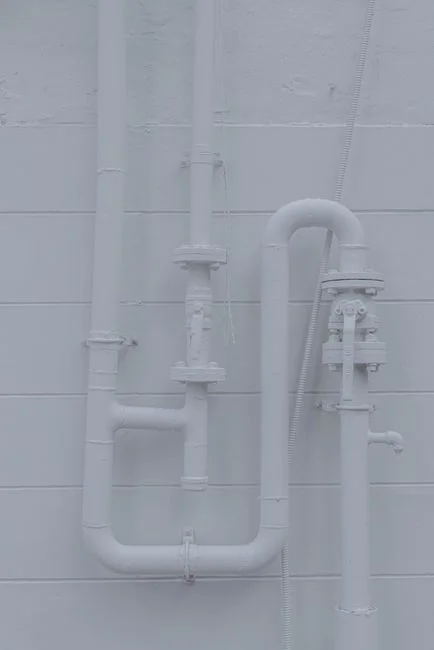
A chlorine analyzer is only useful if it is in the right pipe, with the right sample conditioning, and wired back to a control loop that can act on the reading. Four installation points cover nearly every chlorination/dechlorination train in a 2026 municipal or industrial WWTP.
Location 1, pre-chlorination dosing control, is typically a post-clarifier or pre-contact-tank tap. The analyzer drives the hypochlorite pump VFD or stroke length on a 4–20 mA loop with a 30-second update. Amperometric with ultrasonic self-clean is the standard choice here because the water is unsettled and the dosing decision is real-time. An automatic chemical dosing system downstream of the analyzer closes the loop and removes operator handling of concentration setpoints.
Location 2, post-contact-tank compliance, sits just before dechlorination and is the regulatory measurement point. The reading must hold inside the 0.2–1.0 mg/L free-residual permit band. AWWA C670-2015 best practice calls for two analyzers in parallel with auto-clean and an air-blow isolation valve so one sensor can be verified or serviced without taking the loop out of compliance. Where the plant is feeding an MBR membrane bioreactor, the same post-contact measurement often doubles as the membrane-protection trip.
Location 3, post-dechlorination, is the final verification before discharge. Sulfur dioxide (SO₂) or ascorbic acid dosing strips the residual; the analyzer must read total chlorine reliably below 0.1 mg/L. The water here is usually clean enough that a colorimetric DPD analyzer is acceptable, and the 2–5 minute response is not a problem because the discharge limit changes slowly. A HydropureWater ClO₂ generator upstream of this point gives the operator a faster-acting oxidant that also requires tighter residual control at the same tap.
Location 4, RO or MBR membrane feed, requires a low-level free chlorine measurement to protect the membrane. PVDF and polyamide membranes degrade above 0.1 mg/L continuous exposure and above 0.5 mg/L short-term shock, so a polarographic non-reagent sensor with a filtered sample line is the usual specification. Trip the dosing pump off when the reading exceeds the membrane limit, not when the post-contact reading does.
Sample conditioning is the same at every location: a Y-strainer or basket filter on the take-off, 25–100 micron filtration ahead of the sensor, an air-blanketed sample line to keep dissolved gases stable, and 0.1–0.5 L/min controlled flow delivered to the cell with a rotameter and pressure regulator. Skipping the air blank is the most common field failure I see — it lets CO₂ outgas, shifts pH, and biases the chlorine reading by 10–20% within an hour. The same analyzer, properly conditioned, holds calibration for the full weekly verification window. SCADA integration for wastewater analyzers covers the wiring and tag conventions that complete this loop.
| Location | Setpoint / Limit | Sensor family | Control action |
|---|---|---|---|
| Pre-chlorination (post-clarifier) | Dose to 0.5–1.5 mg/L upstream | Amperometric + ultrasonic clean | 4–20 mA to NaOCl pump VFD |
| Post-contact, pre-dechlorination | 0.2–1.0 mg/L free residual | Amperometric, redundant pair | Compliance log + dose trim |
| Post-dechlorination | < 0.1 mg/L total chlorine | Colorimetric DPD or polarographic | Permit discharge log |
| RO / MBR feed | < 0.1 mg/L continuous free Cl₂ | Polarographic non-reagent | Hard interlock to dosing pump |
AWWA C670-2015 Compliance and O&M Requirements
AWWA C670-2015, "Online Chlorine Analyzer Operation and Maintenance," is the 28-page standard that municipal auditors cite most often during a chlorination-loop review. It does not pick a sensor technology; it sets the operating envelope that any analyzer, regardless of type, must satisfy to be defensible at audit.
The most-cited audit finding is missed weekly calibration verification. The standard expects a verification with a known-concentration DPD standard at least every seven days, recorded with the standard's lot number, the analyzer reading, the deviation in mg/L, and the operator's signature. The field procedure is a five-minute job: expose the sensor to a 1.0 mg/L or 2.0 mg/L primary standard, wait two minutes for response, log the reading. If the deviation exceeds ±0.05 mg/L or ±5% (whichever is greater), the cell is due for membrane or electrolyte service.
Maintenance cadence under the standard runs on a predictable schedule. Membrane cap replacement on amperometric cells is every 6–12 months, depending on the fouling rate of the sample. Electrolyte refill is annual. Colorimetric reagent cartridge swap follows the manufacturer's published interval (typically 14–30 days for a unit measuring every 5 minutes) and the empty cartridge becomes its own maintenance log entry. Polarographic cells run on a similar 6–12 month membrane interval but consume no liquid reagent.
Data quality flags the standard expects in the SCADA historian: response time, drift since last verification, sample flow at the sensor, and temperature-compensated reading. Each one maps cleanly to a tag. Drift goes to a daily trend; sample flow to a low-flow interlock; response time to a daily step-test record kept by the analyzer's auto-diagnostic; temperature to a compensation input on the chlorine reading. ISA-18.2 alarm management governs how those flags are prioritised in the control room, and the AWWA standard expects the same hierarchy.
| AWWA C670-2015 requirement | Typical value / interval | SCADA tag / record |
|---|---|---|
| Calibration verification | Weekly, with primary standard | Daily log entry, 7-day trend |
| Verification acceptance band | ±0.05 mg/L or ±5% | Auto-pass / fail flag |
| Membrane cap replacement | 6–12 months | Maintenance ticket |
| Electrolyte refill | 12 months | Maintenance ticket |
| Reagent cartridge (colorimetric) | 14–30 days | Reagent-low alarm |
| Sample flow at sensor | 0.1–0.5 L/min | Low-flow interlock |
| Temperature compensation | 0–50 °C range typical | Analog input, auto-comp |
2026 Selection Criteria: Choosing the Right Analyzer for Your Plant
The 2026 selection reduces to three decision rules and a small set of integration and cost constraints. Run the rules in order and you will land on a defensible specification without a vendor meeting.
Decision rule 1, sample quality. Turbid raw sewage or settled primary effluent → amperometric with automatic ultrasonic self-clean. Filtered secondary or tertiary water → colorimetric DPD or non-reagent polarographic. Trying to put a colorimetric cell on raw sewage is the single most common specification mistake; the cell clogs, the reagents are consumed in days, and the operator loses trust in the reading within a month.
Decision rule 2, loop speed. Closed-loop dose control with a 30–60 s response → amperometric. Compliance logging only, where 2–5 minutes is acceptable → colorimetric DPD. Membrane protection trip → non-reagent polarographic with a 30–90 s response and a hard interlock, never a soft alarm.
Decision rule 3, chlorine species. Total chlorine needed (chloramine disinfection, dechlorination verification of combined residual) → specify a total-chlorine sensor variant, not a free-chlorine cell. Free chlorine only (standard breakpoint chlorination) → standard amperometric free-chlorine probe. The reagent chemistry differs and a free-chlorine cell on a chloraminated system will under-read by 50–80%.
Integration requirements are non-negotiable for 2026 procurement. Specify dual outputs (chlorine plus temperature) on 4–20 mA plus HART or Modbus TCP, an IP65 enclosure for outdoor installation, and a documented register map so the SCADA team can poll diagnostics without a vendor-specific driver. For broader municipal sewage treatment plant design context, this register map is what lets the analyzer share a historian with the rest of the plant.
Cost benchmarks for 2026 CAPEX framing only: $2,500–$6,000 for an amperometric probe and transmitter, $5,000–$12,000 for a colorimetric panel with auto-clean, and $1,000–$2,500/year per analyzer in consumables (membranes, electrolytes, DPD reagent). Add installation and SCADA integration (typically 40–80% of the instrument cost) and the realistic installed cost is roughly double the sticker price. Use these ranges as a sanity check against vendor quotes, not as a target price.
Frequently Asked Questions
How accurate is an online chlorine analyzer for sewage treatment? Amperometric and polarographic analyzers typically achieve ±0.01 mg/L or ±5% of reading (whichever is greater) when operated per AWWA C670-2015. Colorimetric DPD units achieve ±0.02 mg/L or ±3%. Accuracy in the field depends on weekly verification with a primary standard — without it, drift of 0.1–0.2 mg/L within a month is common.
Where should I install an online chlorine analyzer in a municipal WWTP? The standard four points are pre-chlorination (post-clarifier) for dose control, post-contact-tank for compliance against the 0.2–1.0 mg/L free-residual permit band, post-dechlorination for discharge verification below 0.1 mg/L, and upstream of any RO or MBR membrane to hold free chlorine below the membrane limit. AWWA C670-2015 recommends redundant analyzers at the compliance point.
What is the difference between free, combined, and total chlorine measurement? Free chlorine is HOCl plus OCl⁻ — the active disinfecting species. Combined chlorine is chloramine residual formed when chlorine reacts with ammonia. Total chlorine is the sum of both. Specify a free-chlorine sensor for breakpoint chlorination and a total-chlorine sensor for chloraminated systems or dechlorination verification; the wrong variant will under-read by 50–80%.