What Telemetry for Remote Pump Stations Actually Does
Telemetry for remote pump stations is an RTU-based package that measures wet-well level, pump current, runtime, and station health. It transmits those tags over cellular, radio, or satellite to central SCADA. Properly designed systems detect pump failures, blockages, and power loss before overflows, reduce truck rolls by 30–60%, and keep auditable NPDES records.
The scope of a lift-station telemetry package is narrower than most specifiers expect. A typical 2-pump submersible lift station carries four functional layers: monitoring, control, alarming, and historian. Monitoring captures wet-well level (ultrasonic or hydrostatic), pump running current (CT or 4–20 mA), discharge pressure, station power, and door/intrusion status. Control covers pump start/stop, lead-lag alternation, and call/run setpoints.
Alarming covers high-high level, pump fail, phase loss, and comms loss. Historian logging stores minute-resolution tags so wet-well level, pump cycles, and run-hours stay auditable for NPDES reporting. For a 2-pump lift station, the instrument count is 6–10 I/O points. That set is one wet-well level transmitter, two pump current sensors, one station power monitor, one redundant high-level float independent of the primary transmitter, and one door/intrusion switch.
Without telemetry, the operator often learns of a failed pump when a neighbor reports a wet lawn or the utility receives an SSO notice. EPA consent-decree fines for sanitary sewer overflows have ranged from $2,000 to $50,000+ per event for small-to-mid utilities. A single avoided overflow in a designated sensitive watershed can reach six figures under recent state-level enforcement. The cost of a $10,000 RTU retrofit versus one wet-weather SSO is the calculation that drives most lift-station telemetry projects in 2026.
New builds sometimes start as pre-fabricated pump stations with panel space reserved for the RTU. Retrofit sites usually reuse the existing wet-well and starter gear.
System Architecture: From Wet Well to SCADA Screen
A defensible lift-station architecture has four layers: field instruments, the RTU/PLC with local HMI, the communication network, and the central SCADA/HMI with historian. Each layer is sourced separately, and the procurement document must specify interfaces — not vendor model numbers — between them. Most plants we size for 2-pump municipal stations still run the lower end of the I/O count unless odor or chemical feed is already on site.
Hardware class depends on the station's existing control scheme. A telemetry-only RTU suits a station that already has a working pump controller (across-the-line or VFD) and only needs remote visibility. A PLC+RTU combination suits stations that also require local auto-sequencing, lead-lag alternation, or VFD control. The PLC carries the IEC 61131-3 program, and the cellular modem or radio handles the SCADA link.
A cellular gateway retrofits onto an existing PLC by polling it over Modbus TCP or serial and re-publishing to SCADA. This is the lowest-cost path for stations built between 2010 and 2022 that already have a working PLC.
I/O sizing is the most commonly undersized element. The commonly specified reserve is 20% spare DI and AI on every RTU/PLC. Add one full spare slot for a future radio, additional analog card, or a second cellular modem for redundancy. For a 2-pump station with 8 active I/O, this means specifying a 12-point base and confirming the backplane accepts a second card.
The local HMI is a 7–10″ color touchscreen mounted on the panel door. It is the only operator interface during a cellular outage. At minimum it must show wet-well level, pump status, hand-off-auto (HOA) switches, and alarm acknowledge.
Station power is 120 VAC single-phase at most US lift stations, with a 12 VDC or 24 VDC battery/UPS sized for 4–8 hours of RTU and radio operation. For off-grid sites in remote collection systems, a 50–100 W solar array with a 100–200 Ah battery bank is the typical 2026 specification. Size the bank for 5 days of autonomy at 30% depth of discharge.
Where septicity or H2S control is already planned, reserve spare AI/DI for an Automatic Chemical Dosing System on the same backplane. Dosing faults can then share the station alarm path.
| Layer | Typical Components | Sizing Rule (2-pump station) |
|---|---|---|
| Field instruments | Ultrasonic level, CTs, floats, pressure, door switch | 6–10 I/O, IP67 minimum |
| RTU/PLC + HMI | Telemetry RTU or PLC + cellular modem, 7–10″ HMI | 20% spare DI/AI, 1 spare slot |
| Communication | Cellular, licensed UHF, LoRaWAN, satellite | Dual-SIM for critical sites |
| SCADA/HMI + historian | Central SCADA server or cloud platform with historian | Minute-resolution data, ≥5 yr retention |
Choosing the Communication Bearer: Cellular, Licensed Radio, LoRaWAN, or Satellite
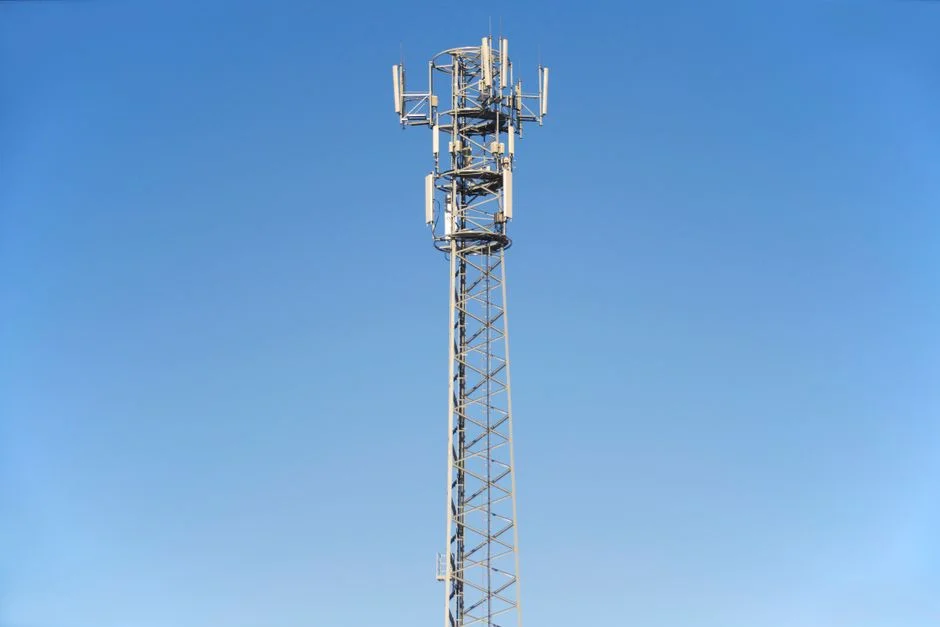
The communication bearer is the single largest lifecycle-cost decision and the most frequently mis-sized. Four bearer classes dominate US lift-station practice in 2026: cellular 4G/LTE-M, licensed 450/900 MHz UHF, private LoRaWAN, and satellite (Iridium or Inmarsat). The decision is driven by site count, line-of-sight, cellular coverage, and recurring-cost tolerance.
Cellular 4G/LTE-M is the default for urban and suburban lift stations with public carrier coverage. Typical pricing is $50–$120 per site per month, with sub-2-second latency for DNP3 polling. Bandwidth supports full SCADA traffic plus firmware-over-the-air updates. LTE-M (Category-M1) is preferred for battery-backed sites because of its lower current draw and deeper sleep modes.
Licensed UHF (450 or 900 MHz) wins for a cluster of 3+ stations with line-of-sight. A single base radio and repeater can serve the network at $5,000–$15,000 upfront and $0 monthly recurring.
LoRaWAN private gateways fit flat-terrain networks of many small sites, such as pressure points or level-only reporting. They suit payloads ≤12 bytes per message and update intervals of 5–15 minutes. Satellite fills the gap for sites with zero cellular coverage, at $80–$250 per site per month and 20–30 second round-trip latency. That latency is acceptable for periodic level reporting but marginal for pump-fail alarms.
Telemetry for remote pump stations that serve hospitals or sensitive watersheds should not rely on a single modem path during storm peaks.
Cybersecurity applies regardless of bearer. Every RTU must sit behind an IPsec or OpenVPN tunnel to a known central endpoint. Use unique site credentials, a documented firmware update plan, and a firewall that denies unsolicited inbound traffic. Cellular gateways are the most exposed because of constant internet exposure; licensed UHF and private LoRaWAN are inherently more secure because the traffic never leaves the private network.
Redundancy for critical stations serving hospitals, large catchments, or sensitive watersheds is dual-SIM cellular with automatic failover. Cellular plus licensed radio in hot-standby is the other common pattern. This adds roughly $1,500–$3,000 to the station CAPEX but eliminates the single most common cause of missed alarms: a single-modem failure during a storm event.
| Bearer | Typical Use Case | Latency | Recurring Cost | Upfront Cost |
|---|---|---|---|---|
| Cellular 4G/LTE-M | Urban/suburban lift stations | <2 s | $50–$120/site/mo | $800–$1,500 |
| Licensed 450/900 MHz UHF | Cluster of 3+ stations with line-of-sight | <1 s | $0/mo (license fee separate) | $5,000–$15,000 network |
| LoRaWAN private | Many small level-only sites, flat terrain | 2–10 s | $0–$10/site/mo | $2,000–$4,000 gateway |
| Satellite (Iridium/Inmarsat) | Zero cellular coverage, remote sites | 20–30 s | $80–$250/site/mo | $1,500–$3,500 |
Alarm Management and ISA-18.2 Discipline for Lift Stations
Alarm flood is the most common hidden failure mode of lift-station SCADA. ISA-18.2 (ANSI/ISA-18.2-2016) is the management system that prevents it. The lifecycle covers philosophy, identification, rationalization, detailed design, implementation, operation, maintenance, and audit.
Every lift-station telemetry project should start with a written alarm philosophy document. Pair it with a rationalization worksheet that lists each alarm, priority, consequence, operator response time, and deadband.
Industry summaries of ISA-18.2 metrics still cite a maximum manageable load near 300 annunciated alarms per day per operating position. Earlier vendor write-ups sometimes used about 5 alarms per 10-minute window. Published ISA-18.2 metric tables target about 1–2 annunciated alarms per 10 minutes on average, with ≤10 alarms in any 10-minute period as the flood ceiling (Process Online summary of ISA-18.2 metrics).
Above these rates, operator response degrades and nuisance acknowledgments replace diagnosis.
Lift-station rationalization for a 2-pump station typically produces 12–20 configured alarms, well within the ceiling. A poorly designed system can generate 200+ alarm events per day from a single chattering level switch. Priority tiers for lift stations follow consequence-based assignment.
Priority 1 (operator action in under 5 minutes): high-high wet-well level, both pumps failed, station power loss. Priority 2 (under 30 minutes): high level, single pump fail, comms loss, VFD fault. Priority 3 (under 8 hours): low level, single sensor out of range, door intrusion, UPS battery low.
The high-level alarm must include a defined deadband. For a 2.5 m diameter wet well, 150 mm of deadband is typical to suppress nuisance repeats during normal pump-down. A shelf or auto-ack timer of 5–15 minutes on the high-high alarm prevents re-assertion during the same pump cycle.
For a deeper treatment of the rationalization process, including a worked Priority 1/2/3 worksheet for a 2-pump station, see the ISA-18.2 alarm management in wastewater SCADA engineering guide.
CAPEX and OPEX: What a Telemetry Retrofit Actually Costs in 2026
The 2026 CAPEX range for a 2-pump lift station telemetry retrofit is well-defined. RTU + enclosure + HMI bundle runs $3,500–$12,000 for a telemetry-only unit. A PLC+RTU with full local control and color HMI runs $10,000–$25,000 (2026 US market range). Field installation — ultrasonic level sensor, CTs, floats, conduit, wiring, and startup labor — adds $1,500–$4,000 per station.
Total turnkey retrofit for a typical 2-pump station sits in the $5,000–$30,000 range. The spread depends on whether the station already has a functioning PLC.
Recurring cost has three lines. Cellular service runs $50–$120 per site per month. SCADA software licensing ranges from $0 for a self-hosted open platform to $2,000 per year per site for a modern cloud-based per-tag subscription model.
Annual RTU maintenance is commonly priced at 8–12% of CAPEX. That line covers firmware updates, battery replacement, and a documented point-by-point re-check.
ROI math is straightforward. A 30–60% reduction in truck rolls on a station currently visited twice weekly saves $4,000–$8,000 per year in labor and vehicle cost. One avoided SSO event in a sensitive watershed often pays back the entire CAPEX inside 18–36 months. Telemetry is a quantifiable operational savings line, not a compliance cost center.
Crews that still drive routes twice a week without remote alarms usually discover that most visits were status checks, not repairs.
Procurement and Specification Checklist
Engineers can take the following sequence directly into a procurement meeting or RFQ:
- Define monitored points: list every sensor with tag, engineering units, range, and I/O type.
- Choose RTU class: telemetry-only RTU, PLC+RTU, or cellular gateway retrofit onto existing PLC.
- Choose communication bearer per the comparison table in the previous section.
- Define alarm philosophy: list priorities, deadbands, and shelving per ISA-18.2.
- Specify SCADA integration protocol: DNP3 (still dominant in North American water/wastewater), Modbus TCP for PLC integration, MQTT + Sparkplug B for greenfield IIoT, or OPC UA for plant historian integration.
- Specify cybersecurity: VPN, firewall, per-site credentials, firmware update plan, role-based access at the SCADA layer.
- Specify cabinet: NEMA 4X rating, surge protection on AC power and signal lines, -20 to +60 °C operating range, UL 508A panel build.
- Define FAT/SAT test plan: point-by-point I/O checkout with live SCADA screenshots documented in a commissioning report.
For a worked example of how these eight steps apply to a more complex pharmaceutical wastewater plant, the pharmaceutical wastewater SCADA engineering guide extends the same architecture to a multi-process facility. For standalone data logging at smaller remote sites, the wastewater data logger spec and cost guide covers the non-SCADA tier of remote monitoring.
Who This Is For and Next Step
This guide is for municipal and industrial utilities specifying telemetry for remote pump stations, plus EPC and panel shops writing RTU RFQs. Look elsewhere if you only need a handheld level logger with no SCADA path, or if the station already has a fully commissioned dual-path RTU under an active maintenance contract. When I/O lists and bearer choice are ready, request a station-specific quote through our lift-station telemetry inquiry form. Include wet-well depth, pump count, and existing PLC make/model.
Frequently Asked Questions

What sensors are required at minimum for a remote lift station?
The 4-sensor minimum is one wet-well level transmitter, one pump current sensor per pump, one station power monitor, and one independent high-level float. Use ultrasonic or hydrostatic level, CT or 4–20 mA current, and a voltage/frequency or phase-loss relay for power. Door/intrusion and discharge pressure commonly complete the full 6–10 I/O station. Most 2-pump panels we commission start with that four-sensor core.
When should a lift station use cellular, radio, or satellite?
Urban and suburban stations default to cellular 4G/LTE-M. Clusters of 3+ stations with line-of-sight use licensed UHF. Many small level-only sites on flat terrain use private LoRaWAN, while zero-coverage sites use satellite at higher recurring cost and latency. Use the bearer comparison table above before locking the RFQ.
How is lift-station telemetry data secured in practice?
Secure each RTU with a VPN tunnel (IPsec or OpenVPN) to central SCADA and a firewall that denies unsolicited inbound traffic. Use unique credentials per site, role-based SCADA access, and a documented firmware update plan. Cybersecurity is a project deliverable, not an afterthought. Licensed UHF and private LoRaWAN reduce exposure because traffic stays private.
Which standards apply to pump-station telemetry projects?
Apply ISA-18.2-2016 for alarm management, IEC 61131-3 for PLC programming, and the NIST Cybersecurity Framework for the security overlay. Add local utility rules such as state PUC requirements, AWWA M2/M3 guidance, and UL 508A panel builds. Check alarm metrics against the ISA-18.2 performance table during FAT and annual audit. Local NPDES language may also require minute-resolution historian retention.
How much does a lift-station telemetry retrofit cost in 2026?
For a typical 2-pump station, turnkey cost is $5,000–$30,000 depending on whether the station already has a working PLC. Telemetry-only RTU retrofits sit at the low end; PLC+RTU with full local control and color HMI sit at the high end. Recurring cellular is $50–$120 per site per month. Final cost depends on sensor count, bearer choice, and whether the existing control panel can be reused.
Related Equipment
- PLC-controlled chemical dosing skid — specifications, capacity range, and technical data
- WSZ underground package sewage treatment plant — specifications, capacity range, and technical data