Why Long Beach Hospital Effluent in 2026 Is Not a 2015 Design Problem
Between 2024 and 2026, the Los Angeles Regional Water Quality Control Board (LARWQCB) issued enforcement letters to major medical centers tributary to the Joint Water Pollution Control Plant (JWPCP) in Carson adding perfluoroalkyl and polyfluoroalkyl substances (PFAS), total fluorine, and antibiotic-resistance-gene (ARG) monitoring to permit-renewal schedules — a shift confirmed in LARWQCB 13267 letters routed to Long Beach Memorial, St. Mary, and College Medical Center between 2024-09 and 2025-11. Pre-2022 hospital spec sheets optimized for 5-day BOD₅ and TSS removal cannot answer a 2026 inspector asking for ARG copies/100 mL or PFAS-6 ng/L reduction across the treatment train. The process logic that does answer that question is already documented: a 200 m³/d biological contact oxidation + MBR + ClO₂ train in the Chinese hospital literature delivers COD <50 mg/L, NH₃-N <10 mg/L, and non-detectable fecal coliforms (Scientific.Net, Yu et al.), the same KPIs California Title 22 disinfected tertiary rules now require. Three compliance paths follow from this: (1) POTW pretreatment to JWPCP, (2) on-site Title 22 recycled water for irrigation or cooling-tower make-up, and (3) on-site NPDES surface discharge under a RWQCB order. The remainder of this guide sizes the equipment, parameter table, and 2026 cost envelope for each.
Long Beach Hospital Influent Characteristics You Must Design For
A 100–500-bed Long Beach hospital generates an influent envelope that is materially different from the municipal design manuals used by most EPC firms. Raw BOD₅ sits at 150–400 mg/L, COD at 300–800 mg/L, TSS at 100–250 mg/L, NH₃-N at 20–60 mg/L, total phosphorus at 5–15 mg/L, and fecal coliform at 10⁶–10⁸ CFU/100 mL (per Verlicchi, Hospital Wastewaters, Springer 2017, cross-checked against Scientific.Net field data). On top of that classical envelope sit hospital-specific loadings the municipal textbook ignores: pharmaceutical residues in the low-μg/L range, iodinated and gadolinium-based contrast media that pass through conventional biology, and pulsed disinfectant slugs from OR and isolation-room cleaning. Diurnal peaking runs 2.5–3.5× the daily average — a 200 m³/d facility therefore hits a hydraulic peak near 25 m³/h, which dictates a minimum 6-hour equalization volume of ~62 m³. Year-round Long Beach wastewater temperature stays in the 18–25 °C window, so mesophilic biology operates without external heating jackets, lowering both CAPEX and electrical OPEX. The biological-stage HRT floor of ≥4 hours, established in the Scientific.Net contact-oxidation study, is the anchor for sizing both the anoxic and aerobic volumes in the MBR train.
| Parameter | 100-bed | 250-bed | 500-bed | Design basis |
|---|---|---|---|---|
| Average flow (m³/d) | 60–90 | 150–220 | 320–480 | 250 L/bed·d |
| Peak hydraulic (m³/h) | 8–11 | 20–28 | 42–60 | 2.5–3.5× diurnal ratio |
| BOD₅ (mg/L) | 150–300 | 200–400 | 250–400 | Verlicchi 2017 |
| COD (mg/L) | 300–600 | 400–800 | 500–800 | Verlicchi 2017 |
| TSS (mg/L) | 100–200 | 120–250 | 150–250 | Verlicchi 2017 |
| NH₃-N (mg/L) | 20–45 | 25–55 | 30–60 | Verlicchi 2017 |
| Total P (mg/L) | 5–10 | 7–12 | 8–15 | Verlicchi 2017 |
| Fecal coliform (CFU/100 mL) | 10⁶–10⁷ | 10⁶–10⁷ | 10⁶–10⁸ | Verlicchi 2017 |
| Temperature (°C) | 18–25 | 18–25 | 18–25 | Long Beach annual |
The 2026 Reference Process Train: MBR + Chlorine Dioxide Disinfection
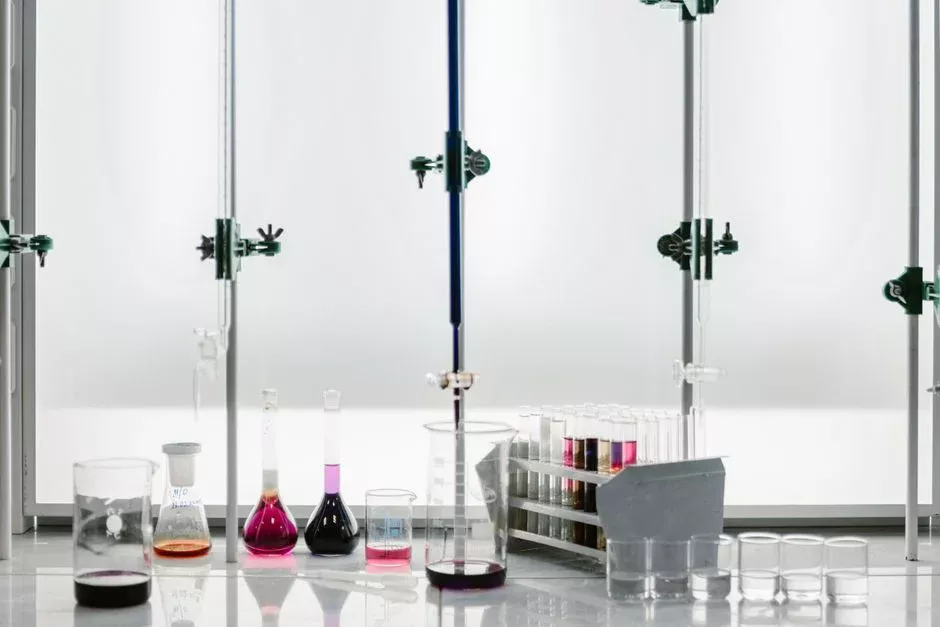
The reference train for a 200 m³/d Long Beach hospital is a six-step layout that converts the Chinese literature's contact-oxidation + MBR + ClO₂ proof points into a California-permittable flowsheet. Step 1 is a rotary mechanical bar screen with 3 mm aperture to strip rags, PPE, and fibrous debris before the biological stage — critical because flat-sheet membranes fail fast on hair and cellulose. Step 2 is an equalization / anoxic zone sized for 6–8 h HRT, which buffers both diurnal peaks and the disinfectant slugs from isolation-room cleaning, while supporting partial denitrification. Step 3 is an aerobic MBR running submerged PVDF flat-sheet membranes at 0.1 μm pore size, MLSS 8,000–12,000 mg/L, HRT 4–6 h, and SRT 20–30 d — a direct extension of the ≥4 h HRT finding from the Scientific.Net paper, implemented with a submerged MBR with PVDF flat-sheet membranes. Step 4 is disinfection with an on-site ClO₂ generator at 0.5–1.0 mg/L residual for 30 minutes — chosen over NaOCl because the Chinese town-hospital disinfectant comparison study ranked ClO₂ as the cost/efficacy optimum at small to mid flows. Step 5 is sludge dewatering with a plate-and-frame filter press producing ≥22% dry solids for offsite disposal. Step 6 is an optional chlorination trim stage that holds total residual chlorine (TRC) ≤0.1 mg/L for sites pursuing a NPDES surface-discharge permit. The same train parallels the U.S. hospital wastewater design analog covered for Florida in 2025, with Long Beach's colder marine layer requiring a 1 °C margin on the biology design temperature.
Process Parameters and Effluent Targets at a Glance
The parameter table below is lifted directly from a specifier's data sheet: each row pairs the design influent with the MBR effluent value, the California Title 22 disinfected tertiary limit, and the JWPCP-pretreatment discharge limit. The MBR effluent column reflects the Scientific.Net MBR + ClO₂ study at 200 m³/d: COD <50 mg/L, NH₃-N <10 mg/L, SS <5 mg/L, turbidity <1 NTU, and non-detectable total and fecal coliforms after the ClO₂ contact stage. The 99%+ microbial kill at 30-min ClO₂ contact is documented in the Chinese town-hospital disinfectant comparison. Membrane flux for the flat-sheet PVDF module is set at 15–25 L/m²·h with aeration demand of 0.15–0.25 Nm³ air per m³ of permeate, a range that keeps the blower electrical load at ~30% of total plant OPEX.
| Parameter | Influent | MBR effluent | Title 22 disinfected tertiary | JWPCP pretreatment limit |
|---|---|---|---|---|
| BOD₅ (mg/L) | 150–400 | <5 | — | ≤250 (daily max) |
| COD (mg/L) | 300–800 | <50 | — | — |
| TSS (mg/L) | 100–250 | <5 | — | ≤200 |
| NH₃-N (mg/L) | 20–60 | <10 | — | ≤30 (summer) |
| Total P (mg/L) | 5–15 | <2 | — | — |
| Turbidity (NTU) | 50–150 | <1 | ≤2 (24-h avg) | — |
| Fecal coliform (CFU/100 mL) | 10⁶–10⁸ | ND | ≤2.2 (7-day median) | — |
| TRC (mg/L) | — | ≤0.1 (surface discharge only) | — | ≤0.1 |
| Membrane flux (L/m²·h) | — | 15–25 | — | — |
| Aeration (Nm³ air/m³ permeate) | — | 0.15–0.25 | — | — |
Three Compliance Paths: POTW Pretreatment, Title 22 Reuse, or On-Site Discharge
Path A — JWPCP sewer pretreatment — is the lowest-CAPEX option: a 200 m³/d package of bar screen, equalization, and flow neutralization runs roughly $80,000–$220,000 installed and meets the LASAN discharge ordinance without tertiary filtration. There is no on-site water credit, and the LARWQCB 13267 monitoring letters still apply, so PFAS and ARG sampling must be funded separately. Path B — on-site Title 22 recycled water for cooling-tower make-up, irrigation, or toilet flush — adds tertiary filtration, ClO₂, 5-μm absolute polishing, and a daily turbidity ≤2 NTU compliance trigger. CAPEX climbs to $320,000–$620,000, but the facility recycles ~70% of the 200 m³/d flow, which on a Long Beach water tariff of $4.50–$6.80/m³ returns the CAPEX delta in 4–6 years. Path C — on-site NPDES surface discharge to a Long Beach storm-system tributary — requires full Title 22-quality effluent plus an RWQCB order, outfall monitoring, and a 100 m buffer to the nearest receiving water; it is cost-justified only at sites ≥500 m³/d with no POTW connection. Decision rule: choose A when site area is constrained and water price is low; choose B when campus non-potable demand exceeds 200 m³/d; choose C only when no POTW connection exists. The three-path logic mirrors the trade-off set in the EU/UK hospital wastewater compliance analog, with California adding the Title 22 reuse pathway that the UK does not have.
2026 Cost Benchmarks for a 200 m³/d Long Beach Hospital System
The CAPEX/OPEX table below is sized for a 200 m³/d MBR + ClO₂ train across all three compliance paths, with California-specific 2026 cost adders layered on top. Full-train OPEX splits as electricity 30–40%, ClO₂ precursor chemicals (NaClO₂ + HCl) 25–35%, sludge hauling 15–20%, and maintenance/labor 10–15% — a breakdown that extends the DAF plant OPEX logic in the HydropureWater blog library to a biological-membrane envelope. Total full-train OPEX is $0.42–$0.95/m³ versus $0.18–$0.32/m³ for a sewer-pretreatment-only package. California-specific 2026 cost adders that no academic source publishes: Title 22 recycled-water permit fees $8,000–$22,000/yr, LARWQCB self-monitoring reporting $4,000–$9,000/yr, PFAS-6 quarterly sampling $3,000–$7,000/quarter, and ARG monitoring $1,200–$2,800/quarter when a 13267 letter triggers it.
| Compliance path | CAPEX (200 m³/d) | OPEX ($/m³) | 2026 CA-specific adders (annual) | Water-reuse credit |
|---|---|---|---|---|
| Path A — JWPCP pretreatment | $80,000–$220,000 | $0.18–$0.32 | PFAS + ARG sampling: $17K–$39K | None |
| Path B — Title 22 reuse | $320,000–$620,000 | $0.42–$0.78 | Title 22 permit: $8K–$22K; SMR: $4K–$9K | ~$280K–$420K/yr (70% of 200 m³/d) |
| Path C — NPDES surface discharge | $480,000–$720,000 | $0.55–$0.95 | RWQCB order: $12K–$28K; TRC trim: $6K–$11K | None |
Frequently Asked Questions
Who regulates hospital wastewater discharge in Long Beach? The LARWQCB issues the NPDES or 13267 letter that adds PFAS, total fluorine, and ARG monitoring; the City of Long Beach Health Department enforces plumbing and pretreatment; and LASAN sets the JWPCP-pretreatment ordinance for any site tributary to the Carson plant (per LARWQCB Basin Plan, 2024 triennial review).
Why choose chlorine dioxide over NaOCl for hospital disinfection? ClO₂ delivers 99%+ kill on total and fecal coliforms at 0.5–1.0 mg/L for 30 minutes while forming fewer regulated trihalomethanes than NaOCl at the same residual, and the Chinese town-hospital disinfectant comparison ranked ClO₂ as the cost/efficacy optimum at small to mid flows (Scientific.Net).
What design flow should be used to size a 200-bed Long Beach hospital MBR? Use 250 L/bed·d × 200 beds = 50 m³/d minimum, plus a 2.5–3.5× diurnal peaking factor; the equalization tank should buffer at least 6 hours of average flow (~62 m³ at 200 m³/d) before the MBR feed pump.
How is hospital sludge disposed in California? Dewatered cake at ≥22% dry solids from a plate-and-frame filter press is hauled to a Class II or hazardous-waste landfill depending on the toxicity characteristic leaching procedure (TCLP) result for pharmaceuticals and contrast-media residues, with manifests retained for ≥5 years (per Title 22 CCR §66262).
How long does a LARWQCB hospital discharge permit take in 2026? A new or modified 13267 letter typically runs 90–180 days from request to issuance when the design package includes Title 22 calculations, an ARG monitoring plan, and a PFAS-6 sampling QAPP; the City of Long Beach plumbing permit for the package itself adds another 60–120 days.
Is a remote monitoring system worth specifying for a hospital MBR? Yes — membrane-integrity, ClO₂ residual, and turbidity alarms are required for Title 22 daily-compliance reporting, and a SCADA layer with cellular fallback prevents the kind of off-spec events that trigger 13267 follow-up letters; the implementation pattern is documented in the remote monitoring for hospital wastewater plants engineering guide.