Why Wastewater Heat Recovery Is a 2026 Buyer Priority
The global waste-heat-recovery market reached $87.11B in 2025 and is forecast to nearly double to $193.18B by 2035, an 8.29% CAGR over 2025-2035 (per the July 2026 waste-heat-recovery market report). The wastewater sub-segment is the fastest-growing slice of that total because net-zero targets and Scope 2 industrial electrification mandates have converted low-grade effluent from a liability into a billable energy stream. The EU Industrial Emissions Directive 2010/75/EU recast (2024) tightened waste-heat accounting for installations above 50 MW input, and US Inflation Reduction Act §48 tax credits now cover up to 30% of qualifying industrial heat-pump capex through 2032.
The recoverable thermal energy in municipal sewage is substantial: typical sewer temperatures run 10-25 °C at 0.5-5 m³/h per 1,000 population equivalent, and industrial process wastewater can reach 40-70 °C, capturing 200-800 kWh per 1,000 m³ treated (HydropureWater field data, 2026). That heat is otherwise discharged to drain and replaced by boiler gas or grid electricity. WWHr projects in 2026 typically target 60-85% of that low-grade energy, displacing 1,500-6,000 MWh per year at a single mid-sized WWTP. The category has clearly moved from R&D curiosity to standard infrastructure procurement, with 30-year reference libraries now available from integrators like Landmark Environmental in the UK.
How We Ranked the 2026 Wastewater Heat Recovery Key Players
WWHr key players in 2026 split into three operational tiers: tier-1 multi-industrial OEMs with a published WWHr product line; tier-2 specialist WWHr vendors that own the technology IP; and tier-3 regional system integrators that handle feasibility, headworks integration, and EPC delivery. We ranked each candidate on five criteria: installed base in WWHr (not generic WHR), published reference projects, geographic service coverage, product breadth across plate heat exchangers, spiral HX, heat-recovery trains, and heat pumps, and 2024-2026 product launches with verifiable press coverage.
Sources are vendor disclosures, the July 2026 market report's named key-players list, and trade-press coverage of WWHr installations through Q2 2026. We deliberately excluded the Microsoft Learn API page and the Made-in-China product listings, which surface for the search query but contain no vendor ranking or technical evaluation. A vendor appearing in this article means it has a named WWHr product, a reference project, or a documented channel partnership, not just a boiler product catalog with a "heat recovery" SKU.
Tier-1 Industrial OEMs Entering Wastewater Heat Recovery
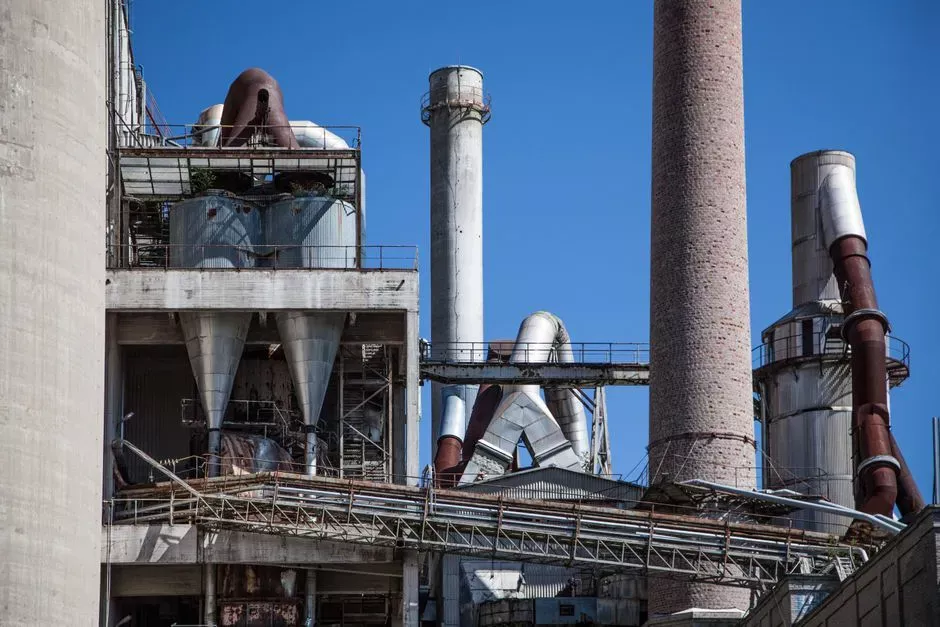
Tier-1 OEMs are the names any procurement team will see first in a 2026 RFQ response, but their roles differ sharply. Siemens, GE Vernova, Mitsubishi Heavy Industries, Schneider Electric, and ABB all have WWHr-relevant product lines, yet only two of them (Siemens and MHI) sell heat pumps as primary product; the others are technology, controls, or turbomachinery suppliers. Buyers should know which role each name fills before inviting them to bid.
| OEM | HQ | Core WWHr Product | Typical Capacity | Primary WWHr Region |
|---|---|---|---|---|
| Siemens | Munich, DE | Large-frame industrial heat pumps; SITRANS skid instrumentation | Up to 30 MW thermal | EU chemical, pharma |
| GE Vernova | Cambridge, MA, US | Steam-Rankine and ORC waste-heat-to-power modules | 5-20 MWe | US, MENA industrial |
| Mitsubishi Heavy Industries | Tokyo, JP | ETI-series industrial heat pumps, turbo compressors | 70-90 °C lift from low-grade sources | Japan, EU, SE Asia |
| Schneider Electric | Rueil-Malmaison, FR | EcoStruxure automation platform, heat-pump integration | Software/controls layer | Global, multi-OEM |
| ABB | Zürich, CH | Drives, motors, process automation for WWHr skids | BoM component, not prime | Global |
For a 30 MW thermal municipal heat-recovery project, Siemens and MHI are credible primes; GE Vernova is the right prime if the buyer wants electricity, not heat; Schneider and ABB are control-layer partners almost always subcontracted to a tier-1 or tier-2 prime.
Tier-2 Specialist Wastewater Heat Recovery Vendors to Watch in 2026
Tier-2 specialists own the IP that tier-1 OEMs increasingly partner with rather than displace. Veolia and Suez dominate municipal WWHr-as-a-service contracts with guaranteed MWh output clauses, which is why municipal buyers default to them. Kingspan Environmental offers packaged 50-500 kW thermal modules suited to UK and Ireland dairy, food, and beverage sites. NIBE Energy Systems (Markaryd, SE) markets a dedicated sewage-source heat-pump (SSHP) line, with the NIBE F1345 (up to 80 kW) and F1355 (up to 130 kW) ranges specifically adapted for municipal WWTP integration and 30-65 °C flow temperatures.
Rehau (RAUTHERM) and similar polymer-HX vendors target clean industrial process streams where metallic fouling is a concern, with a typical 10-30% capex discount versus titanium PHE. Qpinch and Clade Engineering Systems are the innovators worth watching on heat-transformer and mechanical vapor recompression (MVR) technology, lifting 100-180 °C from 20-50 °C effluent streams, a niche where standard heat pumps cannot compete on coefficient of performance. Thermal Energy International and Heatric (a Chart Industries company) cover the PHE and printed-circuit HX (PCHE) ends of the market for fouling or aggressive wastewater streams, with PCHE pressure ratings up to 600 bar and 60-80% smaller volume than equivalent shell-and-tube units.
| Vendor | HQ | Specialty | Typical Project Size | 2026 Reference Activity |
|---|---|---|---|---|
| Veolia | Aubervilliers, FR | WWHr-as-a-service, municipal | 1-50 MW thermal | Active EU municipal tenders |
| Suez | Paris, FR | WWHr-as-a-service, industrial | 1-30 MW thermal | EU + APAC |
| Kingspan Environmental | Selby, UK | Packaged heat-recovery modules | 50-500 kW thermal | UK, Ireland |
| NIBE Energy Systems | Markaryd, SE | SSHP (F1345, F1355) | 30-130 kW per unit | Nordic, DACH |
| Rehau (RAUTHERM) | Erlangen, DE | Polymer PHE for clean streams | 10-200 kW thermal | EU industrial |
| Qpinch | Antwerp, BE | Heat-transformer / MVR | 100 kW-5 MW thermal | EU specialty chemicals |
| Clade Engineering Systems | Bristol, UK | Heat-transformer OEM | 200 kW-2 MW thermal | UK food, pharma |
| Thermal Energy International | Ottawa, CA | PHE and FLU-ACE heat-recovery | 500 kW-10 MW thermal | NA, EU industrial |
Technology Match: Choosing the Right WWHr Configuration by Effluent Type
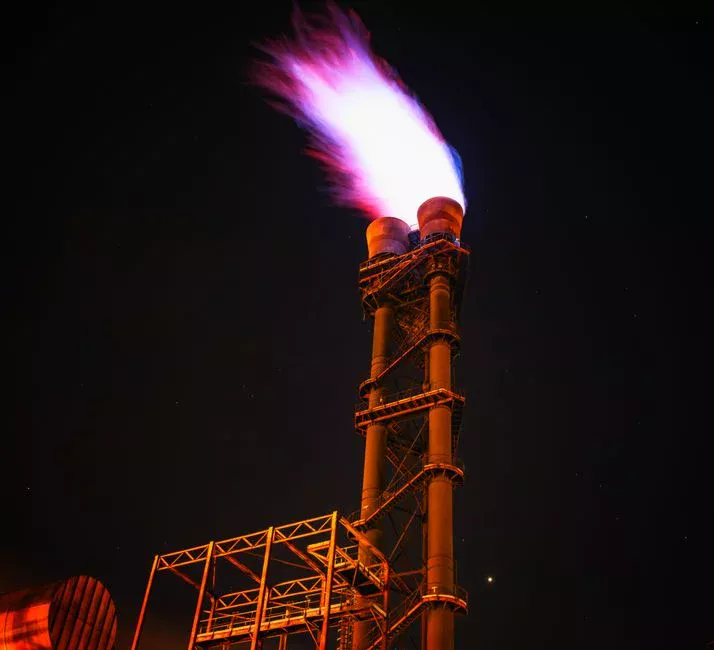
A vendor shortlist only matters if the buyer has already matched effluent characteristics to a heat-recovery configuration. Four archetypes cover the vast majority of 2026 industrial and municipal projects. Clean process water at 30-70 °C with a fouling index below 50 mg/L CaCO₃-equivalent is the natural fit for a standard plate heat exchanger (PHE) with 60-85% thermal effectiveness. Municipal sewage at 10-20 °C needs a sewage-source heat pump (SSHP) upstream of biological treatment to lift to 45-65 °C usable heat, with COP 3.0-4.5 depending on source temperature. Corrosive or scaling streams (chloride >500 mg/L, hardness >1,000 mg/L) require titanium or graphite PHE, which doubles the HX capex but extends service life from 5 to 15+ years. High-temperature industrial effluent at 40-70 °C is where Organic Rankine Cycle or steam-Rankine modules from GE Vernova or MHI generate electricity at 8-18% net efficiency.
Fouling is the single biggest operational risk. Unfiltered sewage can cut PHE effectiveness by 30-50% within 6 months, which is why most SSHP designs pair with upstream fine screening. A GX Series rotary mechanical bar screen at 2-6 mm aperture is the typical headworks pre-treatment that protects a downstream PHE from rag, grit, and fibrous carryover, and the integration point is where most EPC schedules are won or lost.
| Effluent Type | Temperature | Recommended WWHr Tech | Typical Efficiency / COP | Key Fouling Mitigation |
|---|---|---|---|---|
| Clean process water | 30-70 °C | Standard PHE | 60-85% effectiveness | Strainers, periodic CIP |
| Municipal sewage | 10-20 °C | SSHP (NIBE F1345/F1355) | COP 3.0-4.5 | 2-6 mm bar screening |
| Corrosive / scaling | 20-60 °C | Titanium or graphite PHE | 55-75% effectiveness | Material upgrade, side-stream filtration |
| High-temperature industrial | 40-70 °C | ORC / steam-Rankine | 8-18% net electrical | Precipitation softening, ion exchange |
2026 Cost Benchmarks: CAPEX, OPEX, and Payback for WWHr Projects
Procurement teams need defensible dollar figures before issuing an RFQ. 2026 WWHr CAPEX runs $400-$1,200 per kW of recovered thermal output, with the wide range driven by technology choice: SSHP projects sit at $700-$1,200/kW because the compressor and refrigerant loop dominate cost, while PHE-only projects without a heat-pump lift sit at $400-$700/kW. ORC waste-heat-to-power projects price differently, typically $2,500-$5,000 per kWe installed, and should not be benchmarked against the $/kW thermal figures.
OPEX is dominated by pumping and compressor electricity at $0.02-$0.08 per kWh of recovered heat, with maintenance adding another 8-12% of capex per year. Simple payback runs 3-7 years for industrial sites with on-site heat demand and a stable thermal offtake; municipal utilities without a heat offtake typically stretch to 8-12 years unless they can sign a heat-as-a-service contract with a Veolia or Suez. For size context, the MBR cost benchmarks for high-temperature industrial effluent show full wastewater treatment capex of $0.6M-$9M with opex $0.28-$0.95/m³, so a WWHr retrofit at 10% of plant water-treatment capex is a reasonable planning assumption.
| WWHr Configuration | CAPEX (USD / kW thermal) | OPEX (USD / kWh recovered) | Typical Simple Payback | Best-Fit Effluent |
|---|---|---|---|---|
| PHE-only (no heat pump) | $400-$700 | $0.02-$0.04 | 2-4 years | Clean process water 30-70 °C |
| SSHP (NIBE class) | $700-$1,200 | $0.04-$0.08 | 4-7 years | Municipal sewage 10-20 °C |
| Industrial heat pump (MHI/Siemens class) | $800-$1,400 | $0.04-$0.07 | 4-7 years | Industrial effluent 20-50 °C |
| ORC waste-heat-to-power | $2,500-$5,000 / kWe | $0.02-$0.05 / kWhe | 5-9 years | High-T industrial 40-70 °C |
4-Step Vendor Shortlist Framework for a 2026 WWHr RFQ
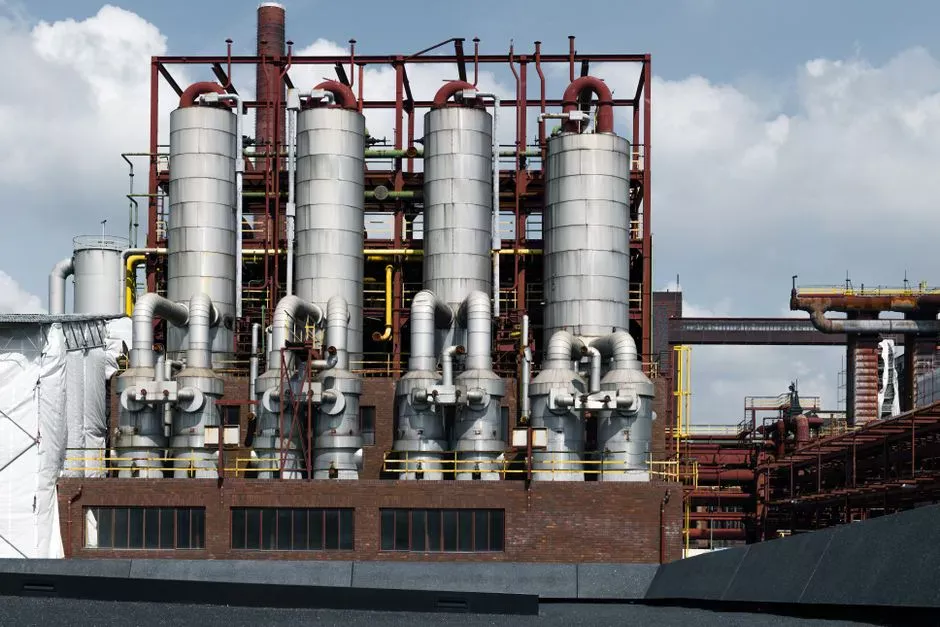
Step 1 — Profile the effluent. Document temperature range, flow rate (m³/h), fouling index (mg/L), pH, chloride, and existing headworks. This single dataset eliminates roughly 60% of vendor proposals because their reference projects do not match the chemistry. Step 2 — Decide the delivery model. Capex purchase, heat-as-a-service (Veolia/Suez), or EPC turnkey (Landmark-style regional integrator) each have different risk allocations. Heat-as-a-service shifts offtake risk to the vendor but locks the buyer into 10-20-year thermal off-take contracts. Step 3 — Issue a 2-page RFQ that requests exactly three reference projects (with operating data, not brochures), one fouling-test report on the actual effluent, and a 10-year lifecycle cost. A short RFQ signals to vendors that the buyer has done its homework, which raises response quality. Step 4 — Score vendors on four weighted criteria: reference relevance 35%, lifecycle cost 30%, service network 20%, technology fit 15%. For opex benchmarking, the 2026 wastewater OPEX benchmark gives the $/m³ anchor your finance team will want alongside the WWHr capex numbers.
Frequently Asked Questions
Which companies are the leading wastewater heat recovery key players in 2026?
Tier-1 multi-industrial OEMs include Siemens, GE Vernova, Mitsubishi Heavy Industries, Schneider Electric, and ABB. Tier-2 specialists include Veolia, Suez, Kingspan Environmental, NIBE Energy Systems, Rehau, Qpinch, Clade Engineering Systems, and Thermal Energy International. Tier-3 regional integrators include Landmark Environmental (UK, 30-year track record).
What CAPEX should a procurement team expect for a WWHr project in 2026?
Budget $400-$1,200 per kW of recovered thermal output. SSHP projects sit at $700-$1,200/kW, PHE-only projects at $400-$700/kW, and ORC waste-heat-to-power at $2,500-$5,000 per kWe installed (HydropureWater field data, 2026).
Which WWHr technology fits municipal sewage at 10-20 °C?
A sewage-source heat pump (SSHP) such as the NIBE F1345 (up to 80 kW) or F1355 (up to 130 kW) is the standard configuration, with typical COP 3.0-4.5 and 60-85% thermal effectiveness downstream of 2-6 mm bar screening.
What is the typical payback for an industrial WWHr project?
3-7 years for industrial sites with on-site heat demand, 8-12 years for municipal utilities without a heat offtake, and 5-9 years for ORC waste-heat-to-power at $0.06-$0.10/kWh electricity displaced.
Are Landmark Environmental and other tier-3 integrators relevant to large WWHr projects?
Yes for EPC delivery and headworks integration; no for technology IP. Landmark Environmental's UK portfolio of 30 years covers feasibility and project management, but the heat exchanger or heat pump itself typically comes from a tier-1 or tier-2 OEM. For broader market context, the 2026 wastewater market forecast confirms WWHr is the fastest-growing sub-segment of the $87.11B global waste-heat-recovery market.
Related Equipment
- HydropureWater MBR membrane bioreactor — specifications, capacity range, and technical data