Why 2026 Is the Tipping Point for Food Plant Water Reuse
Three regulatory pressures converged on food and beverage plants in 2025–2026, and the discharge permit you held last year is no longer the discharge permit you will hold next quarter. First, total nitrogen (TN) caps tightened into the 10–15 mg/L range for meat and dairy effluents in multiple U.S. states and EU member states, a shift flagged by ZwitterCo's October 2024 food and beverage blog as a primary driver of advanced-membrane adoption. Second, water-stress permitting in California (State Water Resources Control Board, 2025 drought emergency regulations), Spain (Royal Decree-Law 4/2023 hydrological planning), China (Yellow River and Yangtze basin discharge tightening for 2025–2026), and parts of India is converting reuse from an ESG talking point into a permit condition. Third, any water that touches a food-contact surface also has to clear FDA 21 CFR 117 — the Current Good Manufacturing Practice, Hazard Analysis, and Risk-Based Preventive Controls rule — which gates reuse water on potability-grade quality regardless of whether the water is technically "drinking water."
The two anchor documents engineers should keep open are the EPA 2012 Guidelines for Water Reuse and the WHO 2017 Guidelines for Drinking-Water Quality (4th edition), both of which the 2026 permit writers are referencing verbatim. Layered on top: freshwater surcharges in drought-stressed basins have hit $1.50–$4.00/m³ in parts of the U.S. Southwest and southern Spain, and ESG disclosure rules (EU CSRD, California SB 253) now force water intensity onto the board agenda. The net result: a properly designed reuse train is no longer a sustainability project — it is the cheapest way to keep the plant permitted.
What Food Processing Wastewater Actually Looks Like
Food processing influent is not a single number; it is a wide band that swings with the product, the shift, and whether the Clean-In-Place (CIP) cycle is dumping at the same moment as production. A meat or dairy plant typically sees BOD 1,000–10,000 mg/L, COD 2,000–20,000 mg/L, and TSS 500–4,000 mg/L, with breweries sitting in the middle of the range and fruit/vegetable wash water at the low end (per Springer 2021, "Food Processing Wastewater Treatment," Chapter 9). Fats, oils, and grease (FOG) run 200–1,500 mg/L in meat and dairy streams and must be removed before any biological step — emulsified FOG coats biomass, causes foaming in aeration basins, and washouts MBR membranes in days if it slips through.
pH swings are brutal: 4–11 across CIP and process streams, which makes equalization non-negotiable. Total nitrogen from protein-rich streams (meat, dairy, soy processing) runs 50–300 mg/L, and this number — not BOD — is what drives the sizing of the biological and membrane stages. Temperature is 25–45 °C from hot CIP and cook-water streams; warm influent accelerates biological kinetics but hurts DAF performance above about 35 °C, so equalization tanks often double as cooling/holding vessels. Finally, variability: wet/dry production schedules generate 3–10× swings in flow and load across a typical week, and any train sized on average flow will fail permit during a CIP peak. The influent envelope below is the sizing reality — match your unit operations to this, not to textbook averages.
The 2026 Reuse Compliance Train: Five Stages, Five Numbers
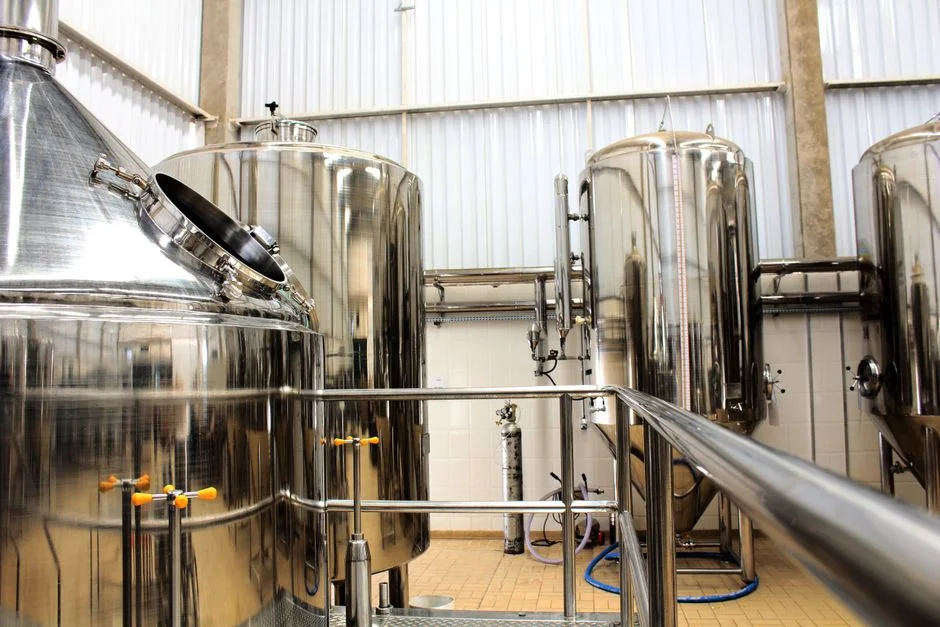
A single unit operation will not deliver reuse-grade water from a food-processing influent, and 2026 enforcement has made that clear. The train that consistently delivers both discharge compliance and on-spec reuse water is a five-stage sequence, and each stage has a measurable job to do.
Stage 1 — Screening and grit removal. A rotary bar screen for headworks with 3–6 mm aperture removes rags, fruit skins, bone fragments, and packaging debris before they blind downstream membranes. Skipping this stage is the single most common cause of premature membrane replacement in food-plant MBRs.
Stage 2 — DAF and grease removal. A DAF unit for FOG and TSS removal delivers 90–95% FOG removal and 60–80% TSS removal in packaged units sized from 4–300 m³/h. DAF effluent typically drops TSS to 100–800 mg/L and FOG to under 50 mg/L — the prerequisite for stable biological operation. Skipping DAF and sending raw FOG to an MBR fouls the membranes in 3–14 days.
Stage 3 — Biological treatment (MBR or MBBR). An MBR system for the biological step produces a <1 μm filtrate with effluent COD typically 20–50 mg/L and BOD <5 mg/L, in roughly 60% of the footprint of a conventional activated-sludge system. For high-nitrogen streams, the MBR is configured for pre-denitrification (anoxic + aerobic zones) and routinely hits TN <15 mg/L with methanol-dosed or internal-MLVSS carbon where BOD:N ratios are tight.
Stage 4 — Membrane separation (UF + RO). An industrial RO system for the reuse step typically achieves 75–95% recovery, 95–99% TDS rejection, and a single-pass conductivity drop from ~2,000 μS/cm influent to <50 μS/cm permeate. UF pretreatment ahead of the RO protects the RO from particulates and colloidal fouling; the RO permeate is the only stream that consistently meets boiler-feed and cooling-tower makeup conductivity targets.
Stage 5 — Disinfection. A ClO2 generator for final disinfection provides residual disinfection and biofilm control in the reuse loop while remaining compliant with EPA drinking-water standards, EU Directive 98/83/EC, and WHO drinking-water guidelines. UV is often paired with ClO2 to handle chlorine-resistant organisms and to drop HPC counts in the distribution piping. With RO + ClO2/UV online, reuse water turbidity lands at <1 NTU and total plant-side water recovery sits in the 75–95% band, depending on RO staging and concentrate management.
The shortcut rules to remember: skip DAF, and the MBR fouls in days. Skip RO, and the TDS is too high for boiler or cooling-tower reuse. Skip disinfection, and the reuse loop grows biofilm and fails FDA 21 CFR 117 microbial expectations within weeks. The five stages are not optional — they are the minimum cost path to 2026 compliance.
Parameter Table: Influent vs. Reuse Water Quality Across the Train
The table below is the one-screenshot reference an engineer can paste into a P&ID. Values are typical mid-range for meat and dairy streams; sub-sector and site variation runs ±20%.
| Parameter | Raw influent | After DAF | After MBR | After RO | Reuse spec (food-contact non-potable) |
|---|---|---|---|---|---|
| BOD (mg/L) | 1,000–10,000 | 800–8,000 | <5 | <1 | ≤5 |
| COD (mg/L) | 2,000–20,000 | 1,500–15,000 | 20–50 | <10 | ≤30 |
| TSS (mg/L) | 500–4,000 | 100–800 | <5 | <1 | ≤5 |
| FOG (mg/L) | 200–1,500 | <50 | <10 | <1 | ≤5 |
| Total nitrogen (mg/L) | 50–300 | 45–280 | 5–15 | <2 | ≤10 (boiler); ≤15 (cooling) |
| TDS (mg/L) | 1,000–5,000 | 1,000–4,500 | 1,000–4,200 | <50 | <100 (boiler); <500 (cooling) |
| Turbidity (NTU) | 100–800 | 30–200 | <1 | <0.1 | ≤1 |
| E. coli (CFU/100 mL) | 10⁴–10⁶ | 10⁴–10⁵ | 10²–10³ | <1 | <1 (per EPA 2012 / WHO 2017) |
| pH | 4–11 | 6–9 | 7–8 | 6.5–7.5 | 6.5–8.5 |
Reuse spec column anchored to EPA 2012 Guidelines for Water Reuse and WHO 2017 drinking-water guidelines; final compliance remains local-jurisdiction-specific. Sub-sector variation (brewery vs. dairy vs. fruit/veg) shifts values ±20% from the bands above.
2026 Regional Compliance Snapshot: US, EU, China, Codex
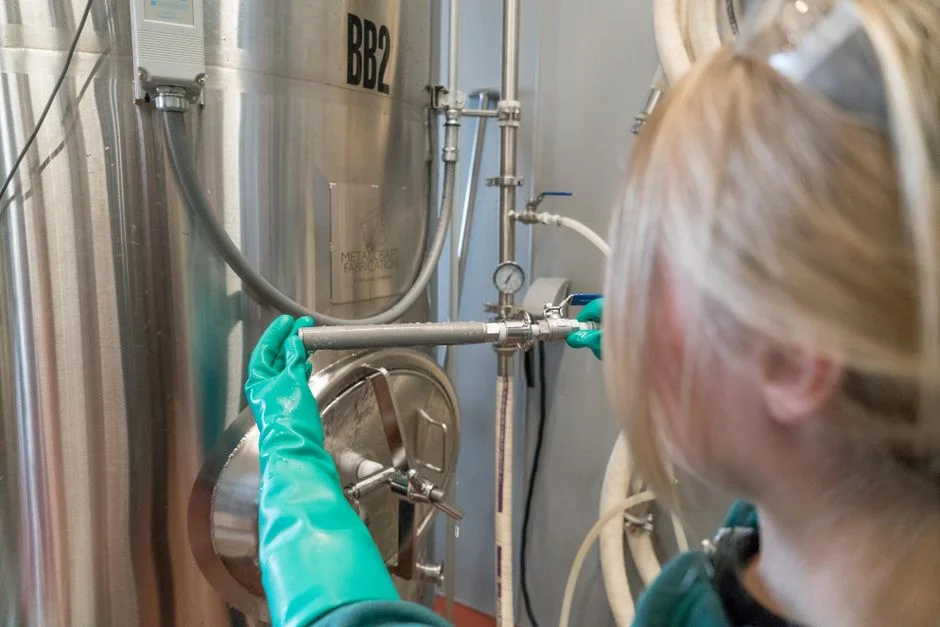
Multi-site operators need a single view of which rules bite where, because 2026 is the year several long-pending frameworks become enforceable.
| Region | Anchor rules (2026) | Key 2026 change for food plants |
|---|---|---|
| United States | EPA 2012 Guidelines for Water Reuse; 40 CFR Part 503 (biosolids); California Title 22; FDA 21 CFR 117 | State-level TN tightening (10–15 mg/L) in meat/dairy permits; California drought emergency regs making reuse a permit condition in critically overdrafted basins |
| European Union | Urban Waste Water Treatment Directive 91/271/EEC; EU Regulation 2020/741 on minimum requirements for water reuse | 2020/741 water reuse quality classes (A–D) become operationally binding for food/beverage sites in water-stressed member states; first EU-wide reuse microbiological standards |
| China | GB 18918-2002; provincial 2025–2026 tightening on TN, TP, COD in Yellow River and Yangtze basins | Discharge limits for food processors in priority basins dropping to COD ≤50 mg/L, TN ≤15 mg/L, with mandatory reuse for sites above 100 m³/day |
| Codex / international | Codex Alimentarius CXC 1-1969 (general principles of food hygiene); CXS 52-2003 (food-additive reuse context) | Reinforces FDA-style GMP: reuse water must be "fit for purpose" with documented hazard analysis; cited in cross-border audits |
For U.S. plants shipping to EU customers, the binding target is the stricter of the two jurisdictions. For Chinese plants in the Yellow River basin, the 2025–2026 provincial tightening has effectively made reuse a permit precondition, not an option.
CAPEX, OPEX, and ROI for a Food Plant Reuse System
Engineering only matters if the board signs the cheque. The cost bands below come from food-plant reuse projects at the listed throughputs, with a full MBR + RO + ClO2 train (HydropureWater field data, 2024–2026).
| Plant size (m³/day) | CAPEX band (USD) | OPEX ($/m³ treated) | Typical payback |
|---|---|---|---|
| 50 | $200,000–$500,000 | $0.55–$0.92 | 4–6 years |
| 100 | $400,000–$1,200,000 | $0.30–$0.60 | 3–5 years |
| 500 | $2,000,000–$6,000,000 | $0.18–$0.40 | 2.5–4 years |
OPEX is dominated by energy (~40%, mostly MBR aeration and RO high-pressure pumps), chemical dosing (~20%, antiscalant, CIP chemicals, ClO2 precursor), and membrane replacement (~15%, RO membranes on a 3–5 year cycle, UF/MBR membranes on a 5–8 year cycle). Payback drops below three years in freshwater-stressed basins where surcharges or scarcity pricing apply (see our 2026 industrial water reuse outlook for the regional water-cost detail). Sensitivity: every 10% lift in recovery past 75% cuts freshwater intake proportionally but raises membrane-cleaning OPEX 5–8% — the optimum is rarely 95%, even when the membranes allow it. The avoided-risk value is real too: a single discharge-violation event for a 500 m³/day plant can run $50,000–$250,000 in fines, cleanup, and shutdown days, so reuse is partly insurance against the next enforcement cycle.
Five-Step Selection Framework for the Right Reuse Train
- Characterize the influent and map the production schedule. Pull 24-hour composite samples across at least one full week including a CIP peak. Variable flow/load above 3× demands equalization and biological robustness — typically MBR over conventional activated sludge.
- Define the end use. Boiler feed, cooling-tower makeup, CIP final rinse, landscape irrigation, and toilet flush each have a different water-quality target. Boiler feed is the strictest (TDS <100 mg/L, silica <0.7 mg/L); cooling-tower makeup is more forgiving (TDS <500 mg/L, conductivity <1,000 μS/cm).
- Match discharge limits and reuse targets to the train. DAF + MBR alone meets discharge-only permits in most jurisdictions. Adding RO + ClO2 is required for any boiler, cooling, or food-contact rinse reuse — see the RO for wastewater reuse process guide for the spec details.
- Size for peak, not average. Equalization tanks (a high-efficiency sedimentation tank in the front end doubles as a flow and load buffer) plus MBR turndown flexibility prevent permit excursions during CIP peaks. The biological stage is sized on peak loading, not mean flow.
- Validate with a piloting and PFD review. A 4–8 week MBR pilot on the actual plant effluent catches fouling risk, confirms nitrification rates, and validates the OPEX model before CAPEX commit. Treat the pilot as cheap insurance against a $2–6M mistake.
The plain-language trade-off: more recovery means more membrane, more energy, and more CIP chemicals. The 2026 optimum for most food plants sits in the 75–85% recovery band — high enough to make reuse a financial win, low enough that membrane cleaning doesn't consume the savings.
Frequently Asked Questions
What discharge limits apply to food processing wastewater in 2026? Most discharge permits in 2026 require BOD ≤30 mg/L, TSS ≤30 mg/L, COD ≤125–200 mg/L, and total nitrogen ≤10–15 mg/L (per EPA 40 CFR and EU UWWTD 91/271/EEC implementation). State and provincial permits can be stricter, particularly in California and the Chinese Yellow River basin.
What reuse water quality is required for food-contact applications? Per FDA 21 CFR 117 and EPA 2012 Guidelines for Water Reuse, food-contact non-potable reuse water must meet turbidity ≤1 NTU, E. coli <1 CFU/100 mL, and TDS limits appropriate to the contact application. Boiler feed and CIP final rinse are the strictest end uses.
What is the typical water recovery rate for a food plant reuse system? A full MBR + RO + disinfection train delivers 75–95% plant-side water recovery, with 75–85% being the typical cost-optimum in 2026 food-plant economics.
How much does a food wastewater reuse system cost? CAPEX ranges from roughly $200,000 for a 50 m³/day packaged system to $2–6M for a 500 m³/day full train, with OPEX of $0.18–$0.92/m³ and payback in 3–6 years (faster in freshwater-stressed regions).
Can an MBR alone meet 2026 reuse compliance? Only for non-food-contact reuse (landscape irrigation, toilet flush, some cooling-tower makeup). Food-contact reuse, boiler feed, and high-pressure cooling-tower makeup require RO plus downstream disinfection to hit the conductivity, TDS, and microbial targets.