Why Jakarta's Industrial Sector Needs a Specialized WWTP Manufacturer
Jakarta's industrial buyers evaluating a wastewater treatment plant manufacturer in jakarta face binding effluent limits that generic global catalogs rarely address. PERMENLH No. 5/2014 sets industrial discharge at BOD 50 mg/L, COD 100 mg/L, TSS 30 mg/L, pH 6.0–9.0, with oil & grease between 5 mg/L (domestic) and 15 mg/L (food processing). PERMENLHK P.68/2016 tightens requirements for hazardous-waste-generating sectors and feeds directly into the PROPER rating system — a five-color compliance score (Gold, Green, Blue, Red, Black) that companies must publish annually. A vendor that cannot document past performance against these specific thresholds is disqualified from serious evaluation, regardless of how polished their catalog looks.
Tropical climate rewrites the design basis. Ambient wastewater temperature sits at 28–32°C year-round in Jabodetabek, which accelerates biological kinetics by 20–30% versus temperate reference data — meaning smaller tankage for the same BOD load, but also faster oxygen depletion and higher FOG emulsification. Monsoon season (November–March) delivers 2–4× hydraulic surges that packaged plants sized on average daily flow will fail without equalization. Dominant effluent sources across the region include textile dyeing (COD 800–1,500 mg/L, strong color), palm oil mills (BOD up to 2,500 mg/L, high FOG), food and beverage, pharmaceutical, hospital, and electronics manufacturing. The decentralized containerized plant already running in Jakarta under the Organica program demonstrates that tropical-climate packaged treatment is technically proven — but the manufacturer selection framework behind it remains poorly documented in public sources.
What Defines a Qualified WWTP Manufacturer in Jakarta
Three supplier archetypes dominate the Jakarta market, and each carries a different risk profile. Category 1 — OEM factories in China with an Indonesian distributor — typically delivers the lowest CAPEX, often 20–35% below local integrators, but the buyer assumes commissioning supervision and parts logistics. Category 2 — local Indonesian system integrators that buy skid-mounted equipment from OEMs and assemble locally — commands a 25–40% markup but provides single-point accountability and Bahasa Indonesia documentation. Category 3 — European or Japanese OEMs with a Jakarta representative office — offers premium engineering documentation and longer equipment life but at 2–4× the CAPEX of Category 1, with lead times frequently exceeding 6 months.
Mandatory certifications to verify before shortlisting: ISO 9001:2015 quality management, ISO 14001 environmental management, CE marking for mechanical and electrical equipment, and — for any government or state-owned-enterprise tender — SNI or TKDN documentation proving local content. Beyond paperwork, the factory audit evidence should include a third-party audit report from SGS or Bureau Veritas issued within the last 12 months, video walkthrough of the production line, and at least three verifiable reference plants in Southeast Asia with contactable end users.
After-sales infrastructure is where Jakarta projects most often fail. A qualified manufacturer must have a service engineer based in Jabodetabek, a documented spare parts inventory held in Indonesia, and a written 48-hour response SLA for biological process upsets. Request this in writing — verbal commitments during sales calls have no contractual weight. Direct OEM sourcing cuts cost but transfers commissioning risk to the buyer; many EPC contractors resolve this by hiring a third-party commissioning supervisor for $8,000–$15,000 per project, which is still cheaper than the local-integrator markup.
Process Technologies Jakarta Manufacturers Should Offer
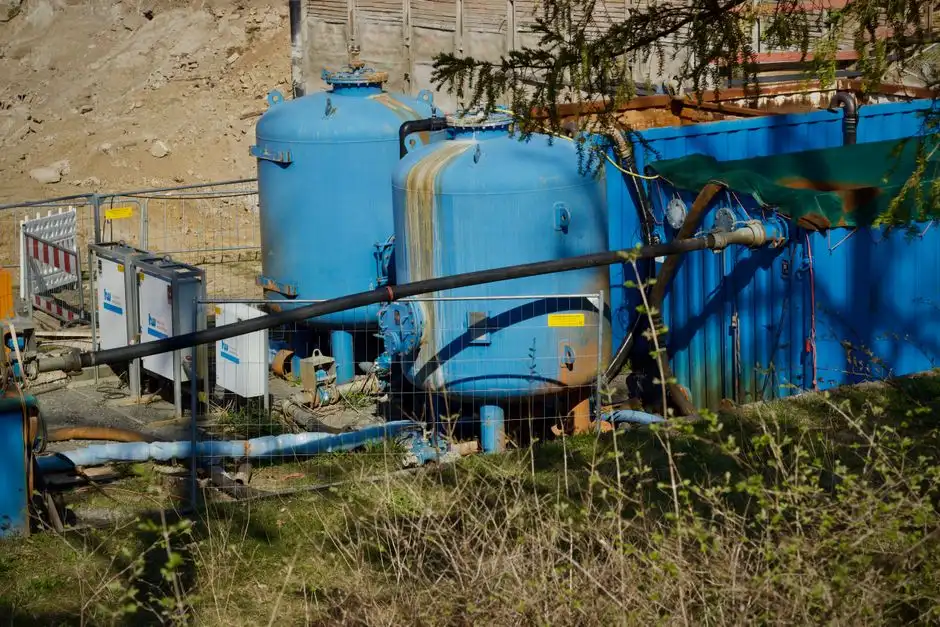
Matching technology to influent is the engineering core of the evaluation. A serious manufacturer should be able to specify across at least five process families, and Jakarta's dominant industrial sectors map to distinct technology choices.
| Process Unit | Typical Capacity | Effluent Target | Best-Fit Sector in Jakarta |
|---|---|---|---|
| MBR (Membrane Bioreactor) | 10–2,000 m³/day | BOD <5 mg/L, COD <30 mg/L, TSS ≈ 0 | Pharmaceutical, electronics, water reuse |
| A/O or A²/O packaged (WSZ underground) | 1–80 m³/h | BOD 20–30 mg/L, TSS 20 mg/L | Residential, hotel, hospital, light commercial |
| DAF (Dissolved Air Flotation) | 4–300 m³/h | FOG <15 mg/L, TSS reduction 70–90% | Food processing, palm oil, textile |
| SBR / CASS batch reactor | 50–5,000 m³/day | BOD 20–30 mg/L, TSS 20 mg/L | Variable batch discharges, food, textile |
| Plate and frame filter press | 1–500 m² filtration area | 75–85% sludge volume reduction | All sectors with limited landfill access |
| ClO₂ or ozone disinfection | 1–500 m³/h | 99%+ microbial kill | Hospital effluent, reuse applications |
For a hospital or pharmaceutical site chasing PERMENLH microbial standards plus reuse-quality discharge, a submerged PVDF MBR membrane bioreactor system at 0.1 μm pore size produces near-reuse effluent at roughly 60% of the footprint required by conventional activated sludge. For a hotel, dormitory, or staff housing complex under 80 m³/h, a buried WSZ underground packaged sewage treatment plant with PLC automation runs unattended. For food, palm oil, or textile influent with FOG above 200 mg/L, front-end DAF pre-treatment system capacity is non-negotiable — biological stages downstream cannot tolerate emulsified oil. Sludge handling should be specified alongside biological treatment: a plate and frame filter press sized 1–500 m² cuts hauling cost by reducing cake volume 75–85%, and a paired automatic chemical dosing system handles pH correction and coagulant feed for PROPER-compliant operation. For deeper process tuning, see this MBR effluent quality for food processing reference and the global total nitrogen discharge limits 2026 guide.
2026 CAPEX and OPEX Benchmarks for Jakarta WWTP Projects
Use these ranges to sanity-check vendor quotes before you open negotiation. All figures are equipment CAPEX excluding civil works, freight, and Indonesian import duty unless noted.
| Plant Size & Scenario | Equipment CAPEX (USD) | OPEX (USD/m³) | Power Benchmark |
|---|---|---|---|
| 50 m³/day, WSZ underground, light commercial | $80,000–$150,000 | $0.18–$0.32 | 0.18–0.35 kWh/m³ |
| 500 m³/day, MBR + DAF, food or textile | $450,000–$850,000 | $0.22–$0.45 | 0.25–0.55 kWh/m³ |
| 2,000 m³/day, MBR + sludge dewatering + disinfection, municipal-industrial hybrid | $2.0M–$3.5M | $0.15–$0.30 | 0.25–0.55 kWh/m³ |
Add 10–15% to equipment CAPEX for sea freight (60–90 days Shanghai or Ningbo to Tanjung Priok), 5–10% Indonesian import duty under HS code 8421.21, and 11% VAT. Local civil works — foundation slabs, equalization tanks, interconnecting piping, and electrical reticulation — typically adds 30–50% to the equipment line. At Jakarta industrial electricity tariffs of $0.08–$0.11/kWh, a 500 m³/day MBR plant at 0.40 kWh/m³ consumes roughly $1,450/month in power alone, which is why OPEX optimization matters as much as CAPEX negotiation. Engineering playbooks on wastewater power consumption optimization and edge computing for wastewater monitoring quantify the savings from aeration control and real-time process adjustment. For the 2,000 m³/day class, a paired plate and frame filter press with 50–500 m² filtration area is typically bundled to handle biosolids; published 2026 OEM cost data (HydropureWater) shows that filter press area scales linearly with daily sludge mass, and a MBR membrane bioreactor system shipping with factory acceptance testing is now standard for export tenders.
Manufacturer Evaluation Matrix for Jakarta Buyers
Score every shortlisted candidate on the same six axes. Weights reflect what most often determines project success in Jabodetabek: regulatory documentation first, technology fit second, and price fifth — not first, because a cheap plant that fails PROPER inspection costs far more than a 15% CAPEX premium.
| Criterion | Weight | What to Request | Disqualifying Issue |
|---|---|---|---|
| Indonesian regulatory documentation (PERMENLH, PERMENLHK, PROPER track record) | 25% | Past test reports against BOD 50, COD 100, TSS 30 mg/L limits | No documented Indonesian compliance data |
| Process technology match to influent | 20% | P&ID customized to your influent profile | Generic one-line proposal with no process detail |
| Factory audit and references | 15% | SGS/Bureau Veritas audit, ≥3 SE Asia references | No factory audit evidence |
| After-sales service network in Indonesia | 15% | Named Jabodetabek service engineer, 48-hr SLA, parts inventory | No local service presence |
| CAPEX competitiveness (5% freight/duty included) | 15% | Itemized quote with motor list and material specs | Quoted lead time >120 days without justification |
| Lead time and logistics to Tanjung Priok | 10% | Confirmed booking + FAT date | Vague delivery window, no FAT commitment |
Require every candidate to submit four documents before scoring: a P&ID drawing customized to your influent, a mass balance with guaranteed effluent parameters, a full equipment list with motor and material specifications, and a commissioning protocol with operator training plan. Vendors that cannot produce these within 10 business days are either too small or too disinterested — eliminate them. A direct-OEM candidate with a full product range (MBR, WSZ, DAF, filter press, dosing, disinfection) can be evaluated alongside local Indonesian system integrators who resell that OEM's equipment, and in some cases the same physical plant is offered at two different price points depending on the channel — worth checking. The Cebu buyer's guide at wastewater treatment plant manufacturer in Cebu applies a similar matrix for Philippine buyers and is useful as a cross-check on the methodology.
Step-by-Step Selection Process for a 2026 Jakarta Project
Plan for a 24–30 week total timeline from purchase order to first treated effluent. Compressing this rarely saves money — it usually costs change-order fees and rushed factory acceptance testing.
- Weeks 1–2 — Influent characterization. Run 7-day composite sampling across all production shifts. Capture peak flows, BOD, COD, TSS, FOG, pH, temperature, and any toxics (phenol, ammonia, heavy metals). Without this data, every vendor proposal is a guess.
- Weeks 3–4 — RFQ to 3–4 pre-screened manufacturers. Send the influent data, target effluent (PERMENLH limits or stricter reuse specification if the project targets water reuse), site constraints, and required commissioning date. Require itemized commercial proposals and customized P&IDs as a condition of bid.
- Weeks 5–7 — Technical and commercial evaluation. Apply the weighted matrix from the previous section. Request factory audit video, reference contacts in Indonesia, and proposed payment terms (typically 30% advance, 60% against shipping documents, 10% retention for direct OEM orders).
- Weeks 8–10 — Contract negotiation and lock-in. Bake in performance guarantees with liquidated damages for PERMENLH non-compliance. Standard structure: LDs at 0.5–1% of contract value per percentage point of BOD exceedance, capped at 10%.
- Weeks 11–24 — Manufacture, FAT, freight, commissioning. Factory acceptance test at OEM site, sea freight to Tanjung Priok (60–90 days), customs clearance under HS 8421.21, site delivery, civil works, mechanical and electrical install, commissioning, and 7-day performance test.
Frequently Asked Questions
What CAPEX should a Jakarta buyer budget for a 100 m³/day WWTP in 2026? Equipment CAPEX for a 100 m³/day packaged plant (WSZ or MBR) typically falls between $150,000 and $280,000 excluding civil works. Add 10–15% for sea freight and import duty, 11% VAT, and 30–50% for local civil works to reach a total installed budget of $250,000–$500,000 (HydropureWater field data, 2026).
How long does a packaged WWTP take to ship from China to Jakarta? Standard sea freight from Shanghai or Ningbo to Tanjung Priok runs 60–90 days port-to-port in 2026, depending on line availability and monsoon-season congestion. Add 7–14 days for customs clearance and 2–4 weeks for on-site installation and commissioning.
Does a packaged WWTP in Jakarta require a local operator? PLC-automated systems (WSZ underground, containerized MBR) can run unattended for routine operation but Indonesian regulations under PERMENLH require a certified operator on call for plants above 100 m³/day. Most factories assign one staff member with part-time responsibility plus a service contract with the manufacturer.
Is MBR or conventional activated sludge better for tropical Jakarta conditions? MBR delivers lower effluent (BOD <5 mg/L vs 20–30 mg/L) at 60% smaller footprint, but consumes 25–40% more power and requires membrane replacement every 5–7 years. For sites targeting water reuse, pharmaceutical, or electronics discharge, MBR is the standard choice. For BOD-only compliance with ample land, conventional activated sludge remains cost-effective.
How does manufacturer documentation support PROPER rating compliance? PROPER scoring requires annual self-reporting of effluent test results and a five-year compliance track record. A qualified manufacturer provides PERMENLH-compliant commissioning reports, ongoing monitoring support, and performance guarantee documentation that the factory submits to the Ministry of Environment. Without this paper trail, even a well-designed plant may score Red or Black on PROPER.