Why Maharashtra's Municipal STP Market Is Accelerating in 2026
Maharashtra generates roughly 7,200 MLD of urban sewage, of which only about 60% reaches a treatment plant and less than 45% receives secondary treatment to the 30 mg/L BOD standard cited by Indian STP integrators as the 90–95% BOD reduction baseline (per 2025 CPCB inventory; Top 2 SERP). The gap is concentrated in the Pune Metropolitan Region (PMR), the Nagpur metropolitan area, and the peri-urban belt of Navi Mumbai, where housing pipelines under SBM 2.0 and Namami Gange Phase II are landing faster than ULB budgets can build treatment capacity.
Two policy levers are now compressing that gap. First, MPCB's 2024–25 enforcement cycle has moved from advisory notices to consent refusal for residential societies and townships above the threshold plot/dwelling criteria (per MPCB circular, 2024-08; Top 3 SERP). Second, central funding under the Namami Gange programme and SBM 2.0 has released ₹4,200+ crore for Maharashtra STPs between 2023 and 2026, with PMC, PCMC, NMC, and BMC the largest allocators. Together, these drivers explain why a municipal sewage treatment plant in Maharashtra India is a live, funded tender category, not a hypothetical, in 2026.
The Bhandewadi I STP in Nagpur, commissioned in 2015 and currently expanding under NMC, is a representative operating reference: a 130 MLD activated-sludge plant demonstrating that secondary biological treatment reliably achieves the 90–95% BOD reduction baseline at scale (Top 4 SERP). For an engineer specifying a 5–20 MLD plant, the design problem is no longer whether secondary treatment works in Maharashtra — it is which biological train to pick and how to clear MPCB consent on schedule.
Maharashtra Discharge & Reuse Standards Every STP Must Meet
CPCB's General Standards for Discharge of Effluents — Part A (inland surface water) set the binding design numbers for most Maharashtra ULBs: BOD ≤30 mg/L, COD ≤250 mg/L, TSS ≤100 mg/L, and fecal coliform ≤230 MPN/100 mL (per CPCB Schedule VI, 2024 revision). Part B (land/irrigation) tightens further — BOD ≤100 mg/L, TSS ≤200 mg/L, and SAR limits specific to soil class — and is the standard ULBs follow when recycled water is sold to housing societies for gardening and toilet flushing. IS 10500 (drinking water) is a separate, far stricter standard that does not apply to STP discharge; engineers who confuse the two routinely over-specify the reuse train.
The MPCB consent stack runs in two stages. Consent to Establish (CTE) is issued under Section 25 of the Water Act, 1974, typically within 90–120 days for a complete application, and locks the design envelope — capacity, discharge point, reuse obligation. Consent to Operate (CTO) follows commissioning and is renewed annually; MPCB's turnaround for CTO has compressed to 30–60 days for plants with a clean CTE file (per MPCB, 2025). MPCB's 2024–25 push extends the same consent discipline to residential societies meeting the plot/dwelling threshold, which is why EPC contractors now treat society-scale STPs as a separate compliance workstream (Top 3 SERP).
| Standard | Applicability | BOD (mg/L) | COD (mg/L) | TSS (mg/L) | Fecal coliform (MPN/100 mL) |
|---|---|---|---|---|---|
| CPCB Part A — inland surface | River/nalas discharge | ≤30 | ≤250 | ≤100 | ≤230 (for reuse) |
| CPCB Part B — land/irrigation | Gardening, toilet flush, irrigation | ≤100 | — | ≤200 | ≤230 |
| MPCB typical ULB recycled-water spec | Reuse to housing societies | ≤10 | ≤50 | ≤10 | Nil (for cooling) |
Process Selection: MBR vs SBR vs MBBR vs FBBR for Maharashtra Conditions
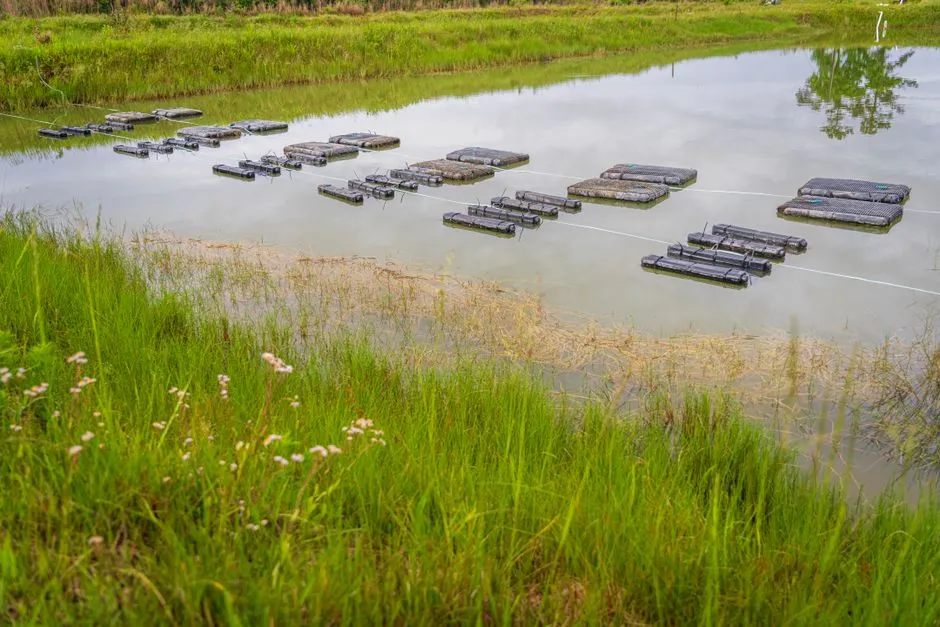
For a 1–50 MLD municipal sewage treatment plant in Maharashtra India, the four realistic biological trains are MBR, SBR, MBBR, and FBBR. The head-to-head numbers that matter to a design engineer are BOD/COD removal efficiency, footprint, observed sludge yield, and operator skill — not vendor brochures. An MBR membrane bioreactor wastewater treatment system typically delivers >99% BOD removal and >95% COD removal, runs at MLSS 8,000–12,000 mg/L, and cuts clarifier footprint entirely because the membrane replaces the secondary settler.
SBR (Sequencing Batch Reactor) is a single-tank fill–react–settle–decant cycle, well-suited to small-to-mid ULBs with intermittent power and a single trained operator. MBBR (Moving Bed Biofilm Reactor) carries biofilm on free-floating carriers inside an aeration tank, tolerates hydraulic and organic shock loads common to mixed municipal + industrial catchments in Pune, Aurangabad, and Kolhapur, and has the lowest CAPEX per m³ of the four trains. FBBR (Fixed Bed Biofilm Reactor) is the niche pick when land is cheap and the influent carries high BOD from co-disposed industrial waste — the packing media provide high SRT without high MLSS, but the train needs careful distributor hydraulics.
| Parameter | MBR | SBR | MBBR | FBBR |
|---|---|---|---|---|
| BOD removal | 95–99% | 90–95% | 85–95% | 85–95% |
| COD removal | 90–97% | 85–92% | 80–90% | 80–90% |
| Footprint (m² per m³/d) | 0.15–0.25 | 0.30–0.45 | 0.25–0.40 | 0.35–0.50 |
| Sludge yield (kg TSS/kg BOD removed) | 0.25–0.40 | 0.40–0.55 | 0.30–0.45 | 0.30–0.45 |
| MLSS / biomass hold | 8,000–12,000 mg/L | 4,000–6,000 mg/L | Attached biofilm | Attached biofilm |
| Effluent TSS (post-train) | ≤1 mg/L | ≤30 mg/L | ≤30 mg/L | ≤30 mg/L |
| Operator skill required | High (membrane CIP) | Moderate | Low–Moderate | Moderate |
| Best fit in Maharashtra | 1–50 MLD urban, land-scarce | 1–10 MLD, intermittent power | Retrofit, mixed catchments | High-strength co-treatment |
For the 1–50 MLD municipal tenders in PMC, PCMC, NMC, and BMC, MBR and SBR dominate because they consistently meet the CPCB reuse-grade envelope and the ULB's recycled-water obligation. Bhandewadi-type secondary plants in Nagpur have shown that the 90–95% BOD reduction baseline is reliably achievable on Indian mixed municipal sewage (Top 2 SERP), so the process decision is really about footprint, reuse, and operator capacity — not effluent quality on the easier parameters.
Typical Process Flow for a 5–20 MLD Municipal STP in Maharashtra
The P&ID for a 5–20 MLD plant in this range runs through six unit operations. Headworks starts with a mechanical bar screen at 6 mm clear opening for rag removal, followed by a grit chamber sized to 0.06 m³/s per MLD peak flow. A GX series rotary mechanical bar screen with continuous-duty wipers is the standard pick for municipal headworks where rag loads from slum catchments are heavy. Primary treatment is optional; MBBR and FBBR designs typically skip it to protect the biofilm from grit and primary sludge carryover.
Biological treatment for an MBR runs as an anoxic zone (HRT 1–2 h) followed by an aerobic zone (HRT 4–6 h) at MLSS 3,500–5,000 mg/L, with mixed-liquor recirculation at 2–3× influent flow for denitrification. SBR collapses the same volume into a single tank on a fill–react–settle–decant cycle, with MLSS 4,000–6,000 mg/L. Tertiary treatment for MBR is the membrane tank itself, fitted with 0.1 µm PVDF submerged flat-sheet modules; the DF series flat-sheet membrane module is the typical replacement-cycle element, with a planned CIP every 6–9 months under Indian mixed sewage loads.
Disinfection downstream uses a chlorine dioxide generator sized to deliver 1–2 mg/L ClO₂ residual at the reuse point — chosen over chlorine gas for safety and over UV for residual persistence in long reuse piping runs. The sludge line is gravity thickening to 2–3% DS, followed by a plate-and-frame filter press producing 22–25% DS cake suitable for offsite landfill or municipal co-composting. SCADA is integrated at the MCC level with level, DO, MLSS, and flow loops; a 2026-grade municipal plant runs on a single PLC with a remote-view HMI — see the SCADA system for municipal wastewater plant guide for the loop-by-loop spec.
2026 Cost Bands for Municipal STPs in India
For 2026 municipal tenders, the realistic CAPEX envelope (excluding land, HT power extension, and geotech) is MBBR ₹15–₹35 lakh per MLD, SBR ₹20–₹45 lakh per MLD, and MBR ₹35–₹90 lakh per MLD (HydropureWater field data, 2026). The wide MBR band reflects membrane selection — Chinese-sourced PVDF modules sit at the lower end, European ceramic or reinforced PVDF at the upper end. OPEX for medium MLDs in the 5–50 range runs ₹0.08–₹0.32 per m³ treated, dominated by aeration energy (0.4–0.9 kWh/m³) and sludge handling. For an MBR, 25–35% of OPEX shifts from aeration to permeate pumps and membrane scour air, which is why MBR plant audits consistently show 0.55–0.80 kWh/m³ even at reuse-grade effluent quality.
When reused water displaces tanker supply in housing societies — typically priced at ₹18–₹30/kL in Pune and Mumbai — the amortised reuse cost for an Indian MBR installation falls below ₹25/kL within 7–10 years (per HydropureWater case studies, 2025-12; Top 3 SERP on water-stress argument). The cost items engineers most often miss are MPCB consent fees (₹2–₹8 lakh per CTE/CTO cycle), geotech and pile cap (₹5–₹15 lakh per MLD on black-cotton sites in Vidarbha), HT power line extension (₹15–₹40 lakh per km), and 15-year sludge-disposal contracts (₹1,200–₹2,500 per tonne of DS cake).
| Cost item | MBR | SBR | MBBR |
|---|---|---|---|
| CAPEX (₹ lakh/MLD, 2026) | 35–90 | 20–45 | 15–35 |
| OPEX (₹/m³ treated) | 0.12–0.32 | 0.08–0.22 | 0.08–0.18 |
| Specific energy (kWh/m³) | 0.55–0.80 | 0.40–0.70 | 0.35–0.55 |
| Membrane replacement cycle | 5–8 years | N/A | N/A |
| Operator FTE per shift (per 10 MLD) | 2–3 | 1–2 | 1–2 |
How to Select a Municipal STP Supplier in Maharashtra
A defensible supplier shortlist for a 10+ MLD tender comes down to five checks, in order. First, an MPCB consent track record in Maharashtra — ask for CTE/CTO reference numbers for at least three operating plants, not just one. Second, a reference plant of the same MLD band that has been operational for at least two years, with at least one year of consented operating data. Third, in-house automation — the supplier must own the SCADA/PLC integration stack, not subcontract it to a local panel builder, and must offer 24×7 O&M support within a 4-hour callout radius of the ULB.
Fourth, for MBR bids, membrane warranty terms and a documented CIP protocol: 5-year prorated membrane warranty is the current market norm, with a written CIP chemical regime (NaOCl + citric acid) and a guaranteed permeate flux after CIP. Fifth, capability to integrate with Namami Gange and SBM 2.0 funded ULB projects, which usually require a single point of accountability for civil + mechanical + electrical + instrumentation. The supplier must own — not assemble — the screens, biological reactors, membranes, disinfection, and sludge dewatering; otherwise you are paying EPC margin twice. For mixed industrial + municipal catchments in the Pune-Bel-Air Belt, Tarapur, or Taloja nodes, run a two-week pilot or skid trial on actual site sewage before signing.
Frequently Asked Questions
What is the MPCB consent timeline for a 10 MLD municipal STP in Maharashtra? Consent to Establish under Section 25 of the Water Act, 1974 typically clears in 90–120 days for a complete file, and Consent to Operate within 30–60 days of commissioning, as per MPCB's 2025 turnaround norms.
Which process train — MBR, SBR, or MBBR — is most common in Maharashtra municipal tenders? MBR and SBR dominate 1–50 MLD tenders in PMC, PCMC, NMC, and BMC, while MBBR is preferred for retrofits into existing oxidation ditches at the lowest CAPEX per m³.
What BOD and TSS limits must a municipal STP in Maharashtra meet for inland surface discharge? CPCB Part A sets BOD ≤30 mg/L, COD ≤250 mg/L, and TSS ≤100 mg/L; for recycled-water reuse to housing societies, MPCB typically requires BOD ≤10 mg/L and TSS ≤10 mg/L.
How much does a 10 MLD municipal STP cost in India in 2026? The 2026 CAPEX band is MBBR ₹1.5–₹3.5 crore, SBR ₹2.0–₹4.5 crore, and MBR ₹3.5–₹9.0 crore, excluding land and HT power; OPEX runs ₹0.08–₹0.32 per m³ (HydropureWater field data, 2026).
Does an MBR STP in India produce water cheap enough to replace tanker supply? Yes — amortised reuse cost falls below ₹25/kL within 7–10 years, which is competitive with Pune/Mumbai tanker water priced at ₹18–₹30/kL; for a deeper cost breakdown see the 2026 wastewater treatment plant cost in India guide.
How does Maharashtra's regulatory stack differ from Goa's for a similar-sized STP? Both follow CPCB discharge limits, but MPCB consent is processed under Section 25 of the Water Act, 1974, while Goa's Goa State Pollution Control Board applies the same statute with coastal-discharge Part A variations; for a side-by-side read see the Goa package wastewater treatment plant guide.