Why Hobart Buyers Can't Use a Generic Sewage Equipment Catalog
A sewage treatment equipment supplier in Hobart should deliver packaged MBR, SBR, or A/O plants rated for Tasmania's 8–12 °C winter wastewater — typically 1–2,000 m³/day — with full compliance to the Tasmanian Environment Protection Notice (Water) and the National Water Quality Management Strategy. Expect landed CAPEX of AUD $1,800–$4,500 per m³/day from Asian manufacturers, plus verify freight routing through the Port of Hobart and local commissioning support.
Generic Chinese catalog pages such as the Made-in-China 2026 sewage treatment equipment index list over 100 suppliers in a single undifferentiated feed, with no climate context, no Australian regulatory filter, and no AUD landed-cost logic. For a Hobart project engineer that catalog is a starting point at best and a liability at worst. Three structural mismatches make a generic response unusable off the shelf.
First, temperature. Hobart's mean winter wastewater temperature sits at 8–12 °C against the 20 °C reference embedded in most Chinese factory design curves. Per standard Arrhenius corrections, biological activity drops 40–60% across that gap, which means a tank sized for tropical duty will under-perform on BOD and ammonia in a Tasmanian winter. Second, regulation. Tasmania regulates discharge under the Environment Protection Notice (Water) 2003 and the National Water Quality Management Strategy (NWQMS), with municipal limits typically BOD ≤20 mg/L, TSS ≤30 mg/L, NH₃-N ≤5 mg/L, total N ≤15 mg/L, and total P ≤2 mg/L — a tighter envelope than many Chinese municipal GB 18918-2002 defaults. Third, logistics. Land freight from mainland Australian distributors adds 15–25% to capital cost versus direct sea freight to the Port of Hobart, so the supplier's shipping terms and Incoterms materially change the total cost of ownership before a single bolt is tightened.
Core Sewage Treatment Technologies Supplied into Hobart
For flow rates of 1–2,000 m³/day the Hobart market is served by five core technology classes, each mapped to a typical influent and discharge target in the table below. Engineers should shortlist on the basis of influent BOD/COD ratio, footprint available on site, and whether the discharge goes to sewer, waterway, or recycled-water irrigation.
| Technology | Flow range | Typical influent / target | Hobart fit |
|---|---|---|---|
| Underground packaged A/O plant (WSZ series) | 1–80 m³/h | Domestic-strength sewage, BOD 150–250 mg/L → reuse or sewer | Residential, hotel, hospital, small factory; bury below grade for thermal stability and noise control |
| MBR membrane bioreactor | 10–2,000 m³/day | Municipal or pre-treated industrial, BOD ≤200 mg/L → near-reuse (TSS <5 mg/L) | High-effluent-quality sites, waterway discharge, irrigation reuse |
| SBR sequencing batch reactor | 200–5,000 m³/day | Variable influent, BOD 200–400 mg/L → sewer or waterway | Hobart municipal plants and food processors with diurnal peaks |
| DAF dissolved air flotation | 4–300 m³/h | High-FOG or high-TSS industrial (dairy, seafood, meat) | Pre-treatment for Tasmanian aquaculture, dairy, and food sectors |
| Plate and frame filter press | 1–500 m² filter area | Sludge dewatering 18–25% dry solids | Solids side of any packaged plant; reduces landfill volume |
The underground packaged A/O sewage plant remains the default for sub-80 m³/h domestic and small-commercial duty because burial provides a 2–4 °C thermal buffer through Hobart winters. For sites requiring reuse-grade effluent or discharge to a sensitive receiving water, the MBR membrane bioreactor system with submerged 0.1 μm PVDF membranes delivers 60% smaller footprint than conventional activated sludge and typically achieves TSS <5 mg/L, NH₃-N <1 mg/L, and turbidity <1 NTU. Industrial pre-treatment, especially for food processors handling fats and suspended solids, is normally anchored on a DAF pre-treatment skid delivering 4–300 m³/h with air-to-solids ratios of 0.005–0.015. Solids handling completes the train with a plate and frame filter press sized at 1–500 m² — an essential line item because Tasmanian landfill levies make cake-solids content financially material.
Tasmania's Regulatory and Climate Constraints That Shape Equipment Selection
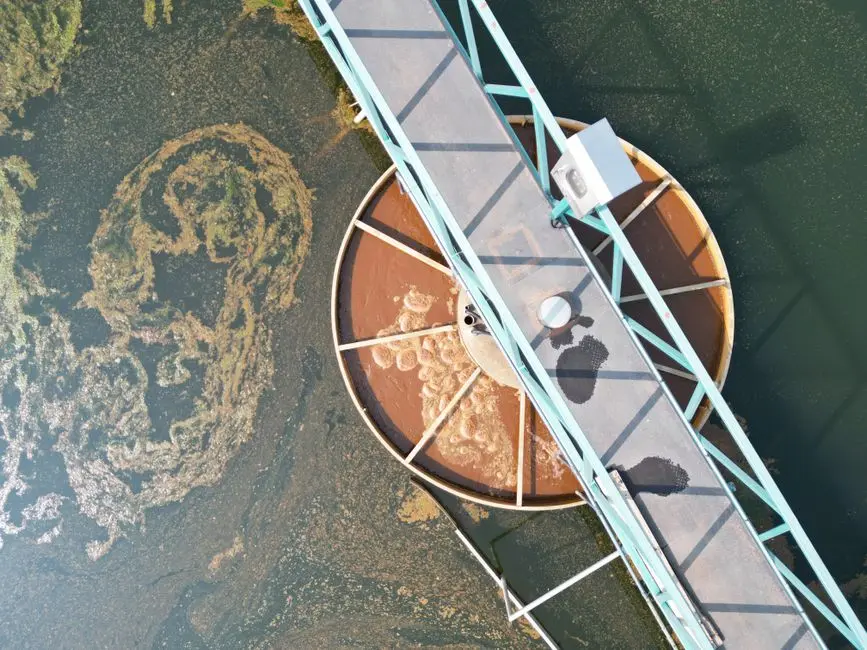
Environment Protection Notice (Water) Tasmania sets site-specific discharge limits via permit; council sewer discharge typically follows the NWQMS Guideline for Sewerage Systems with BOD 20 mg/L, TSS 30 mg/L, NH₃-N 5 mg/L, and pH 6.0–9.0 as the working envelope. Tasmanian EPA reviewers expect designers to demonstrate compliance through steady-state mass balance, not just nameplate performance, so any RFQ response should include a process flow diagram with calculated effluent concentrations at the design winter temperature.
A 10 °C drop from 20 °C roughly halves the nitrification rate, per the standard θ = 1.08 Arrhenius correction applied across the activated-sludge and MBBR literature. Practical consequence: MBBR/activated-sludge tanks in Hobart must be sized 1.4–1.8× larger than the tropical reference, or operated at 40–55% of the rated volumetric loading. Below-grade installation is the simplest passive mitigation — a buried tank holds 4–8 °C above ambient air through winter and reduces radiated noise, which is why the WSZ underground series maps so directly to Hobart small-scale municipal and hotel duty.
Other constraints are favourable. Hobart sits in seismic zone negligible and a temperate marine climate, so FRP or SS304 construction is acceptable without heavy corrosion allowance beyond standard industrial specifications (no coastal splash-zone upgrade required for most sites). The Tasmanian Wastewater Strategy is moving toward smaller, decentralised package plants for regional communities — a direction that positions packaged-skid suppliers strongly against traditional build-on-site concrete solutions.
How to Evaluate a Sewage Treatment Equipment Supplier in Hobart
A supplier that cannot produce cold-climate design evidence, English-language engineering documentation, and a confirmed Port of Hobart routing is not a serious candidate for a Tasmanian project. Use the following scorecard to compare shortlisted vendors; weight engineering documentation and cold-climate evidence at 30% each, and the remaining four criteria at 10% each.
- Engineering documentation (30%): minimum 8–10 deliverables per project — P&ID, GA drawings, electrical schematics, PLC program, O&M manual, and commissioning checklist in English.
- Cold-climate design evidence (30%): case studies in climates below 12 °C wastewater, or explicit Arrhenius-corrected kinetics in the design basis.
- Container shipping to Hobart (10%): FOB vs CIF terms, lead time 35–55 days Asia to Port of Hobart, Australian customs broker coordination confirmed in writing.
- Local commissioning support (10%): factory-engineer on-site commissioning typically costs AUD $8,000–$18,000 plus flights and accommodation for 7–14 days; confirm whether this is included or itemised.
- Spare parts and membrane replacement (10%): MBR membranes require replacement every 7–10 years; supplier must stock modules in Australia or airfreight within 5–7 days.
- Compliance documentation (10%): ISO 9001, CE marking, and where applicable WaterMark certification for plumbing components are baseline expectations.
Any vendor that scores below 60% on this rubric should be excluded. The single most common cause of project failure in offshore-supplied packaged plants is not equipment quality — it is a missing O&M manual and a PLC program that the local electrician cannot read.
2026 Pricing and Total Cost of Ownership for Hobart Projects
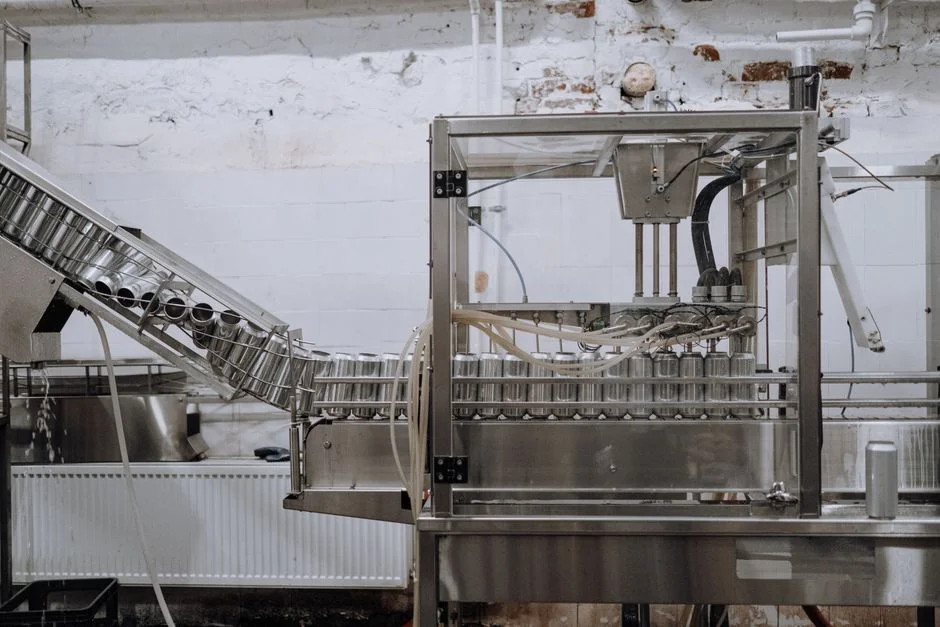
Landed CAPEX from Asian manufacturers for packaged sewage plants sits at AUD $1,800–$4,500 per m³/day, covering equipment, sea freight, insurance, and the 5% customs duty applicable to wastewater equipment under HS 8421. The Made-in-China 2026 screw press price band of US$3,100–3,800 per set (roughly AUD $4,700–5,800) anchors the major-component cost expectation. OPEX runs AUD $0.18–$0.65 per m³ treated, dominated by electricity at 0.35–0.55 kWh/m³ for MBR and 0.25–0.40 kWh/m³ for SBR, multiplied by Tasmania's commercial tariff of approximately AUD $0.28/kWh. Sludge disposal at Hobart landfill runs AUD $80–$140 per tonne, which is the financial lever that justifies a filter press or centrifuge on the solids line.
| Cost line | Range | Notes |
|---|---|---|
| Packaged plant CAPEX (landed) | AUD $1,800–$4,500 per m³/day | Includes sea freight + 5% duty under HS 8421 |
| On-site commissioning (factory engineer) | AUD $8,000–$18,000 + flights/ accommodation, 7–14 days | Often itemised separately in CIF quotes |
| Electricity (OPEX) | 0.25–0.55 kWh/m³ × AUD $0.28/kWh | MBR upper end, SBR lower end |
| MBR membrane replacement | Every 7–10 years | Budget ~15–20% of original MBR module cost |
| Sludge disposal (Hobart landfill) | AUD $80–$140 per tonne | Drives case for filter press dewatering |
| Hobart-specific contingency | 8–12% of CAPEX | Remote site access, crane hire, council fees, winter commissioning risk |
Add 8–12% contingency for Hobart-specific items: remote-site access on rural council roads, crane hire for tank lifts, council inspection fees, and the cost of extended commissioning if a winter performance trial runs cold. Skipping that line item is the most common budgeting error in Tasmanian packaged-plant tenders.
A 7-Step Procurement Roadmap for Hobart Sewage Treatment Projects
- Define design flow and load. Average daily flow, peak factor (typically 2.5–4× for sewer networks), and influent BOD, COD, TSS, total N, and total P from at least 12 months of composite sampling if available.
- Confirm discharge point. Sewer (council trade-waste permit), waterway (Tasmanian EPA permit), or irrigation (NWQMS recycled-water guidelines). The discharge point decides whether MBR-grade effluent is required or whether SBR-to-sewer is acceptable.
- Issue the RFQ with Hobart-specific addenda. Cold-climate derating calculation, Tasmanian compliance citation, and Port of Hobart delivery terms should be mandatory compliance fields, not optional.
- Shortlist 3 suppliers using the evaluation scorecard above. Weight engineering documentation and cold-climate evidence at 30% each; reject any candidate scoring below 60%.
- Conduct a factory acceptance test (FAT) via video or in person. Confirm dimensions, control logic, weld quality, and membrane integrity before shipment — a 30-minute FAT walk-through has saved more projects than any contract clause.
- Plan site works during Tasmania's driest months (December–March). Ground conditions, crane access, and concrete curing all improve; rain-day delay risk drops by roughly half compared with winter delivery.
- Commission with the factory engineer present, then run a 28-day performance trial before handover acceptance. Treat the trial as a contractual milestone tied to retention payment.
Frequently Asked Questions
What discharge limits apply to sewage treatment plants in Hobart?
Municipal discharge to a council sewer in Hobart typically follows the NWQMS Guideline for Sewerage Systems with BOD 20 mg/L, TSS 30 mg/L, NH₃-N 5 mg/L, and pH 6.0–9.0. Discharge to a waterway requires a site-specific permit under the Tasmanian Environment Protection Notice (Water), which is usually tighter than the sewer envelope.
How much colder is Hobart wastewater than the design reference, and what does that mean for sizing?
Hobart's mean winter wastewater temperature runs 8–12 °C against the 20 °C reference used in most Chinese factory curves. Per Arrhenius corrections, that gap derates biological activity 40–60%, so MBBR and activated-sludge tanks must be sized 1.4–1.8× larger than the tropical reference or operated at 40–55% of rated volumetric loading.
What is the typical landed cost of a packaged sewage plant from China to Hobart?
Landed CAPEX for packaged MBR, SBR, or A/O plants from Asian manufacturers sits at AUD $1,800–$4,500 per m³/day, including sea freight, insurance, and the 5% duty applicable under HS 8421. Add AUD $8,000–$18,000 for factory-engineer commissioning plus 8–12% Hobart-specific contingency.
Which technology is best for a food or seafood processor in Tasmania with high FOG?
A DAF pre-treatment skid rated at 4–300 m³/h handles the fats, oil, and grease load ahead of biological treatment. The biological stage is normally an A/O or SBR configured for the specific BOD and ammonia load, and the solids line should finish on a filter press to reduce landfill cost. For FOG-specific discharge limits, see the oil and grease discharge limit reference.