What the 2026 Total Nitrogen Limit Actually Is in India
India's total nitrogen (TN) discharge limit in 2026 is set by the CPCB under the Environment (Protection) Rules, 1986 — and the binding number depends on industry schedule and receiving water. Most general industrial effluents must achieve nitrate-N ≤10 mg/L on land application, while fertilizer, refinery, and distillery plants face stricter State PCB TN ceilings of 10–50 mg/L. Advanced biological nitrification-denitrification is the standard compliance pathway.
The 1986 framework remains the legal anchor; 2026 enforcement is layered on top with State PCB notifications (Maharashtra MPCB, Tamil Nadu TNPCB, Gujarat GPCB, Karnataka KSPCB) and CPCB's 2022–2024 sectoral guideline revisions. For municipal STPs discharging to water-quality-sensitive receiving bodies, the de facto TN target is ≤10 mg/L; for inland surface water discharges, ≤20 mg/L is generally accepted (CPCB SWM updation, 2020). On the industrial side, fertilizer and ammonia units typically face an NH₃-N ceiling of 15 mg/L under State PCBs, with total inorganic N capped near 30 mg/L. Gujarat GPCB's 2022 refinery notification tightened TN to ≤15 mg/L for coastal discharges, and Maharashtra MPCB's 2022 distillery order pushed total Kjeldahl nitrogen (TKN) to ≤25 mg/L — a roughly 50% reduction from the older CPCB baseline.
The practical takeaway for an EHS engineer writing a 2026 compliance bid: do not stop at the 1986 Schedule value. Pull the latest State PCB order for your sector and receiving water body. In most cases, the State ceiling is 20–50% tighter than the CPCB floor, and that delta is what determines whether a standard A/O train will suffice or you need an MBR polish.
How Indian Effluent Rules Decode TN Across Schedules
The 1986 Rules organize effluent standards into schedules, and most plant engineers mis-cite the wrong table. Here is how the TN parameter is actually distributed across the framework that binds 2026 enforcement.
| Schedule | Scope | Typical TN / NH₃-N Parameter | Notes for 2026 |
|---|---|---|---|
| Schedule I | 29 specific industries (fertilizer, petroleum refinery, dye & dye intermediates, pharma, distillery, sugar, etc.) | NH₃-N and/or NO₃-N embedded in industry parameter list | Each industry has its own value; pharma NH₃-N ≤5 mg/L, NO₃-N ≤10 mg/L; refinery NH₃-N ≤5 mg/L with TN ≤15 mg/L in GPCB 2022 |
| Schedule II | Composite effluents and CETPs | State Board sets tighter values than CPCB baseline | CETP TN is often ≤15 mg/L for inland discharge |
| Schedule VI | Hazardous waste — incinerator, landfill leachate | TN typically ≤50 mg/L | Tighter limits apply if leachate co-discharges to sewer |
| Part-A sectoral amendments | Sector-specific notifications (textile, distillery, sugar, fertilizer) | NH₃-N ≤5–15 mg/L by sector | CPCB 2022–2024 sectoral guidelines supersede generic Schedule values |
Schedule I is the most-misread section because the TN parameter is buried inside an industry-specific parameter list rather than presented as a standalone TN row. For example, the petroleum refinery entry lists NH₃-N ≤5 mg/L, but the binding TN ceiling of 15 mg/L in Gujarat comes from a 2022 GPCB notification overlaying the same industry. For distilleries, the older CPCB text shows TKN ≤50 mg/L; the 2026 enforcement value in Maharashtra and Karnataka is ≤25 mg/L. Pharma's NH₃-N ≤5 mg/L and NO₃-N ≤10 mg/L values were clarified in the 2022 CPCB amendment, with TN ≤15 mg/L as the practical composite for inland discharge. The hierarchy is unambiguous: the 1986 text is the legal floor, but 2026 enforcement uses the latest amended and sector-specific notification that applies to your State and receiving water body.
TN Limits by Industry — 2026 Compliance Snapshot
The table below consolidates the binding TN or NH₃-N values from CPCB Schedule I and the most recent State PCB notifications (Maharashtra 2022, Tamil Nadu 2023, Gujarat 2022, Karnataka 2024) for the six sectors Indian EHS engineers most often ask about.
| Industry | NH₃-N Limit | NO₃-N Limit | Total N (TKN + NO₃-N) | Governing Notification |
|---|---|---|---|---|
| Fertilizer (ammonia/urea) | ≤15 mg/L | ≤10 mg/L | ≤30 mg/L | CPCB Schedule I + State PCBs |
| Distillery (molasses/grain) | ≤10 mg/L | ≤10 mg/L | ≤25 mg/L | Maharashtra MPCB 2022 order; KSPCB 2024 |
| Pharma (formulations/APIs) | ≤5 mg/L | ≤10 mg/L | ≤15 mg/L | CPCB 2022 amendment |
| Textile (dyeing/finishing) | ≤5 mg/L | ≤10 mg/L | ≤20 mg/L; CETP units ≤15 mg/L | CPCB textile guidelines 2022 + State PCBs |
| Petroleum refinery (coastal) | ≤5 mg/L | — | ≤15 mg/L | GPCB 2022 refinery notification |
| Pulp & paper (inland discharge) | ≤5 mg/L | ≤10 mg/L | ≤15 mg/L | CPCB Schedule I + CPCB 2023 sectoral update |
For fertilizer plants, the practical compliance target after an MBBR-A/O train with polishing is TN ≤30 mg/L — not ≤10 mg/L, because the influent NH₃-N load of 1,000–2,000 mg/L from urea/ammonia operations makes a 10 mg/L effluent economically punitive without an MBR or RO polish. Distillery effluent behaves differently: with influent TKN often 800–1,500 mg/L but a high BOD:N ratio (8–12:1) from spent wash, biological nitrification-denitrification alone can typically hit TN ≤25 mg/L. Pharma is the tightest sector at TN ≤15 mg/L and is the dominant driver of MBR retrofits in Indian formulation clusters (Hyderabad, Ahmedabad, Bangalore).
How TN Is Measured and Reported in India
Designing to one TN number and reporting against another is one of the most common audit failures at Indian ETP/STP sites. The 1986 Rules and subsequent CPCB guidelines define TN reporting through the sum of three analytically separate fractions.
- TKN (Total Kjeldahl Nitrogen): digested and distilled per IS 3025 Part 34; includes organic-N + ammonia-N but excludes NO₃-N and NO₂-N.
- NO₃-N: UV spectrophotometry at 220 nm with 275 nm interference correction, per IS 3025 Part 34.
- NO₂-N: colorimetric method (NEDA or sulphanilamide), per IS 3025 Part 34.
Total nitrogen in compliance reporting is typically reported as TKN + NO₃-N + NO₂-N; some State PCBs (Maharashtra, Gujarat) accept TKN + NO₃-N as TN for routine self-monitoring, but full-component reporting is required during consent renewal audits. Online TN analyzers using UV 220 nm correlation or combustion chemiluminescence are increasingly mandated for continuous discharge of fertilizer and refinery units — typically at 6-hour averaging windows. Sample preservation is non-negotiable: acidify with H₂SO₄ to pH <2, refrigerate at 4 °C, hold ≤24 h for TKN and ≤48 h for NO₃-N. Above pH 2 or beyond holding time, organic-N hydrolyses and TKN reads 10–20% high, which will fail a compliance report even when the process is genuinely compliant.
Choosing the Right Treatment Train to Hit ≤10 mg/L TN
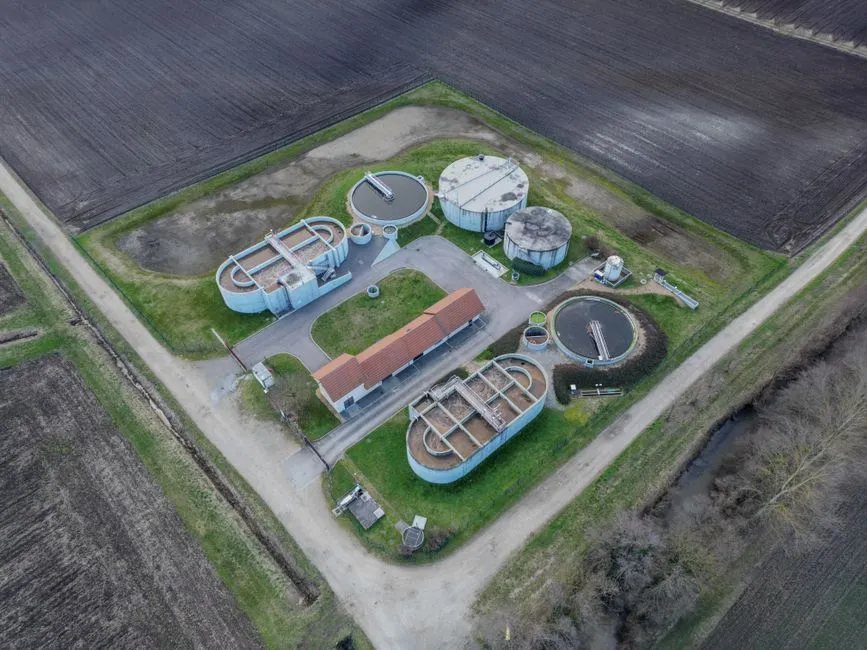
Train selection in India is driven less by textbook performance and more by influent temperature, C/N ratio, and the TN ceiling your State PCB is enforcing. Four process options dominate 2026 bid specifications.
| Process | Typical TN Effluent | HRT | SRT | MLSS | Best-Fit Indian Influent |
|---|---|---|---|---|---|
| A/O (anoxic-oxic) MLE | ≤10–15 mg/L | 14–22 h | 15–25 d | 3,500–5,000 mg/L | C/N ≥6:1, NH₃-N ≤200 mg/L, refinery and pharma secondary treatment |
| MBBR (anoxic + aerobic stages) | ≤8–12 mg/L | 6–10 h | Biofilm-based, no recycle SRT | Carrier fill 30–40% | High-TN influent, warm temperature 30–40 °C, fertilizer and distillery |
| SBR (timed anoxic-aerobic) | ≤10–15 mg/L | Cycle 6–8 h | 20–30 d | 4,000–6,000 mg/L | Small-to-mid distillery, pharma batch discharges, flow 50–500 m³/d |
| MBR polish | ≤3–5 mg/L | 10–14 h (bio) + membrane | 30+ d | 8,000–12,000 mg/L | Pharma TN ≤15 mg/L, refinery reuse, semiconductor |
The A/O MLE with a 30% internal recycle and SRT of 15–25 d remains the workhorse for refinery and pharma secondary treatment where influent C/N is already ≥6:1. For fertilizer and distillery where NH₃-N can hit 1,000–2,000 mg/L and temperatures run 35–45 °C, the MBR membrane bioreactor for tertiary TN polishing paired with an anoxic MBBR front-end is the most common 2026 winning configuration. SBR is favored for batch-discharging pharma and mid-size distilleries because the timed anoxic-aerobic cycle avoids a dedicated anoxic tank and keeps footprint small — a useful WSZ series underground A/O package plant variant exists for flow 10–100 m³/d sites. When the TN ceiling is ≤3 mg/L — common in pharma and semiconductor — a tertiary denitrification filter with methanol feed is added downstream, raising CAPEX but reliably delivering 1–2 mg/L effluent TN.
Carbon supplementation matters when BOD:N falls below 4:1. Standard methanol dose is 3 g CH₃OH per g NO₃-N removed; for pharma where methanol residue is restricted, acetate or ethanol are dosed at 3.5–4 g COD per g NO₃-N. Without supplementation, denitrification stalls at 30–50% efficiency and effluent TN reads 20–40 mg/L even on a well-designed A/O train.
Process Design Parameters for 2026 Compliance
Before signing a process guarantee, check that the bid specification actually meets these design floors at site temperature. The most common 2026 retrofit failure in India is bidding an A/O MLE at 20 °C design SRT and discovering at 35 °C site SRT that nitrification is unstable.
| Parameter | Design Target | Failure Threshold | Why It Matters in India |
|---|---|---|---|
| Aerobic SRT (20 °C) | ≥18 d | <10 d at 35 °C | Below 5 d at any temperature, NO₂-N accumulates and TN fails |
| DO (aerobic zone) | 2–3 mg/L | <1.5 mg/L | Below 0.2 mg/L triggers incomplete denitrification |
| DO (anoxic zone) | 0.2–0.5 mg/L | >0.8 mg/L | Excess DO in anoxic zone suppresses NO₃-N reduction |
| MLVSS/MLSS ratio | 0.6–0.8 | <0.5 | Indicates toxic inhibition; common with textile and refinery influent |
| C/N ratio (influent) | 5–8 | <4 or >10 | Below 4 requires external carbon; above 10 wastes BOD and aeration cost |
| Clarifier SOR (peak) | ≤20 m³/m²/d | >30 m³/m²/d | Sludge washout at peak flows destroys SRT |
| Sludge yield | ~0.3 kg TSS/kg BOD | — | Sets sludge handling OPEX at 8–12% of total |
For high-MLSS denitrification systems targeting TN ≤5 mg/L, DF-series PVDF flat sheet membrane modules at 0.1–0.4 μm pore size let you push MLSS to 10,000–12,000 mg/L without clarifier washout — this is what unlocks the 30+ d SRT needed for stable nitrification at 35–40 °C site temperatures.
2026 Compliance Cost Benchmarks (India)
Most engineers can defend the technology but not the number. These are the CAPEX and OPEX ranges we see across Indian bid evaluations in 2026 for TN-compliance retrofits.
- Retrofit MBBR-A/O CAPEX: ₹18–35 lakh per 100 m³/d for 50–200 m³/d flows; economies of scale bring this to ₹12–18 lakh per 100 m³/d above 1,000 m³/d (HydropureWater field data, 2026).
- MBR polish for ≤5 mg/L TN: adds ₹25–55 lakh per 100 m³/d over the base biological system, dominated by membrane modules and blowers.
- OPEX: ₹2.5–6.5 per m³ treated. Aeration accounts for 55–65%, methanol/carbon dosing 10–18%, sludge handling 8–12%, and membrane cleaning 5–8% for MBR-equipped sites.
- CPCB sampling and lab compliance: ₹1.5–4 lakh per year per plant for monthly TN panels plus 24-hour composite sampling and online analyzer certification.
For the pre-treatment side, DAF pre-treatment upstream of biological nitrogen removal is now standard at distillery and textile sites to strip FOG and suspended solids that would otherwise toxic-shock the nitrifier population. Methanol feed accuracy matters at low TN targets — PLC-controlled methanol dosing for denitrification holds the C:N window inside ±5% and is the cheapest insurance against a failed consent renewal.
Frequently Asked Questions
What is the CPCB total nitrogen limit for fertilizer plant effluent in 2026?
Fertilizer plants face NH₃-N ≤15 mg/L and TN ≤30 mg/L under CPCB Schedule I, with State PCBs (Maharashtra, Gujarat, Karnataka) typically enforcing the same ceiling. MBBR-A/O with polishing reliably hits this range at 1,000–2,000 mg/L influent NH₃-N.
Which schedule of the 1986 Rules applies to pharma TN discharge?
Schedule I covers pharma formulations and APIs, with NH₃-N ≤5 mg/L, NO₃-N ≤10 mg/L, and TN ≤15 mg/L after the 2022 CPCB amendment. MBR polish is the standard 2026 compliance configuration.
What TN limit do State PCBs enforce over the CPCB floor?
Maharashtra MPCB's 2022 distillery order sets TKN ≤25 mg/L (50% tighter than the older CPCB 50 mg/L). Gujarat GPCB's 2022 refinery notification sets TN ≤15 mg/L for coastal discharges. Karnataka KSPCB's 2024 distillery guideline aligns with Maharashtra.
What is the minimum C/N ratio for biological denitrification to hit ≤10 mg/L TN?
A C/N ratio of 5–8 is the design window for endogenous denitrification. Below 4, external carbon (methanol 3 g/g NO₃-N, or acetate/ethanol at 3.5–4 g COD/g NO₃-N) is required to avoid incomplete denitrification and high effluent TN.
How is total nitrogen measured for CPCB compliance reporting?
TN is reported as TKN + NO₃-N + NO₂-N per IS 3025 Part 34. Samples are preserved with H₂SO₄ to pH <2, refrigerated at 4 °C, with 24 h holding for TKN and 48 h for NO₃-N. Online UV 220 nm analyzers are increasingly required for fertilizer and refinery continuous discharge.