Hospital Wastewater Treatment in England UK: 2026 Compliance & Engineering Guide
Hospital wastewater treatment in England UK in 2026 is governed by the Urban Waste Water Treatment (England and Wales) Regulations 1994, which require Defra to assess compliance per agglomeration and publish an annual situation report. Hospitals must additionally hold an Environment Agency discharge permit or a Trade Effluent Consent with their local water company. A standard 2026 process train — rotary screening, biological treatment (MBR or contact oxidation), and chlorine dioxide disinfection — reliably achieves COD <50 mg/L and undetectable total coliforms at 5–500 m³/day flows typical of English hospitals.
Why Hospital Wastewater in England Faces Tighter Scrutiny in 2026
The Urban Waste Water Treatment (England and Wales) Regulations 1994 place a direct reporting duty on Defra: assess compliance with the Regulations in each agglomeration, defined as "each area where wastewater is collected to be treated or discharged," and publish a situation report on the disposal of urban wastewater and sludge. The most recent published data set covers the 2020 reporting year and was released on GOV.UK on 2022-12-21; the 2024 reporting cycle is now the operational baseline for any 2026 retrofit specification. A standalone hospital site is its own agglomeration if it discharges directly to a watercourse, but a hospital draining to a municipal sewer becomes part of the receiving water company's agglomeration — and the Trust inherits the water company's compliance risk profile, not its own.
The Environment Agency sets discharge permits for any site discharging to surface water or groundwater under the Environmental Permitting (England and Wales) Regulations 2016. Where a hospital instead discharges to sewer, the route is a Trade Effluent Consent issued by the receiving water company — Thames Water, United Utilities, Severn Trent, Anglian, Yorkshire, Northumbrian, Southern Water, Wessex, South West, or Dŵr Cymru — under the Water Industry Act 1991. Both routes are live in 2026; both have hard consent limits.
Added to that is a third compliance lens: wastewater-based epidemiology (WBE) surveillance. The UK Health Security Agency and the Environment Agency have, since 2024, intensified routine monitoring for SARS-CoV-2, influenza A/B, RSV, and antimicrobial resistance (AMR) gene markers at WwTWs serving NHS catchments. Several NHS Trusts have received formal requests for flow data and sampling access at the upstream point — a request that flows uphill into on-site pre-treatment works, not into the municipal plant. AMR marker detection in hospital effluent is now part of the published UK surveillance literature, and that evidence base is being used by the Environment Agency when setting permit review conditions (per Defra WBE programme outputs, 2024–2025). The cumulative effect: a hospital estates team in 2026 is simultaneously managing a Defra situation-report obligation, an Environment Agency or water-company consent, and an implicit duty to support WBE sampling.
What Comes Out of a Typical English Hospital Sewer
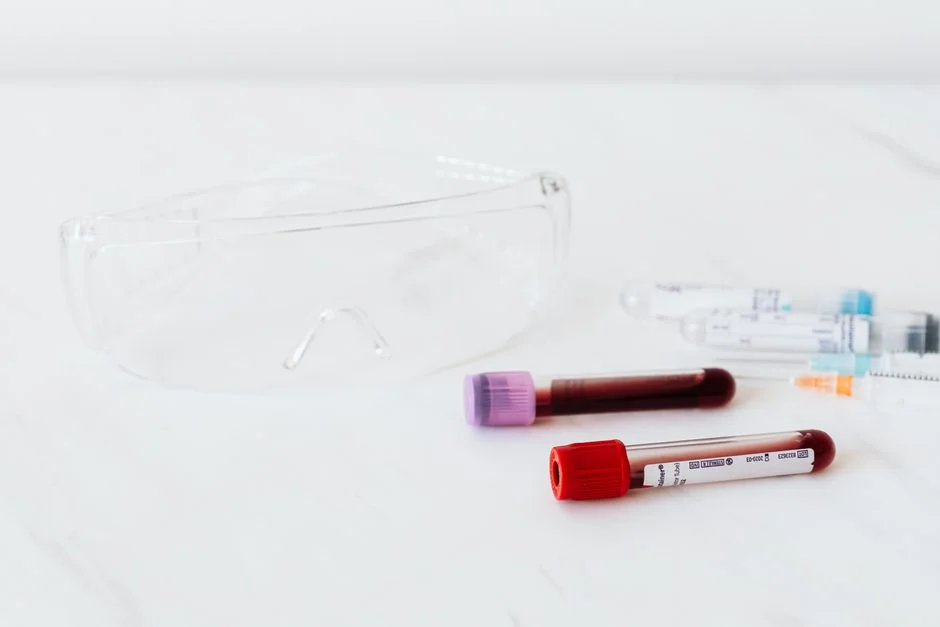
Hospital sewage is not domestic sewage with extra steps. The influent profile combines toilet and catering flows with a pharmaceutical, microbiological, and radiological load that no municipal catchment carries. The table below is a defensible design envelope based on UK-published hospital effluent surveys and the broader Verlicchi et al. (Springer, 2017) review of hospital wastewater characteristics; it is what a 2026 process train should be sized against, not the 200 mg/L COD assumption that works for a housing estate.
| Parameter | Typical English hospital range | Design value (peak) |
|---|---|---|
| BOD5 | 150–400 mg/L | 450 mg/L |
| COD | 250–600 mg/L | 700 mg/L |
| TSS | 100–350 mg/L | 450 mg/L |
| NH3-N | 20–80 mg/L | 100 mg/L |
| Total coliforms | 106–108 CFU/100 mL | 108 CFU/100 mL |
| pH | 6.5–8.5 | 6.0–9.0 |
| Temperature | 15–30 °C | 35 °C |
The BOD5:COD ratio of 0.77 reported for hospital wastewater in the Chlorella sp. LH2 study (Bioresources and Bioprocessing) confirms that the organic fraction is genuinely biodegradable — not a refractory industrial load — so conventional biological treatment is the right first move. That ratio is high relative to chemical or food-processing effluents, which usually sit closer to 0.4–0.5, and it means an MBR or contact-oxidation stage will do real work on the carbon load rather than just polishing a chemical precipitate.
Distinctive contaminants sit on top of that envelope. Pharmaceutical residues — antibiotics, analgesics, anaesthetics, hormones, cytotoxics from oncology day units — discharge in microgram-per-litre concentrations that the municipal plant is not optimised to remove. Iodinated X-ray contrast media loads in kilogram-per-day quantities from a busy radiology department, and they pass through most biological plants largely untouched. Disinfectants — glutaraldehyde from endoscopy, formaldehyde from histopathology, quaternary ammonium compounds from surface cleaning — suppress downstream biology if equalisation is poor. Radioisotopes from nuclear medicine (Tc-99m, I-131) are short-lived but arrive in pulses and need their own decay tank. Flow variability is the underrated problem: a small clinic runs 5–50 m³/day, a district general hospital 200–500 m³/day, and a large teaching hospital 800–1,500 m³/day, with diurnal peaks at 08:00–10:00 and 18:00–20:00 that are 2–3× the night baseline. Equalisation at 8–12 hours retention is the standard defence; without it, the disinfection stage fails on the morning peak.
The 2026 Process Train That Satisfies UK Regulators
The process train below is the one that has held up across NHS retrofits, private hospital builds, and Environment Agency permit reviews between 2022 and 2026. It has four stages: headworks, biological, disinfection, and (where reuse is targeted) polishing. Performance numbers in the table are drawn from the cited case studies and from packaged-plant operating data; they are what a procurement engineer should be benchmarked against, not what a marketing sheet claims.
Stage 1 — headworks. A rotary mechanical bar screen with 3–5 mm aperture is the right starting point. Hospital sewage post-2020 contains substantially more rags, PPE fragments, and plastic than the pre-2020 baseline, and a 6 mm screen — the old default — passes too much. The 3 mm aperture is also a defensible position when explaining to the Environment Agency why the downstream MBR membrane is not rag-fouled every quarter.
Stage 2 — biological treatment. Two options are credible for 2026. A submerged MBR — PVDF flat-sheet or hollow-fibre, nominal pore size 0.1–0.4 μm — gives the best effluent quality and the smallest footprint. The Scientific.Net case study at 200 m³/day reported COD <50 mg/L and NH3-N <10 mg/L using a biological contact oxidation + MBR combination, with no detectable total or faecal coliforms in the MBR permeate. The HRT finding from the same group's contact-oxidation work — at HRT >4h the effluent meets BOD/COD discharge limits, but SS still needs polishing — translates directly into UK design: size the aeration tank at 4–6 h HRT at average flow, and accept that a membrane stage is the SS polisher, not an optional extra. A conventional extended-aerobic activated-sludge plant is the lower-CAPEX option where footprint allows. Either way, downstream disinfection sees a low-SS, low-COD feed, which is what the chlorine dioxide stage needs to work.
Stage 3 — disinfection. An on-site chlorine dioxide generator is the preferred 2026 option. The Scientific.Net comparative study recommended "effective complex chlorine dioxide generator" as the preferred hospital wastewater sterilant over sodium hypochlorite, chlorine, ozone, and UV. The engineering reasons are concrete: ClO2 has a 2.5× higher oxidation potential at equivalent dose, no trihalomethane formation across pH 6–9 (NaOCl forms THMs at any pH above 7), and proven biofilm control in the distribution pipework downstream. A 0.5–1.0 mg/L residual ClO2 after 30 minutes contact time gives ≥3-log reduction in total coliforms and ≥4-log in E. coli, which satisfies both Environment Agency permit conditions and the implicit WBE sampling requirement by keeping indicator organisms below detection between sampling events. A submerged MBR membrane bioreactor skid can house the biological stage and a packaged ClO2 unit in a single ISO-frame container for sites with no civil build room.
Stage 4 — polishing. Where the treated effluent is to be reused for toilet flushing, irrigation of non-potable landscape, or boiler make-up, add a sand/multimedia or UF membrane polish to drop turbidity below 2 NTU. A compact medical wastewater treatment system skid that combines screening, MBR, and ClO2 in one enclosure is the right answer for clinics in the 5–50 m³/day band that do not have a plant room and do not want one built.
| Stage | Equipment | Design basis | Effluent target |
|---|---|---|---|
| 1. Headworks | Rotary bar screen, 3–5 mm | Peak flow + 25% | Remove rags, PPE, plastics |
| 2. Biological | Submerged MBR, 0.1–0.4 μm PVDF | HRT 4–6 h, MLSS 8–12 g/L | COD <50 mg/L, NH3-N <10 mg/L, TSS <5 mg/L |
| 3. Disinfection | ClO2 generator, 0.5–1.0 mg/L residual | 30 min contact, CT ≥15 mg·min/L | Total coliforms not detected |
| 4. Polishing (optional) | MM filter or UF, 0.01–0.05 μm | For reuse only | Turbidity <2 NTU |
Discharge to Sewer vs On-Site Treatment: The UK Decision Rule
Most English hospitals in the 5–500 m³/day band can choose between two compliant routes: a Trade Effluent Consent with the local water company, or a full on-site treatment plant with discharge to either sewer (rare, since most sites are already in the sewer catchment) or directly to a watercourse under an Environment Agency permit. The choice is economic and risk-based, not regulatory.
The Trade Effluent Consent route is the right default for any site with municipal sewer access and no on-site cytotoxic, radioisotope, or isolation-ward load. Application is made to the receiving water company under the Water Industry Act 1991; typical consent parameters are COD, suspended solids, ammoniacal nitrogen, pH, temperature, and a metals screen. The water company has a statutory duty to consent unless the discharge would harm the sewer or the downstream works, and consent is normally issued within 2–3 months. Charges are volumetric and trade-effluent-specific, set under the water company's Ofwat-approved methodology.
On-site treatment becomes mandatory when any of the following apply: the site handles cytotoxic drugs without a dedicated decay/dilution system, the site holds an Environment Agency permit for direct discharge to surface water, the site is upstream of a WwTW that the Environment Agency has flagged for catchment-level AMR surveillance, or the site's effluent temperature or pH excursions would breach the water company's standard consent conditions. A standalone hospital — one whose site drainage does not enter a public sewer before treatment — falls under the UWWTR 1994 agglomeration definition and triggers the Environment Agency's permitting framework, not the water company's consent regime.
| Criterion | Discharge to sewer (Trade Effluent Consent) | On-site treatment + discharge to watercourse |
|---|---|---|
| Regulator | Local water company | Environment Agency (Environmental Permit) |
| Statutory basis | Water Industry Act 1991 | Environmental Permitting Regs 2016 + UWWTR 1994 |
| Typical CAPEX | £5k–£25k (consent admin, pre-treatment only) | £150k–£1.5M (full MBR + ClO2 plant) |
| OPEX burden | Volumetric charge £0.50–£2.50/m³ | £0.22–£0.53/m³ all-in |
| Compliance reporting | Self-monitoring + spot checks | Quarterly self-monitoring, annual return |
| Best for | Sites with municipal sewer, low cytotoxic load | Standalone sites, direct discharge, AMR-sensitive catchments |
2026 CAPEX and OPEX for a UK Hospital Effluent Plant
The numbers below are 2026 all-in figures: equipment, installation, civils (foundations, interconnecting pipework, MCC), commissioning, and the first year's consumables. OPEX includes electricity at the 2026 industrial tariff of roughly 24–28 p/kWh, ClO2 precursor chemicals (citric acid + sodium chlorite), membrane replacement amortised over a 5–7 year cycle, and operator time at <2 hr/day for a packaged plant. The OPEX range is consistent with the broader UV disinfection OPEX breakdown benchmark for 2026 and the oxidation ditch operating cost economics for energy and sludge handling.
| Flow band | Site type | CAPEX (2026 GBP) | OPEX (£/m³) |
|---|---|---|---|
| 20 m³/day | Small clinic / day surgery | £65k–£110k | £0.55–£0.90 |
| 100 m³/day | District general hospital | £180k–£320k | £0.30–£0.55 |
| 500 m³/day | Large teaching hospital | £750k–£1.4M | £0.22–£0.40 |
The packaged MBR baseline is £0.18–£0.45/m³ in 2026 for the biological stage alone; adding chlorine dioxide disinfection contributes a further £0.04–£0.08/m³ in precursor chemicals and power, bringing the all-in packaged-plant OPEX into the £0.22–£0.53/m³ band. Once flow exceeds roughly 150 m³/day, on-site treatment becomes cheaper than a Trade Effluent Consent volumetric charge of £0.50–£2.50/m³, particularly for sites with restricted sewer capacity or a contested consent renewal. The 100 m³/day district-general case is the band where the decision genuinely matters: the OPEX crossover sits inside that envelope and the right answer depends on site layout, sewer proximity, and the Trust's appetite for capital spend versus operating risk.
Frequently Asked Questions
Does a hospital in England need an Environment Agency discharge permit?
Only if it discharges directly to a watercourse or groundwater, in which case the UWWTR 1994 agglomeration definition applies and an Environmental Permit under EPR 2016 is required; otherwise a Trade Effluent Consent with the local water company under the Water Industry Act 1991 is the standard route.
Why is chlorine dioxide preferred over sodium hypochlorite for hospital effluent?
Chlorine dioxide delivers ≥3-log total coliform reduction at 0.5–1.0 mg/L residual with 30 min contact, and does not form trihalomethanes at pH 6–9 the way sodium hypochlorite does, which is the key reason the Scientific.Net comparative study recommended it for hospital wastewater.
What is a realistic 2026 CAPEX figure for a 100 m³/day hospital effluent plant in England?
£180,000–£320,000 all-in for a packaged MBR plus chlorine dioxide system, including installation, civils, and commissioning, based on current UK packaged-plant pricing.
How do I get a Trade Effluent Consent in England?
Apply to the receiving water company — Thames, United Utilities, Severn Trent, Anglian, Yorkshire, or whichever company operates the local sewer — under the Water Industry Act 1991, with a characterisation of the discharge against standard consent parameters (COD, SS, NH3, pH, temperature, metals).
Is hospital wastewater in England being monitored for antimicrobial resistance?
Yes — the UK Health Security Agency and Environment Agency have run wastewater-based epidemiology surveillance for SARS-CoV-2, influenza, RSV, and AMR gene markers at WwTWs serving NHS catchments since 2024, and AMR marker detection in hospital effluent is part of the published evidence base the Environment Agency uses when reviewing permits.
Related Equipment
- underground packaged sewage treatment plant — specifications, capacity range, and technical data