What 'Wastewater Treatment Plant Manufacturer in Alexandria' Means in 2026
A buyer sourcing a wastewater treatment plant manufacturer in Alexandria for a 2026 project will encounter three distinct supplier archetypes, and the right fit depends entirely on capacity, process risk, and who holds the operating liability. The first archetype is the global EPC operator running municipal mega-projects — SUEZ and Arab Contractors have operated and maintained the 800,000 m³/day East Alexandria plant since 2012, covering 4.5 million residents and recovering 50% of the plant's energy needs from anaerobic digestion (SUEZ Africa references, 2026). The second is the regional civil contractor handling the civil works, piping, and EEAA permit coordination for mid-scale municipal builds. The third is the Chinese OEM package-plant manufacturer exporting containerized or skid-mounted MBR and SBR systems, typically in the 10–500 m³/day range, which dominates the 2024–2026 export pipeline to Egypt.
No domestic Egyptian OEM currently builds in the 800,000 m³/day class — that tier is reserved for global EPCs operating under multi-decade concessions. The 2026 buyer's market for industrial and mid-municipal plants (10–10,000 m³/day) is a mix of Chinese OEMs supplying skids plus local EPCs performing integration, erection, and commissioning. The December 2023 East Alexandria extension added anaerobic digester units to the existing train, which is direct evidence that 2026 demand is split between greenfield and retrofit/upgrade work — buyers specifying a supplier should confirm whether the OEM has a documented retrofit track record before issuing the RFQ.
Egypt's 2026 Compliance Framework Buyers Must Specify
Law 4/1994 is the parent Egyptian environmental statute; Decree 44/2000 is the executive regulation that sets the industrial and municipal discharge schedule enforced by the Egypt Environmental Affairs Agency (EEAA). Any RFQ for a treatment plant must reference both instruments explicitly, because suppliers cannot later claim the discharge ceiling was ambiguous if the tender text quotes the schedule directly. For industrial effluent discharging to a municipal sewer, Decree 44/2000 sets typical ceilings of BOD ≤ 60 mg/L, COD ≤ 120 mg/L, TSS ≤ 60 mg/L, and pH 6–9, with heavy-metal and color limits referenced in the annexes — for a deeper walkthrough of the color parameter, the Egypt color discharge compliance guide covers the 2026 enforcement thresholds in detail.
Alexandria-specific overlays add three more layers buyers must capture. Law 93/1962 governs municipal sewer connection and the technical conditions for industrial discharge into the Alexandria sewer network operated by AlexRenew. Alexandria Governorate environmental permits sit on top of EEAA approval, and the approval sequence — EEAA → Governorate → AlexRenew — must be planned into the project schedule at RFQ stage, not after contract award. Coastal intake sites on Alexandria's western harbor commonly see TDS of 800–1,200 mg/L in the raw wastewater stream, which drives brine-tolerant membrane selection and corrosion-rated civil works. The 800,000 m³/day East Alexandria plant is operated under a long-term O&M concession model, and buyers evaluating large municipal bids can reference that delivery structure when negotiating performance guarantees and operator-EPC liability split.
Manufacturer Categories and Process Technologies Compared
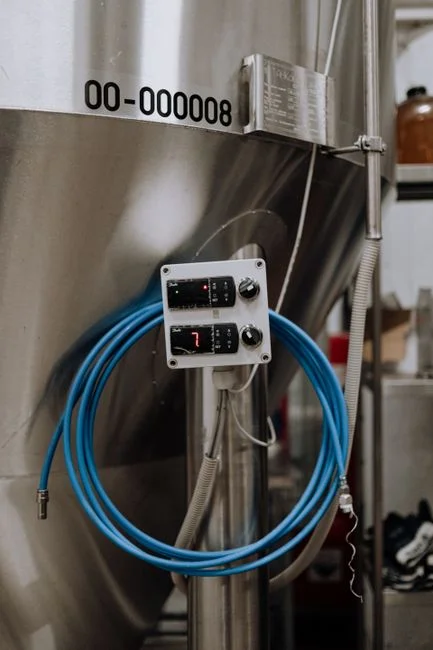
Four technology buckets cover roughly 90% of what an Alexandria buyer will be offered in 2026. The table below maps process type, capacity range, and the end-user profile it fits — use it as the first-pass filter before requesting quotes.
| Process type | Capacity range | Key design parameters | Typical Alexandria end-user |
|---|---|---|---|
| Containerized MBR (skid-mounted) | 10–500 m³/day | 0.1–0.4 μm PVDF hollow-fiber or flat-sheet membranes; effluent TSS < 1 mg/L | Hotels, hospitals, factories inside industrial zones or free zones |
| Civil MBR (concrete tank + cassette membranes) | 500–10,000 m³/day | Footprint ~60% smaller than conventional activated sludge; MLSS 8,000–12,000 mg/L | Residential compounds, large commercial developments, airport/port utilities |
| SBR / cyclic activated sludge | 200–20,000 m³/day | Robust to hydraulic and organic shock loads; no separate clarifier | Tanneries, food processors, intermittent-flow industrial sites |
| Anaerobic + aerobic hybrid | 1,000–100,000+ m³/day | UASB or EGSB upstream; biogas CHP for energy recovery (target ≥ 50% plant energy) | Breweries, dairy, agro-industry, and large municipal retrofits modeled on East Alexandria |
The civil MBR package plant and the containerized package STP are the two configurations most frequently quoted by Chinese OEMs for mid-capacity industrial and commercial buyers. Containerized MBR is the fastest-growing export category from Chinese suppliers to Egypt across 2024–2026 because it compresses delivery to 8–14 weeks ex-factory and sidesteps much of the on-site civil coordination that delays conventional builds.
2026 CAPEX and OPEX Ranges for Alexandria WWTP Projects
The figures below are industry-typical 2026 ranges for the Egyptian and wider MENA market, not quotes from any specific tender. Use them to build a defensible budget envelope and to challenge vendor premiums during negotiation.
| Capacity band | CAPEX range (USD/m³ installed) | OPEX range (USD/m³ treated) | Notes |
|---|---|---|---|
| Containerized ≤ 500 m³/day | 180–450 | 0.15–0.32 | Fastest install; membrane replacement every 7–10 years |
| Civil MBR 500–5,000 m³/day | 400–900 | 0.10–0.22 | Lower OPEX at scale; energy 0.3–0.6 kWh/m³ |
| Civil SBR / anaerobic hybrid > 5,000 m³/day | 500–1,200 | 0.08–0.18 | Energy-recovery tier; design toward the 50% benchmark set at East Alexandria |
OPEX assumptions behind the table include membrane replacement every 7–10 years for MBR cassettes, energy draw of 0.3–0.6 kWh/m³ for fine-screening and aeration, and sludge haul-off at $20–$60/tonne depending on dewatering efficiency and disposal route. For any plant above 10,000 m³/day, the 50% energy-recovery benchmark set at the East Alexandria facility should be the design target — the PVDF flat-sheet MBR module configurations and a sludge dewatering press are the two equipment items most often under-specified in budget-stage tenders. Add a 10–18% logistics and customs premium for equipment imported through Alexandria or Damietta ports versus locally fabricated skids; the premium widens further if membrane cassettes are shipped in climate-controlled containers.
7-Point Supplier Scorecard for Alexandria WWTP Manufacturers
Apply this scorecard to every shortlisted OEM before issuing a technical clarification. Each row is binary or 0–3 weighted; total possible score is 21.
| # | Criterion | What to verify | Weight |
|---|---|---|---|
| 1 | CE / ISO 9001 / ISO 14001 certification | Current certificate numbers traceable to the issuing body; scope covers WWTP, not parent group | 3 |
| 2 | Reference plants in MENA or Africa | At least 2 operating references ≥ 3 years old; ask for operator contact | 3 |
| 3 | Factory Acceptance Test (FAT) documentation | Standard FAT protocol; option for witnessed FAT in China or via live video | 3 |
| 4 | Arabic/English commissioning support | Commissioning engineer Arabic-fluent; O&M manual in Arabic and English | 3 |
| 5 | Local agent or regional office | Egypt-based or Cairo-based representative with signed authorization letter | 3 |
| 6 | Spare parts lead time | Critical spares (membranes, diffusers, blowers) ≤ 21 days to Alexandria | 3 |
| 7 | Membrane and media warranty terms | ≥ 5 years on membranes, written exclusion list, prorated vs. full replacement | 3 |
Aggregator platforms list 50+ suppliers, but they do not vet compliance with Law 4/94 or Decree 44/2000. The SUEZ/Arab Contractors partnership at East Alexandria is a useful reference for owner-operator-EPC coordination: a single concessionaire holds process performance risk, which removes the most common dispute trigger in Egyptian WWTP contracts.
Frequently Asked Questions
What is the largest wastewater treatment plant in Alexandria and what is its 2026 benchmark?
The SUEZ/Arab Contractors East Alexandria plant treats 800,000 m³/day for 4.5 million residents and recovers 50% of its energy from anaerobic digestion (SUEZ Africa references, 2026) — any plant above 10,000 m³/day should be designed against that 50% energy-recovery target.
Which laws govern WWTP discharge compliance in Egypt for 2026?
Law 4/1994 sets the parent environmental framework; Decree 44/2000 schedules industrial and municipal discharge limits enforced by the EEAA, with BOD ≤ 60 mg/L, COD ≤ 120 mg/L, and TSS ≤ 60 mg/L to municipal sewer.
What capacity range is best served by containerized MBR versus civil MBR in Alexandria?
Containerized MBR is economic from 10–500 m³/day and ships in 8–14 weeks; civil MBR becomes more cost-effective from 500–10,000 m³/day because site civil costs are amortized over larger flow.
How much does a wastewater treatment plant cost per cubic meter in Egypt in 2026?
Industry-typical 2026 ranges are $180–$450/m³ for containerized plants, $400–$900/m³ for civil MBR, and $500–$1,200/m³ for civil SBR or anaerobic hybrid systems, plus 10–18% logistics premium for Alexandria or Damietta port imports.
What should a buyer verify before signing a WWTP supply contract in Egypt?
Confirm CE/ISO 9001/ISO 14001 certification, at least two MENA reference plants older than three years, FAT protocol, Arabic-speaking commissioning support, an Egypt-based agent, spare parts lead time under 21 days, and ≥ 5-year membrane warranty — the seven-point scorecard covers all of these.
Related Equipment
- civil MBR package plant — specifications, capacity range, and technical data
- containerized package STP — specifications, capacity range, and technical data
- PVDF flat-sheet MBR module — specifications, capacity range, and technical data
- sludge dewatering press — specifications, capacity range, and technical data