What a Tashkent Sewage Treatment Plant Must Deliver in 2026
A sewage treatment plant destined for Tashkent in 2026 must hit a defined effluent envelope before it can be tied into the Suvsoz municipal network or discharged to a surface water body. The binding thresholds are set by SanPiN 2.1.5.1315-03 and Cabinet of Ministers Resolution No. 949 (2014): BOD5 ≤15 mg/L, COD ≤80 mg/L, suspended solids ≤20 mg/L, NH3-N ≤1.5 mg/L for discharge to water bodies used for drinking abstraction. The municipal Suvsoz tie-in permits BOD up to 25 mg/L and TSS to 35 mg/L, so the stricter surface-water target drives process choice for any site near the Chirchiq or Boz-Su canals.
Typical Tashkent mixed domestic/industrial influent arrives at the headworks in a tight band: BOD 200–400 mg/L, COD 400–800 mg/L, TSS 200–350 mg/L, NH3-N 30–50 mg/L, total phosphorus 5–10 mg/L (Tashkent city utility operating data, 2024–2025). The climate envelope compounds the problem: ambient swings from -15°C in January to +42°C in July, with 50°C diurnal variation in July, and diurnal swings of 30°C in winter. That envelope forces climate-rated enclosure or below-grade siting for any package plant, plus aeration blower derating for the summer peak. Any vendor whose spec sheet does not address the temperature envelope and the SanPiN numbers in writing can be eliminated on day one.
How to Shortlist Sewage Treatment Plant Suppliers in Tashkent
Shortlisting a sewage treatment plant supplier in Tashkent runs as a five-gate filter, executed in week one of the procurement cycle, and removes 60-70% of unsuitable bidders before technical evaluation begins.
- Verify OEM status. Ask for a business license showing manufacturing scope (not "trading" or "import"), a factory audit video dated within 12 months, and an ISO 9001 certificate number traceable on the issuing body's online registry. Trading companies cannot honour a 24-month mechanical warranty on welded tanks.
- Demand 3 CIS or Central Asia references in the last 5 years. Tashkent-bound logistics (rail gauge, customs codes 8421.21 for filtering/purifying machinery) and climatic calibration make EU or US project lists weak proxies. Ask for the end-user contact and a commissioning report.
- Confirm CE, EAC, or IECEx certification. Gosstandart of Uzbekistan accepts CE-marked equipment under Resolution No. 949 for accelerated customs clearance; EAC (Eurasian Conformity) is preferred for CIS-destined units. A supplier with neither triggers an extra 4-6 week homologation step.
- Check regional spare-parts inventory. Require either bonded-warehouse stock in Almaty, Dubai, or Tashkent, or a written 72-hour shipment commitment from a regional hub. Membrane modules and UV lamps are the items that actually fail in year two.
- Confirm PLC/HMI documentation language and remote access. Russian or English HMI is non-negotiable for unmanned substations. A VPN-ready PLC with a documented Modbus TCP or OPC UA tag list cuts O&M cost by 15-25% across the asset life (HydropureWater field data, 2025).
Suppliers failing any of the five gates go to a "watch list," not the shortlist. The result is a defensible 2-3 vendor list ready for technical scoring under the framework below.
Process Selection: MBR vs SBR vs A/O vs MBBR for Tashkent Conditions
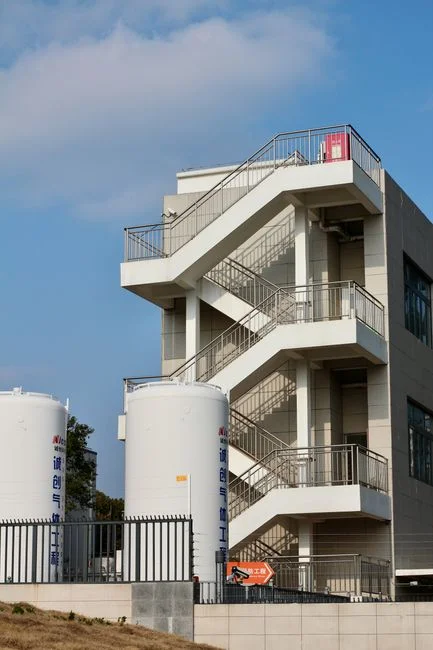
Process selection is where most Tashkent procurements overpay — either by defaulting to conventional A/O when a tight plot demands MBR, or by paying MBR capex for an effluent target that a well-run SBR can clear. The table below summarises the operating envelope each process delivers, sized to Tashkent's 200-400 mg/L BOD domestic/industrial mix.
| Process | Footprint (m² per m³/day) | Effluent BOD (mg/L) | Effluent TSS (mg/L) | Power (kWh/m³) | Sludge yield (kg DS/kg BOD) |
|---|---|---|---|---|---|
| MBR (0.1 µm PVDF submerged) | 0.05–0.10 | ≤5 | ≤1 | 0.45–0.70 | 0.25–0.35 |
| SBR (timer-decant) | 0.15–0.25 | 10–20 | 15–25 | 0.30–0.45 | 0.35–0.45 |
| A/O (anoxic-oxic) | 0.20–0.35 | 20–30 (no tertiary) | 20–30 | 0.25–0.40 | 0.40–0.50 |
| MBBR (HDPE carriers) | 0.08–0.15 | 15–25 | 20–30 | 0.30–0.45 | 0.30–0.40 |
MBR is the right call when the Tashkent plot is tight, when the buyer is targeting water reuse for cooling-tower make-up, or when the discharge permit forces BOD ≤10 mg/L. Footprint is 60% smaller than conventional A/O and the process handles hydraulic surges from Tashkent's combined sewer overflows. A skid-mounted MBR membrane bioreactor system with a 0.1 µm PVDF membrane module ships in a 40 ft container and skips the reinforced-concrete basin line item entirely.
SBR cuts capex by 25-35% versus MBR at the 200-1,000 m³/day scale, but needs 2× basin volume and timer-based decanters that fail when oil/grease exceeds 50 mg/L — a hard "no" for food, dairy, or refinery influent in Tashkent's industrial parks. A/O remains the lowest-capex option and is the workhorse at Tashkent's existing Salar and Boz-Su WWTPs, but the 20-30 mg/L BOD effluent almost always triggers a tertiary polishing step (sand filter + UV) to meet SanPiN 2.1.5.1315-03. An underground containerized A/O package plant from the WSZ series is a common retrofit choice for housing complexes and small industrial parks.
MBBR is the compact retrofit option, tolerating 2-3× higher organic loading than activated sludge and offering a defensible balance of footprint and capex for Tashkent industrial parks where land is allocated but not abundant. MBR market growth in 2026 continues to outpace other process categories in Central Asia, driven by tightening reuse permits.
2026 CAPEX and OPEX Benchmarks for Tashkent Installations
The budget envelope for a Tashkent-bound STP in 2026 lands in a narrow band once the process is fixed. The table below uses FOB-China pricing plus Tashkent inland delivery, excluding civil works, and draws on HydropureWater field quotations issued Q1 2026.
| Capacity | A/O (USD) | SBR (USD) | MBR (USD) | MBBR (USD) |
|---|---|---|---|---|
| 50 m³/day | 35,000 | 38,000 | 52,000 | 42,000 |
| 200 m³/day | 110,000 | 120,000 | 165,000 | 135,000 |
| 500 m³/day | 240,000 | 260,000 | 360,000 | 290,000 |
| 1,000 m³/day | 420,000 | 460,000 | 650,000 | 510,000 |
On a normalised basis, expect $180-$650 per m³/day of capacity depending on process. OPEX is dominated by aeration: 0.25-0.45 kWh/m³ for fine-bubble diffused air, contributing 50-65% of total OPEX at Uzbekistan's industrial tariff of UZS 450-900/kWh (Uzbekenergo tariff schedule, 2025-Q4). A chemical dosing skid for phosphorus precipitation adds 8-12% to OPEX but is mandatory for sites discharging to the Chirchiq river basin.
Civil-works cost in Tashkent runs $180-$320 per m³ of reinforced-concrete basin volume, which is exactly why containerized MBR and SBR plants are gaining share — they skip the basin line. Spare-parts budget should be planned at 4-6% of CAPEX annually (membrane modules, diffusers, UV lamps, dosing-pump heads). Add the Uzbekistan landed-cost stack on top of the FOB number: import duty 5-10% on equipment, plus 12% VAT, plus 0.5-1.5% customs brokerage — line items procurement teams routinely forget until the bank reconciliation.
Logistics, Installation, and After-Sales Reality in Tashkent
Lead time from a Chinese OEM to a Tashkent site runs 30-45 days by rail via the Koshkar or Alataw border crossing, versus 18-25 days by sea to Bandar Abbas plus 10 days overland. Rail is typically cheaper for STPs under 60 t (the threshold above which a sea container needs special handling). Confirm the supplier pre-fits lifting lugs to the tank roof — Tashkent crane hire is scarce and a 40 ft ISO tank with no lugs is a commissioning-day delay.
The Tashkent grid is reliable on paper but a 50-100 kVA diesel standby and a UPS on the control panel are standard. A pre-specified generator socket and bypass switchgear in the supplier's scope prevents a costly site retrofit. Commissioning takes 7-14 days on-site, supervised by the OEM's engineer, and a Russian-speaking commissioning lead is non-negotiable for handover to the local Suvsoz operator. Demand 24 months mechanical / 12 months electrical warranty minimum, with response SLA in writing — distance from the supplier HQ makes anything less a gamble. A packaged integrated water purification unit with a pre-installed bypass loop cuts the commissioning day count by roughly 30%.
Vendor Scorecard: 10 Questions to Ask Before Signing the PO
Print the table below and bring it to the supplier meeting. Each "no" answer triggers a 10-20% price negotiation or disqualification — a defensible audit trail when the CFO asks why vendor B was passed over.
| # | Question | Yes / No |
|---|---|---|
| 1 | Is the supplier an OEM manufacturer (not a trading company)? | |
| 2 | Is ISO 9001 certificate number traceable online? | |
| 3 | 3+ reference projects in CIS or Central Asia within 5 years? | |
| 4 | CE, EAC, or IECEx certification available? | |
| 5 | SanPiN 2.1.5.1315-03 effluent compliance documented? | |
| 6 | Process-specific warranty (membranes 24+ months)? | |
| 7 | Russian-language PLC/HMI documentation? | |
| 8 | 72-hour regional spare-parts SLA in writing? | |
| 9 | 24-month mechanical warranty minimum? | |
| 10 | On-site commissioning included in the contract? |
For sites targeting water reuse, add a question on an on-site chlorine dioxide generator — ClO2 dosing at 0.5-1.0 mg/L residual is the cheapest path to SanPiN-compliant disinfection for non-potable reuse loops, and avoids the cost of a UV channel in cold winter conditions. For buyers comparing options across the region, the 2026 buyer's guide for Riyadh covers the GCC compliance angle and is a useful parallel read.
Frequently Asked Questions
What CAPEX should I budget for a 200 m³/day STP in Tashkent?
Expect $110,000 for a skid-mounted A/O and $165,000 for an MBR at the same capacity, FOB China, before 5-10% Uzbekistan import duty and 12% VAT. Civil works adds $180-$320 per m³ of basin if you go with concrete tanks (HydropureWater field quotations, 2026-Q1).
Should I choose MBR or conventional A/O for a Tashkent housing project?
MBR when the plot is under 1,000 m² or when the developer wants a reuse-ready effluent (BOD ≤5 mg/L, TSS ≤1 mg/L). A/O when land is plentiful and the effluent target is the 25 mg/L BOD Suvsoz tie-in — capex is roughly 30-40% lower.
What import duties apply on Chinese wastewater equipment entering Uzbekistan?
Customs code 8421.21 carries a 5-10% import duty plus 12% VAT on the CIF value, plus 0.5-1.5% customs-brokerage fees. CE or EAC marking accelerates clearance under Resolution No. 949.
How long does on-site commissioning take?
7-14 days for a 50-500 m³/day package plant, including seeding, aeration calibration, and PLC point-to-point testing. Plan for a Russian-speaking commissioning lead to sign off handover with Suvsoz.
Does the supplier handle SanPiN compliance documentation?
Reputable OEMs supply a SanPiN-aligned effluent performance certificate, a Gosstandart conformity letter, and a Russian-language O&M manual as part of the standard delivery pack. Confirm this in writing before the PO — aftermarket documentation requests routinely add 6-8 weeks. For background on the broader reuse trend driving these requirements, see industrial water reuse drivers in 2026.