Why Car Wash Effluent Needs a Dedicated Treatment Plant Design
Carwash wastewater (CWW) is a three-pollutant cocktail that no off-the-shelf sewage or greywater design handles cleanly. The 2020 Springer systematic review on CWW treatment (Bustillo-Lecompte et al., doi:10.1007/s11356-020-09741-w) classifies it as "an important source of either water pollution or water consumption," framing the design problem as both an environmental compliance issue and a water-security opportunity. The three contaminant classes behave differently: anionic surfactants (linear alkylbenzene sulfonates, alcohol ethoxylates) depress surface tension, hold emulsified oil in suspension, and resist gravity separation; mineral oils and grease from undercarriages and engine degreasing form stable emulsions once surfactants are present; and abrasive grit from brushes and road film (silt, sand, brake dust with Pb, Cu, Zn) acts as a slow abrasive on pumps and membranes downstream. A single unit operation cannot hit all three — which is why a sequenced train is mandatory.
Per-vehicle water use sets the hydraulic boundary: 60–120 L for an express tunnel wash, 100–300 L for a rollover, and 200–600 L for a self-service bay (per the Springer 2020 review of water consumption in commercial vehicle wash systems). At a chain doing 200 cars/day, that places most plants in the 5–50 m³/d envelope. The regulatory pinch is what drives the equipment choice: sewer discharge limits in most jurisdictions cap oil & grease at 10–15 mg/L and TSS at 30–50 mg/L, while reuse standards — USEPA WaterSense new-construction guidance and China GB/T 18920-2020 for urban miscellaneous water — require COD below 30 mg/L, turbidity below 5 NTU, and absence of visible oil sheen. Sewer-only designs stop short of those reuse targets; greywater packages lack oil/surfactant removal. Both are wrong tools.
Influent Characterization: The Numbers Behind the Design
Engineers cannot size a DAF or an MBR without first building a mass balance, and CWW concentrations vary widely by wash type, soil load, and detergent chemistry. The table below consolidates the typical influent envelope used in primary literature (Abdelmoez et al. 2013, Water Sci Technol 68:974–981; Al-Gheethi et al. 2016, IOP Conf. Ser. Mater. Sci. Eng.) and 2024–2025 field campaigns.
| Parameter | Typical range (mg/L unless noted) | Peak shift | Design driver |
|---|---|---|---|
| COD | 200–1,500 | ×2.0–2.5 | Reuse target drives biological sizing |
| BOD₅ | 100–600 | ×1.8–2.2 | F:M ratio, aeration tank volume |
| TSS | 300–800 | ×2.0 | DAF and pre-filter loading |
| Oil & grease | 50–400 | ×2.5–3.0 (after tunnel wash) | DAF air-to-solid ratio, sludge handling |
| Surfactants (MBAS) | 10–80 | ×2.5 | Equalization volume, DAF removal efficiency |
| Heavy metals (Pb, Cu, Zn) | 0.5–5.0 total | ×1.5 | Reuse catchment sensitivity |
| pH | 6–9 | ±1.5 units | NaOH/H₂SO₄ dosing capacity |
Two design consequences follow. First, equalization volume must be sized on the peak shift (1.5–2.5× daily average) — not on the daily average itself — otherwise the DAF will see slug loads of surfactant that break the floc matrix and push oil through the float layer. Second, trace heavy metals (Pb 0.1–1.0 mg/L, Cu 0.2–1.5 mg/L, Zn 0.5–3.0 mg/L) are below typical municipal discharge limits but above USEPA and GB/T 18920 reuse criteria, which forces ion exchange or RO polishing when recycled water contacts vehicle surfaces at tunnel sites.
The Process Train: From Dirty Wash Water to Reuse-Grade Effluent
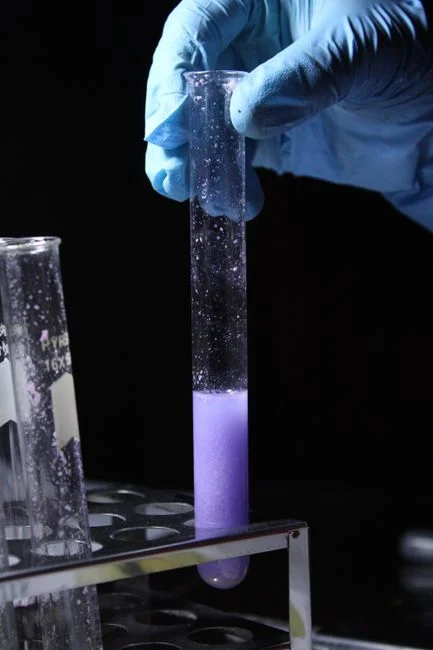
The train that meets both sewer and reuse targets in 5–50 m³/d plants sequences seven unit operations, each sized to a specific function. Walking it through matches how a P&ID is laid out from the wash bay drain to the final holding tank.
- Coarse screening. A rotary bar screen with 5–10 mm aperture captures lint, leaves, plastic wrappers, and shop towels before the lift station. Without it, rag accumulations blind the DAF nozzles within weeks.
- Grit chamber / oil–water gravity separator. Free oil and coarse grit settle out in a 10–20 min detention basin, protecting downstream pumps and the DAF recycle pump from abrasion. This stage alone can remove 30–60% of free oil before chemical treatment.
- Equalization tank. A 24-h HRT minimum for tunnel washes (8–12 h for self-service) dampens surfactant and pH spikes; gentle aeration at 0.5–1.0 m³ air/m³ tank·h keeps the contents aerobic and prevents H₂S release downstream. This is where the peak-factor math pays back.
- Dissolved air flotation (DAF). This is the workhorse. A DAF system reliably removes 90–95% of oil & grease and 70–85% of TSS in a single stage, with 60–80% COD reduction when paired with coagulant dosing. The physics and the parameter selection logic are covered in detail in the DAF Clarifier Working Principle: 2026 Engineering Specs & Selection Guide.
- Biological treatment or MBR. A sequencing batch reactor (SBR) or moving-bed biofilm reactor (MBRR) polishes residual COD/BOD for discharge-only trains. When the target is reuse, an MBR system replaces the clarifier and combines activated sludge with 0.1–0.4 μm PVDF membranes, producing a clarified permeate that already meets the turbidity target for RO feed.
- Disinfection. A HydropureWater ClO₂ generator is preferred over UV at this scale because residual surfactants can shield microbes from UV; ClO₂ at 1–2 mg/L residual achieves 3-log bacterial reduction with 30-min contact and tolerates surfactant interference better.
- RO or UF polishing (reuse only). For 80–95% recycling targets, RO operates at 10–15 bar feed pressure with 70–85% recovery and antiscalant dosing of 2–5 mg/L. Brine volume at 15–30% of RO feed is sent to sewer or to a small brine evaporation stage. This is the same architecture described in the How to Treat Oily Wastewater: 2026 Engineering Guide to Process Selection for industrial oily streams.
Unit Sizing Parameters Engineers Actually Use
Tables are the only honest way to convey what each unit needs. The numbers below are what gets written into a process datasheet for a 5–50 m³/d car wash plant; they come from operating DAF and MBR datasheets and field commissioning data.
| Unit | Key parameter | Design value | Notes |
|---|---|---|---|
| Equalization tank | HRT | 24 h (tunnel), 8–12 h (self-serve) | Size on peak shift 1.5–2.5× |
| DAF | Surface loading | 5–15 m/h | Lower for high oil load |
| DAF | Hydraulic retention | 20–40 min | Includes recycle stream |
| DAF | Air-to-solid ratio | 0.005–0.02 | Raise for emulsified oil |
| DAF | Recycle rate | 20–30% | Saturator pressure 4–6 bar |
| MBR | MLSS | 8,000–12,000 mg/L | Higher than CAS for flux stability |
| MBR | HRT | 6–10 h | Independent of sludge age |
| MBR | Membrane flux | 12–20 L/m²·h | 0.1–0.4 μm PVDF |
| MBR | Air-scour rate | 0.3–0.5 m³/m²·h | Continuous, crossflow below 0.5 m/s |
| RO polishing | Feed pressure | 10–15 bar | Two-pass only if TDS <50 mg/L required |
| RO polishing | Recovery | 70–85% | Antiscalant 2–5 mg/L |
Chemical dosing ties it together: a PAC dose of 50–150 mg/L and a PAM (anionic polyacrylamide) dose of 1–5 mg/L ahead of the DAF, with pH trim using 0–2 kg NaOH/m³ as needed. In practice, a PLC-controlled automatic chemical dosing skid tracks the equalization-tank flowmeter and dose-proportions each stream — without that feedback loop, surfactant shocks pass through untreated and the DAF float layer collapses. Where discharges are governed by the limits described in the Industrial Effluent Limits in China: A Comprehensive Guide, the dosing skid also delivers the metering data that compliance reporting requires.
Reuse vs. Sewer Discharge: A Decision Framework
Whether the plant is sized for reuse or for compliant discharge is the single biggest fork in any car wash ETP project, and the wrong choice either doubles CAPEX for no payback or under-sizes the system and triggers consent violations. The decision turns on three hard numbers: number of wash bays, water cost, and sewer access.
If the site has two or more wash bays, water cost exceeds USD 2/m³, and a local reuse standard applies (GB/T 18920 in China, WaterSense in the U.S., the EU Water Reuse Regulation in Europe), the design should target 70–85% recycle using DAF + MBR + ClO₂, with payback on water savings typically 18–30 months at 5–50 m³/d (HydropureWater field data, 2025). If sewer discharge is permitted and water is cheap (below USD 1/m³, common in much of South Asia and parts of the GCC), the simpler train — screening + DAF + biological (SBR/MBBR) + disinfection — is more cost-effective, and the CAPEX delta funds membrane replacement budgets for the next 7–10 years instead. If the site has zero sewer access (remote truck wash, off-grid fleet depot, mining haul-truck wash bay), reuse is mandatory and RO polishing must be sized for 100% recycle with a brine management plan — either evaporation ponds, crystallizer, or contracted liquid-waste pickup at 5–10% of the feed volume.
The 2026 regulatory context makes reuse increasingly the default path. China tightened MBAS discharge limits for vehicle-service facilities in 2025 (provincial rolling updates), the EU Water Reuse Regulation (2020/741) minimum requirements applied from 2023 onward, and Gulf countries (UAE, KSA) have rolled out fit-for-purpose water specifications that align with reuse. Sewer-only designs are still legal, but the trajectory is against them.
2026 CAPEX and OPEX Benchmarks for Car Wash ETP Designs
Procurement readers use cost bands to sanity-check vendor quotes. The figures below reflect 2026 Q1 pricing for skid/containerized plants shipped to Asia and the Middle East (HydropureWater field data, 2026-01) and include equipment, instrumentation, installation, and commissioning. Civil works, building, and external piping are excluded.
| Plant size | Configuration | CAPEX (USD) | OPEX (USD/m³ treated) | Notes |
|---|---|---|---|---|
| 5 m³/d | Skid, reuse-grade (DAF + MBR + ClO₂) | 18,000–35,000 | 0.30–0.45 | Express tunnel bay, single site |
| 20 m³/d | Containerized, reuse-grade | 55,000–95,000 | 0.22–0.35 | 2–4 bay chain location |
| 50 m³/d | Civil-built, reuse with RO | 80,000–150,000 | 0.20–0.30 | Regional hub, 8+ bays |
| 20 m³/d | Discharge-only (no RO) | 30,000–55,000 | 0.12–0.18 | Compare delta vs. reuse |
OPEX is dominated by chemical consumables (coagulant, flocculant, antiscalant, NaOH) and by membrane replacement — PVDF MBR membranes carry a 5–7 year service life under stable operation, and RO membranes 3–5 years. The water-savings delta between a 20 m³/d reuse plant and a 20 m³/d discharge-only plant is roughly 16 m³/d at typical wash chemistry, which at USD 2/m³ water cost repays the CAPEX delta of USD 25,000–40,000 in 2–3 years. At USD 1/m³ or lower, the payback stretches past 4 years and reuse is harder to justify on water savings alone — though it may still be required by local regulation.
Frequently Asked Questions
What is the typical DAF removal efficiency for oil and grease in car wash effluent?
A well-sized DAF unit achieves 90–95% oil & grease removal and 70–85% TSS removal in a single stage when operated at 5–15 m/h surface loading with 50–150 mg/L PAC and 1–5 mg/L PAM (HydropureWater field data, 2026). Pretreatment with equalization is required to keep the air-to-solid ratio stable.
What is the minimum HRT for an equalization tank ahead of a car wash DAF?
A 24-hour HRT is the working minimum for tunnel and rollover washes to absorb the 1.5–2.5× peak shift in surfactant and pH loading. Self-service washes with smoother flow patterns can be designed at 8–12 hours (per Abdelmoez 2013, Water Sci Technol).
When is RO polishing required in a car wash water recycling system?
RO polishing is required when the design targets 80–95% recycling for vehicle wash reuse, when permeate TDS must stay below 50 mg/L, or when local standards (GB/T 18920 in China, EU Water Reuse Regulation 2020/741) mandate it. For discharge-only trains, RO is unnecessary.
What is the 2026 CAPEX range for a 20 m³/d car wash effluent treatment plant?
A 20 m³/d reuse-grade containerized plant runs USD 55,000–95,000 CAPEX at 2026 Q1 pricing. A discharge-only train at the same capacity is USD 30,000–55,000 (HydropureWater field data, 2026-01). Civil works, building, and external piping are not included in either figure.
How often must MBR and RO membranes be replaced in a car wash reuse plant?
PVDF MBR membranes typically last 5–7 years under stable operation with proper air-scour and relaxation cycles. RO membranes last 3–5 years, with replacement frequency driven by feed water hardness, antiscalant dosing, and recovery rate. Chemical-clean-in-place every 1–3 months extends service life.