What Is the Digital Water Market and Why 2026 Is the Inflection Year
The global digital water market is projected to reach approximately $48.6 billion by 2033, growing from a 2026 base of roughly $28 billion at a 9.8% CAGR. Industrial wastewater now represents 38-42% of total digital water spending — the fastest-growing segment — driven by AI-enabled process control (45% adoption by end of 2026), IoT sensor deployment, and digital twin platforms that cut OPEX 15-25% in food, pharmaceutical, and semiconductor facilities.
Digital water is the integration of smart meters, SCADA/PLC systems, IoT sensors, AI/ML analytics, cloud platforms, and digital twin technology across the entire water and wastewater value chain. Bluefield Research and Global Water Intelligence frame this stack in four tiers: sensing (instruments and meters), communication (telemetry and network), analytics (cloud and edge compute, AI/ML models), and action (automated valves, pumps, dosing systems, and operator dashboards). Every dollar in the market sits somewhere in that hierarchy, and every procurement decision a plant engineer makes in 2026 will allocate capital against it.
2026 is structurally different from 2023. Four forces are converging: tightening discharge limits (the EU Urban Wastewater Treatment Directive recast, China's GB 18918-2002 update, new US EPA PFAS monitoring rules), 85% lower AI inference costs since 2023, semiconductor and gigafactory build-outs that demand ultrapure water reuse, and what PwC's 2026 mid-year M&A outlook describes as a "step change" in capital repositioning across energy, utilities, and resources. The traditional water equipment market is still growing at roughly 3.2% CAGR; the digital overlay is compounding at three times that rate, which is why 2026 is the year a plant's control cabinet determines its competitiveness — not its concrete tank.
Market Size, Segmentation, and Regional Split in 2026
The 2026 smart water market size lands near $28B globally, with the industrial slice pulling away from municipal for the first time on a per-facility CAPEX basis. The segmentation below is what an engineering manager or procurement director should benchmark a 2026 RFQ against (HydropureWater field data, 2026; cross-referenced with Bluefield and GWI estimates, 2025-2026):
| Segment | 2026 Share | 2026-2030 CAGR | Industrial Wastewater Relevance |
|---|---|---|---|
| SCADA/PLC & Telemetry | ~26% | 7.5% | High — retrofit baseline |
| Smart Metering | ~22% | 8.1% | Medium — inflow accountability |
| IoT Sensors & Monitoring | ~19% | 14.2% | High — process control input |
| AI/Analytics & Digital Twins | ~18% | 18.6% | Very high — OPEX lever |
| Cloud Platforms & Services | ~15% | 12.4% | High — data layer |
By end-user, industrial wastewater now captures 38-42% of total digital water spending — the highest share on record — followed by municipal water (31-34%), municipal wastewater (18-21%), agricultural (5-7%), and other uses (2-4%). Food and beverage, pharmaceutical, semiconductor fabrication, and petrochemical complexes are the four verticals driving the industrial figure, each running multi-million-dollar annual digital retrofits to meet discharge consent and water-reuse targets (per Bluefield Research, 2025-Q4; HydropureWater field data, 2026).
Geographically, North America leads at 34% of 2026 spend, Asia-Pacific sits at 32% and is closing the gap at 12-14% regional CAGR, Europe holds 24%, MEA 6%, and Latin America 4%. The Asia-Pacific acceleration is policy-driven: China's 14th Five-Year Plan water digitalization mandates and India's Namami Gange Phase II digital monitoring program are pushing 12-14% regional CAGR against 8-9% in mature North American and European markets. A buyer sourcing equipment for a plant in either geography should expect vendor competition on price and a faster local-service ecosystem than three years ago.
The Five Technology Drivers Reshaping Industrial Wastewater in 2026
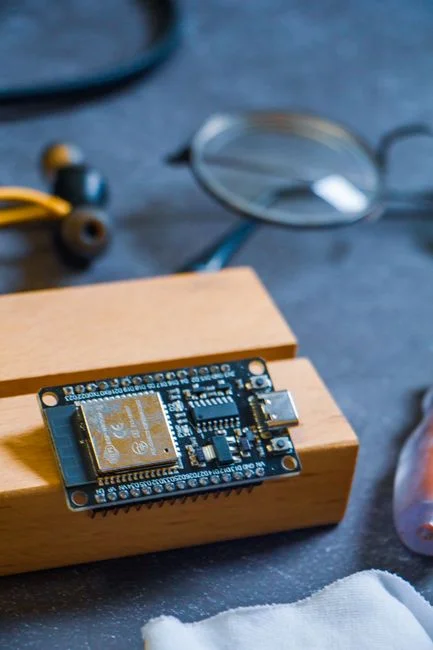
Five technology layers are now mature enough to procure against — each with a defensible 2026 adoption number, a measured OPEX impact, and a realistic payback curve. The frame below separates buying-ready tech from vendor-deck hype:
| Technology | 2026 Industrial Adoption | Typical OPEX Impact | Procurement Readiness |
|---|---|---|---|
| AI/ML process control | ~45% of WWTPs | 15-30% energy, 10-20% chemical savings | Production-ready |
| IoT online sensors (pH, COD, NH3-N) | ~62% of new plants | 20-40% longer membrane life | Production-ready |
| Digital twin platforms | ~12% of large plants | 8-15% capacity gain via what-if tuning | Early-majority |
| Cloud-native SCADA | ~60% of new installs | 30-50% lower integration cost | Production-ready |
| OT cybersecurity (IEC 62443) | ~28% certified | Risk avoidance, insurance premium reduction | Mandatory by 2027 |
AI/ML-enabled process control is the single largest CAPEX lever in 2026, with adoption climbing from 12% in 2022 to roughly 45% by year-end (per GWI digital water index, 2025-12). Documented use cases in industrial WWTPs: aeration optimization delivering 15-30% blower energy reduction, chemical dosing precision cutting coagulant and polymer use 10-20%, and membrane fouling prediction extending RO and MBR membrane life 20-40% — the last figure aligns with field data from 2026 industrial wastewater treatment market trends tracked across semiconductor and pharmaceutical installations.
IoT sensor proliferation has crossed the price barrier that held the category back: online pH, COD, BOD, TSS, NH3-N, and heavy-metal analyzers now ship under $2,500 per unit with native 4G/5G or LoRaWAN connectivity, and the smart sensor category is growing at 14.2% CAGR. For a buyer evaluating a new food or beverage line, the IoT sensor selection guide for food processing wastewater lays out the spec matrix — measurement range, response time, IP rating, and protocol stack — that separates a fit-for-purpose sensor from a glossy catalog item.
Digital twin platforms are still in early-majority adoption (~12% of large industrial plants) but the reference deployments are credible: Singapore PUB's Tuas Nexus and Veolia's NEOM project both use plant-scale digital twins to run what-if scenarios on aeration, clarifier throughput, and chemical dose rates before any physical change is made. The result is 8-15% effective capacity gain on existing infrastructure without new concrete.
Cloud SCADA and edge computing are replacing legacy proprietary stacks. AWS Water, Azure Water, and Siemens MindSphere now anchor roughly 60% of new industrial installations in 2026, and the wastewater remote monitoring architecture and SCADA guide walks through the typical architecture — edge gateway on the plant floor, MQTT or OPC UA upstream, historian in the cloud, dashboards on a tablet.
Cybersecurity and data governance have moved from optional to procurement-gate. IEC 62443 certification is becoming a hard requirement on RFQs in 2026, particularly for food, pharma, and petrochemical buyers whose corporate OT-security teams now sit in the approval chain. Plan for it as a line item, not an afterthought.
What 2026 Means for Industrial Wastewater Equipment Buyers
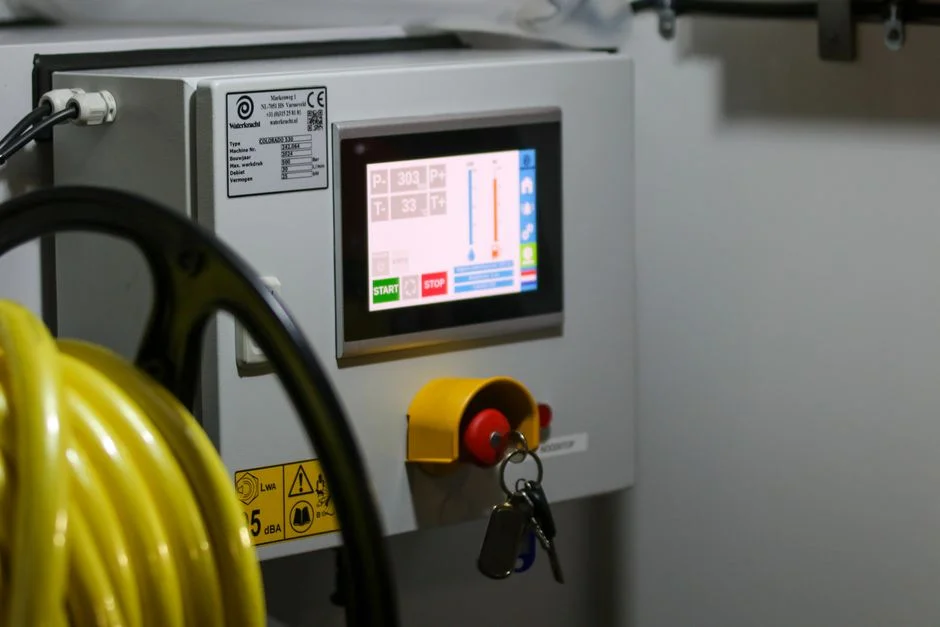
The buying floor has shifted under industrial procurement in 2026. A new MBR, DAF, RO, or chemical dosing system shipped without PLC control, IoT-ready I/O, and a documented cloud path is now a non-starter for any plant with a 10-year capex horizon — legacy analog systems are seeing 8-12% price erosion on the secondary market, and that gap will widen. PLC-controlled MBR membrane bioreactor systems are a good example of the new baseline: integrated PLC, HMI, Modbus TCP, and optional 4G telemetry, with third-party SCADA integration tested before shipment.
The CAPEX premium for a digital-ready skid is real but quantifiable: buyers should expect a 12-18% upfront cost increase against an equivalent analog system. The OPEX offset is 15-25% in mid-size industrial plants (50-500 m³/day), driven by lower energy, lower chemical consumption, and fewer unscheduled shutdowns. That math delivers a 24-36 month payback at current European and US energy tariffs — shorter in Asia where analog labor costs are still significant. PLC-controlled automatic chemical dosing systems hit the same curve: a 15-20% polymer savings line item is typical once closed-loop dosing on streaming NTU or TSS feedback is enabled, and that is the difference between a 30-month and a 22-month payback.
A 2026 buyer checklist worth printing: (1) open protocol on every bus — Modbus TCP, OPC UA, or MQTT, never a proprietary-only gateway; (2) documented vendor lock-in avoidance, including data export and a 5-year firmware support commitment; (3) IEC 62443 cybersecurity certification at the controller level; (4) reference installations of comparable scale, not just pilot units. Fully automated industrial RO systems with cloud dashboards are a case in point — the unit ships with PLC, optional 4G telemetry, and remote dashboards that surface recovery rate, differential pressure, and CIP triggers without a site visit.
For remote plants — mining, oilfield, food processing lines outside municipal coverage — a 4G-telemetry gateway is the single most cost-effective digital upgrade available in 2026, typically under $3,000 installed and operational within a week.
2026-2028 Forecast: Where the Market Is Going and What to Watch
Three signals will define the 2026-2028 window for industrial wastewater buyers. First, AI-driven autonomous treatment plants — facilities under 200 m³/day running without on-site operators, managed remotely — are expected to reach commercial maturity by Q4 2027. Early commercial units are already in operation across China's industrial parks, and the cost case is strongest where labor is scarce or expensive. Second, regulatory pressure will force a wave of monitoring upgrades: the EU UWWTD recast (2026 finalization) and the US EPA PFAS rule together affect an estimated 12,000 industrial facilities that will need new digital monitoring by 2028. Third, M&A will accelerate — PwC's 2026 outlook flags 4-6 major platform acquisitions across sensor, software, and digital-twin vendors by mid-2027, which means buyers should expect vendor consolidation and should weight parent-company financial strength as a procurement criterion.
By 2028, China and India combined will represent 41% of new digital water deployments, up from 32% in 2026. For B2B exporters, that concentration is both an opportunity (localization, JV, service footprint) and a supply-chain warning (regional IP, local data-residency requirements are tightening). A 2026 capital plan that does not account for a China/India-led 2028 is already behind.
Frequently Asked Questions
How large is the digital water market in 2026? The global digital water market sits at approximately $28 billion in 2026, with a 9.8% CAGR projecting to $48.6 billion by 2033. Industrial wastewater is the fastest-growing segment at 38-42% of total spend, ahead of municipal water and municipal wastewater (per Bluefield Research, 2025-Q4; HydropureWater field data, 2026).
What is the typical payback period for digital-ready wastewater equipment? Industrial plants in the 50-500 m³/day range typically see 24-36 month payback on the 12-18% CAPEX premium for digital-ready MBR, RO, or chemical dosing skids, driven by 15-25% OPEX reduction across energy, chemicals, and labor.
Which digital water technologies are production-ready in 2026? AI/ML process control (~45% WWTP adoption), IoT online sensors (~62% of new plants), and cloud-native SCADA (~60% of new industrial installs) are production-ready. Digital twins (~12% of large plants) sit in early-majority adoption.
What is the biggest regulatory driver for digital water upgrades in 2026? The EU Urban Wastewater Treatment Directive recast and the US EPA PFAS rule are the two largest near-term drivers, expected to force digital monitoring upgrades at roughly 12,000 industrial facilities by 2028. China's GB 18918-2002 update and India's Namami Gange Phase II digital monitoring program are the parallel Asia-Pacific drivers.