Who Regulates Wastewater Discharge in Kenya?
Kenya discharge regulations for industrial effluent are enforced by the National Environment Management Authority (NEMA) under the Environmental Management and Co-ordination Act (EMCA, Cap 387, 1999) and the Water Quality Regulations (Legal Notice 120 of 2006). The 2020 National Environmental Discharge Guidelines update practical limits. Industrial discharges to sewer or environment must meet BOD ≤ 50 mg/L, COD ≤ 100 mg/L, TSS ≤ 50 mg/L, total nitrogen ≤ 20 mg/L, and pH 6.0–9.0. A wastewater discharge permit is required before any industrial discharge begins.
Three statutory bodies share the regulatory space, and confusing their mandates is a common cause of incomplete permit applications. NEMA controls the environmental discharge permit and the Environmental Impact Assessment (EIA) license under EMCA. The Water Resources Authority (WRA), established under Section 13 of the Water Act 2016, governs water-use permits for any abstraction from a river, lake, or borehole. The Water Services Regulatory Board (WASREB) regulates sewer-service providers such as Nairobi Water, KISWASCO, and Eldoret Water, plus the trade-effluent tariffs those utilities apply to industrial customers. A project that discharges to a municipal sewer will interact with all three agencies before commissioning.
The legal hierarchy to cite in any submission is: Constitution of Kenya Article 42 (right to a clean environment) → EMCA Cap 387 (1999) → Water Act 2016 → Water Quality Regulations (LN 120/2006) → 2020 NEMA National Environmental Discharge Guidelines. Each instrument overrides anything below it, so a 2026 design basis should anchor to the 2020 guidelines, not the 2006 regulations alone. Policy direction also matters: the Cabinet Secretary's 2017 announcement that Kenya would scale up urban wastewater reuse has shaped county-level planning in Nairobi, Kiambu, and Machakos (Xinhua, 2017-03-22). New plants in these counties should be designed for reuse compliance, not just for compliance discharge, because reuse is increasingly the regulator's preferred endpoint. Teams comparing successive rulebooks can also review our earlier Wastewater Treatment Regulations Kenya 2026 overview for the same NEMA–WRA permitting frame.
Kenya Discharge Regulations: NEMA Effluent Limits for 2026
Schedule III of the Water Quality Regulations (LN 120/2006) sets the historical discharge limits that NEMA inspectors still enforce. The 2020 NEMA National Environmental Discharge Guidelines tighten selected parameters for new industrial entrants and explicitly cover heavy metals, which the 2006 schedule handled only partially. The table below consolidates the limits that engineering teams in Kenya are designing against in 2026.
| Parameter | Limit (discharge to environment or sewer) | Source instrument |
|---|---|---|
| pH | 6.0–9.0 | LN 120/2006, Schedule III |
| BOD₅ (5-day) | ≤ 50 mg/L | LN 120/2006, Schedule III |
| COD | ≤ 100 mg/L | LN 120/2006, Schedule III |
| Total Suspended Solids (TSS) | ≤ 50 mg/L | LN 120/2006, Schedule III |
| Total Nitrogen (TN) | ≤ 20 mg/L | 2020 NEMA Discharge Guidelines |
| Total Phosphorus (TP) | ≤ 5 mg/L | 2020 NEMA Discharge Guidelines |
| Temperature | ≤ 30 °C | LN 120/2006, Schedule III |
| Residual chlorine (after 30 min contact) | ≥ 0.5 mg/L | LN 120/2006, Schedule III |
| Fecal coliform (discharge to environment) | ≤ 100 CFU/100 mL | 2020 NEMA Discharge Guidelines |
| Fecal coliform (restricted irrigation reuse) | ≤ 1,000 CFU/100 mL | WHO 2006 reuse guideline |
| Lead (Pb) | ≤ 0.1 mg/L | 2020 NEMA Discharge Guidelines |
| Cadmium (Cd) | ≤ 0.1 mg/L | 2020 NEMA Discharge Guidelines |
| Chromium, total (Cr) | ≤ 0.05 mg/L | 2020 NEMA Discharge Guidelines |
| Mercury (Hg) | ≤ 0.005 mg/L | 2020 NEMA Discharge Guidelines |
| Arsenic (As) | ≤ 0.02 mg/L | 2020 NEMA Discharge Guidelines |
Two caveats change the practical design basis. First, the 2020 guidelines lower some heavy-metal thresholds compared to the 2006 schedule, so a facility commissioned in 2026 against the older instrument may already be non-compliant. Second, discharge to a municipal sewer often triggers additional county-level by-laws; for example, Nairobi Water & Sewerage Company's Trade Effluent Tariff requires pre-treatment to BOD ≤ 1,000 mg/L before acceptance and applies a load-based tariff on anything above 500 mg/L. Engineers should confirm the receiving sewer operator's tariff schedule before sizing the biological stage, because it can be more binding than the national limit.
The 2026 background context for tightening these limits is straightforward: Kenya records roughly 2,500 cervical-cancer deaths per year linked to inadequate sanitation infrastructure (KEN SHE study, 2022), and the WHO reuse guidelines (≤ 1,000 CFU/100 mL fecal coliform for restricted irrigation) are now the de facto target for any facility planning to discharge to a crop-irrigation scheme.
What water discharge standards apply to industry?
Water discharge standards for Kenyan industry start with Schedule III of LN 120/2006 for BOD, COD, TSS, pH, temperature, and residual chlorine, then add the 2020 NEMA nitrogen, phosphorus, pathogen, and heavy-metal limits. Most plants we size for Athi River and Nairobi industrial zones treat the national BOD ≤ 50 mg/L and COD ≤ 100 mg/L envelope as the floor, then check whether the sewer operator's trade-effluent agreement is tighter on organic load. Designers who stop at the 2006 schedule alone miss TN ≤ 20 mg/L and TP ≤ 5 mg/L, which bind nutrient-rich food and beverage streams first.
How do effluent quality discharge standards change equipment size?
Effluent quality discharge standards change equipment size by fixing the required removal percentage from measured influent, not by fixing a single unit capacity. When chromium or sulfide is present, precipitation and sulfide oxidation stages sit upstream of biology; skipping them to save footprint is the usual reason NEMA grab samples fail on metals even when BOD looks compliant.
The Wastewater Discharge Permit Process Step by Step
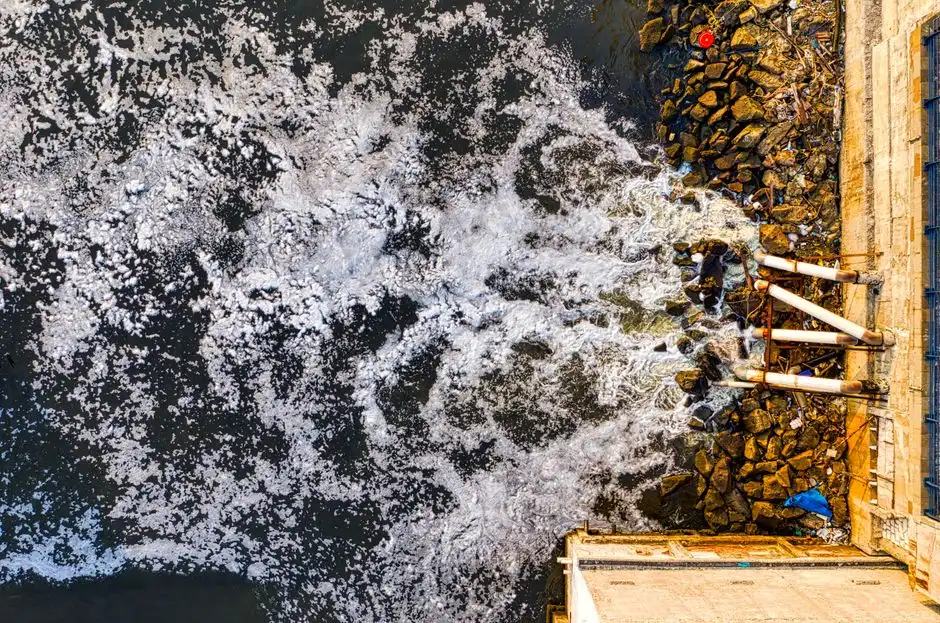
The permit pathway is sequential — each step depends on the previous one being closed out, and skipping ahead is the single most common reason NEMA issues stop-orders. A 2026 industrial facility should plan for 9–14 months of pre-construction regulatory work covering NEMA and WRA permitting requirements for discharge and abstraction.
- EIA Study Report approval: A registered EIA/EA expert prepares the study report under EMCA Section 58. NEMA reviews, may request revisions, then issues an EIA license. Mandatory for any industrial facility discharging trade effluent.
- Wastewater Discharge Permit application: Submit to NEMA with full influent characterization, treatment-train design basis, discharge-point coordinates, and a self-monitoring plan covering all Schedule III parameters.
- WRA Water Permit: Apply to the Water Resources Authority for any abstraction from a watercourse. This is separate from the NEMA discharge permit — the two cannot be substituted for each other.
- County License to Operate plus Trade Effluent Agreement: The county government issues a single-business permit; the receiving sewer operator (e.g., Nairobi Water, KISWASCO) signs a trade-effluent agreement specifying discharge limits, sampling points, and tariff.
The pitfall to avoid: starting earthworks, commissioning equipment, or accepting waste streams before the EIA license is issued. Under EMCA Section 119, NEMA can order an immediate shutdown, levy a fine up to KES 1,000,000, and require retroactive remediation at the operator's cost. In practice, inspectors verify the EIA license serial number before any other document, so an expired or pending license is a hard stop.
Treatment Train That Meets Kenya's 2026 Effluent Envelope
The parameter table tells the engineer what the discharge must look like; the treatment train below is the equipment sequence that consistently delivers those numbers for a typical industrial plant in 2026. Right-sizing starts with influent characterization — a food processor and a metal-finishing shop do not share a design basis.
| Stage | Equipment | Function & typical removal | 2026 design target |
|---|---|---|---|
| Headworks | Rotary bar screen (≥ 5 mm aperture) | Solids protection for downstream process | Removes > 90% of gross solids |
| Equalization + pH correction | Equalization tank with automatic chemical dosing system | Flow and pH buffering | pH held to 6.5–7.5 before biology |
| Pre-treatment (high-FOG / high-TSS) | Dissolved air flotation (DAF) system | FOG and TSS removal | 80–95% TSS, 60–90% FOG |
| Biological | MBR membrane bioreactor | BOD, COD, NH₃-N reduction | BOD ≤ 50 mg/L, TSS ≤ 5 mg/L |
| Tertiary clarification | High-efficiency sedimentation tank (lamella clarifier) | Sludge-solids capture post-MBR | Reduces TSS carry-over for RO feed |
| Polishing / reuse | Multi-media filter + RO | Closed-loop industrial reuse | Matches Kenya reuse-policy direction |
| Disinfection | Chlorine dioxide generator | Pathogen kill | ≥ 0.5 mg/L residual after 30 min contact |
A 5 mm aperture rotary mechanical bar screen at the headworks protects the downstream biological stage from rag, plastics, and fruit-matter — a frequent failure mode in food and beverage plants. The MBR is the workhorse of the train: at 8–12 kg BOD/m³·d it reliably achieves BOD ≤ 50 mg/L and TSS ≤ 5 mg/L in a footprint 60% smaller than conventional activated sludge, which matters on the land-constrained industrial zones around Nairobi, Athi River, and Eldoret. For plants targeting reuse (the policy direction the 2017 Cabinet Secretary announcement set), the lamella clarifier and RO polish the MBR permeate to a conductivity below 50 µS/cm, suitable for boiler feed or process rinsing.
Selection checklist before freezing the P&ID: (1) map every Schedule III and 2020-guideline parameter to a removal stage; (2) confirm sewer vs environment discharge point; (3) size equalization for the peak-to-average flow ratio you actually measure, not the brochure average; (4) decide whether DAF is required from FOG and TSS data; (5) verify residual-chlorine contact time ≥ 30 min at design flow; (6) reserve space for sludge dewatering, because sludge is regulated waste under EMCA; (7) write the self-monitoring plan into the same package as the mechanical layout.
Industry-Specific Compliance: Food, Textile, Tannery, and Manufacturing
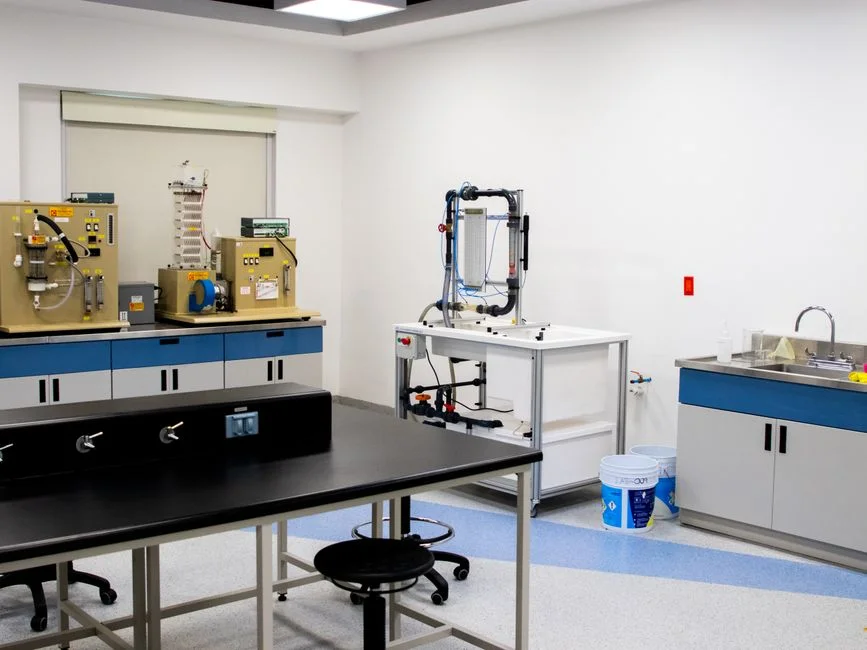
The binding constraint differs by industry, and over-designing a treatment train for the wrong parameter is wasted capital. Food and beverage facilities (tea, coffee, dairy, brewery) typically arrive with BOD of 1,500–4,000 mg/L, TSS of 800–2,000 mg/L, and FOG of 200–600 mg/L; the train is DAF plus MBR membrane bioreactor with an upstream automatic chemical dosing system for pH control.
Textile and dye-house effluent binds on color, COD (often 800–2,500 mg/L), sulfate, and chromium residues from mordant dyes. The treatment sequence is coagulation, biological reduction, then tertiary oxidation (ozone or Fenton) for color removal to < 100 Pt-Co units. Tannery and leather effluent is the hardest stream in Kenya: chromium, sulfide, salinity 4,000–8,000 mg/L Cl⁻, and BOD 2,000–5,000 mg/L. Chromium precipitation at pH 8.5–9.0 as a dedicated pre-stage is mandatory — discharging chrome-laden effluent to any municipal sewer without precipitation is the fastest route to a NEMA closure order. Light manufacturing and metal finishing bind on heavy metals; chemical precipitation followed by ion exchange or RO is the standard answer, and untreated metal-bearing waste cannot be discharged to any environment under the 2020 guidelines.
A 2026 design tip: when in doubt, run the schedule of expected influent concentrations through the parameter table and identify which two or three parameters will bind first. Right-size the equipment for those, not for the average. Kenya discharge regulations do not reward oversized biology that still fails metals or pathogens.
Self-Monitoring, Reporting, and What NEMA Inspectors Check
Compliance is evidence-based, not design-based — a correctly sized plant with no monitoring records is treated as non-compliant on inspection. The 2020 NEMA guidelines require online monitoring at the final discharge point for flow (magnetic flow meter), pH, COD, and TSS, plus quarterly accredited-laboratory analysis for the full Schedule III parameter list including heavy metals and fecal coliform.
On inspection, NEMA officers check four things in order: (1) the valid discharge permit and EIA license displayed on site, (2) effluent sample results against the permit conditions for the previous 12 months, (3) sludge handling and disposal records (sludge is regulated waste under EMCA and cannot be co-disposed with municipal solid waste), and (4) the operator logbook showing daily readings, calibrations, and any non-conformities. An online ammonia nitrogen analyzer on the MBR outlet closes the nitrogen-monitoring gap that grab sampling misses, and the data feeds directly into the quarterly report.
Penalties under EMCA Section 119 for unauthorized discharge are a fine up to KES 1,000,000 and/or imprisonment up to 2 years, plus mandatory cleanup and loss of operating license. For a continuous-compliance plant, the cost of an accredited monitoring contract is trivial compared to the cost of a single enforcement event.
Who This Is For and Next Step
Who this is for: plant engineers, EPC contractors, and procurement managers sizing or upgrading industrial effluent plants in Kenya against NEMA Schedule III and the 2020 discharge guidelines. Who should look elsewhere: teams seeking only municipal sewer tariff tables from a single county utility, or operators outside Kenya needing CPCB or other non-Kenyan codes as their primary design basis. Next step: send influent data, discharge point (sewer or environment), and target reuse quality so the train can be checked against the permit envelope before earthworks — start with a scoped request for quote that includes your BOD/COD/TSS and metal profile.
Frequently Asked Questions

What is the legal basis for NEMA's authority over industrial wastewater in Kenya?
NEMA derives its authority from the Environmental Management and Co-ordination Act, Cap 387 of 1999, specifically Sections 58 (EIA licensing) and 119 (enforcement). The Water Quality Regulations (LN 120/2006) and the 2020 National Environmental Discharge Guidelines sit beneath EMCA as the operational instruments. Inspectors treat a missing EIA license as a hard stop before they review any treatment drawings or lab results.
What are the 2026 NEMA effluent limits for BOD, COD, and TSS?
BOD ≤ 50 mg/L, COD ≤ 100 mg/L, and TSS ≤ 50 mg/L remain the Schedule III baseline under Legal Notice 120 of 2006 and the 2026 design envelope. The 2020 NEMA Discharge Guidelines add total nitrogen ≤ 20 mg/L and total phosphorus ≤ 5 mg/L for new industrial entrants. Heavy-metal limits in those guidelines can be tighter than the older schedule, so metal-bearing plants must design to the 2020 values.
Do I need an EIA license before applying for a discharge permit?
Yes. The EIA license under EMCA Section 58 must be issued before the Wastewater Discharge Permit application is accepted. Operating before the EIA license is issued exposes the operator to immediate shutdown and a fine of up to KES 1,000,000 under Section 119, plus retroactive remediation. In the field, inspectors ask for the EIA serial number first, then open the discharge-permit file.
Which treatment equipment is recommended for a new industrial plant in 2026?
For most industries, the standard train is a rotary bar screen, equalization with chemical dosing, DAF pre-treatment, an MBR for the biological stage, a lamella clarifier for polishing, and chlorine dioxide disinfection to hold ≥ 0.5 mg/L residual after 30 minutes. Food plants lean on DAF plus MBR; tanneries add chromium precipitation at pH 8.5–9.0 before biology. Final sizing still follows measured influent, not a generic catalogue train.
How does Kenya's 2026 framework compare with neighboring countries?
Kenya's BOD limit of 50 mg/L is comparable to Uganda's (50 mg/L) but tighter than Tanzania's (60 mg/L) for discharge to environment. Cross-checks against other national codes help EPC teams standardize multi-country packages, but the Kenyan permit still cites EMCA and NEMA instruments. For a side-by-side parameter comparison using the same engineering frame, see our BOD discharge limit in Indonesia 2026 reference.