Alexandria's Wastewater Treatment Market in 2026
Alexandria's industrial mix is unusually heterogeneous for a single governorate: petrochemical complexes at El Mex and Abu Qir, fertilizer and nitrogen-chemicals plants along the eastern harbor, textile mills in El Max and Kafr El Dawar, and a fast-growing food-processing cluster in Borg El Arab Industrial Zone. Each segment generates a different influent profile — textile streams typically arrive at COD 800–2,000 mg/L with high color, dairy and food lines at BOD 1,500–3,000 mg/L with fats/oils/grease (FOG) above 300 mg/L, refinery and petrochemical streams at oil & grease 200–600 mg/L with phenolic compounds, and fertilizer condensate often above 200 mg/L NH₃-N. That diversity is the first reason a procurement manager cannot simply transpose a Cairo or Port Said shortlist into Alexandria.
Under Egypt's 2030 Vision, the Alexandria Governorate has committed to upgrading decentralized industrial wastewater treatment, with packaged and containerized plants absorbing most of the new demand because municipal interceptor capacity in the industrial belts remains constrained. Mediterranean summer air temperatures of 28–32°C and wastewater temperatures of 24–28°C accelerate biological kinetics — nitrification rates roughly double per 10°C rise within the mesophilic range — but the same climate increases odor generation, sulfide release in sewers, and sludge stabilization problems if the treatment train is undersized.
| Alexandria Industrial Cluster | Dominant Influent Characteristic | Typical Capacity Band | Treatment Pressure |
|---|---|---|---|
| El Mex petrochemical | Oil/grease 200–600 mg/L, phenols | 200–2,000 m³/day per site | Marine discharge EEAA scrutiny |
| Abu Qir fertilizer | NH₃-N 150–300 mg/L, high TDS | 500–5,000 m³/day | Total nitrogen ≤30 mg/L |
| El Max / Kafr El Dawar textiles | COD 800–2,000 mg/L, strong color | 100–1,500 m³/day | Decolorization + reuse |
| Borg El Arab food & dairy | BOD 1,500–3,000 mg/L, FOG | 50–800 m³/day | Reuse-grade effluent |
EEAA Law 4/1994 and Decree 44/2000: What Alexandria Suppliers Must Comply With
EEAA Law 4/1994 is the umbrella environmental protection statute governing wastewater discharge to surface water, marine environment, and sewer networks in Egypt, and Ministerial Decree 44/2000 sets the numerical effluent limits for industrial discharges. Any sewage treatment plant supplier in Alexandria must demonstrate that its proposed treatment train can meet these limits under the operating range the buyer's influent will actually produce, not at the design point on a clean-water datasheet.
Decree 44/2000 industrial discharge limits most often applied in Alexandria: BOD ≤60 mg/L, COD ≤100 mg/L, TSS ≤60 mg/L, oil & grease ≤50 mg/L, pH 6–9, total nitrogen ≤30 mg/L, total phosphorus ≤1 mg/L, and residual chlorine ≤1 mg/L for chlorinated systems. The 2009 amendment (Law 9/2009) and 2015 amendment (Law 105/2015) raised penalties for non-compliance to EGP 100,000–5,000,000 per violation, added hazardous-waste provisions, and granted EEAA inspectors on-site sampling authority without prior notice. For plants discharging to the Mediterranean through Alexandria's coastal outfalls, EEAA also applies coastal-zone thresholds that are tighter on TSS, hydrocarbons, and phenolic indices than the inland industrial limits.
| Parameter | Decree 44/2000 Industrial Limit | Engineering Implication |
|---|---|---|
| BOD | ≤60 mg/L | Biological stage sized to 95% removal |
| COD | ≤100 mg/L | Coagulation polishing often required |
| TSS | ≤60 mg/L | MBR or sand filtration mandatory for high load |
| Oil & grease | ≤50 mg/L | DAF pre-treatment before biology |
| pH | 6–9 | Equalization tank required upstream |
| Total nitrogen | ≤30 mg/L | Nitrification/denitrification A/O train |
Treatment Train Selection for Typical Alexandria Influent
Match the train to the influent, then the supplier falls out. A textile mill with COD 800–2,000 mg/L and strong color needs a different process from a refinery with oil/grease 400 mg/L, and a single supplier offering only one technology will rarely cover both. The four most common Alexandria trains are described below.
- Textile: Equalization → pH correction → GX series rotary mechanical bar screen → dissolved air flotation pre-treatment unit (coagulation + DAF) → A/O biological stage → decolorization polishing. COD removal typically 85–95% across the train.
- Food processing / dairy: Bar screening → DAF (FOG removal 70–90%) → A/O or WSZ underground integrated A/O package plant → integrated MBR membrane bioreactor system for reuse-grade effluent with TSS <5 mg/L.
- Petrochemical / refinery: API/CPI separator → DAF → activated carbon → MBR with 0.1 μm PVDF flat sheet membranes (DF series) for oil-tolerant filtration. Expect 70–85% COD removal before carbon polish.
- Fertilizer / ammonia-rich: Flow equalization → nitrification/denitrification A/O with online NH₃-N probe → MBR polishing. Carbon source (methanol or acetate) dosing is typically needed because fertilizer condensate has a low C/N ratio.
MBR versus SBR: MBR delivers effluent TSS <5 mg/L and a footprint 30–50% smaller than SBR at the same throughput, which is the deciding factor inside Alexandria's constrained industrial plots. SBR remains the lower-CAPEX choice (typically 20–30% cheaper on the same flow) and is acceptable for sites with adequate land and where reuse is not the goal.
| Industry | Pre-treatment | Biological Stage | Polishing | Reuse Possible? |
|---|---|---|---|---|
| Textile | GX screen + DAF | A/O | Sand filter / carbon | Partial (process water) |
| Food / dairy | DAF | A/O or WSZ package | MBR | Yes, irrigation/boiler |
| Petrochemical | DAF + carbon | A/O | MBR (PVDF 0.1 μm) | Limited |
| Fertilizer | Equalization | Nitrification/denitrification | MBR | Yes, cooling |
Supplier Comparison: Chinese OEMs, Egyptian Integrators, and European Brands
Three supplier archetypes compete for Alexandria projects in 2026, and the choice between them is driven less by technology and more by financing, documentation, and post-shipment support.
Chinese OEMs (factory-direct exporters such as HydropureWater, plus Jiangxi New, Water System, and similar) typically quote 30–50% below European pricing on comparable MBR scope, ship containerized skids from Chinese ports to Alexandria Port in 6–8 weeks, and supply English plus Arabic documentation when requested. Lead times are consistent, but on-site commissioning support is usually a 2–3 week engineer visit unless a local Egyptian agent is engaged.
Egyptian local integrators (Egyptian Water Technology, National Technology Group, Enviromate Egypt, and a number of Alexandria-based EPC firms) are strongest on rapid mobilization — typically 1–3 weeks from PO to site presence — and on after-sales service, with 24/7 dispatch inside the governorate. Their limitation is depth in advanced MBR membrane technology: most rely on imported membrane modules and design the civil and mechanical scope in-house, which is fine for SBR and conventional A/O but requires careful vetting on MBR.
European OEMs (Veolia, Suez, WABAG, and selected Italian/Spanish specialists) carry premium CAPEX but offer EPC turnkey execution, full EEAA documentation packs, and long-term O&M contracts. They are the de facto choice for World Bank, EBRD, EIB, and African Development Bank-financed Alexandria projects where the procurement rules require documented international reference plants.
| Criterion | Chinese OEM (e.g., HydropureWater) | Egyptian Integrator | European OEM |
|---|---|---|---|
| EEAA compliance pack | Available on request | Local-knowledge strong | Complete, audit-grade |
| MBR depth | High (own membranes available) | Medium (resells modules) | High |
| Lead time to Alexandria | 6–8 weeks sea freight | 1–3 weeks mobilization | 12–20 weeks |
| CAPEX (50–2,000 m³/day) | $35k–$850k | $60k–$1.1M | $120k–$1.8M |
| O&M support in Egypt | Engineer visit + agent | 24/7 local dispatch | Long-term contract option |
| Financing-agency acceptance | Growing | Case by case | Standard |
CAPEX and OPEX Benchmarks for Alexandria Sewage Treatment Plants in 2026
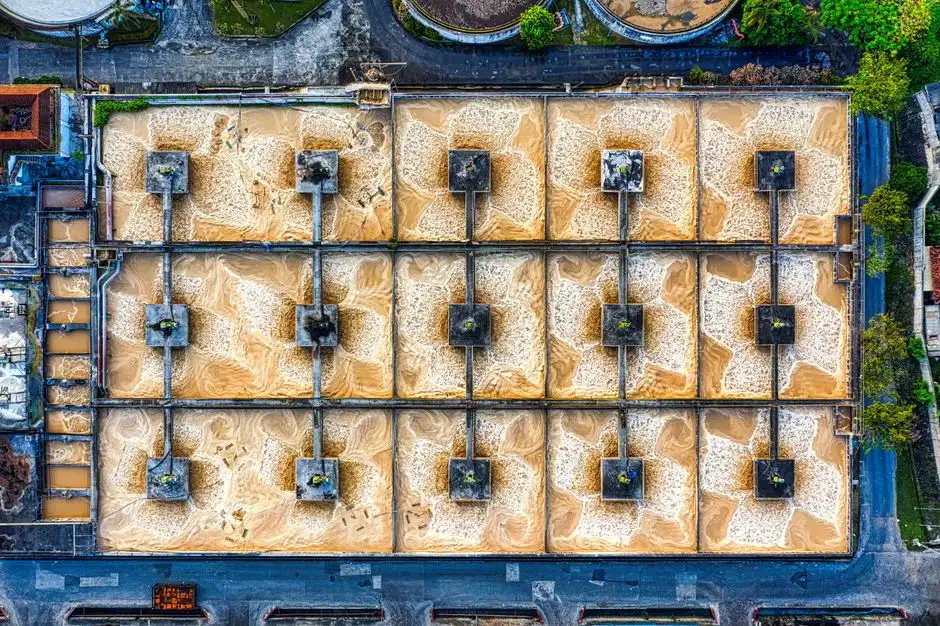
The figures below are typical 2026 USD bands for equipment-only or equipment-plus-basic-installation scopes delivered to Alexandria, drawn from HydropureWater field data and cross-checked against current Chinese and European export pricing. They exclude land, civil works above the equipment skid, and EEAA permitting fees, which are project-specific.
- Package A/O plant, WSZ underground integrated A/O package plant, 1–80 m³/h: CAPEX $35,000–$150,000; OPEX $0.10–$0.25/m³.
- Integrated MBR membrane bioreactor system, 10–2,000 m³/day: CAPEX $250,000–$850,000; OPEX $0.18–$0.40/m³ driven by membrane replacement every 7–10 years and periodic chemical cleaning.
- Containerized MBR skid, 50–200 m³/day: CAPEX $180,000–$420,000, the fastest deployment option for Alexandria industrial parks where the buyer needs a working plant inside 90 days of PO.
- Dissolved air flotation pre-treatment unit, 4–300 m³/h across 13 models: $22,000–$95,000 per unit.
- Rotary bar screen, GX series rotary mechanical bar screen: $3,500–$18,000 per unit depending on channel width and bar spacing.
Egyptian pound volatility remains the single largest budget risk for Alexandria buyers. As of early 2026 the EGP has traded in a wide band against the USD, and suppliers invoicing in EGP for imported equipment have re-priced contracts mid-shipment in the past 24 months. Structure all equipment payments in USD or EUR for Chinese and European supply, and lock a fixed-price PO at the manufacturer's FCA or FOB value before paying any local-currency deposits.
| System | Flow Range | CAPEX (USD, 2026) | OPEX (USD/m³) | Deployment Time |
|---|---|---|---|---|
| WSZ underground A/O | 1–80 m³/h | 35,000–150,000 | 0.10–0.25 | 3–5 weeks ex-works |
| MBR integrated | 10–2,000 m³/day | 250,000–850,000 | 0.18–0.40 | 8–12 weeks |
| Containerized MBR skid | 50–200 m³/day | 180,000–420,000 | 0.20–0.38 | 6–8 weeks + 1 week install |
| DAF unit | 4–300 m³/h | 22,000–95,000 | 0.03–0.06 | 3–4 weeks |
| GX bar screen | Per channel | 3,500–18,000 | Negligible | 2–3 weeks |
Five-Criterion Supplier Selection Framework
Score each candidate sewage treatment plant supplier in Alexandria on a 1–5 scale for each criterion below, then weight and sum. A weighted total above 4.0 indicates a strong fit, 3.0–4.0 indicates a conditional fit with documented gaps, and below 3.0 indicates the supplier should not be shortlisted regardless of price.
- EEAA compliance documentation and prior Alexandria reference projects — weight 30%. Ask for at least three reference plants in Egypt, EEAA-approved drawings, and a completed Decree 44/2000 compliance matrix signed by a chartered engineer.
- Process technology match to the specific influent — weight 25%. Confirm membrane type (PVDF, 0.1–0.4 μm), biological stage sizing at the actual influent BOD/COD/NH₃-N, and pre-treatment redundancy.
- CAPEX and 10-year lifecycle cost — weight 20%. Include membrane replacement, energy at Alexandria tariff (~USD 0.07–0.10/kWh in 2026), chemical consumption, and sludge disposal.
- Lead time and Alexandria logistics support — weight 15%. Container availability at Alexandria Port, customs broker familiarity with the supplier's HS codes, and on-site engineer mobilization time.
- O&M service, training, and spare parts availability in Egypt — weight 10%. Local agent, recommended spares list priced in advance, and operator training duration. HydropureWater's integrated MBR membrane bioreactor system ships with a 24-month spare-parts kit and a 2-week commissioning engineer visit, which materially affects this score.
Add the five weighted scores; a result above 4.0 with no criterion below 3 is a defensible PO recommendation.
Frequently Asked Questions
Which suppliers qualify as a sewage treatment plant supplier in Alexandria for 2026? Three archetypes qualify: Chinese OEMs such as HydropureWater, Egyptian integrators including Egyptian Water Technology and Alexandria-based EPC firms, and European OEMs like Veolia and Suez. Each is evaluated on EEAA Law 4/1994 and Decree 44/2000 compliance, MBR or SBR process capability, lead time, and CAPEX, with package plants from $35,000 for 50 m³/day to $850,000 for 2,000 m³/day MBR systems.
What CAPEX should I budget for a 500 m³/day MBR plant in Alexandria? Expect $300,000–$550,000 for an integrated MBR with PVDF membranes, containerized or skid-mounted, excluding civil works. Add 15–25% for installation, EEAA permitting, and commissioning in 2026 Alexandria market conditions.
Do Alexandria plants need to meet Decree 44/2000 in addition to Law 4/1994? Yes. Law 4/1994 is the enabling statute and Decree 44/2000 sets the numerical limits: BOD ≤60 mg/L, COD ≤100 mg/L, TSS ≤60 mg/L, oil & grease ≤50 mg/L, pH 6–9, total nitrogen ≤30 mg/L.
How long does a containerized MBR take to ship from China to Alexandria? Sea freight from Shanghai or Ningbo to Alexandria Port is typically 6–8 weeks in 2026, plus 1–2 weeks for customs clearance and 1 week for on-site installation and commissioning.
Is a Chinese OEM acceptable for an EBRD-financed Alexandria project? Acceptable in principle, but EBRD procurement rules typically require documented international reference plants of comparable size, an audit-grade EEAA compliance pack, and a performance bond — the same documentation set a European OEM would supply. A framework similar to the supplier selection framework for MENA markets applies.
Where can I compare North Africa supplier benchmarks outside Egypt? The North Africa supplier comparison methodology used in the 2026 Algeria buyer's guide applies the same five-criterion weighted scoring, with adjusted weights for local content rules. For MBR technology trends, the MBR technology outlook to 2030 provides forecast data on membrane pricing and capacity.