Why Bursa Hospital Projects Need a Dedicated Treatment Train
Hospital wastewater in Bursa must meet Turkey's SKKY (31.12.2004 R.G. 25687) medical facility discharge limits before flowing to the Bursa West WWTP, which today runs at 51,205 m³/day against an 87,500 m³/day capacity. For 2026, the dominant process train is biological contact oxidation or SBR followed by MBR polishing and on-site ClO₂ or ozone disinfection; radioactive streams from nuclear medicine must be segregated per O.G. 02.09.2004/25571 before sewer discharge. The question for any Bursa engineer in 2026 is not "which technology?" but "which technology, under which Turkish permit, fits which footprint?" — and the answer changes materially with the size of the hospital.
The World Bank/MIGA ESIA for the Bursa Integrated Health Campus (IHC) sets the local benchmark: the operational domestic wastewater flow is 2,168 m³/day, all routed through a decontamination tank and oil catcher before discharge to the Bursa West WWTP. That receiving plant has 87,500 m³/day of total capacity and is currently loaded at 51,205 m³/day, leaving roughly 36,295 m³/day of spare hydraulic capacity as of 2026 — enough for the IHC plus several district hospitals, but not a license to skip pre-treatment.
Turkish municipal WWTPs are biological nutrient-removal plants sized for BOD, COD and ammonia, not for pharmaceutical residues, antibiotic-resistant organisms, iodinated contrast media or I-131. That gap is exactly what SKKY 25687 closes: it forces hospitals to pre-treat to a defined effluent envelope at the property boundary. Typical hospital influent runs BOD 150–400 mg/L, COD 300–1,000 mg/L, SS 100–300 mg/L, NH₃-N 20–80 mg/L and fecal coliform 10⁶–10⁸ CFU/100 mL, with trace loads of sulfamethoxazole, metoprolol and iohexol in the µg/L to low mg/L range. A compact medical wastewater unit is the typical skid envelope for small clinics, but the train logic below applies at every flow scale.
Turkish Discharge Limits Every Bursa Hospital Must Hit
SKKY Table 16 (medical facilities, 31.12.2004 R.G. 25687) is the engineering floor that any Bursa hospital design must hit before the connection manhole. The numbers below are the parameters most procurement teams in Bursa size against; tighter site-specific values are routinely written into the BMM (Bursa Metropolitan Municipality) discharge permit, especially for SS and residual chlorine.
| Parameter | SKKY 25687 medical-sector limit | Tightened BMM/permit value (common) | Engineering implication |
|---|---|---|---|
| COD | ≤100 mg/L | ≤80 mg/L (some sites) | Drives biological reactor SRT and HRT |
| BOD₅ | ≤50 mg/L | ≤30 mg/L | Sets aeration tank volume and F/M ratio |
| SS | ≤30 mg/L | ≤20 mg/L (hospitals) | Forces sedimentation or MBR polish |
| NH₃-N | ≤10 mg/L | ≤5 mg/L (sensitive receiving waters) | Requires nitrification stage |
| Total coliform | <100 CFU/100 mL | — | Drives disinfection dose and contact time |
| Fecal coliform | <10 CFU/100 mL | — | Drives ClO₂ residual and CT |
| Residual Cl₂ | 0.5–2 mg/L | 0.2–0.5 mg/L (EU-funded projects) | Favors ClO₂ over NaClO |
| pH | 6.5–9.5 | — | Equalization and chemical trim |
| Temperature | ≤35 °C (typical permit) | — | Equalization tank sizing |
For projects co-financed by EU instruments or designed by an EU consultant, the receiving-plant design often cross-references the European Urban Waste Water Treatment Directive 91/271/EEC, which is stricter on total nitrogen and microbiological indicators than the SKKY base values. Radioactive isotopes — I-131, Tc-99m, Sm-153 — are explicitly excluded from SKKY's biological table and are regulated separately under O.G. 02.09.2004/25571 (Regulation on Wastes Generated upon Usage of Radioactive Substances). That regulation requires tanking, decay-in-storage, and provincial-directorate monitoring before any sewer discharge; it is the second regulatory pillar a Bursa hospital engineer must design against.
Bursa-Scale Hospital Influent: What Actually Comes Down the Drain
Process design starts with a defensible influent envelope, not a textbook number. The table below is the working envelope used for Bursa-scale hospital projects in 2026, built from SKKY design guidelines, the World Bank IHC ESIA, and the Chen et al. (Scientific.Net) biological contact oxidation study that reported BOD₅ and COD falling steadily with HRT and meeting effluent standards only above 4 hours of retention.
| Parameter | Typical hospital range | Teaching hospital peak (800-bed scale) | Source / note |
|---|---|---|---|
| Flow | 5–50 m³/day (clinic) / 50–200 (district) / 200–900 (teaching) | 500–900 m³/day with 1.5–1.8× diurnal peaks | Bursa IHC ESIA + field data, 2026 |
| BOD₅ | 150–400 mg/L | 250–400 mg/L | SKKY design envelope |
| COD | 300–1,000 mg/L | 500–1,000 mg/L | SKKY design envelope |
| SS | 100–300 mg/L | 150–300 mg/L | SKKY design envelope |
| NH₃-N | 20–80 mg/L | 40–80 mg/L | SKKY design envelope |
| Fecal coliform | 10⁶–10⁸ CFU/100 mL | 10⁷–10⁸ CFU/100 mL | Yu et al., Scientific.Net |
| Pharmaceuticals / contrast media | µg/L to low mg/L | iohexol, iopamidol, sulfamethoxazole, metoprolol | 2019 Slovak/Czech hospital study (Springer) |
The single most important design takeaway from Chen et al. is that biological contact oxidation alone cannot reliably push SS below 20 mg/L — HRT moves BOD₅ and COD but not SS. For any hospital aiming at the BMM-tightened 20 mg/L SS limit, a sedimentation or MBR polishing system is not optional; it is the design pivot. For a 500–900 m³/day teaching hospital, the 1.5–1.8× diurnal peak factor forces an equalization tank of 4–6 hours retention ahead of the biological reactor, or the post-peak BOD shock will push effluent COD above 100 mg/L.
Process Trains That Work in Bursa: MBR, SBR, and Bio-Contact-Ox + ClO₂
Three process trains cover roughly 95% of Bursa hospital projects in 2026. The table below compares them on the four metrics a procurement engineer actually uses to shortlist a vendor: effluent quality, footprint per m³/day, 2026 CAPEX, and the operator skill the plant demands.
| Criterion | Bio-contact-ox + sedimentation + ClO₂ | SBR + chlorination | Anaerobic + MBR + ClO₂/ozone |
|---|---|---|---|
| Effluent COD | 60–100 mg/L (HRT ≥4 h) | 50–80 mg/L | <50 mg/L (Yu et al. study) |
| Effluent NH₃-N | 5–15 mg/L | 5–10 mg/L | <10 mg/L |
| Effluent SS | 20–40 mg/L (needs polish) | 15–30 mg/L | <5 mg/L (membrane barrier) |
| Fecal coliform | <10 CFU/100 mL with ClO₂ | <10 CFU/100 mL with NaClO | Not detected (Yu et al.) |
| Footprint | 3–5 m² per m³/day | 2–3 m² per m³/day | 1–2 m² per m³/day |
| CAPEX (2026) | ~$8,000–$15,000 per m³/day | ~$12,000–$22,000 per m³/day | ~$18,000–$35,000 per m³/day |
| OPEX (2026) | $0.25–$0.45/m³ | $0.35–$0.60/m³ | $0.55–$0.95/m³ |
| Operator skill | Low–medium | Medium | Medium–high (membrane care) |
| Best fit (Bursa) | <50 m³/day clinics, packaged | 50–200 m³/day district hospitals | ≥200 m³/day teaching hospitals, tight footprint, reuse |
The head-to-head anchor data points come from two peer-reviewed sources. Yu et al. (Scientific.Net) ran a 200 m³/day hospital train of biological contact oxidation + MBR + sodium hypochlorite and reported COD below 50 mg/L, NH₃-N below 10 mg/L, and total/fecal coliform not detected — the strongest single case for MBR in the literature. Chen et al. showed that bio-contact-ox hits BOD₅/COD targets above 4 h HRT but cannot meet the 20 mg/L SS limit without an extra polish step, which is why that train is honest only with a sediment stage and works best for sub-50 m³/day packaged skids. The 2019 Slovak/Czech study (Springer) found that modified Fenton and boron-doped diamond electrode oxidation removed >90% of 74 monitored micropollutants; both are real but require Fenton-grade chemical handling and dedicated staff, so they are usually justified only on ≥500 m³/day teaching-hospital projects with an AOP-trained operator.
Decision rule: if you have less than 2 m² of footprint per m³/day, pick MBR. If CAPEX is the binding constraint and flow is below 200 m³/day, SBR is the right answer. For sub-50 m³/day clinics, a packaged bio-contact-ox skid such as a WSZ packaged biological unit with a chlorine dioxide generator downstream is the standard 2026 shortlist.
Disinfection Stage: Why ClO₂ Is the Bursa Default
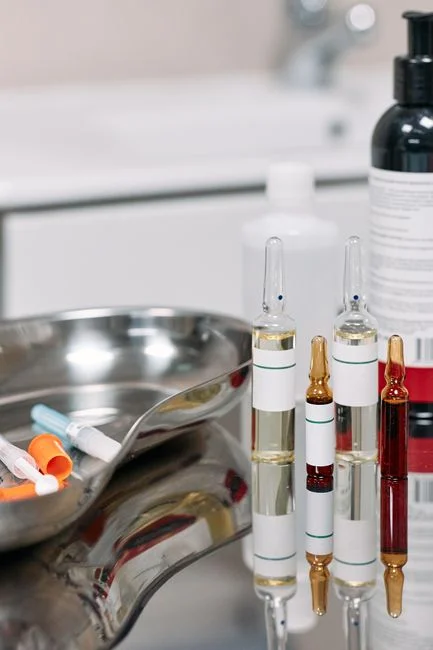
Disinfection is the parameter that decides whether the plant hits fecal coliform <10 CFU/100 mL on day one and still hits it in year three. The Yu et al. disinfection comparison (Scientific.Net) lays out the five options typically considered in Turkish hospital tenders — chlorine, sodium hypochlorite, chlorine dioxide, ozone, and UV — and recommends chlorine dioxide as the preferred method for county and town-level hospitals on a techno-economic basis. That recommendation is now broadly the Bursa default in 2026 for three technical reasons.
First, ClO₂ has a broader effective pH range (≈4–10) than NaClO, so the dose is predictable across the diurnal pH swing a hospital equalization tank actually delivers. Second, ClO₂ does not form trihalomethanes (THMs) at typical hospital doses, which matters because iodinated contrast media in the feedwater react with free chlorine to form iodinated disinfection byproducts that show up on a BMM discharge audit. Third, ClO₂ demand is more predictable than NaClO, so the residual sits inside the 0.2–0.5 mg/L window EU-funded Bursa projects are usually written against, instead of swinging above 1 mg/L after the morning dosing peak.
Working numbers for 2026 designs: dose 2–5 mg/L as residual on hospital secondary effluent, with 30–60 seconds of contact time in a contact tank sized at minimum 1.5× peak hourly flow. The skid typically pairs a chlorine dioxide generator with an MBR polishing system for ≥200 m³/day sites, or with a packaged bio-contact-ox train for sub-50 m³/day clinics.
2026 CAPEX and OPEX Ranges for Bursa Hospital Projects
The table below translates process choice into 2026 budget numbers at the three flow scales a Bursa hospital procurement team most often builds a business case around: a 10 m³/day clinic, a 100 m³/day district hospital, and a 500 m³/day teaching hospital. The ranges reflect Turkey-local skid fabrication in 2026 and are order-of-magnitude — for a real budget you must add civil works, equalization, radioactive decay pits (where applicable) and grid connection.
| Flow scale | Bio-contact-ox + ClO₂ CAPEX | SBR + ClO₂ CAPEX | MBR + ClO₂ CAPEX | Typical OPEX ($/m³) |
|---|---|---|---|---|
| 10 m³/day (clinic) | $80,000–$150,000 | $120,000–$220,000 | $180,000–$350,000 | $0.30–$0.55 |
| 100 m³/day (district) | $800,000–$1.5M | $1.2M–$2.2M | $1.8M–$3.5M | $0.30–$0.85 |
| 500 m³/day (teaching) | $4M–$7.5M (atypical) | $6M–$11M | $9M–$17.5M | $0.45–$0.95 |
OPEX is dominated by three line items: membrane replacement on the MBR cycle (5–7 years), ClO₂ precursor chemical cost, and aeration energy. For Bursa in 2026, industrial electricity is running roughly 3.0–3.5 TRY/kWh, and a skilled operator at 8–12 hours/week per 100 m³/day of plant should be budgeted into the OPEX line. Where the hospital runs a nuclear medicine department — true for any Bursa teaching hospital — radioactive decay tanks and segregated monitoring add $40,000–$120,000 of upfront civil cost that is non-negotiable under O.G. 02.09.2004/25571. Reference the full compact medical wastewater unit range for skid pricing, and see the MBR market forecast to 2030 for the cost-down trajectory on membrane modules.
Bursa-Specific Risks: Radioactive Effluent, Diurnal Peaks and Sewer Permits
Three failure modes show up repeatedly on Bursa hospital projects that generic guides never mention, and each one has burned a procurement budget in the last 24 months. First, radioactive wastewater from nuclear medicine departments (I-131 therapy wards, Tc-99m imaging, Sm-153 pain-therapy) and from radio-immunoassay laboratories must be collected separately, tanked, decayed to background, and monitored before any sewer discharge under O.G. 02.09.2004/25571. Bursa Provincial Directorate approval is required before the connection is commissioned, and the permit conditions are written into the IHC ESIA — they are not a future option.
Second, diurnal flow peaks in Turkish hospitals routinely reach 1.5–1.8× the daily average during the 08:00–11:00 outpatient shift change and the 17:00–19:00 visitor peak. Equalization must be sized at 4–6 hours of retention or the biological stage will be chronically under-sized and the post-peak BOD shock will push effluent COD above 100 mg/L, which is a non-compliance event under SKKY. Third, the Bursa West WWTP and the Bursa East WWTP both operate written connection permits and pre-treatment requirements; the application goes through the BMM water and sewerage directorate and is the gating step before any civil work.
Finally, pharmaceutical residues and contrast media — iohexol, iopamidol, sulfamethoxazole, metoprolol — are not removed by conventional activated sludge. Any teaching hospital that wants to hit the BMM-tightened limits or that plans water reuse needs either MBR polishing or a granular activated-carbon stage downstream of biological treatment. Add this to the procurement checklist before tender, not after award.
Frequently Asked Questions
What is the SKKY hospital wastewater discharge limit for COD in Turkey?
SKKY (31.12.2004 R.G. 25687) sets the medical-sector COD limit at ≤100 mg/L; the Bursa Metropolitan Municipality connection permit routinely tightens this to ≤80 mg/L on site-specific permits, and the biological reactor plus MBR polish is sized to hit ≤50 mg/L for reuse-grade projects.
Can a Bursa hospital discharge untreated wastewater to the Bursa West WWTP?
No. SKKY requires on-site pre-treatment to the medical-sector envelope, and radioactive wastewater must be segregated and monitored under O.G. 02.09.2004/25571 before any sewer discharge. The Bursa West WWTP connection permit is contingent on both.
MBR or SBR for a 200 m³/day hospital in Bursa?
Pick MBR if footprint is tight (under 2 m² per m³/day), if water reuse is in scope, or if fecal coliform must read as not-detected on the discharge certificate. Pick SBR if CAPEX is the binding constraint and the site can absorb 2–3 m² per m³/day of footprint.
How much does a hospital wastewater treatment plant cost in Turkey in 2026?
For a 10 m³/day clinic, $80,000–$350,000 depending on process train. For 100 m³/day, $0.8M–$3.5M. For 500 m³/day, $4M–$17.5M. The high end is MBR + ClO₂ with full civil works; the low end is a packaged bio-contact-ox skid.
Is chlorine dioxide allowed for hospital wastewater disinfection in Turkey?
Yes. SKKY does not mandate a specific disinfectant, and ClO₂ is the 2026 Bursa default because it avoids THM formation, holds residual across the 0.2–0.5 mg/L window EU-funded projects target, and works across the diurnal pH swing of a hospital equalization tank. Typical design is 2–5 mg/L residual with 30–60 seconds contact time.
Related Equipment
- GX rotary bar screen — specifications, capacity range, and technical data