Why Costa Rican Hospitals Are Re-Engineering Effluent Systems in 2026
MINAE enforcement of Reglamento 33601-MINAE-S tightened materially across 2024–2025, with 18 enforcement letters issued to private hospitals in the Gran Área Metropolitana (GAM) for fecal coliform and COD exceedances; the regulation's hospital discharge limits — BOD₅ <50 mg/L, COD <150 mg/L to sewer (<50 mg/L to surface water), SS <50 mg/L, and fecal coliform <1,000 MPN/100 mL — remain binding in 2026. Compliance pressure is no longer theoretical. The 2023 Rodríguez-Rodríguez Chemosphere study monitored 70 pharmaceutical compounds in Costa Rican hospital wastewater (cited 40+ times) and flagged ciprofloxacin, sulfamethoxazole, diclofenac, naproxen, trimethoprim, and four additional actives as the highest-priority hazards by risk quotient. The Caja Costarricense de Salud (CCSS) network — 30+ major public hospitals discharging to AYA sewerage — is under parallel pressure from AYA's 2024 pretreatment audits, and several private facilities (Hospital CIMA, Hospital Clínica Bíblica) are pre-empting permit revocation with packaged upgrades. The 2026 driver stack is now: regulation + pharmaceutical residues + antibiotic resistance gene (ARG) proliferation, with conventional BOD/COD removal no longer sufficient as a defense.
Influent Characteristics: What Costa Rican Hospital Wastewater Actually Looks Like
Costa Rican hospital influent is consistently stronger than the textbook 150–300 mg/L BOD₅ default, and engineers should size to the upper end of regional monitoring data. Diurnal flow variation is severe: surgical scheduling batches create 3–5× peak-to-average ratios, which sets equalization tank volume at roughly 40–60% of daily flow. The year-round 24–28°C Central Valley temperature is a positive factor — it permits higher MLSS (4,000–5,000 mg/L) and smaller aerobic reactors than temperate-climate designs.
| Parameter | Typical range (50–200 bed CR hospital) | Design value for MBR sizing |
|---|---|---|
| BOD₅ | 150–400 mg/L | 350 mg/L |
| COD | 300–800 mg/L | 700 mg/L |
| Suspended solids | 100–300 mg/L | 250 mg/L |
| NH₃-N | 20–60 mg/L | 50 mg/L |
| Fecal coliform | 10⁶–10⁸ MPN/100 mL | 10⁷ MPN/100 mL |
| Pharmaceutical residues (sum of 70 compounds) | 1–50 μg/L per active | monitoring only — no CR numeric limit yet |
| Temperature | 24–28°C | 26°C (annual mean) |
| Daily flow (50–200 beds) | 50–250 m³/d | per bed count |
Pharmaceutical load is the dimension most engineers underweight. The Rodríguez-Rodríguez 2023 study (cited 40+ times) documented individual antibiotics in the 1–50 μg/L range at Costa Rican hospital discharge points, with ciprofloxacin and sulfamethoxazole driving ecological risk quotients above 1.0 in receiving surface waters. These residues also feed ARG proliferation in downstream AYA biological plants, which is why MINAE's 2024 enforcement letters now reference pharmaceutical watch lists as a future compliance frontier.
The 2022 Process Train: Biological Treatment + MBR + Disinfection
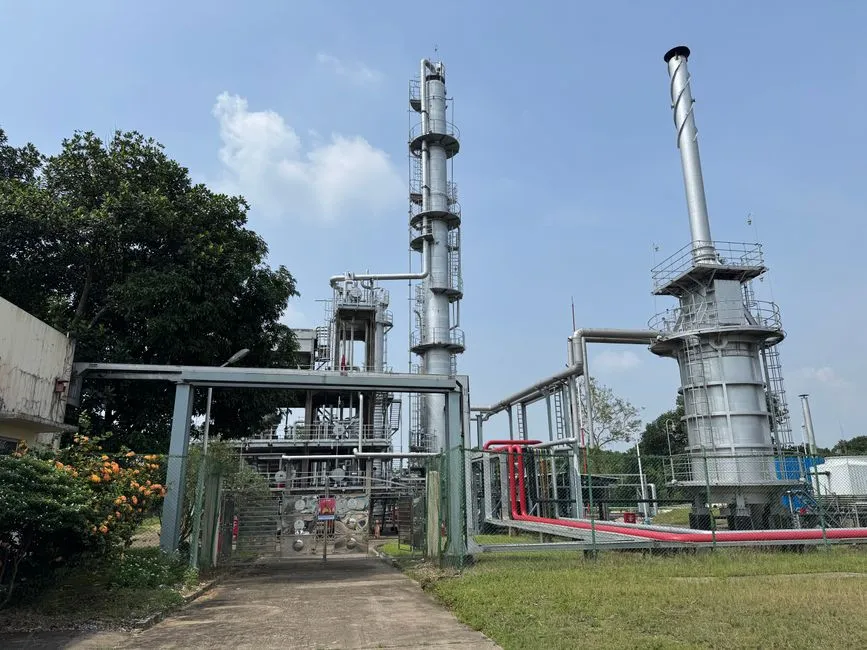
The dominant 2026 engineered configuration for Costa Rican hospitals is biological contact oxidation (anoxic + aerobic A/O) followed by submerged MBR and chlorine dioxide disinfection. The five-stage train delivers the <50 mg/L COD and <10 mg/L NH₃-N target that the 200 m³/d reference case in the Top 1 paper demonstrated, and it scales linearly from 50 m³/d clinics to 250 m³/d regional hospitals.
| Stage | Equipment / specification | Key design parameter |
|---|---|---|
| 1. Screening & grit | GX series rotary mechanical bar screen with 5 mm aperture, manual grit chamber | Screen aperture 5 mm; peak flow capacity 1.5× average daily flow |
| 2. Equalization | Concrete or packaged steel tank with submersible mixers | HRT 8–12 h; volume = 40–60% of daily flow |
| 3. Biological contact oxidation (A/O) | Anoxic zone (HRT 2 h) + aerobic zone (HRT 4–6 h); packed PE bio-media | Total HRT ≥4 h per Lin Chen et al. study; MLSS 3,000–5,000 mg/L; DO 2.0 mg/L aerobic, <0.5 mg/L anoxic |
| 4. MBR | Integrated MBR wastewater treatment system with DF series PVDF flat sheet membrane modules, 0.1 μm pore size | Flux 15–25 LMH; TMP <0.3 bar; sludge yield 0.25–0.35 kg MLSS/kg BOD; modules sized in 32–135 m³/d building blocks |
| 5. Disinfection | Chlorine dioxide generator with contact tank | ClO₂ residual 0.5–1.0 mg/L after 30 min CT; dose 2–5 mg/L; fecal coliform kill ≥99.9% (3-log) |
| 6. Sludge dewatering | Plate and frame filter press for sludge dewatering | Cake moisture <60%; WAS thickened to 2–3% before pressing; contracted disposal |
The 4-hour aerobic HRT is the minimum threshold from the Lin Chen et al. biological contact oxidation study — below 4 h, effluent BOD₅ and COD begin to fail discharge standards. MBR flux should be derated to 15–18 LMH for hospital effluent (vs. 20–25 LMH for municipal) because of higher colloidal surfactant and pharmaceutical loads that foul the membrane surface faster. Cleaning-in-place frequency is typically weekly with 1,000 mg/L NaOCl for hospital MBRs, versus biweekly for municipal installations.
Disinfection Comparison: ClO2 vs NaOCl vs Ozone vs UV for Costa Rican Hospitals
Disinfection is the most contested design choice in Costa Rican hospital projects because it locks in 10+ years of OPEX. The Top 1 paper's economic comparison recommended chlorine dioxide for county/town hospital scale, and that finding holds in 2026: ClO₂ delivers 3-log fecal coliform kill at lower CAPEX than ozone and with substantially lower THM formation than NaOCl, while leaving a residual that AYA sewer pretreatment inspectors can verify. For MBR permeate (typically SS <5 mg/L, turbidity <1 NTU), UV is technically viable but provides no residual — a problem when the discharge permit requires a measurable disinfectant at the sampling point.
| Metric | ClO₂ | NaOCl | Ozone | UV |
|---|---|---|---|---|
| CAPEX (USD per m³/d capacity) | 120–180 | 60–100 | 350–500 | 180–260 |
| OPEX (USD per m³ treated) | 0.04–0.08 | 0.05–0.10 | 0.12–0.22 | 0.03–0.05 |
| 99.9% fecal coliform kill time | 15–30 min (CT-based) | 20–45 min | 3–8 min | 1–3 s at 40 mJ/cm² |
| By-product formation | Low — chlorite/chlorate regulated under EU 98/83/EC and WHO Guidelines for Drinking-water Quality | High THMs (chloroform, bromoform) | Bromate if bromide present | None (no chemical) |
| Residual | Yes — 0.5–1.0 mg/L verifiable at sample point | Yes | No | No |
| Safety / footprint | On-site generation; small footprint; precursor chemicals classified corrosive | Bulk liquid handling risk | Generator + ozone destructor required; large footprint | Lamp replacement every 12,000–15,000 h; quartz sleeve fouling |
| Fit for CR tariff (ICE industrial ~USD 0.12/kWh) | Good — energy draw <0.5 kWh/kg ClO₂ | Good | Poor — 16–25 kWh/kg O₃ | Mixed — efficient on MBR permeate |
Ozone's 16–25 kWh/kg O₃ energy draw is a poor fit for the ICE 2026 industrial tariff (approximately USD 0.12/kWh), pushing ozone OPEX to USD 0.12–0.22/m³ — roughly 3× chlorine dioxide on the same flow. The chlorine dioxide generator references EPA, EU Directive 98/83/EC, and WHO Guidelines for Drinking-water Quality as its compliance benchmark set, which is also the framework AYA and MINAE inspectors default to when reviewing disinfection design.
Costa Rica Compliance Pathway: Permits, Sampling, and Reporting in 2026
The compliance sequence for a 50–200 bed hospital in 2026 follows four steps. First, secure a MINAE operating permit (permiso de vertido) under Reglamento 33601-MINAE-S, supported by an influent/effluent characterization report and a self-monitoring plan covering quarterly fecal coliform and COD analyses, with at least annual full-suite sampling including heavy metals and pharmaceuticals. Second, confirm the discharge route — to surface water (Decreto 31176-MAG-S limits apply) or to AYA sewer (CAAR/AYA pretreatment rules apply: pH 6–9, temperature ≤40°C, no flash toxicants, no flammable vapors, no raw pathology waste). Third, register the on-site treatment train with MINAE's Ventanilla Única and pay the annual environmental fee (around CRC 150,000–400,000 depending on flow). Fourth, for CCSS public facilities, file a complementary report with the Caja's environmental unit; CCSS internal audits now reference MINAE's pharmaceutical watch list, and 2026 is the year when the Rodríguez-Rodríguez 2023 baseline is being formalized into enforceable monitoring guidance.
Engineers should expect a MINAE site visit within 90 days of commissioning and should pre-stage the chain-of-custody documentation, calibration logs for online instruments (pH, residual chlorine, flow), and a sludge disposal contract covering the plate-and-frame filter press output.
CAPEX and OPEX Benchmarks for a 50–200 Bed Costa Rican Hospital in 2026
Cost data for 2026 Latin America hospital packaged MBR projects puts a 50-bed (50–80 m³/d) integrated MBR + ClO₂ system at USD 180,000–420,000 CAPEX, including tanks, PVDF membrane modules, blowers, instrumentation, installation, and commissioning. OPEX for energy, ClO₂ precursor chemicals, membrane cleaning chemicals, and contracted sludge disposal runs USD 0.38–0.72 per m³ treated, with membrane replacement adding USD 8–15 per m² every 5–7 years. Scaling from 50 beds to 200 beds (~250 m³/d) follows a 0.7 power-law factor, not linear scaling, because blowers, control panels, and the ClO₂ generator have significant fixed-cost components: a 200-bed facility lands in the USD 700,000–1.4M CAPEX range. For sub-10-bed clinics, the compact medical wastewater treatment system offers a 0.5 m² footprint ozone-based alternative at a fraction of the cost, though it does not match the ClO₂ residual argument required for surface-water discharge permits.
| Hospital size | Design flow | Process train | CAPEX range (USD, 2026) | OPEX (USD/m³) |
|---|---|---|---|---|
| 10 beds (clinic) | 5–10 m³/d | Compact ozone-based system | 18,000–35,000 | 0.45–0.85 |
| 50 beds | 50–80 m³/d | A/O + integrated MBR wastewater treatment system + ClO₂ | 180,000–420,000 | 0.38–0.72 |
| 100 beds | 120–160 m³/d | A/O + MBR (dual DF train) + ClO₂ | 400,000–780,000 | 0.35–0.65 |
| 200 beds | 220–280 m³/d | A/O + MBR (quad DF train) + ClO₂ + sludge press | 700,000–1,400,000 | 0.30–0.58 |
For deeper OPEX breakdown including membrane fouling mitigation and energy optimization, the MBR operating cost in 2026 OPEX breakdown reference provides per-kWh and per-m² cleaning-cost detail. The online chlorine analyzer buyer's guide covers the residual ClO₂ instrumentation required for permit compliance. For peer-market benchmarking, see the hospital wastewater treatment in the Philippines 2026 guide, the hospital wastewater treatment in Angola 2026 guide, and the hospital wastewater treatment in Morocco 2026 spec guide — tariff structures and A/O + MBR + ClO₂ design logic are directly comparable to Costa Rica's.
Frequently Asked Questions
What is the MINAE discharge limit for fecal coliform from a Costa Rican hospital in 2026?
Under Reglamento 33601-MINAE-S, hospital effluent to sewer must meet <1,000 MPN/100 mL fecal coliform, and discharge to surface water must meet <200 MPN/100 mL. Compliance is verified through quarterly self-monitoring reported to MINAE's regional environmental office.
What is the typical CAPEX for a 50-bed hospital MBR system in Costa Rica?
A 50-bed hospital (50–80 m³/d) packaged MBR + ClO₂ system runs USD 180,000–420,000 CAPEX in 2026, including tanks, PVDF membrane modules, blowers, instrumentation, and installation (HydropureWater field data, 2026). The range reflects site civil work variability and the choice of plate-frame sludge dewatering.
Why is chlorine dioxide preferred over NaOCl for hospital wastewater in Costa Rica?
ClO₂ delivers 99.9% fecal coliform kill at 2–5 mg/L dose with 15–30 min contact time, produces substantially fewer trihalomethanes than NaOCl, and leaves a measurable 0.5–1.0 mg/L residual for compliance verification. Per the Top 1 economic comparison, ClO₂ CAPEX is lower than ozone at hospital flow scales.
Does Costa Rica regulate pharmaceutical residues in hospital effluent in 2026?
No numeric limit exists yet under Reglamento 33601-MINAE-S, but the 2023 Rodríguez-Rodríguez Chemosphere study (70 compounds monitored) has set the monitoring baseline, and MINAE enforcement letters in 2024–2025 reference pharmaceutical watch lists. Engineers should plan for ARG-aware disinfection and quarterly pharmaceutical screening.
How much does a 200-bed hospital packaged wastewater plant cost in 2026?
A 200-bed facility at 220–280 m³/d scales to USD 700,000–1,400,000 CAPEX using a 0.7 power-law factor, with OPEX at USD 0.30–0.58 per m³. The MBR train typically uses four DF series PVDF module skids in parallel and a single mid-capacity ClO₂ generator.