Why 2026 Is a Pivot Year for Decentralized Treatment
Four 06 Apr 2026 signals have moved decentralized wastewater treatment from a "pilot-stage" conversation to a procurement decision: the EU released €3.1 billion in Cohesion Policy funds for water resilience, the New Delhi Municipal Council (NDMC) committed to 8 new decentralized STPs, the Haryana pollution control board set a 15-day deadline for STP sampling under the Yamuna Action Plan, and Kerrville, Texas advanced a $3.1 million reclaimed-water pipeline to combat drought. On the same day, Taiwan reported that 70% of monitored river-pollution sites improved year-on-year, a result directly tied to distributed treatment retrofits (per Water Today, 06 Apr 2026). For a 2026 buyer, the question is no longer whether decentralized systems are deployable but how to specify them against the new funding windows. This 2026 decentralized wastewater treatment outlook frames the opportunity: modular package plants treating 10–20,000 m³/day at or near the point of generation, per the kaimimembrane application overview, are now the default procurement path for municipalities and industrial parks that cannot wait for trunk-sewer build-out.
Regional Snapshot: EU, South Asia, North America, MENA and Latin America
Policy momentum and project pipelines differ sharply by region, and so do the dominant package-plant configurations. The table below ties the 2026 drivers to the technology and capacity range each region is buying.
| Region | Key 2026 policy / project driver | Dominant package technology | Indicative capacity range |
|---|---|---|---|
| European Union | €3.1B Cohesion Policy fund release (06 Apr 2026); Urban Waste Water Directive 91/271/EEC compliance gaps | MBR + UV disinfection skid packages | 500–20,000 m³/day |
| South Asia (India focus) | NDMC 8-plant Delhi roll-out (06 Apr 2026); Haryana 15-day STP sampling deadline; Yamuna Action Plan Phase III | Containerized MBR and FBBR units; prefabricated moving-bed biofilm reactors | 50–5,000 m³/day |
| North America | EPA Decentralized Wastewater Management MOU webinar series (2021 baseline, ongoing); Kerrville $3.1M reclaimed-water pipeline (06 Apr 2026) | EPA NSPS-aligned package plants with tertiary filtration and UV | 100–10,000 m³/day |
| MENA and Latin America | Drought-driven reuse mandates; Tijuana Ecoparque case study as proof point for urban greening with reuse | Packaged MBR + RO trains with UV for irrigation-grade reuse | 100–10,000 m³/day |
Three patterns emerge across these geographies. EU buyers are chasing compliance with Directive 91/271/EEC (tightening in 2026 revisions) using MBR + UV packages sized above 500 m³/day. Indian buyers are deploying containerized MBR and FBBR units in the 50–5,000 m³/day band to fast-track NDMC's 8-plant programme and meet Haryana's 15-day sampling cadence. MENA and Latin American buyers consistently pair MBR with reverse osmosis because their binding constraint is reuse for irrigation, not just discharge compliance. The U.S. EPA Decentralized Wastewater Management MOU, which has run a public webinar series since at least September 2021 (per EPA's published webinar archive), remains the institutional anchor for U.S. decentralized procurement despite federal administration turnover.
Validated Tech Specs: MBR, FBBR, MABR and IFAS Compared
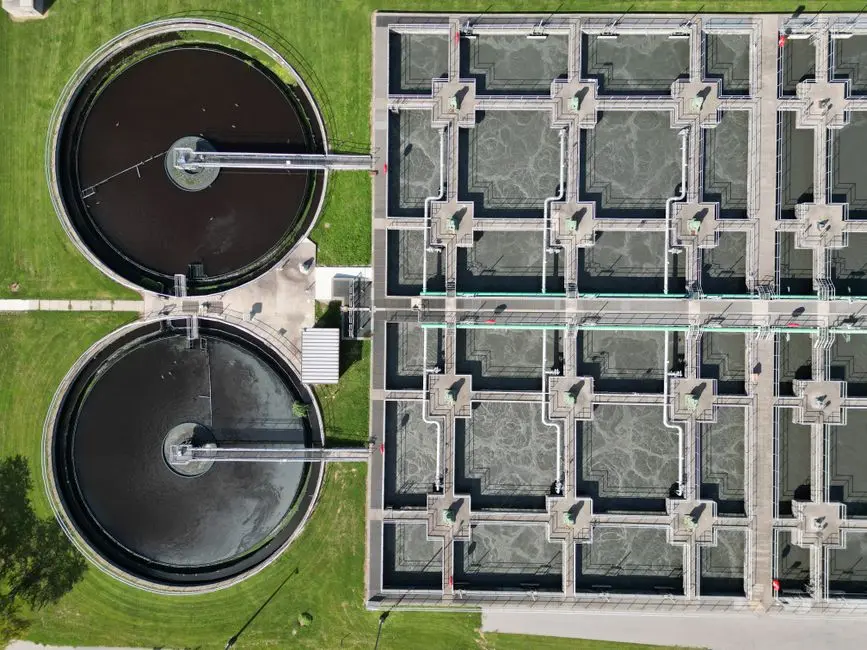
The core process decision determines both footprint and lifecycle cost, necessitating a comparison of MBR performance against independent benchmarks and emerging alternatives. Submerged hollow-fiber MBR at 30 nm pore size delivers permeate turbidity near zero and routinely achieves BOD <5 mg/L and TSS <5 mg/L; MLSS up to 8,000 mg/L (2–3× conventional activated sludge) is consistent with the vendor claim and with peer-reviewed MBR operating data. Footprint savings of 30–50% versus conventional activated sludge and a 66.7% reduction in residual sludge yield are credible because higher MLSS and solids retention time directly suppress sludge production. MABR (membrane-aerated biofilm reactor) is a 2026 emerging alternative to size into new tenders; the MABR capacity and sizing engineering guide outlines the design formula and loading rates. IFAS (integrated fixed-film activated sludge) suits high-strength industrial effluents such as slaughterhouse wastewater, with CAPEX of $280–$650 per m³/day of capacity per the IFAS slaughterhouse case. Energy comparisons indicate MBR aeration draws 0.3–0.6 kWh/m³ versus 0.2–0.4 kWh/m³ for conventional activated sludge, trading footprint savings for 30–50% higher blower energy usage.
| Parameter | Submerged MBR (Hollow Fiber) | FBBR (Fixed-Bed Biofilm) | MABR | IFAS |
|---|---|---|---|---|
| Pore size / media | 30 nm membrane | Biofilm carriers, no membrane | Gas-transfer membrane for biofilm | Biofilm carriers in suspended sludge |
| MLSS / biomass | Up to 8,000 mg/L | Attached biomass, 3,000–5,000 mg/L equivalent | Attached biofilm, low suspended MLSS | 3,000–5,000 mg/L + attached biomass |
| Footprint vs CAS | 30–50% smaller | 20–40% smaller | 30–50% smaller | 20–35% smaller |
| Effluent BOD / TSS | <5 / <5 mg/L | <10 / <10 mg/L typical | <5 / <5 mg/L achievable | <10 / <10 mg/L typical |
| CAPEX ($/m³/day) | $150–$450 (municipal) | $120–$300 | $200–$500 | $280–$650 (industrial) |
| Best fit | Municipal reuse, space-constrained sites | Rural / low-strength, low O&M | Aeration-energy-sensitive sites | High-strength industrial effluents |
2026 Cost Benchmarks: CAPEX, OPEX and Total Cost of Ownership
Procurement managers require defensible numbers rather than base sticker prices. For modular MBR packages in the 100–2,000 m³/day band, CAPEX typically lands at $150–$650 per m³/day of installed capacity, with the low end achieved by standardized skids at high-volume manufacturing and the high end by site-specific civil work, containerization, or stringent reuse-grade finishing. OPEX for an operating MBR runs $0.20–$0.55 per m³ treated, dominated by aeration energy (40–60% of OPEX), membrane cleaning chemicals (10–15%), and sludge hauling (10–20%); the 2026 MBR operating cost breakdown itemizes each line. Membrane replacement, the largest non-energy OPEX line, should be budgeted using current per-m² flat-sheet versus hollow-fiber pricing rather than legacy curves, as detailed in the 2026 MBR membrane replacement cost guide. Add a 15–25% CAPEX uplift when specifying UV or ClO₂ disinfection to meet EPA NSPS, EU Directive 91/271/EEC, or India CPCB discharge norms, and another 10–20% if the project requires irrigation-reuse quality via RO downstream of the MBR.
Supplier Selection Framework for 2026 Procurement
Four checks separate a defensible supplier from a glossy one. Check 1 — reference list at the required capacity band: ask for at least three operating references in the 10–2,000 m³/day MBR range, with effluent data, not just photos. Check 2 — regional regulatory alignment: confirm the supplier can deliver against EU 91/271/EEC, U.S. EPA NSPS, India CPCB, Saudi Presidency of Meteorology and Environment (PME) standards, and Vietnam QCVN 40:2011/BTNMT, with documentation in the language of the permitting authority. Check 3 — lifecycle support: verify membrane availability (lead time under 8 weeks), spare parts inventory in-region, and remote-monitoring capability with at least 12 months of trend data retention. Check 4 — total installed cost transparency: require an itemized quote that separates skid price, civil work, freight, installation, commissioning, and the first 24 months of membrane replacement, rather than a single lump sum. For the community and rural band up to 80 m³/h, a WSZ underground package sewage treatment plant matches the footprint and burial-installation profile most municipal engineers want; for the 10–2,000 m³/day municipal and industrial reuse band, an integrated MBR membrane bioreactor system covers both tertiary and reuse-grade duty cycles.
Frequently Asked Questions
What is decentralized wastewater treatment? A modular package plant treating 10–20,000 m³/day at or near the point of generation, replacing or supplementing a central trunk-sewer system, with submerged MBR or FBBR as the dominant core processes.
What does a 2026 decentralized wastewater treatment system cost? Modular MBR packages typically run $150–$650 per m³/day of installed CAPEX at the 100–2,000 m³/day scale, with OPEX of $0.20–$0.55 per m³ treated.
What pore size and effluent quality can a package MBR deliver? Submerged hollow-fiber MBR at 30 nm pore size produces permeate turbidity near zero, BOD below 5 mg/L, and TSS below 5 mg/L, supporting both discharge and reuse permits.