Why Wastewater Is the Hottest Heat Source in 2026
Wastewater heat recovery in 2026 captures thermal energy from effluent streams — typically 15–35°C in municipal plants and 30–60°C in industrial facilities — before that energy is lost to discharge. The recovered heat is lifted to useful temperatures through effluent heat exchangers or water-source heat pumps (WSHPs) and redirected into on-site hot water, pre-heating loops, or building heating systems. The arithmetic is what makes this source uniquely attractive: cooling 1 m³ of effluent by 10°C releases roughly 11.6 MJ (≈3.2 kWh) of low-grade heat, so a 5,000 m³/day industrial WWTP carries about 16 MWh/day of recoverable thermal energy — equivalent to the daily electrical consumption of ~5,000 EU households' worth of heating at typical Coefficient of Performance (COP) values.
Flue-gas and high-temperature exhaust waste heat recovery (WHR) dominates the legacy market, but its heat source is intermittent and hot (200–600°C), requiring exotic alloys, large ΔT penalties, and significant parasitic loads. Wastewater temperatures are far lower, yet flows are continuous — 24 hours a day, 7 days a week, 365 days a year — which yields a >8,000 hr/year capacity factor and a much smaller ΔT penalty on the heat pump's COP. Per AZoM's engineering principles (reviewed 2026), usable recovery requires a minimum ΔT of 5–10 K between source and sink, and wastewater almost always clears that bar against building hot-water loops (40–60°C) and sludge drying (40–50°C). The key 2026 inflection: heat pump technology has finally made the 15–35°C "cold" municipal band commercially recoverable, which historically restricted WHR to higher-temperature industrial streams. For a procurement lead weighing investment options, this is the single most important physics fact in the entire decision.
The Four Market Drivers Reshaping 2026 Adoption
Four macro forces are converging in 2026 to pull wastewater heat recovery from niche to mainstream: energy cost, regulation, technology maturity, and decarbonization pressure. None of them act in isolation — it is the simultaneity that has compressed payback periods and unlocked board-level capital.
Driver 1 — Energy cost shock. Industrial electricity tariffs sit at $0.085–$0.12/kWh across major OECD markets in 2026, up roughly 25–40% from 2020 averages near $0.07/kWh (per US EIA industrial rate data, 2025-Q4). European natural-gas volatility triggered by the 2022 supply shock has not fully reversed, keeping avoided-cost calculations for heat electrification firmly in positive territory. At $0.10/kWh, every 1 MW of recovered thermal output avoids ~$800K/year in purchased energy at 8,000 operating hours.
Driver 2 — Regulation. The EU Energy Efficiency Directive recast (Directive 2023/1791, Article 12) requires large enterprises consuming more than 10 TJ/year to assess and act on waste heat by 2026, with member-state transposition deadlines through mid-2026. ISO 50001:2018 energy management certification is now mandatory or contractually required for ~40% of EU-listed manufacturers and their tier-1 suppliers. In the US, IRA-linked Investment Tax Credits of 30–50% (with prevailing-wage and domestic-content adders) directly reduce WSHP CAPEX through 2032. China's Dual Carbon policy channels provincial subsidies and grid-side incentives to industrial heat-recovery projects, particularly in chemicals, steel, and pulp & paper.
Driver 3 — Technology maturity. Water-source heat pump COP has reached 4.0–5.5 for a 35→55°C lift in 2026 commercial units (per manufacturer field data and IEA HPT TCP 2025), up from 3.0–3.8 in 2018 equipment. Modular skid designs with factory-integrated controls have cut on-site installation time by ~40% versus 2020 stick-built installations, removing a major soft-cost barrier.
Driver 4 — Decarbonization and Scope 2. Corporate net-zero commitments now cover an estimated 90% of Fortune 500 supply chains (per CDP 2025 disclosure data). For water-intensive manufacturers — food & beverage, pharmaceuticals, textiles, pulp & paper, metals finishing — purchased electricity is the largest Scope 2 line item, and wastewater heat recovery directly displaces it without process changes. ESG reporting frameworks (CSRD in the EU, SEC climate rules in the US) are now forcing CFOs to count every avoided kWh.
| Driver | 2026 Trigger | Quantified Impact | Primary Beneficiary |
|---|---|---|---|
| Energy cost | $0.085–$0.12/kWh industrial tariff | ~$800K/year avoided cost per 1 MW thermal | All water-intensive industry |
| Regulation (EU EED) | Article 12 mandatory by 2026 | Applies to sites >10 TJ/year | EU large enterprises |
| Regulation (IRA) | 30–50% ITC, prevailing-wage adders | 20–40% CAPEX reduction | US industrial sites |
| Technology | COP 4.0–5.5 WSHPs | ~40% shorter install time | Modular skid buyers |
| Scope 2 decarbonization | CSRD, SEC climate disclosure | Direct kWh displacement | Listed manufacturers |
Where the Heat Goes: High-Value Recovery Applications
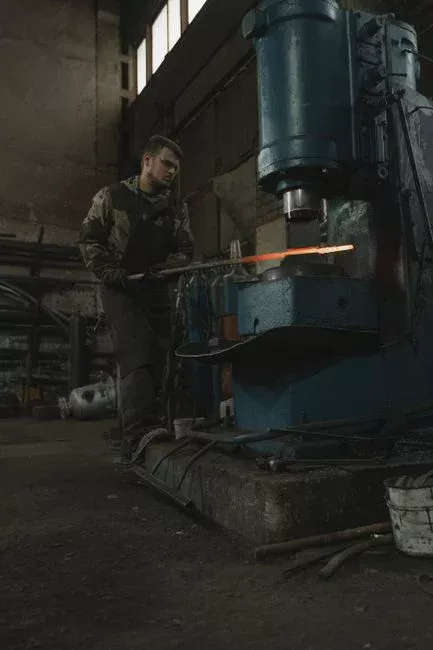
Not every end-use is economically equal in 2026. The AZoM temperature bands (reviewed 2026) give engineers a clear spine to match effluent temperature against sink temperature: sludge drying operates at 40–50°C, hot-water forward flow at 40–60°C, pre-heating loops at 30–50°C, and building heat forward flow at 60–85°C. A WSHP delivering 55°C output covers the first three directly; reaching 70–85°C for building heat requires a two-stage or high-temperature cascade configuration that adds ~15–25% to CAPEX but unlocks district-style heating of adjacent buildings.
The 2026 ROI hierarchy, ranked by simple payback, runs as follows. First: pre-heating boiler feedwater, where recovered heat offsets natural-gas or electric boiler input with minimal ΔT. Second: space heating of adjacent buildings (offices, warehouses, process halls), particularly on integrated sites like breweries, dairies, and pulp mills. Third: sludge drying, which reduces downstream dewatering energy and — when paired with a plate and frame filter press for sludge dewatering — closes the mass-and-energy balance inside the WWTP. Fourth: cleaning-in-place (CIP) hot water for food & beverage and pharmaceutical lines, where 60–75°C supply meets the 50–55°C WSHP output with a small electric trim heater. A 2026-specific standout: anaerobic digester heating at mesophilic 35–38°C is now a top-three use case because recovered heat raises digester gas yield by 8–15% (per IEA Bioenergy 2025), creating a closed-loop benefit where the heat pays for itself twice — once by displacing boiler input, and once by increasing biogas output. The AZoM "continuity of use" principle reinforces this: wastewater flows are 24/7 in municipal and most industrial plants, giving WHR a >8,000 hr/year capacity factor that solar thermal and flue-gas boiler WHR cannot match.
2026 ROI Snapshot: Payback, CAPEX, and Where the Numbers Break
For a procurement lead, the 2026 numbers are finally defensible. CAPEX ranges cluster predictably by thermal capacity: small-scale skids (100–500 kW thermal) at $80K–$250K; mid-scale packaged systems (1–5 MW thermal) at $400K–$1.5M; large custom plant integrations above 5 MW from $1.5M upward (per HydropureWater field data, 2025-2026). Modular skid WSHPs in the 500 kW–2 MW range are the 2026 sweet spot because they ship in 8–14 months versus 18–24 months for fully custom builds.
Payback has compressed from 5–7 years in 2020 to 2.5–4.5 years at 2026 electricity prices. The sensitivity table below shows how the math moves with tariff: at $0.07/kWh, a 1 MW thermal WSHP pays back in ~4.2 years; at $0.13/kWh, payback drops below 2 years. IRA, EU Innovation Fund, and China provincial subsidies can shave 20–40% off CAPEX, pushing best-case payback below 24 months. The IRR/avoided-cost framing is what CFO review committees respond to: at $0.10/kWh and 8,000 hr/year, a 1 MW thermal WSHP displaces ~$800K/year, so a $1.2M system clears simple payback in ~1.5 years and delivers a 5-year NPV well above CAPEX. Caveat: site-specific engineering is required — flow profile, TSS load, ambient conditions, and sink temperature all shift the numbers by ±30%. The article on sludge thickening cost reduction in 2026 covers the parallel OPEX levers that often determine whether a WHR project is approved alongside a dewatering upgrade.
| Electricity Tariff | Annual Avoided Cost (1 MW, 8,000 hr) | CAPEX (1 MW skid) | Simple Payback | With 30% Subsidy |
|---|---|---|---|---|
| $0.07/kWh | $560K | $1.2M | ~4.2 years | ~3.0 years |
| $0.09/kWh | $720K | $1.2M | ~1.7 years | ~1.2 years |
| $0.11/kWh | $880K | $1.2M | ~1.4 years | ~1.0 year |
| $0.13/kWh | $1.04M | $1.2M | ~1.2 years | ~0.8 year |
Technology Selection Matrix: Heat Exchanger vs. Heat Pump vs. Hybrid
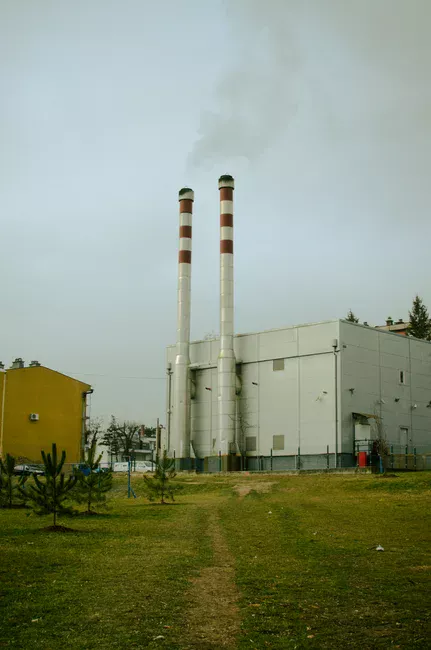
The core technical decision is which hardware class matches the source temperature, flow rate, and target sink. Three configurations dominate 2026 bids, and the right one depends on physics, not preference.
Direct plate heat exchanger (HX): the lowest-CAPEX option, with no electricity input and 85–92% effectiveness. Best suited when the source is already ≥45°C and the sink is pre-heating only — for example, a brewery or dairy discharging 50–60°C effluent into a 35°C boiler feedwater loop. Brazed-plate HX units are the default for flows under 50 m³/h; larger municipal flows above 1,000 m³/h require spiral-plate or shell-and-tube designs to manage fouling from residual total suspended solids (TSS).
Water-source heat pump (WSHP): required when the source is 15–35°C municipal effluent and the sink is 50–85°C. Modern 2026 commercial units deliver COP of 4.0–5.5 for a 35→55°C lift, meaning 1 kWh of electricity moves 4–5.5 kWh of heat. CAPEX runs 1.5–3× higher than a direct HX, but the technology unlocks building heat, CIP, and sludge-drying use cases that an HX cannot reach.
Hybrid (HX + heat pump): the 2026 best practice. A direct HX preheats the sink stream to as high as the source ΔT allows, then a WSHP tops up to the target temperature. A hybrid system typically recovers 70–85% of available waste heat versus 40–55% for HX-only configurations, and avoids the COP penalty of running a heat pump across the full ΔT. The AZoM physical-proximity rule applies to all three configurations: locate the HX or heat pump within 100–200 m of the discharge point to keep piping heat loss below 5–10%.
| Configuration | Source Temp | Sink Temp | CAPEX (1 MW) | Effectiveness / COP | Best Use Case |
|---|---|---|---|---|---|
| Direct plate HX | ≥45°C | 30–50°C | $200K–$400K | 85–92% effectiveness | Industrial pre-heating |
| WSHP only | 15–35°C | 50–85°C | $800K–$1.5M | COP 4.0–5.5 | Municipal + building heat |
| Hybrid (HX + WSHP) | 20–60°C | 40–85°C | $900K–$1.7M | 70–85% recovery | Most 2026 industrial sites |
A Buyer's 2026 Action Checklist
- Audit effluent flow and temperature profile. If daily flow exceeds 50 m³/day and ΔT to the candidate use case is greater than 10 K, WHR is in scope. Log seasonal variation — winter effluent temperatures and summer sink temperatures both move payback by 20–30%.
- Map regulatory exposure. Confirm whether the EU EED recast, ISO 50001, US IRA tax credits, or China Dual Carbon subsidies apply to the site in 2026. Non-compliance risk often outweighs energy savings in the board's decision calculus.
- Benchmark electricity and gas prices. Use the avoided-cost framing — $0.10/kWh and 8,000 hr/year is the 2026 OECD baseline; some European industrial sites exceed $0.15/kWh.
- Issue a request for a heat-recovery feasibility study. Specify source temperature, target use case, required ROI/IRR, and any space constraints within 200 m of the discharge point.
- Evaluate modular skid WSHP vendors. Target delivery in under 9 months; 2026 lead times for units above 1 MW thermal remain 8–14 months. Pair the skid selection with a review of adjacent treatment upgrades such as MBR membrane bioreactor systems to capture combined OPEX savings — a pattern explored further in the analysis of membrane technology market regional analysis 2026.
Frequently Asked Questions
How big is the wastewater heat recovery market in 2026? The global waste heat recovery system market sits at USD 73–81B in 2025 and is forecast to reach USD 130–157B by 2032–2034 at an 8.8–10% CAGR. Within that envelope, industrial wastewater is the fastest-growing source segment, pulled forward by the four drivers above.
What is the typical payback for wastewater heat recovery in 2026? Simple payback runs 2.5–4.5 years at current OECD electricity prices for a 1–5 MW thermal skid. With IRA, EU Innovation Fund, or Chinese provincial subsidies applied, payback compresses below 2 years in the best cases. Larger custom plant integrations above 5 MW thermal typically run 3–6 years without subsidies.
Which industries benefit most from wastewater heat recovery? Food & beverage, pharmaceuticals, pulp & paper, textiles, metals finishing, breweries, dairies, and municipal WWTPs with adjacent heat demand. The common thread: high water throughput, continuous flow, and a sink (CIP, pre-heating, building heat) within 200 m of the discharge point. The same site-density logic that drives interest in decentralized wastewater treatment trends 2026 applies here.
Is a heat pump always required? No. Direct plate or spiral heat exchangers work economically when the effluent source is ≥45°C and the sink is pre-heating only (30–50°C). WSHPs become necessary when the source drops into the 15–35°C municipal band and the target sink exceeds 50°C — for example, building heat or CIP.
What regulations are driving WHR adoption in 2026? The EU Energy Efficiency Directive recast (2023/1791, Article 12, mandatory by 2026), ISO 50001:2018 energy management for listed firms and their supply chains, US IRA Investment Tax Credits of 30–50%, China Dual Carbon provincial subsidies, and the UK ESOS Phase 4 assessment cycle. Together these create a regulatory floor under WHR project economics that did not exist in 2020.