The Untapped Energy Potential of Industrial Wastewater
Wastewater represents a significant, untapped energy resource, capable of generating billions of kilowatt-hours annually through technologies like anaerobic digestion. This process converts organic matter in wastewater sludge into valuable biogas, which can be used for heat and electricity, offering a sustainable energy solution for industries. Globally, wastewater facilities already generate an estimated 7.3 billion kWh of energy annually, a figure that could be substantially increased. Industrial wastewater, often characterized by higher organic loads and specific pollutant profiles, presents unique and often more potent opportunities for energy recovery compared to municipal streams. The concept of wastewater-to-energy conversion, at its core, is the strategic transformation of these organic components within wastewater into usable forms of energy, turning a disposal challenge into a revenue-generating asset.
For industries looking to enhance their sustainability profiles and reduce operational expenditures, understanding this potential is paramount. Effectively managing industrial water footprints can lead to significant cost savings, as detailed in our guide on industrial water footprint reduction. By harnessing the energy inherent in their wastewater, companies can move towards a more circular economy, minimizing waste and maximizing resource utilization.
Key Technologies for Wastewater-to-Energy Conversion
The conversion of wastewater into usable energy primarily relies on biological and thermal processes that break down organic matter to release energy-rich compounds. The most prominent among these is anaerobic digestion (AD), a well-established biological process where microorganisms break down biodegradable material in the absence of oxygen. This process occurs in enclosed vessels known as digesters. There are two main operational temperature ranges for AD: mesophilic (30-38°C) and thermophilic (50-57°C). Thermophilic digestion is faster and can lead to higher pathogen reduction, but it requires more energy input for heating and can be more sensitive to temperature fluctuations. The primary output of AD is biogas, a mixture typically composed of 50-75% methane (CH4), 25-50% carbon dioxide (CO2), and small amounts of other gases like hydrogen sulfide (H2S) and nitrogen. The high methane content makes biogas a potent fuel source.
To enhance the efficiency of AD, particularly for challenging industrial sludges, the Thermal Hydrolysis Process (THP) is often employed as a pre-treatment step. THP involves heating sludge under pressure, which breaks down complex organic molecules, making them more accessible to anaerobic microorganisms. This pre-treatment can significantly increase biogas yields, reduce sludge volume, and improve dewatering characteristics. The biogas generated can then be utilized in several ways. It can be combusted directly in boilers to produce heat for the treatment plant or other industrial processes. More commonly, it is used in Combined Heat and Power (CHP) units, which generate both electricity and heat simultaneously, offering high overall energy efficiency. Alternatively, biogas can be upgraded by removing CO2 and other impurities to produce biomethane, which is chemically equivalent to natural gas and can be injected into the existing natural gas grid or used as a vehicle fuel.
Beyond biological processes, thermal energy recovery from wastewater is also a viable option, particularly for facilities with significant wastewater flows. Wastewater Energy Transfer (WET) systems, as highlighted by organizations like the CleanTech Alliance, utilize the inherent thermal properties of wastewater. These systems involve heat exchangers that can transfer heat from the wastewater to a building's heating or cooling system, or vice versa. This method is most effective when there is a consistent flow of wastewater and a simultaneous demand for thermal energy, making it a complementary approach to biogas generation. The choice of technology depends heavily on the characteristics of the wastewater stream, including its organic load (COD/BOD), solids content, and temperature, as well as the specific energy needs of the industrial facility. While AD is broadly applicable to organic-rich wastewaters, THP is best suited for sludges that are difficult to digest or require enhanced biogas yields. WET systems are more focused on thermal energy capture and are less dependent on the organic content.
| Technology | Primary Mechanism | Key Output | Typical Applicability | Energy Recovery Form | Considerations |
|---|---|---|---|---|---|
| Anaerobic Digestion (AD) | Microbial decomposition in oxygen-free environment | Biogas (Methane, CO2) | Organic-rich wastewater and sludge (e.g., food processing, pulp & paper) | Heat, Electricity (CHP), Biomethane | Requires stable temperature, potential for H2S removal, digestate management |
| Thermal Hydrolysis Process (THP) | High-pressure steam pre-treatment of sludge | Enhanced biogas yield from AD | Difficult-to-digest sludges, aiming for maximum biogas production | Increases biogas output when coupled with AD | Higher capital cost, energy input for steam generation |
| Wastewater Energy Transfer (WET) | Heat exchange with wastewater | Thermal energy | Wastewater streams with consistent flow and temperature differentials | Heating and Cooling | Requires proximity to thermal load, dependent on flow rate and temperature |
Industrial Applications and Equipment for Energy Recovery
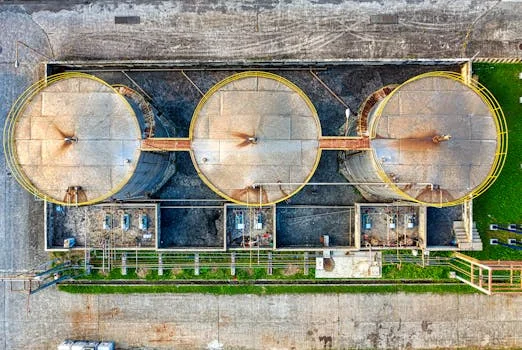
The application of wastewater-to-energy conversion technologies spans numerous industrial sectors, each with unique wastewater characteristics that influence the feasibility and efficiency of energy recovery. The food and beverage industry, for example, generates wastewater rich in organic compounds (high COD/BOD) from processes like brewing, dairy production, and meat processing, making it an ideal candidate for anaerobic digestion to produce significant amounts of biogas. Similarly, pulp and paper mills produce large volumes of wastewater containing organic fibers and dissolved solids, which can also be treated via AD. Chemical manufacturing plants may have diverse wastewater streams, some of which, if containing biodegradable organic matter, can be utilized for energy recovery, though careful characterization is crucial to avoid inhibitory substances.
Effective wastewater-to-energy systems often integrate with upstream and downstream treatment processes. HydropureWater offers a range of equipment that plays a crucial role in preparing wastewater and managing sludge for these energy recovery pathways. Upstream equipment, such as Rotary Mechanical Bar Screens, is essential for removing large debris and solids that could clog downstream equipment or interfere with biological processes. Dissolved Air Flotation (DAF) systems, like our Dissolved Air Flotation (DAF) systems for industrial wastewater, are vital for removing suspended solids and fats, oils, and greases (FOG). Removing FOG is particularly important, as high concentrations can inhibit anaerobic digestion and reduce biogas quality. By effectively treating the influent, these upstream processes ensure that the wastewater entering the energy recovery stage is optimized for biological activity and biogas generation.
Sludge treatment equipment is equally critical. After anaerobic digestion, the resulting digestate still contains a significant amount of water. Dewatering this digestate is essential for reducing its volume, lowering transportation costs, and preparing it for further processing or disposal. Our plate and frame filter presses are highly effective sludge dewatering equipment, capable of achieving dry solids content that significantly reduces the overall sludge mass. This dewatering step is crucial for improving the efficiency of sludge handling and can indirectly impact the economics of the energy recovery process by minimizing the volume of residual material. In some cases, integrated systems that combine primary treatment, energy generation via AD, and subsequent sludge dewatering are implemented to create a closed-loop resource recovery system. The robust design of HydropureWater's equipment ensures reliability and efficiency even when handling the challenging and often variable nature of industrial wastewater streams.
Benefits and Challenges of Wastewater-to-Energy Conversion
Implementing wastewater-to-energy conversion offers a compelling suite of benefits for industrial facilities. Foremost among these are the significant reductions in operational costs through energy savings. By generating on-site heat and electricity from their own wastewater, companies can decrease their reliance on grid power and fossil fuels, leading to substantial savings on utility bills. The sale of excess energy to the grid or the production of biomethane for commercial use can create new revenue streams. Environmentally, this process offers substantial advantages, including a reduction in greenhouse gas emissions by capturing methane, a potent greenhouse gas, and converting it into usable energy. It also contributes to improved environmental compliance by effectively treating wastewater and recovering valuable resources. The digestate produced from anaerobic digestion can also be a valuable byproduct, often utilized as a nutrient-rich fertilizer, closing the loop on resource recovery.
However, the path to wastewater-to-energy conversion is not without its challenges. The initial capital investment for advanced treatment and energy generation equipment, such as anaerobic digesters and CHP units, can be substantial. Space requirements for these facilities, particularly for larger industrial operations, can also be a limiting factor. The variability in biogas production, influenced by fluctuations in wastewater flow and composition, requires careful system design and operational management to ensure consistent energy output. Maintenance of specialized equipment, including digesters and biogas handling systems, necessitates skilled personnel and ongoing operational expenditure. Navigating regulatory hurdles and obtaining permits for energy generation and grid connection can also add complexity. Despite these challenges, the economic viability and return on investment (ROI) for industrial wastewater-to-energy projects are increasingly favorable, especially when considering long-term operational savings, potential revenue generation, and the growing importance of sustainability initiatives and carbon credits. Understanding the economic viability of wastewater treatment, including energy recovery, is crucial for successful implementation.
Frequently Asked Questions
How do we convert waste-to-energy?
Waste-to-energy conversion typically involves processes that break down organic waste materials, such as wastewater sludge, food waste, or agricultural residues, to produce energy-rich gases like biogas (primarily methane) through anaerobic digestion, or through thermal processes like incineration or gasification.
How to generate energy from wastewater?
Energy can be generated from wastewater primarily through anaerobic digestion, which converts the organic matter in wastewater sludge into biogas. This biogas can then be used to produce heat and electricity, often via combined heat and power (CHP) units. Thermal energy can also be recovered directly from wastewater streams using heat exchangers.
Can sewage be used to generate electricity?
Yes, sewage can be used to generate electricity. The organic solids in sewage, known as sludge, are treated through anaerobic digestion to produce biogas. This biogas, rich in methane, can then be combusted in engines or turbines to drive generators and produce electricity.
What is the typical energy output from wastewater treatment plants?
The energy output from wastewater treatment plants varies significantly based on the plant's size, the organic content of the wastewater, and the technologies employed. However, facilities utilizing anaerobic digestion can generate a substantial portion of their energy needs, with some advanced plants becoming net energy producers. The American Biogas Council reports that wastewater facilities can produce approximately 7.3 billion kWh of energy annually, with significant untapped potential.
Related Equipment
- integrated sewage treatment plants — view specifications, capacity range, and technical data
Need a customized solution? Request a free quote with your specific flow rate and pollutant parameters.
Further Reading
Explore these in-depth articles on related wastewater treatment topics: