Lahore’s industrial sector faces strict NEQS discharge limits (e.g., COD <150 mg/L, TSS <100 mg/L), with non-compliance penalties up to PKR 10M/year. This guide provides 2026 engineering specs for sewage treatment equipment proven in Lahore applications—including DAF systems (95% TSS removal), MBR (99% pathogen reduction), and electrocoagulation (70% chemical savings)—along with a zero-risk supplier selection framework to ensure compliance and cost efficiency.
Why Lahore’s Industries Need NEQS-Compliant Sewage Treatment Equipment
The Punjab Environmental Protection Department (EPD) has intensified its oversight of industrial discharge into the Ravi River and local sewerage networks, increasing non-compliance penalties to a maximum of PKR 10M per year. For procurement managers and engineers, selecting a sewage treatment equipment supplier in Lahore is no longer merely a utility purchase but a critical risk-mitigation strategy. The Water and Sanitation Agency (WASA) Lahore is currently implementing the Lahore Water and Wastewater Management (LWWM) Project (2025-2030), which includes the construction of massive surface water treatment plants and the enforcement of stricter discharge monitoring for any facility connected to the municipal grid.The financial impact of non-compliance is evidenced by recent enforcement actions. In 2024, a textile mill located in the Sundar Industrial Estate was fined PKR 8.2 million for persistent COD violations. The facility’s existing primary treatment was insufficient for the high-dye concentration in their effluent. Following the installation of a DAF system for Lahore textile mills (95% TSS removal, NEQS-compliant), the plant successfully reduced COD from 800 mg/L to 120 mg/L, bringing them well within the legal threshold (HydropureWater field data, 2024).
Compliance requirements vary by industry. Hospitals in Lahore must address pathogen reduction to prevent waterborne disease outbreaks, while food processing and textile units face high organic loads. The following table outlines the current NEQS discharge limits that every system in Lahore must achieve for municipal sewer disposal.| Parameter | NEQS Limit (Inland Waters) | NEQS Limit (Sewage Treatment) | Typical Lahore Industrial Raw Waste |
|---|---|---|---|
| Chemical Oxygen Demand (COD) | 150 mg/L | 400 mg/L* | 800 - 2,500 mg/L |
| Biochemical Oxygen Demand (BOD₅) | 80 mg/L | 250 mg/L* | 300 - 1,200 mg/L |
| Total Suspended Solids (TSS) | 200 mg/L | 400 mg/L | 500 - 1,500 mg/L |
| Oil and Grease | 10 mg/L | 10 mg/L | 50 - 200 mg/L |
*Note: Stricter limits apply if discharging into fresh water bodies like the BRBD Canal or Ravi River.
To ensure compliance, industries must select the right sewage treatment technology.Engineering Specs for Lahore’s Top 4 Sewage Treatment Technologies
Technical specifications for wastewater systems must be calibrated to the specific flow rates and contaminant profiles found in Lahore’s industrial clusters. Generic equipment often fails due to the high ambient temperatures of the Punjab region, which can affect biological activity and chemical reaction rates. Engineers should compare technologies based on removal efficiency, footprint, and power draw to ensure long-term operational stability.Dissolved Air Flotation (DAF) Systems: These are the standard for textile and food processing units. The DAF utilizes micro-bubble technology (20-50 microns) to achieve 92-97% TSS removal and 95% FOG removal. With flow rates ranging from 4 to 300 m³/h, DAF is ideal for pre-treatment before biological stages. The process flow involves chemical coagulation and flocculation, followed by air dissolution where pressurized water releases bubbles that lift solids to the surface for mechanical skimming.
Membrane Bioreactor (MBR) Systems: For facilities with limited space or those requiring high-quality permeate for recycling, the MBR system for Lahore hospitals (99.9% pathogen reduction, NEQS-compliant) is the preferred choice. MBR combines activated sludge treatment with membrane filtration, resulting in a footprint 60% smaller than conventional activated sludge plants. It consistently produces effluent with COD <50 mg/L and near-zero TSS.
Electrocoagulation (EC): This is a chemical-free alternative particularly effective for tanneries and pharmaceutical plants. EC uses electrical currents to destabilize suspended, emulsified, or dissolved contaminants. It offers a 70% reduction in sludge volume compared to traditional chemical precipitation, significantly lowering waste disposal costs in Lahore’s urban areas.
Advanced Oxidation Processes (AOP): AOP is utilized for hybrid systems for Lahore’s high-COD industrial wastewater (e.g., tanneries, food processing). While OPEX is higher due to energy and reagent consumption, it is the only technology capable of breaking down recalcitrant dyes and complex organic molecules that biological systems cannot process.
| Technology | TSS Removal | COD Removal | Energy Draw (kWh/m³) | Typical Footprint |
|---|---|---|---|---|
| DAF | 95% | 60-70%* | 0.4 - 0.6 | Medium |
| MBR (Integrated) | 99.9% | 90-95% | 0.8 - 1.2 | Very Small |
| Electrocoagulation | 90% | 70-80% | 1.0 - 2.5 | Small |
| AOP (UV/H₂O₂) | N/A | 85-98% | 2.0 - 5.0 | Small |
*COD removal in DAF is primarily linked to the insoluble fraction of the waste.
NEQS Compliance Mapping: Which Equipment Meets Lahore’s Discharge Limits?
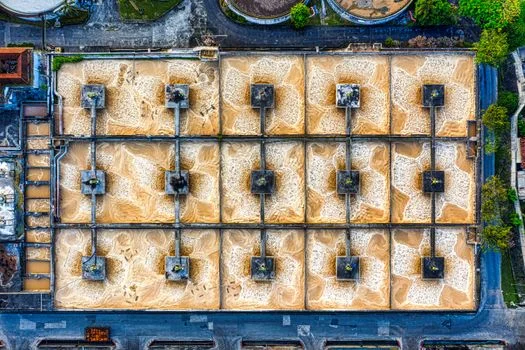
In Lahore, the WASA LWWM project has introduced stricter requirements for tertiary treatment, especially for industrial units located near residential zones. If your facility is discharging into a drain that eventually feeds into agricultural land, the BOD and COD limits are significantly tighter than those for municipal sewer connections. MBR systems are currently the only standalone technology that meets all NEQS limits for heavy-metal-free industrial sewage without requiring extensive tertiary polishing.
| NEQS Parameter | DAF Performance | MBR Performance | EC + AOP Hybrid |
|---|---|---|---|
| COD <150 mg/L | Conditional (Pre-treatment) | Excellent (Compliant) | Excellent (Compliant) |
| BOD <80 mg/L | Partial Removal | Excellent (Compliant) | High Efficiency |
| TSS <100 mg/L | Excellent (Compliant) | Superior (<5 mg/L) | Excellent (Compliant) |
| Pathogens (Total Coliform) | Low Reduction | 99.9% Reduction | Moderate Reduction |
Cost Breakdown: CAPEX, OPEX, and ROI for Lahore Sewage Treatment Systems
Investing in sewage treatment equipment requires a transparent understanding of both the initial Capital Expenditure (CAPEX) and the ongoing Operational Expenditure (OPEX). In the Lahore market, local fabricators may offer lower initial prices, but these systems often suffer from 20-30% higher energy consumption and frequent mechanical failures compared to internationally engineered systems. When comparing a sewage treatment equipment supplier in Lahore, buyers must evaluate the Total Cost of Ownership (TCO) over a 10-year lifecycle.CAPEX for a 100 m³/day plant typically ranges from PKR 2.5M to PKR 15M depending on the technology. DAF systems represent the lower end of the CAPEX spectrum, while MBR systems occupy the higher end due to membrane costs. However, the ROI on an MBR system is often faster for facilities that can reuse the treated water for cooling towers or irrigation, saving on WASA water extraction charges. These financial models are similar to Faridabad’s textile wastewater treatment specs (comparable to Lahore’s NEQS challenges), where water scarcity drives the adoption of high-efficiency recycling systems.
| Cost Component | DAF System (10 m³/h) | MBR System (10 m³/h) | Electrocoagulation (10 m³/h) |
|---|---|---|---|
| Estimated CAPEX | PKR 3.5M - 6M | PKR 8M - 14M | PKR 5M - 9M |
| Energy Cost/Month | PKR 45,000 | PKR 85,000 | PKR 110,000 |
| Chemical Cost/Month | PKR 60,000 | PKR 15,000 | PKR 5,000 |
| Maintenance/Year | PKR 150,000 | PKR 400,000* | PKR 250,000 |
*Includes membrane replacement provisions.
ROI Case Study: A Lahore-based hospital recently replaced their failing septic system with an integrated MBR unit. By avoiding annual environmental fines of PKR 3.2M and reducing their water purchase requirements by 40%, the facility achieved full ROI in approximately 22 months. The system’s automated controls also allowed them to reduce dedicated wastewater staff from three technicians to one part-time operator.
Zero-Risk Supplier Selection Framework for Lahore Buyers