Why Tabriz Needs Tailored Sewage Treatment Equipment in 2026
Tabriz’s industrial and municipal sectors face dual pressures: severe water scarcity (Iran’s per capita water availability fell 40% since 2000, per FAO) and stricter effluent standards (Iran’s Environmental Protection Organization mandates COD <100 mg/L for industrial discharge). In 2026, local suppliers like Tabriz Environmental Technologies and ZIRSakht Tadbir Arian offer systems tailored to these challenges—e.g., MBR plants with 99% water reuse capability or DAF systems removing 95%+ FOG from food processing wastewater. This guide provides Tabriz-specific engineering specs, cost models (CAPEX: $50K–$5M), and a zero-risk supplier selection framework.
Tabriz’s industrial water demand remains approximately 30% unmet as of 2025, according to reports from the Iran Water Resources Management Co. This deficit is particularly acute for the Tabriz Petrochemical Co. and large-scale food processors like Sahar Dairy, where production continuity depends on reliable water reuse systems in Tabriz. The 2024 National Water Law has accelerated this need, mandating that any industrial facility discharging more than 50 m³/day must achieve 20% wastewater reuse by 2027. For procurement managers, this is no longer a matter of environmental CSR but a legal prerequisite for operational licensing.
The regional climate of East Azerbaijan presents unique engineering hurdles. With high evaporation rates reaching 2,000 mm/year and extremely low humidity, open-air lagoons are increasingly obsolete due to massive water loss. the high salinity of groundwater in the Tabriz basin necessitates equipment with specialized corrosion-resistant coatings. Understanding how Oman’s arid climate compares to Tabriz’s challenges can provide valuable insights into why enclosed, modular systems are becoming the regional standard for petrochemical effluent treatment in Iran.
Engineering Specs for Tabriz’s Top 3 Sewage Treatment Systems
Membrane Bioreactor (MBR) technology has become the benchmark for Tabriz projects requiring high-quality effluent for cooling towers or irrigation. By combining biological treatment with membrane filtration, MBR systems for Tabriz’s high-reuse projects produce water with Chemical Oxygen Demand (COD) below 30 mg/L and Total Suspended Solids (TSS) under 5 mg/L. These specs comfortably meet Iran’s ISIRI 1053 standards for unrestricted reuse. HydropureWater’s DF Series data indicates that these systems occupy a 60% smaller footprint than traditional activated sludge plants, a critical factor for land-constrained factories in the Tabriz Industrial Estate.
For the region’s robust food processing sector, Dissolved Air Flotation (DAF) remains the primary solution for pre-treatment. High-efficiency DAF systems for Tabriz’s food processing plants are engineered to remove over 95% of Fats, Oils, and Grease (FOG). In a 2025 application at a Tabriz-based dairy, DAF units maintained 98% FOG reduction even during peak processing loads, protecting downstream biological units from fouling. For municipal planners, cost-effective integrated A/O systems for Tabriz municipalities offer a balance of low energy consumption and reliable BOD removal (85–90%) for decentralized residential complexes.
| System Type | Primary Application | Effluent COD (mg/L) | Footprint Requirement | Tabriz Adaptation |
|---|---|---|---|---|
| MBR (Integrated) | Petrochemical / Water Reuse | <30 | Ultra-Compact | Insulated tanks for -10°C winters |
| DAF | Food Processing / Textiles | 150–300 (Pre-treat) | Moderate | Saline-resistant SS316 components |
| Integrated A/O | Municipal / Small Housing | <60 | Compact / Underground | Covered to prevent 2,000mm/yr evap. |
Local adaptations are mandatory for equipment longevity in East Azerbaijan. Suppliers must provide insulated housing for membrane units to prevent freezing during Tabriz’s sub-zero winter temperatures. Additionally, because the influent in Tabriz often features high organic loads (BOD 300–800 mg/L), aeration systems must be sized with a 20% safety margin compared to standard European or Chinese municipal models.
Tabriz Supplier Comparison: Technical Capabilities vs Cost
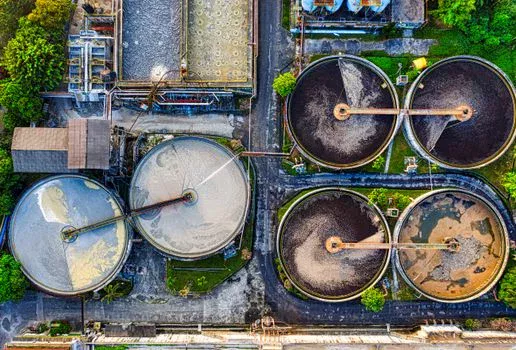
Evaluating a sewage treatment equipment supplier in Tabriz requires a granular look at their track record with local influent parameters. Tabriz Environmental Technologies, for instance, has established a dominant position in the petrochemical sector, citing a 99% phenol removal rate at the Tabriz Refinery. Their systems are heavily ruggedized for industrial toxins. Conversely, ZIRSakht Tadbir Arian has focused on high-tech MBR applications; their 2025 project for a Tabriz municipal hospital achieved 95% water reuse, successfully recycling greywater for HVAC cooling and landscaping.
When comparing these to regional or budget-focused suppliers like San Lan Technologies, the trade-off usually involves after-sales support. While San Lan offers DAF systems with a 30% lower CAPEX, their lack of a dedicated Tabriz-based service team can lead to extended downtime. According to 2026 Iran Customs data, choosing a supplier with domestic manufacturing or assembly capabilities can reduce total project costs by 15–20% due to exemptions from the 10% import tariff on fully assembled foreign machinery. This makes local engineering expertise a financial asset rather than just a logistical convenience.
| Supplier Attribute | Local Tier-1 (e.g., Tabriz Env.) | Regional High-Tech (e.g., ZIRSakht) | Budget Import (e.g., San Lan) |
|---|---|---|---|
| Avg. Lead Time | 8–12 Weeks | 10–14 Weeks | 16–24 Weeks |
| Maintenance Support | 24h On-site in Tabriz | 48h On-site from Tehran | Remote / 3rd Party |
| ISIRI 1053 Cert. | Fully Certified | Fully Certified | Self-Declared Compliance |
| Relative CAPEX | Baseline (100%) | 115% | 75% |
Compliance with Iran sewage treatment standards 2026 is the ultimate filter for supplier selection. Only suppliers who can provide certified lab results from the Iran Environmental Protection Organization (IEPO) for existing installations should be shortlisted. This ensures that the equipment can handle the specific chemical profiles of Tabriz's industrial zones, which often include heavy metals from textile dyeing or high salinity from local mineral processing.
2026 Cost Breakdown for Tabriz Sewage Treatment Projects
Budgeting for a Tabriz wastewater treatment plant cost involves balancing the initial capital expenditure (CAPEX) against the long-term operational costs (OPEX). For 2026, MBR systems in Tabriz are priced between $800 and $1,200 per m³/day of capacity. While higher than DAF ($300–$600/m³/day), the MBR's ability to produce high-grade reuse water often justifies the investment. These figures include civil works, which typically account for 25–35% of the total budget in the Tabriz region. For comparison, you may review cost benchmarks for Gulf region projects, noting that Iran's lower labor costs are often offset by higher technology import fees.
OPEX in Tabriz is driven primarily by energy (40–50% of monthly costs) and chemical consumables (20–30%). For MBR systems, membrane replacement is a significant cyclical expense, occurring every 5–7 years at an estimated cost of $10–$15 per square meter of membrane surface. However, the ROI remains strong; with industrial water prices in Tabriz rising to $0.50–$1.00/m³, a high-efficiency reuse system can offset up to 70% of its own operating costs. A case study at a local petrochemical facility showed a full CAPEX recovery within 4.2 years based solely on reduced freshwater procurement and avoided discharge penalties.
| Project Scale | Technology | CAPEX (USD/m³ capacity) | OPEX (USD/m³ treated) |
|---|---|---|---|
| Small (10–50 m³/d) | Integrated WSZ | $900 – $1,100 | $0.18 – $0.25 |
| Medium (100–500 m³/d) | DAF + Biological | $500 – $750 | $0.12 – $0.20 |
| Large (1,000+ m³/d) | Advanced MBR | $800 – $1,000 | $0.22 – $0.30 |
Zero-Risk Selection Checklist for Tabriz Buyers
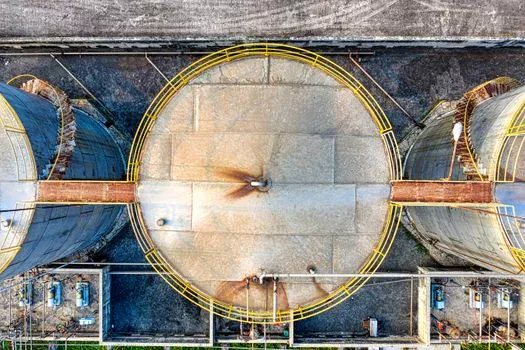
To avoid common pitfalls such as equipment failure due to high salinity or regulatory fines, procurement managers should follow this structured framework when evaluating a sewage treatment equipment supplier in Tabriz:
- Step 1: Verify Certification: Ensure the equipment and the supplier are listed on the Iran Environmental Protection Organization’s approved vendor list and hold valid ISIRI 1053 certification.
- Step 2: Local Case Study Audit: Request data from at least two operational sites within East Azerbaijan. Specifically, ask for influent/effluent logs for the winter months to verify performance at -10°C.
- Step 3: After-Sales Infrastructure: Confirm the location of the nearest spare parts warehouse. A local service center in Tabriz or Tehran can reduce emergency downtime by 40%, according to a 2025 survey by the Iran Water Association.
- Step 4: Financial Benchmarking: Compare quotes against the 2026 benchmarks provided in this guide. Reject any bid that is more than 20% above market rates without a clear technical justification (e.g., specialized metallurgy for acid waste).
- Step 5: Pilot Testing: For petrochemical effluent treatment in Iran, always insist on a 2-week pilot test using a mobile unit. Tabriz's wastewater often has unique "shocks" in pH and salinity that theoretical models may miss.
Frequently Asked Questions
What are the effluent standards for industrial wastewater in Tabriz?
The Iran Environmental Protection Organization requires industrial discharge to meet ISIRI 1053 standards: COD <100 mg/L, BOD <30 mg/L, and TSS <50 mg/L. For discharge into sensitive aquifers or for agricultural reuse, these limits are often tightened significantly.
How much does a 50 m³/day MBR system cost in Tabriz?
For a 2026 project, the CAPEX for a 50 m³/day MBR system from a local supplier ranges from $40,000 to $60,000, including civil works and installation. The OPEX typically sits between $0.15 and $0.25 per cubic meter treated.
Can DAF systems handle Tabriz’s high FOG loads from food processing?
Yes. DAF systems are specifically designed for food processing wastewater equipment in Tabriz, capable of removing 95%+ of FOG. This is essential for facilities like Sahar Dairy to prevent clogging of municipal sewer lines.
What’s the lead time for sewage treatment equipment in Tabriz?
Local suppliers generally deliver within 8–12 weeks. Imported systems from Europe or East Asia can take 16–24 weeks, primarily due to 2026 customs clearance procedures and international logistics delays.
Are there financing options for sewage treatment projects in Tabriz?
Yes. Iran’s National Development Fund currently offers 5–7 year loans at 12–15% interest specifically for industrial water reuse and environmental protection projects. These terms are available for facilities upgrading to meet the 2024 National Water Law mandates.