An RO desalination process converts seawater or brackish water into low-TDS permeate by forcing feed through a thin-film composite membrane at pressures above the osmotic pressure of the salt solution. Seawater trains typically run at 60–80 bar; brackish trains run at 15–30 bar. With energy recovery, specific energy often falls in the 3–5 kWh/m³ range for seawater and 0.5–1.5 kWh/m³ for brackish feed, producing permeate commonly below 500 mg/L TDS.
How an RO desalination process works
An RO desalination process forces feedwater through a thin-film composite membrane at 15–80 bar by salinity. Membranes reject about 99.5% of dissolved salts and yield permeate typically below 500 mg/L TDS. With energy recovery, seawater plants commonly use 3–5 kWh/m³ and brackish plants 0.5–1.5 kWh/m³. Recovery is usually 40–60% for seawater and 70–90% for brackish feed.
More than 97% of Earth’s water is saline, and UN 2023 figures put about 2.2 billion people without safely managed drinking water. Plant engineers feel that gap as rising municipal tariffs and tighter extraction permits. One coastal semiconductor plant in Taiwan cut localized water procurement cost by about 40% after installing dedicated HydropureWater’s industrial RO systems for seawater and brackish water desalination. RO now accounts for roughly 80% of new desalination installations worldwide.
Compared with thermal routes, RO avoids phase change. Multi-stage flash (MSF) often needs 10–15 kWh/m³ thermal-equivalent energy, while modern RO with recovery devices sits near 3–5 kWh/m³ for seawater duty. That energy gap, plus modular trains from about 10 m³/day to over 500,000 m³/day, is why most plants we size for coastal industry choose membrane desalination first.
Step-by-step engineering stages from intake to permeate
RO plant engineering is a staged filtration and pressurization sequence built to protect membrane surfaces and hold salt rejection. Skip a stage and fouling or mechanical stress usually follows within days, not months.
Step 1: Intake and screening. Raw water passes coarse and fine screens. Industrial intakes commonly use 5–10 mm then 1–2 mm mesh to remove debris and marine life. A GX Series Rotary Mechanical Bar Screen protects downstream pumps and filters from large suspended solids before any pressurized equipment sees the flow.
Step 2: Pretreatment. Pretreatment sets membrane life. Without rigorous pretreatment, membranes foul within 24–48 hours and flux can fall 30–50%, according to EPA 2024 benchmarks cited in field practice notes. Engineers typically deploy multi-media filters for RO pretreatment for turbidity, then high-efficiency DAF systems for RO pretreatment for fats, oils, grease, and algae. Where industrial wastewater feeds the train, MBBR systems can pretreat wastewater before RO desalination to cut BOD and limit biofouling.
Step 3: High-pressure pumping. High-pressure pumps must overcome osmotic pressure: 60–80 bar for seawater and 15–30 bar for brackish water. Energy recovery devices capture hydraulic energy from the concentrate and return it to the feed side, cutting motor power demand by about 30–40% on seawater trains.
Step 4: Membrane separation. The active polyamide layer has an effective pore size of 0.0001–0.001 µm. That scale rejects about 99.5% of NaCl and about 99.9% of bacteria and viruses under design conditions. Seawater design flux is usually 12–18 LMH; brackish systems often run 20–30 LMH and recover 70–90% because osmotic resistance is lower.
Step 5: Post-treatment. Permeate is often acidic and low in minerals. pH adjustment and remineralization stabilize corrosivity before reuse or distribution. WHO desalination guidance stresses source control, treatment, and blending of final waters inside a Water Safety Plan framework. For industrial reuse or municipal supply, a chlorine dioxide generator for industrial reuse provides residual disinfection. Operators who need the full barrier chain can learn how RO permeate is further treated in drinking water plants to meet WHO standards through stabilization and disinfection steps.
| Process Stage | Equipment Used | Target Parameter | Engineering Goal |
|---|---|---|---|
| Intake | GX Bar Screen | Settleable Solids | Protect high-pressure pumps |
| Pretreatment | DAF / Multi-media | SDI < 3.0 | Prevent membrane fouling |
| Pressurization | HP Pump + ERD | 60–80 bar (SW) | Overcome osmotic pressure |
| Separation | TFC Polyamide Membrane | 99.5% Salt Rejection | Produce <500 mg/L TDS water |
| Post-treatment | Dosing / Disinfection | pH 7.0–8.5 | Corrosion control and safety |
Seawater RO vs. Brackish Water RO: Key Differences in Pressure, Energy, and Cost
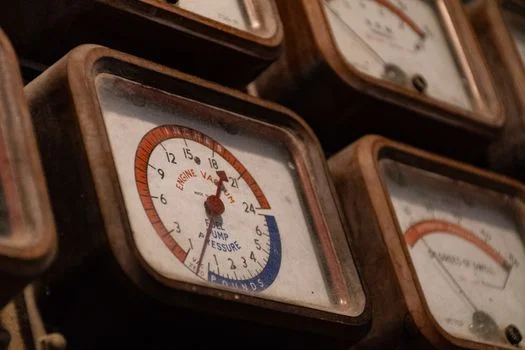
Feedwater salinity sets RO design because osmotic pressure rises with Total Dissolved Solids. Seawater typically holds about 35,000 mg/L TDS; brackish water usually sits between 1,000 and 10,000 mg/L TDS. That spread drives pump rating, membrane type, recovery, and OPEX.
Seawater RO (SWRO) needs 60–80 bar to hold economical flux. Brackish Water RO (BWRO) runs at 15–30 bar. Energy follows the same split: BWRO often uses 0.5–1.5 kWh/m³, while SWRO still needs 3–5 kWh/m³ even with efficient ERDs. Lower salinity also allows higher recovery—70–90% on brackish trains versus 40–60% on seawater, where brine concentration limits appear sooner.
| Parameter | Seawater RO (SWRO) | Brackish Water RO (BWRO) |
|---|---|---|
| Feedwater TDS | 35,000 – 45,000 mg/L | 1,000 – 10,000 mg/L |
| Operating Pressure | 60 – 80 bar | 15 – 30 bar |
| Energy Consumption | 3.0 – 5.0 kWh/m³ | 0.5 – 1.5 kWh/m³ |
| Water Recovery Rate | 40% – 60% | 70% – 90% |
| Membrane Lifespan | 3 – 5 Years | 5 – 7 Years |
| Typical CAPEX | $1,500 – $2,500 /m³/day | $800 – $1,500 /m³/day |
RO Membrane Specifications: Pore Size, Flux, and Salt Rejection Explained
RO membranes are thin-film composites with a polyester support, a polysulfone interlayer, and a roughly 0.2 µm polyamide active skin. The 0.0001–0.001 µm effective pore size (about 1–10 angstroms) rejects hydrated sodium ions (~0.56 nm) while water molecules (~0.28 nm) pass by solution-diffusion.
Flux is a hard design limit. Excess flux accelerates fouling and compaction. Seawater membranes are usually designed at 12–18 LMH; brackish membranes often handle 20–30 LMH because fouling pressure is lower. Modern seawater elements routinely deliver 99.5–99.8% salt rejection (HydropureWater field data, 2025). Spiral-wound modules appear in about 95% of industrial systems for packing density; hollow-fiber remains niche on some brackish duties.
| Specification | Seawater Membrane | Brackish Water Membrane |
|---|---|---|
| Pore Size | 0.0001 – 0.001 µm | 0.0001 – 0.001 µm |
| Design Flux | 12 – 18 LMH | 20 – 30 LMH |
| Salt Rejection | 99.5% – 99.8% | 98.0% – 99.5% |
| Material | Polyamide TFC | Polyamide TFC |
| Max Temperature | 45°C | 45°C |
| Configuration | Spiral-Wound | Spiral-Wound |
Energy Recovery in RO Systems: How ERDs Cut Costs by 30–40%
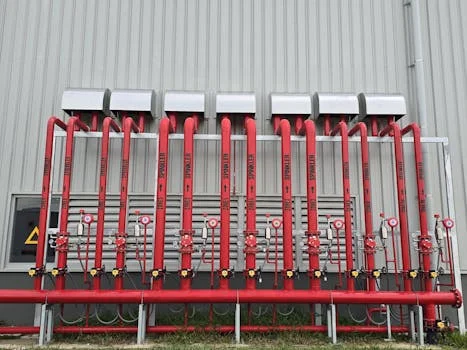
Energy recovery devices explain why RO displaced most thermal desalination on cost. ERDs recover 90–98% of the hydraulic energy in the high-pressure brine before it leaves the pressure vessels. Without an ERD, a SWRO plant often uses 8–10 kWh/m³; with a pressure exchanger, consumption commonly drops to 3–5 kWh/m³.
Two device families dominate: centrifugal turbochargers and isobaric pressure exchangers. Pressure exchangers are standard on large plants, with energy transfer efficiency up to about 98%. Turbochargers at 85–90% efficiency still fit smaller skids and retrofits because the mechanics are simpler. On a 10,000 m³/day seawater train, ERD payback is often 1–3 years from power savings alone. A major SWRO plant in Saudi Arabia reported about 35% OPEX reduction after fitting isobaric ERDs on the high-pressure loop. Teams evaluating renewables also review how solar-powered RO systems reduce energy costs for high-salinity wastewater treatment when ERDs share the load with on-site generation.
RO Desalination Costs: CAPEX, OPEX, and ROI for Industrial Buyers
Total cost of ownership splits into CAPEX and OPEX. According to 2025 industry ranges used in buyer models, seawater CAPEX often lands between $1,200 and $2,500 per m³/day of capacity, depending on intake and pretreatment complexity. Brackish systems are usually cheaper at $800 to $1,500 per m³/day.
OPEX is dominated by energy (40–50%), then membrane replacement (10–20%), then chemicals (5–10%). Seawater membranes are commonly replaced every 3–5 years; brackish membranes every 5–7 years, at roughly $0.05–$0.15 per m³ produced. Antiscalants, biocides, and CIP chemicals typically add $0.03–$0.10 per m³.
| Cost Component | Seawater RO ($/m³) | Brackish Water RO ($/m³) |
|---|---|---|
| Energy (at $0.10/kWh) | $0.30 – $0.50 | $0.05 – $0.15 |
| Membrane Replacement | $0.08 – $0.15 | $0.05 – $0.10 |
| Chemicals & Consumables | $0.05 – $0.10 | $0.03 – $0.07 |
| Labor & Maintenance | $0.07 – $0.20 | $0.05 – $0.15 |
| Total OPEX | $0.50 – $1.50 | $0.20 – $0.80 |
ROI Calculation Example: Consider a 1,000 m³/day SWRO system for an industrial plant currently purchasing municipal water at $2.50/m³.
Annual Water Cost (Municipal): $912,500
Annual OPEX (RO System at $0.60/m³): $219,000
Annual Savings: $693,500
Estimated CAPEX: $1,800,000
Payback Period: 2.6 Years
What drives stainless steel process skid pricing?
Stainless steel process skid pricing rises with alloy grade, weld documentation, and hygienic finish, not only nameplate flow. Most RO skids we quote for coastal industry use 316L on high-pressure piping; duplex alloys appear when chloride and temperature climb. Instrumentation density, pressure rating to 80 bar, and factory FAT scope can move package cost as much as membrane count on mid-size trains.
What is cooling tower blowdown recovery cost?
Cooling tower blowdown recovery cost depends on feed TDS, target recovery, and brine handling more than pump horsepower alone. Plants treating 1,000–10,000 mg/L blowdown with BWRO often see OPEX near $0.20–$0.80/m³ at $0.10/kWh power, while CAPEX commonly tracks the $800–$1,500 per m³/day brackish band when pretreatment is already in place. Where blowdown mixes with sanitary flows, an Underground Package Sewage Treatment Plant (WSZ Series) can stabilize organics before the RO skid, protecting membranes and shortening CIP cycles.
Common RO System Failures and How to Prevent Them
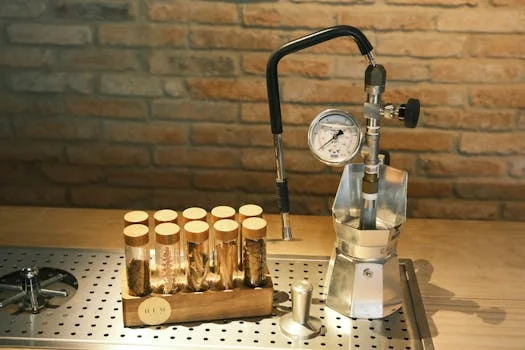
RO stability usually fails through fouling, scaling, or chemical attack. Organic or biological fouling on the membrane surface can cut flux 30–50% if pretreatment slips. Keep Silt Density Index below 3.0 with high-efficiency DAF systems and multi-media filters before the cartridge stage.
Scaling appears when calcium carbonate or calcium sulfate precipitates as brine concentrates inside the elements. Dose antiscalant and control pH with a PLC-controlled chemical dosing systems for antiscalants and pH adjusters. Polyamide membranes also fail under free chlorine; chlorinated feed needs sodium bisulfite dechlorination before the first element. Watch differential pressure across stages: a 10–15% rise is the usual trigger for Cleaning-In-Place. Sites that also treat domestic sewage beside the desalination train often place a second Underground Package Sewage Treatment Plant (WSZ Series) on the sanitary line so organics never cross into the RO feed sump.
Who this is for and next step
Plant engineers, EPC teams, and procurement managers use this page when comparing SWRO and BWRO on pressure, energy, and payback. Look elsewhere if you only need low-pressure ultrafiltration or if thermal waste heat already makes MED cheaper than membranes. When you have feed TDS, target permeate quality, and daily demand, request a sized proposal through our RO desalination quote request so the train can be matched to your recovery and OPEX limits.
Frequently Asked Questions
What is the difference between seawater RO and brackish water RO?
Seawater RO runs at 60–80 bar on feeds near 35,000 mg/L TDS, while brackish RO uses 15–30 bar on 1,000–10,000 mg/L TDS. Recovery is typically 40–60% for seawater versus 70–90% for brackish water. Energy and OPEX follow that split: about 3–5 kWh/m³ and $0.50–$1.50/m³ for SWRO, versus 0.5–1.5 kWh/m³ and $0.20–$0.80/m³ for BWRO at $0.10/kWh power.
How long do RO membranes last?
Seawater RO membranes typically last 3–5 years, while brackish water membranes last 5–7 years under normal industrial duty. Lifespan tracks pretreatment quality and CIP frequency more than calendar age. Membrane replacement usually accounts for 10–20% of total OPEX, or about $0.05–$0.15 per cubic meter of permeate when elements are changed on schedule.
What is the energy consumption of an RO desalination system?
With modern energy recovery devices, seawater RO commonly consumes 3–5 kWh per cubic meter of permeate. Brackish water RO is leaner at 0.5–1.5 kWh/m³ because osmotic pressure is lower. Without an ERD, seawater plants often climb to 8–10 kWh/m³, which is why pressure exchangers or turbochargers sit on almost every new SWRO train we size above a few hundred m³/day.
Can RO systems remove viruses and bacteria?
RO membranes reject about 99.9% of bacteria and viruses when integrity holds, because the 0.0001–0.001 µm effective pore size is far smaller than typical virus diameters near 0.02 µm. That rejection is not a substitute for a residual disinfectant in tanks and distribution. Post-treatment disinfection remains standard practice to control downstream recontamination after the membrane stage.
What are the main components of an RO desalination system?
A complete train includes intake screens, a pretreatment train (DAF, multi-media filters, cartridge filters), high-pressure pumps, RO membrane pressure vessels, energy recovery devices, and post-treatment for pH adjustment plus disinfection. Antiscalant dosing and dechlorination skids protect the polyamide layer. Instrumentation for flow, conductivity, and differential pressure closes the control loop used for CIP triggers.