Sludge dewatering equipment cuts Iran disposal costs by 60-80% when cake meets Department of Environment (DOE) landfill or agricultural-reuse limits. A screw press such as JX Filtration’s JXDL303 processes 150-210 kg/h dry solids at 20-25% cake solids, while belt presses typically reach 18-22% solids at higher hydraulic throughput. Municipal packages commonly fall in IRR 1.2B–4.5B before duties and installation.
What sludge dewatering equipment fits Iranian plants?
Iranian plants choose screw, belt, filter-press, or centrifuge units by feed rate, target cake solids, power tariff, and DOE Standard 535 limits. At 2–8 m³/h municipal flow, screw presses at 20-25% solids or belt presses at 18-22% solids usually fit. Hazardous industrial sludge often needs filter presses at 30-40% solids; centrifuges cover 10-100 m³/h but face cost and power limits.
Why Dewatering Is Critical for Iranian Wastewater Treatment Plants
Iran’s Department of Environment (DOE) mandates sludge dewatering to less than 30% moisture for landfill disposal under DOE Standard 535 (2023). That rule shapes WWTP operating cost and disposal planning nationwide. Untreated sludge disposal currently costs Iranian facilities IRR 800–1,500 per ton, according to 2024 municipal data from the Tehran Water Authority.
A Tehran WWTP reported cutting sludge disposal costs by 72% after installing a screw press, as detailed in an Iran Water & Wastewater Co. 2023 report. Lower cake volume also cuts truck trips and helps keep landfill sites inside DOE approval conditions. Most plants we size for 50,000–200,000 PE still run near the lower end of the 2–8 m³/h sludge-flow band until a second train is funded.
Iranian municipal sludge often carries high organic content from domestic sewers. Industrial sludge from steel, pharma, or petrochemical sites can hold heavy metals or specialty chemicals, so one machine rarely fits every stream without polymer trials and cloth or screen selection checks.
Volume reduction also frees scarce urban yard space. Plants that once staged wet cake for daily haul can shift to every-other-day trucks once solids climb into the 20% band, which matters when gate fees and fuel both rise in the same quarter.
What is sludge dewatering?
Sludge dewatering is the mechanical step that raises solids content and shrinks volume before landfill, incineration, or agricultural reuse. In Iranian practice it sits after thickening and polymer conditioning. Operators judge success by cake percent solids, filtrate clarity, and energy per ton dry solids.
Without that step, hauling wet sludge at IRR 800–1,500 per ton quickly dominates OPEX. Gravity thickeners alone rarely meet DOE landfill moisture limits, so mechanical presses or centrifuges become the compliance gate before trucks leave the plant.
Types of Machines: How They Work and When to Use Each
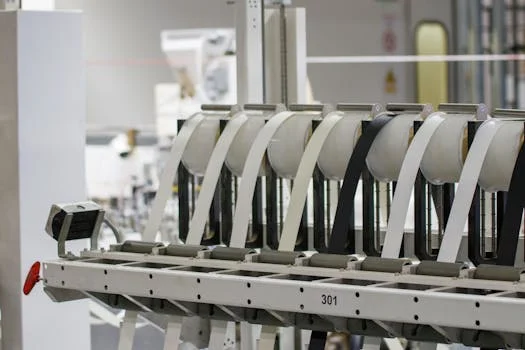
Different machines serve different Iranian municipal and industrial duties. Each separates solids from water by a different principle, so dryness, throughput, and power draw diverge in predictable ways.
Screw Press
A screw press uses a continuous, slow-speed screw that compresses sludge against a cylindrical screen. Continuous low-speed duty suits municipal sludge that typically finishes at 20-25% solids. A JXDL303-class unit can process 150-210 kg/h dry sludge at about 3.7 kW.
With Tehran generating about 1.2 million tons of sludge per year, screw presses remain common where feeds stay moderate and operators want low noise and low wash-water demand. Most food-processing plants we commission keep the screw at the slow end of its range overnight, then open the discharge cone only for the morning peak.
Belt Press
Belt presses combine gravity drainage with mechanical squeeze between two porous belts. They often handle 30-50 m³/h and suit large municipal loads or petrochemical and food-processing sludge. Energy is higher than a screw press, typically 5-10 kW, but capacity usually pays when the plant already runs two or more thickening trains.
Belt wash-water and cloth tracking need daily attention. Plants that skimp on wash nozzles see blinding within weeks on oily petrochemical sludge, so budget water and spare belts when you compare OPEX with a screw press.
Filter Press
A filter press is a batch machine: hydraulic pressure forces sludge through cloths and builds cake in the plates. Cake solids often reach 30-40%, which helps hazardous industrial sludge from pharmaceutical or mining sites. Isfahan steel plants that contend with heavy metals frequently specify a Plate and Frame Filter Press for Sludge Dewatering when they need dry, stackable cake and tighter DOE landfill compliance.
Batch cycles mean you size plate volume against the longest shift, not average hourly flow. A 1–10 m³/h nameplate is useful only if fill, squeeze, and dump times still clear the day’s sludge inventory.
Centrifuge
Centrifuges separate solids by high-speed rotation. They dewater efficiently, yet Iranian uptake stays limited because capital cost, maintenance, and power draw are high. Rural grids with unstable voltage make continuous high-speed duty hard to guarantee without a dedicated generator set.
Which centrifuge suits municipal secondary sludge?
Centrifuges for municipal secondary sludge make sense mainly when continuous feed exceeds about 10 m³/h and the plant can fund 15-50 kW duty plus specialist service. For secondary activated sludge at typical Iranian mid-size WWTPs (2–8 m³/h), screw or belt presses usually deliver 18-25% cake solids at lower energy.
Choose a centrifuge only after confirming polymer dose, spare-bowl lead time, and backup power for peak hours. If customs delays for bowl assemblies exceed three months, a belt press with local cloth stock is often the safer municipal path.
| Equipment Type | Operating Principle | Typical Throughput | Dewatered Solids Content | Energy Consumption | Iran Use Case |
|---|---|---|---|---|---|
| Screw Press | Continuous screw compression | 0.5-10 m³/h | 20-25% | 3-5 kW | Small to medium municipal WWTPs, industrial food processing |
| Belt Press | Gravity drainage + mechanical compression | 5-50 m³/h | 18-22% | 5-10 kW | Large municipal WWTPs, petrochemical, general industrial |
| Filter Press | Batch hydraulic pressure filtration | 1-10 m³/h (batch) | 30-40% | 7-15 kW (intermittent) | Hazardous industrial sludge (e.g., pharmaceutical, mining, heavy metals) |
| Centrifuge | High-speed centrifugal separation | 10-100 m³/h | 20-30% | 15-50 kW | Limited (high CAPEX/OPEX, power concerns) |
Technical Specifications: Matching Hardware to Iran’s Sludge Characteristics
Matching hardware to Iranian sludge starts with feed capacity, target solids, tariff, and footprint. Screw-press feed typically spans 0.5–10 m³/h; belt presses cover 5–50 m³/h. Municipal plants serving 50,000–200,000 people often see 2–8 m³/h sludge flow, so either screw or belt units can work depending on peak-day headroom.
Target cake solids matter for DOE disposal pathways: screw presses typically reach 20-25%, belt presses 18-22%, and filter presses 30-40%. Meeting the DOE’s 30% moisture landfill limit often pushes teams to aim for at least 25% solids content in practice. Energy is a hard OPEX lever: a JXDL303 screw press draws 3.7 kW, while a typical belt press draws about 7.5 kW.
With industrial tariffs at IRR 1,200–2,500/kWh, every idle kilowatt shows up on the monthly bill. Urban Iranian WWTPs are short on floor space. A screw press near L3700 mm × W1650 mm usually fits tighter rooms than a belt press near L6000 mm × W2500 mm.
Pair either machine with an automated polymer dosing system for sludge conditioning when feed solids swing between wet-weather and dry-season loads. Polymer use commonly sits near 2-5 kg/ton DS on screws and 3-8 kg/ton DS on belts or filter presses, but oily industrial feeds can sit above that band until mixing improves.
| Parameter | Screw Press (e.g., JXDL303) | Belt Press (Typical) | Filter Press (Typical) |
|---|---|---|---|
| Sludge Feed Capacity | 0.5–10 m³/h | 5–50 m³/h | 1–10 m³/h (batch) |
| Dewatered Solids Content | 20-25% | 18-22% | 30-40% |
| Energy Consumption | 3.7 kW | 7.5 kW | 7.5–15 kW (intermittent) |
| Footprint (Approx.) | L3700mm × W1650mm | L6000mm × W2500mm | L4000mm × W2000mm |
| Polymer Consumption | Low (2-5 kg/ton DS) | Medium (3-7 kg/ton DS) | Medium (3-8 kg/ton DS) |
| Maintenance Frequency | Low | Medium | Medium to High |
Cost Breakdown: CAPEX, OPEX, and ROI for Iranian Facilities
Procurement teams in Iran need CAPEX, duty, and disposal savings on one sheet before they open a tender. Screw-press CAPEX typically sits at IRR 1.2B–2.5B, belt presses at IRR 2B–4.5B, and filter presses at IRR 3B–6B for municipal-scale trains. Import duties of 10-20% and installation at 15-25% of equipment cost usually sit on top of those figures.
OPEX is driven by power (about IRR 500–1,500 per hour of electricity), labor (1-2 operators per shift at IRR 30M–50M per operator-month), and maintenance (typically 5-10% of CAPEX per year). ROI often lands at 1.5–3 years for municipal plants and 2–4 years for petrochemical sites.
A 50 m³/h belt press can save a Tehran WWTP about IRR 1.8B/year in disposal fees when wet sludge hauling is displaced. Financing routes include subsidies under Iran’s National Water Plan and leasing via the Industrial Development & Renovation Organization. Build the model with conservative polymer prices; that line item moves ROI more than painted steel thickness ever will.
Sludge dewatering equipment bids should also show spare-parts landed cost for year one. A low equipment price that omits cloths, screws, or hydraulic seals often loses after the first planned outage.
| Cost Category | Screw Press (Typical) | Belt Press (Typical) | Filter Press (Typical) |
|---|---|---|---|
| CAPEX (Equipment Only) | IRR 1.2B–2.5B | IRR 2B–4.5B | IRR 3B–6B |
| Import Duties (10-20%) | IRR 120M–500M | IRR 200M–900M | IRR 300M–1.2B |
| Installation Costs (15-25% of Equip.) | IRR 180M–625M | IRR 300M–1.125B | IRR 450M–1.5B |
| Energy OPEX (per hour) | IRR 500–800 | IRR 900–1,500 | IRR 1,000–2,000 (intermittent) |
| Labor OPEX (per operator/month) | IRR 30M–50M (1-2 operators/shift) | ||
| Maintenance OPEX (annual) | 5-7% of CAPEX | 6-8% of CAPEX | 7-10% of CAPEX |
| Typical ROI | 1.5–3 years | 1.8–3.5 years | 2–4 years |
Iran’s Regulatory Requirements for Sludge Disposal
Iran’s Department of Environment sets disposal limits that govern machine selection as much as throughput does. DOE Standard 535 requires less than 30% moisture for landfill cake and less than 15% moisture for agricultural reuse, including pistachio farmland in Kerman. According to the DOE (2023), heavy-metal limits include cadmium (Cd) below 20 mg/kg, lead (Pb) below 300 mg/kg, and mercury (Hg) below 10 mg/kg.
Those metal caps hit industrial sludge from Isfahan steel mills and Tehran pharmaceutical plants hardest. Agricultural reuse also needs pathogen control, with Class A biosolids targeting fecal coliform below 1,000 MPN/g. Drought-hit regions such as Yazd still seek that quality cake when irrigation water is scarce.
Local DOE site approval remains mandatory for every disposal location. Proximity to water sources, especially in Gilan, is a frequent rejection reason. Keep lab certificates for metals and pathogens with the haul ticket; inspectors ask for both when cake leaves the plant gate.
Supplier Evaluation Framework: How to Choose a Vendor in Iran

Vendor choice in Iran is as much about logistics and spare parts as about nameplate capacity. Local suppliers often quote 1–2 month lead times and Tehran-based service, while international imports may take 3–6 months. International warranties can stretch to about 5 years versus 1–2 years for many local builders, but only if spare cloths, screws, and bowls clear customs quickly.
Ask for 2–3 Iran-specific references, such as municipal trains in Mashhad or industrial units in Isfahan. JX Filtration’s pig-farm project in Iran (2022) is one published local deployment example. Require CE, ISO 9001, and Iran National Standard Organization (INSO) approval, because DOE reviewers often prefer INSO-marked gear.
Budget 1–2 weeks of on-site operator training, a spare-parts list with lead times, and, where useful, remote monitoring on IoT-ready presses. For industrial plant equipment supplier shortlists, score response time in hours, not brochure language, and verify who stocks polymer pumps and cloths inside Iran.
| Evaluation Criteria | Key Considerations for Iran | HydropureWater Offering |
|---|---|---|
| Local References & Case Studies | Require 2-3 Iran-specific project references (municipal/industrial). | Proven installations in Iranian municipal and industrial sectors. |
| Compliance Certifications | CE, ISO 9001, INSO approval (DOE preference). | All equipment is CE, ISO 9001, and INSO-compliant. |
| After-Sales Support | Local service centers, response time, spare parts availability. | Dedicated local support team, guaranteed spare parts inventory. |
| Training & Maintenance | On-site operator training (1-2 weeks), remote monitoring. | Comprehensive on-site training, IoT-enabled remote diagnostics. |
| Warranty & Lead Time | Warranty duration, typical delivery time for Iran. | Competitive warranty terms, efficient logistics for Iran. |
| Technology & Innovation | Energy efficiency, automation features (e.g., automated polymer dosing system). | High-efficiency designs, integration with automated polymer dosing system for optimal performance. |
Selection Checklist, Who This Is For, and Next Step
Freeze the process train only after seven checks. Measure average and peak sludge flow in m³/h. Set cake solids against DOE landfill (<30% moisture) or agri reuse (<15% moisture). Confirm metal and pathogen lab data. Price power at IRR 1,200–2,500/kWh into OPEX. Compare footprint against the available slab. Lock polymer dose in kg/ton DS. Verify INSO paperwork and local spare-parts stock.
This guide is for Iranian municipal WWTP engineers, EPC contractors, and industrial EHS managers sizing screw, belt, or filter-press trains. Look elsewhere if you only need temporary rented tanks with no cake-handling plan, or if your stream is already above 30% solids and only needs conveyance.
When those seven checks are complete, share flow, solids, and disposal route so a package can be sized against Iran logistics. You can request a quote with those parameters and the duty hours you expect per week.
Frequently Asked Questions
What is the typical ROI for dewatering systems in Iran?
Typical ROI for dewatering systems in Iran is 1.5–3 years at municipal WWTPs and 2–4 years at industrial sites. Savings come mainly from cutting wet-sludge haul costs that otherwise run IRR 800–1,500 per ton. A medium plant can save more than IRR 1.5 billion per year when cake replaces liquid haul. Always model polymer and power before locking the payback claim.
What are Iran’s key regulatory standards for sludge disposal?
Iran’s DOE Standard 535 requires less than 30% moisture for landfill disposal and less than 15% moisture for agricultural reuse. Heavy-metal caps include Cd <20 mg/kg, Pb <300 mg/kg, and Hg <10 mg/kg per DOE (2023) guidance. Agricultural Class A paths also target fecal coliform below 1,000 MPN/g. Local DOE site approval is still required for every disposal location.
How does machine choice match Iran’s sludge characteristics?
Municipal sludge in Iran is often high in organics and fairly consistent, so screw presses at 20-25% solids or belt presses at 18-22% solids usually fit. Industrial sludge may carry metals or specialty chemicals and often needs filter-press cake at 30-40% solids. Run jar tests and a pilot day whenever feed COD or metals swing seasonally. Polymer dose in the 2–8 kg/ton DS band is a common starting window.
What are the main CAPEX and OPEX components in Iran?
CAPEX covers equipment at IRR 1.2B–6B, import duties of 10-20%, and installation at 15-25% of equipment cost. OPEX is dominated by energy at roughly IRR 500–2,000 per operating hour, labor at IRR 30M–50M per operator-month, polymer, and annual maintenance at 5-10% of CAPEX. Filter presses cost more up front but can cut haul mass when high cake solids are mandatory.
Which technology fits high-solids industrial sludge in Iran?
For hazardous high-solids industrial sludge—steel-mill metals or pharmaceutical waste—a filter press is usually the preferred machine. It reaches about 30-40% dewatered solids and produces stackable cake that is easier to landfill under DOE moisture rules. Budget intermittent 7–15 kW duty, cloth changes, and batch cycle time. Confirm metal concentrations against DOE mg/kg limits before reuse pathways are claimed.