Published ranges for a package wastewater treatment plant cost Mexico run from $100K to $1.7M installed at 10 to 500 m³/h. A 50 m³/h A/O system quoted for Guanajuato met BOD <30 mg/L and TSS <40 mg/L at $400–$600K, civil works included. Chihuahua's smaller-plant file is a 90-day review, while A/O and SBR energy on these duties is 0.3–0.6 kWh/m³ and prefabricated skids are offered at 12–20 weeks. The benchmarks below are the set this guide used for 2025 project budgets.
Package Wastewater Treatment Plant Cost Mexico by Capacity
Installed cost in Mexico is $100K–$200K at 10–30 m³/h, $200K–$550K at 30–100 m³/h, and $550K–$1.7M at 100–500 m³/h. Equipment is the larger line. Civil works run from $20K–$50K up to $150K–$500K. Cost per m³/h falls from $3,300–$6,700 on the small band to $1,100–$3,400 on the large band.
| Capacity (m³/h) | Equipment Cost ($) | Civil Works ($) | Total Installed Cost ($) | Cost per m³/h ($) |
|---|---|---|---|---|
| 10–30 | $80K–$150K | $20K–$50K | $100K–$200K | $3,300–$6,700 |
| 30–100 | $150K–$400K | $50K–$150K | $200K–$550K | $2,000–$5,500 |
| 100–500 | $400K–$1.2M | $150K–$500K | $550K–$1.7M | $1,100–$3,400 |
Read each row as installed cost, not as a skid purchase order. At 10–30 m³/h, equipment is $80K–$150K, civil works are $20K–$50K, and the total is $100K–$200K, or $3,300–$6,700 per m³/h. At 30–100 m³/h, equipment is $150K–$400K, civil works are $50K–$150K, and the total is $200K–$550K, or $2,000–$5,500 per m³/h. At 100–500 m³/h, equipment is $400K–$1.2M, civil works are $150K–$500K, and the total is $550K–$1.7M, or $1,100–$3,400 per m³/h.
Energy price in the guide is $0.08–$0.15/kWh and is a large operating line. Chemicals for pH, disinfection, or extra nutrient removal average $0.02–$0.05/m³. A 50 m³/h plant with one operator and one technician is cited at $15K–$30K per year, benefits included. Most plants we price in the 30–100 m³/h band spend more on power than on labor once the blowers run all day.
Import duty on non-NAFTA equipment can add 15% to the equipment cost. Container freight inside Mexico is quoted at $5K–$20K. Commissioning, performance tests, and operator training add $10K–$30K. Ask each bidder to split a package wastewater treatment plant cost Mexico number into equipment, civil works, freight, duty, and commissioning before you compare offers.
Reuse for irrigation or process can save $0.50–$1.00/m³ against buying municipal water. Fines cited for NOM-001-SEMARNAT misses run $2K–$10K/year. Projects that cut greenhouse gas from treatment can also sell credits on Mexico's Mercado Voluntario de Carbono. Those three lines, not a brochure removal rate, are what move a simple payback.
Consider a 50 m³/h MBR in Guadalajara with 80% water reuse. At 1,200 m³/day on 24/7 operation and $0.75/m³ saved, reuse savings are $328,500 a year. Installed cost in that note is $500K and annual OpEx is $100K, so reuse minus OpEx is $228,500. The same note then divides $500,000 by $118,500 and states a payback of about 4.2 years, which is not $500K divided by $228,500.
Where Package Plants Beat a Central Plant in Mexico
Package plants in Mexico cut capital by 30–50% versus a centralized plant and start 6–12 months sooner. They are prefabricated, skid-mounted, or containerized, and the capacity band here is 10 to 500 m³/h. That band covers industrial parks, remote housing, and small or mid-size municipalities. A large scheme such as the $33 million plant in the source notes carries multi-year civil works, while a prefabricated package is quoted at 12–20 weeks.
According to the Auditoría Superior de la Federación, the CONAGUA inventory it reviewed lists 4,542 municipal plants, with 2,928 marked in operation and 1,614 out of service. The same audit says operating municipal plants then fell from 2,928 in 2023 to 2,899 in 2024. Non-municipal plants in that inventory were 3,866, of which 3,849 were in operation. An idle municipal plant does not remove the need for a package unit at a site with no sewer.
States such as Oaxaca and Chiapas still have large sewer gaps, so a package plant avoids waiting on a municipal network. Discharge compliance is still NOM-001-SEMARNAT for the receiving body you actually use. Chihuahua's smaller decentralized files are described as faster than dense Mexico City permits, and source notes on the Chihuahua plant show the same skid can be repeated as flow grows. Most plants we place off an interceptor are there because the sewer, not the reactor, is the missing piece.
Containerized MBR System Mexico Food Processing
A food plant in Querétaro installed a 30 m³/h containerized MBR and commissioned it in 16 weeks, against over 18 months for a conventional plant. The quoted footprint was 2.5 m x 6 m. High-strength food waste and a reuse goal drove the membrane choice. Most food plants we see lose later weeks on the permit, not on the container crane.
Food plants in this band often carry FOG above 500 mg/L, so the container MBR still needs flotation at $30K–$80K or the membranes foul. The biological skid does not replace that pretreatment. Quote the container and the flotation unit as one train. A 16-week membrane box beside a missing grease unit is not a commissioned plant.
How fast can a food-plant MBR start?
The Querétaro food plant was commissioned in 16 weeks on a 30 m³/h containerized MBR, versus over 18 months for a built-in-place plant. Fabrication quotes for prefabricated units remain 12–20 weeks, and custom plants take 24–36 weeks. The 2.5 m x 6 m footprint is the container envelope quoted for that job. Permits of 4–12 months can still outlast the skid.
How to Size a Package Plant for Mexico Wastewater
Selecting a package plant in Mexico starts from influent load and from the effluent the discharge or the reuse loop must meet. Industrial BOD in this guide is 200–800 mg/L and TSS is 250–1,200 mg/L, drawing on HydropureWater field data, 2025, with food plants at the high end. Municipal influent is cited at BOD 150–300 mg/L and TSS 150–350 mg/L from Nuevo Laredo plant data. Most municipal plants we size sit near the low end of that BOD band until a wet-industry tenant connects.
The biological choice, A/O, SBR, or MBR, sets effluent quality, pad area, and kilowatt-hours. The benchmarks used in this guide are below.
| System Type | BOD Removal (%) | TSS Removal (%) | Nitrogen Removal (%) | Footprint (m²/m³/h) | Energy Use (kWh/m³) |
|---|---|---|---|---|---|
| A/O | 85–92 | 88–95 | 50–70 | 0.08–0.12 | 0.3–0.5 |
| SBR | 90–95 | 92–97 | 60–80 | 0.10–0.15 | 0.4–0.6 |
| MBR | 95–98 | 99+ | 70–90 | 0.05–0.08 | 0.5–0.8 |
For influent BOD under 500 mg/L and a moderate pad, A/O is the usual balance of removal and cost. The Underground Package Sewage Treatment Plant (WSZ Series) is the buried A/O unit for that municipal and light-industrial duty. Where the limit is TSS <10 mg/L, move to an SBR. Most town plants we size stay on A/O unless reuse or a tight pad forces a membrane.
Reuse at TSS <5 mg/L and turbidity <2 NTU, or a pad that cannot spare A/O area, calls for MBR. Footprint on that row is 0.05–0.08 m²/m³/h, against 0.08–0.12 for A/O and 0.10–0.15 for SBR. Energy moves the other way: MBR is 0.5–0.8 kWh/m³, SBR is 0.4–0.6 kWh/m³, and A/O is 0.3–0.5 kWh/m³.
Pick the row from the receiving-body nitrogen limit, not from a habit. A plant that only needs BOD and TSS removal rarely pays for the MBR kilowatt-hours. A reuse loop that also cuts nitrogen often does.
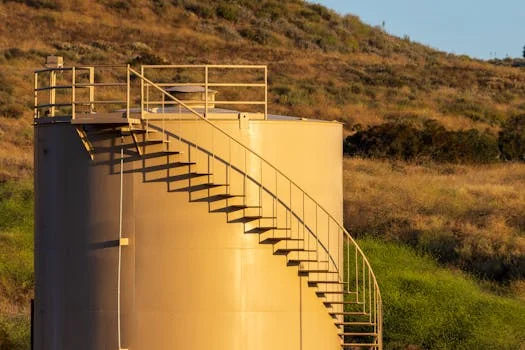
Pretreatment keeps the biology alive. Use coarse and fine screens at 1–3 mm, an equalization tank with 2–4 hours of retention, and pH held at 6.5–8.5. Skip any one of those and the removal percentages in the table become brochure numbers. Most upsets we trace on package plants start in the equalization tank, not in the aeration grid.
After the biology, sludge is the cost that stays. Belt presses or filter presses cut sludge volume by 70–85%. Landfill disposal is cited at $50–$120/ton in Mexico City, and composting or agricultural use at $20–$40/ton in rural areas where the rules allow it. Ask for sludge mass in the bid, with a target under 0.3 kg dry solids/m³ treated.
NOM-001-SEMARNAT Compliance Package Plant Mexico
NOM-001-SEMARNAT-2021 governs discharges to national receiving bodies in Mexico and replaced NOM-001-SEMARNAT-1996. According to SEMARNAT, the 2021 norm was published in the Diario Oficial de la Federación on 11 March 2022 and became mandatory 365 days later. Agua y Drenaje de Monterrey dates that start at 11 March 2023. Design files that still say BOD <30 mg/L, TSS <40 mg/L, and fecal coliforms <1,000 MPN/100 mL are using the 1996 monthly averages for aquatic-life protection, not the 2021 river column.
For rivers, streams, canals, and drains, the Monterrey briefing of NOM-001-SEMARNAT-2021 lists monthly, daily, and instantaneous COD at 150, 180, and 210 mg/L. TSS on that column is 60, 72, and 84 mg/L. E. coli is 250, 500, and 600 NMP/100 mL and replaces fecal coliforms on the river class. Do not paste this river column onto a reservoir, a coast, or soil.
The same river column sets temperature at 35°C, grease and oils at 15, 18, and 21 mg/L, and pH from 6 to 9. Total nitrogen is 25, 30, and 35 mg/L and total phosphorus is 15, 18, and 21 mg/L, monthly then daily then instantaneous. Acute toxicity in that briefing is 2 UT at 15 minutes, and TOC where marked is 38, 45, and 53 mg/L. Earlier guidance used the 1996 aquatic-life monthly set. The 2021 river set is the one above (Agua y Drenaje de Monterrey, 23 February 2023; SEMARNAT, 11 March 2022).
State files add steps on top of the federal norm. Guanajuato industrial projects often add tertiary treatment when reuse is intended, commonly DAF pretreatment for Mexico's food processing and textile wastewater ahead of the package. Chihuahua groundwater discharge needs a hydrogeological study, a 90-day review, and fees of $2K–$5K. Most files we review lose a month because the receiving body was never named, so nobody knew which 2021 column applied.
The permit stack is usually three documents. An environmental impact statement (Manifestación de Impacto Ambiental, MIA) is required above 50 m³/h or in sensitive areas, at $10K–$30K and 6–12 months. A CONAGUA (Comisión Nacional del Agua) discharge concession (Título de Concesión) for national waters takes 4–8 months, with fees often set at 0.5–1% of capital cost. Municipal land-use approval, such as Chihuahua's Licencia de Uso de Suelo, checks zoning.
A 100 m³/h industrial plant in Monterrey had an 8-month delay after an MIA was missed. A 30 m³/h municipal plant in Mérida, with no MIA, was approved within 4 months. Screen the 50 m³/h MIA threshold before you freeze a fabrication slot. The difference between those two jobs was paperwork, not biology.
According to the Auditoría Superior de la Federación, CONAGUA's 2024 public-water register held 583,754 titles, and 19,809 of them (3.4%) were discharge permits for 33,500.9 hm³ a year. Industrial use was 14,178.4 hm³, or 43.3% of that volume. The same audit says CONAGUA approved 73 laboratories in 2024 for NOM-001-SEMARNAT-2021 analysis, while no verification unit was yet operating for that norm. Plants near Nuevo Laredo can also face International Boundary and Water Commission (IBWC) review, and the source notes cite activated-sludge requirements on that Rio Grande reach, with U.S. Environmental Protection Agency (EPA) oversight noted in the same border files.
MBR System Cost Mexico Industrial Wastewater
Industrial MBR cost in Mexico uses the same installed bands as other package plants, and the Guadalajara 50 m³/h reuse case carried $500K installed. That capacity sits in the 30–100 m³/h row, where total installed cost is $200K–$550K and equipment is $150K–$400K. The MBR row removes 95–98% of BOD, 99+ of TSS, and 70–90% of nitrogen. Footprint is 0.05–0.08 m²/m³/h and energy is 0.5–0.8 kWh/m³.
What does an industrial MBR cost in Mexico?
A 50 m³/h industrial MBR in the Guadalajara note was $500K installed, with 80% reuse on 1,200 m³/day. Power at 0.5–0.8 kWh/m³ is the operating gap versus A/O at 0.3–0.5 kWh/m³. Food plants with FOG >500 mg/L should add flotation at $30K–$80K before comparing biological prices. Most industrial MBR quotes we compare move more on that pretreatment than on the membrane model.
Prefabricated Wastewater Treatment Mexico Supplier Checklist
A prefabricated supplier for Mexico should be scored on certificates, part-load power, sludge mass, and a local crew. ISO 9001 is the quality-system check. NSF/ANSI 40 is a residential biological mark and only a weak signal on industrial gear. Effluent testing should follow NMX-AA-003-SCFI-2019.
Technical checks that change the award are these:
- Influent flexibility: the design must absorb food-plant BOD spikes and flow swings without missing the effluent limit.
- Energy: require kWh/m³ at 100% load and also at 50% and 30% load, because early years often run below peak.
- Sludge: target under 0.3 kg dry solids/m³ treated so disposal does not erase the reuse saving.
- Remote monitoring: SCADA, stored trends, and SMS or email alarms matter when the site is hours from a technician.
- References: ask for a Mexico plant of similar flow and industry, plus a named service address in the country.
- Guarantee: write 90% uptime and, on MBR, a 1-year membrane warranty into the contract, not the brochure.
Local makers such as Rotoplas and EcoAzur often move permits faster, cut freight, and stock parts for simpler A/O or SBR units. Their MBR range can be thin. International suppliers such as HydropureWater and Veolia carry more membrane and industrial process options, at a 20–30% higher cost and leads of 16–24 weeks tied to import logistics. Pick the local shop when the A/O row meets the limit, and the importer when reuse needs the MBR row.
Red flags are a missing Mexico reference, no local service crew, and a one-size proposal with no influent analysis. A 20 m³/h package in Puebla missed its discharge limit within six months because the equalization tank was undersized. That is the usual failure when a generic design skips the 2–4 hour buffer. Put influent, effluent, permit class, 90% uptime, and the 1-year membrane warranty in the request for proposal.
What should a Mexico package bid include?
A usable bid states influent BOD and TSS, the receiving-body column under NOM-001-SEMARNAT-2021, and energy at 30%, 50%, and 100% load. It also states sludge in kg dry solids per m³. Equipment, civil works, freight, the 15% non-NAFTA duty when it applies, and $10K–$30K for commissioning stay on separate lines. A single lump sum hides which of those lines moved.
Bid forms that still say price water treatment plants in mexico usually mean this installed total, not the skid alone. City networks are a different cost problem. Read Wastewater Treatment Plant Cost in Mexico City: 2026 Engineering Break before you apply a rural package factor inside the capital. Freight of $5K–$20K and a 15% non-NAFTA duty, when it applies, belong in that same comparison.
Who Should Use These Package Cost Bands
The cost bands in the table fit industrial parks, food plants, and municipalities that need 10 to 500 m³/h and do not have a long interceptor. Procurement leads can use the three capacity rows as a budget gate before a formal design. Engineers still have to match influent BOD and the 2021 receiving-body column. A vendor quote below the equipment column needs a written exclusion list.
Look elsewhere if the project is a multi-year centralized plant on the scale of the $33 million example, or if flow is above 500 m³/h. Mexico City network costs are not these package bands. Soil infiltration and coastal discharge need their own NOM-001-SEMARNAT-2021 columns, which this river-class note does not replace. A town that already owns a running plant may need a retrofit, not a new container.
Next, freeze flow, BOD, TSS, FOG, and the receiving body, then price equipment, civil works, freight, duty, and commissioning as separate lines. Use the request a quote with flow and pollutant data only after the MIA screen is done. One measured week of influent beats a catalogue capacity. Do not send numbers until the MIA threshold, above 50 m³/h, is checked.
Frequently Asked Questions
Does Mexico have enough wastewater treatment plants to meet demand?
No, Mexico still treats only part of its wastewater: this guide's earlier CONAGUA figure was 63% in 2023, with over 1,500 municipalities lacking a centralized plant. Oaxaca was cited at 38% and Chiapas at 22%. According to the Auditoría Superior de la Federación, using CONAGUA data, the treated share rose from 67.0% in 2023 to 68.1% in 2024. Treated flow rose 0.2 m³/s and collected flow fell 3.1 m³/s.
What are the lead times for package plants in Mexico?
Prefabricated systems in Mexico, including containerized MBR units, are quoted at 12–20 weeks. Custom-engineered plants take 24–36 weeks. Permits then add 4–12 months, and Mexico City files usually sit at the long end. Most schedules we build treat the permit as the critical path, not the skid factory.
Can package plants handle industrial wastewater with high FOG or heavy metals?
Yes, package plants can take high FOG or metals only when pretreatment is added before the biology. Food wastewater at FOG >500 mg/L needs dissolved air flotation first, at $30K–$80K. Chromium or lead needs chemical precipitation and clarification, at $50K–$150K. Most plants we review miss this by sizing the pretreatment on average flow, not on the peak shift.
Are there financing options for package plants in Mexico?
Yes, Mexico package plants are cited with CONAGUA municipal loans at 5–7% APR and with Bancomext export finance for international suppliers. Private reuse work has also used green bonds, including Fibra Uno's 2024 issuance. A quoted rate is not an award: the borrower still needs a discharge permit and a named receiving body.
What maintenance is required for a package plant in Mexico?
Routine care is weekly, quarterly, and yearly, and a 50 m³/h plant is cited at $5K–$20K a year before major parts. Weekly tasks are blower checks, MBR membrane inspection, and a basic effluent test. Quarterly tasks are diffuser cleaning, dosing-pump service, and dewatering service. Annual work can mean new MBR membranes or biofilter media, which sit outside that $5K–$20K band.