A package wastewater treatment plant in Guanajuato, Mexico costs $120–$450 per m³/day of capacity, targets reuse-grade effluent under NOM-001-SEMARNAT-2021, and installs in 4–8 weeks where sewers stop short.
package wastewater treatment plant guanajuato mexico: when the site needs one
Guanajuato buyers install a package plant when the sewer cannot take the load or when reuse is the water plan. CONAGUA classed 80% of state aquifers as over-exploited in 2023, and high-BOD discharge pushes municipal surcharges above $50,000 MXN per month. Most plants we size for Silao start from a 72-hour composite.
Guanajuato’s water deficit is an operating constraint, not a slogan. CONAGUA (2023) classed 80% of the state’s aquifers as over-exploited. A factory in Silao feels that as a surcharge, not as a map. High biochemical oxygen demand (BOD) in the discharge often pushes municipal surcharges above $50,000 MXN per month.
Aquifer decline then threatens the production line itself. In the Bajío corridor, GM and Mazda sit beside food plants such as Sabritas and Bimbo. Centralized sewers no longer cover every new bay.
On-site compact treatment is the practical reply where the trunk sewer stops. SAPAF, the Sistema de Agua Potable y Alcantarillado de San Francisco del Rincón, raised wastewater treatment coverage from 48% to 81%. Rural belts and new industrial parks still sit outside those lines. In those zones a modular plant replaces a long concrete civil job and can treat water to a reuse standard.
León is already moving toward indirect potable reuse to refill its aquifers. Most parks we walk still haul the shortfall in pipas before the plant is online.
Guanajuato industry is also tied to Mexico’s climate numbers. Earlier national guidance used a 22% reduction in greenhouse gas (GHG) emissions by 2030, and compact, energy-efficient systems are a primary tool in that transition. High-efficiency activated sludge at San Francisco del Rincón has already demonstrated a cut of 2,500 t CO2e per year. Choosing between aerobic vs. anaerobic systems for Guanajuato’s industrial wastewater is how a plant cuts power and stays inside the discharge permit at the same time.
nom-001-semarnat compliance package plant mexico
NOM-001-SEMARNAT compliance for a package plant in Mexico is set by the receiving body, not by one BOD number. According to the Diario Oficial text of 11 March 2022, the norm does not apply to storm drains or to a discharge sent straight into a municipal sewer.
The Secretaría de Economía catalog lists the norm as vigente, published on 11 March 2022, with a general entry-into-force date of 11 March 2023. The SEMARNAT publication notice states the same: the norm entered into force 365 natural days after publication. Segundo transitorio of the norm itself puts Tables 1 and 2, plus the sampling appendix, in force on 3 April 2023, updating the 1996 norm it replaced. Earlier design sheets used a BOD5 cap of 30 mg/L for many industrial discharges.
The 2021 norm dropped BOD5 from the parameter table. It uses chemical oxygen demand, or total organic carbon when chloride is at or above 1,000 mg/L. When chlorides reach that mark, the monthly total-organic-carbon limits are 38 mg/L for rivers, 25 mg/L for reservoirs, and 15 mg/L for karst soil.
Table 1 monthly averages (P.M.) are the ordinary compliance test. For rivers, streams, canals, and drains, monthly grease and oils are 15 mg/L. Monthly TSS is 60 mg/L and monthly COD is 150 mg/L. Monthly total nitrogen is 25 mg/L, total phosphorus is 15 mg/L, and Escherichia coli is 250 NMP/100 mL.
Reservoir monthly TSS is 20 mg/L and reservoir monthly COD is 100 mg/L. Reservoir monthly total nitrogen is 15 mg/L and total phosphorus is 5 mg/L. Instantaneous values are for a CONAGUA or PROFEPA check, not the plant’s routine average.
Temperature is 35°C and pH is 6–9 on every receiving-body class. Acute toxicity must be at or below 2 UT by Vibrio fischeri over 15 minutes, and that parameter enters into force in the fourth year after the 11 March 2022 publication.
Presa Allende is a reservoir, so the reservoir column is the one that matters for a direct discharge there. A river outfall in the same municipality is a different column. Most plants we review in León miss the monthly average, not a single grab, because weekend shutdowns change the composite.
Federal fines cited for serious SEMARNAT cases still reach up to $500,000 MXN, and closure remains the severe end of the scale. Those fine figures are the operating risk used in local bids. They are not a line inside Table 1.
CEAG, the Guanajuato State Water Commission, still sits on the local file. Executive Secretary Ricardo Sandoval-Minero’s office is the state contact named on current permits. CONAGUA approval for a new package plant typically takes 6 to 12 months.
A pre-certified package can shorten the technical slice of the environmental impact review. It does not delete the permit.
Food plants in Irapuato and Celaya often face a sewer FOG cap below 15 mg/L so grease does not plug the municipal network. That sewer rule is a utility condition. It is not NOM-001, because NOM-001 stops at the municipal sewer wall.
| Parameter | NOM-001-SEMARNAT (2021) Limit | Typical Industrial Influent (Guanajuato) | Package Plant Target Effluent |
|---|---|---|---|
| Biochemical Oxygen Demand (BOD5) | ≤30 mg/L | 300 – 800 mg/L | <10 mg/L |
| Total Suspended Solids (TSS) | ≤40 mg/L | 250 – 600 mg/L | <5 mg/L |
| Chemical Oxygen Demand (COD) | ≤125 mg/L | 600 – 1,500 mg/L | <60 mg/L |
| Fats, Oils, and Grease (FOG) | ≤15 mg/L | 50 – 300 mg/L | <10 mg/L |
| Fecal Coliforms | ≤1,000 MPN/100 mL | 10^6 – 10^7 MPN/100 mL | <100 MPN/100 mL |
Keep the sheet above as the older design comparison. Its BOD5 ≤30 mg/L, TSS ≤40 mg/L, COD ≤125 mg/L, and fecal-coliform ≤1,000 MPN/100 mL cells do not match Diario Oficial Table 1. The package-plant targets in the last column, under 10 mg/L BOD5, under 5 mg/L TSS, under 60 mg/L COD, under 10 mg/L FOG, and under 100 MPN/100 mL, are reuse aims. They are tighter than the river monthly COD of 150 mg/L.
Use them when the water goes back to cooling or irrigation. Use Table 1 when the water goes to a national body. For an arid-climate comparison only, see New Mexico’s package plant requirements for comparison. The permit you file in Guanajuato is still the Mexican one.
Nitrogen and phosphorus removal still matters at Presa Allende because the reservoir monthly caps are 15 mg/L total nitrogen and 5 mg/L total phosphorus.
Package Wastewater Treatment Technologies for Guanajuato: MBR vs. A/O vs. DAF
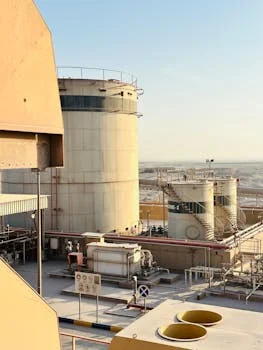
Membrane bioreactor (MBR) systems remove over 99% of total suspended solids, which is why reuse sites in Guanajuato pick them. Biology and membrane filtration sit in one tank and replace the secondary clarifier. For automotive parts plants in Silao, MBR systems for high-strength industrial wastewater in Guanajuato can make cooling-tower makeup or irrigation water and cut the draw on an over-exploited aquifer. Most automotive shops we size in Silao accept the extra power only when that reuse line is real.
Worker housing and small communities usually do not need that membrane. Anoxic/oxic (A/O) units nitrify and denitrify in two chambers and are the lower-energy path for NOM-001 nitrogen. A/O package plants for municipal sewage in Guanajuato typically consume between 0.8 and 1.2 kWh/m³. MBR systems on the same duty use 1.5 to 2.0 kWh/m³.
Buried tanks save the yard and cut odor complaints next to housing. Most housing plants we size run at the lower end of 0.8 kWh/m³ when the anoxic zone is a real volume, not a painted baffle.
Meat and dairy plants around Celaya need dissolved air flotation before either biology. Lipids and solids blind membranes and slow aerobic bugs. DAF pre-treatment for Guanajuato’s high-FOG industrial wastewater can take out up to 95% of TSS and 80% of FOG by micro-bubble flotation. That protects the downstream step and steadies the permit. Skip it and the first clean-in-place often lands inside a month.
| Feature | MBR (Membrane Bioreactor) | A/O (Anoxic/Oxic) | DAF (Dissolved Air Flotation) |
|---|---|---|---|
| Primary Use Case | Water Reuse / High COD | Municipal Sewage / BOD Removal | High FOG / Industrial Pre-treatment |
| Effluent Quality | Superior (Reuse quality) | Good (Discharge quality) | Pre-treated (Requires bio-step) |
| Footprint | Very Small (50% of A/O) | Medium | Small (Mechanical) |
| Energy Use | 1.5 – 2.0 kWh/m³ | 0.8 – 1.2 kWh/m³ | 0.4 – 0.6 kWh/m³ |
| Maintenance | High (Membrane cleaning) | Low (Sludge management) | Moderate (Chemical dosing) |
mbr system for industrial wastewater guanajuato cost
An MBR system for industrial wastewater in Guanajuato costs at the top of the local equipment bands, not at the A/O floor. Equipment CAPEX across package plants runs $120 to $450 per m3/day of daily capacity. MBR sits toward the high end because the membrane replaces the clarifier and the blowers run harder.
Use the capacity table, not a single unit price. A 10–50 m³/day equipment band is $15,000 – $40,000, with installation and civil works of $5,000 – $12,000. In 2025 a 50 m³/day system, installation included, typically lands at $25,000 to $45,000 USD, and MBR is the upper half of that range.
A 100–200 m³/day train is $75,000 – $140,000 in equipment before $15,000 – $35,000 of civil works. Above 500 m³/day the equipment band is $250,000 – $450,000. Most plants we price for a 100 m³/day food site land in the $75,000 – $140,000 equipment band before the clay-soil pad.
Power is the ownership sting. MBR energy is 1.5 – 2.0 kWh/m³, against 0.8 – 1.2 kWh/m³ for A/O. Energy is about 60% of MBR operating cost. In 2025, Central Mexico operating cost for these package systems averages between $0.15 and $0.40 per cubic meter treated.
The 100–200 m³/day annual OPEX band in the table is $0.25 – $0.35 per cubic meter. Buy MBR when the reuse cubic meter replaces pipas or freshwater. Buy A/O when the permit is a river or reservoir discharge and the plot can hold the extra tank. The footprint note on the comparison table is real: MBR is about 50% of an A/O footprint.
daf pre-treatment high fog food processing mexico
DAF pre-treatment for high-FOG food processing in Mexico is a front-end step, not the whole plant. Guanajuato food influent on the design sheet runs 50 – 300 mg/L FOG, 250 – 600 mg/L TSS, and 600 – 1,500 mg/L COD. A bare MBR or A/O on that water fouls.
A properly dosed DAF can remove up to 95% of TSS and 80% of FOG. Energy for that step is 0.4 – 0.6 kWh/m³, below either biological option. Chemical coagulant and polymer are the cost that moves, not the blower. The package-plant target after the full train is under 10 mg/L FOG.
A national receiving body still judges grease at 15 mg/L as the monthly average. A municipal sewer in Irapuato or Celaya can demand grease below 15 mg/L even though NOM-001 does not apply to that sewer.
Most meat plants we see in Celaya run DAF, then biology. Dairy is the same pattern with a tighter fat spike at clean-in-place. Size the DAF on the peak fat hour, not the daily average. A 72-hour composite that misses the sanitation shift will undersize the float cell.
Recycle and saturation pressure belong in the datasheet. A unit that only quotes a removal percentage with no chemical dose will miss the 80% FOG figure the week the kill floor runs long.
containerized wastewater treatment plant capex mexico 2026
Containerized wastewater treatment plant CAPEX in Mexico in 2026 still follows the same capacity bands used for 2025 bids. The box changes the civil scope. It does not change the biology or the permit. Equipment at $120 to $450 per cubic meter of daily capacity remains the planning range.
A container cuts site hours. It does not erase the pad.
Size on peak day, not on the average shift. Local engineers still use Q (m³/day) = (staff population × 200 L/person/day) + (industrial process flow in m³/day). A site with 500 employees and a 10 m³/day process discharge needs at least 110 m³/day once peaks are in. Staff alone are 500 × 200 L/person/day = 100 m³/day before the process line.
Most containerized units we set in the Bajío still need a reinforced pad on expansive clay. The box is not the foundation.
Read CAPEX in three lines, not one. For 10 – 50 m³/day, equipment is $15,000 – $40,000 and civil works $5,000 – $12,000, with annual OPEX $0.35 – $0.45 per cubic meter. For 100 – 200 m³/day, equipment is $75,000 – $140,000 and civil works $15,000 – $35,000, with OPEX $0.25 – $0.35. For 500+ m³/day, equipment is $250,000 – $450,000 and civil works $50,000 – $100,000, with OPEX $0.15 – $0.25.
In 2025 the treated-water operating band for Central Mexico was between $0.15 and $0.40 per cubic meter. Energy pricing, not the container steel, is why that band sits where it does.
A wider national cost frame is in Wastewater Treatment Plant Cost in Mexico 2026: Engineering Specs, Loc. For an emerging-economy price check only, see Vietnam’s package plant market for emerging economy context. Guanajuato payback is often faster because pipas in San Miguel de Allende are expensive. Do not import another country’s permit into this bid.
| System Capacity (m³/day) | Estimated CAPEX (USD) | Installation & Civil Works | Annual OPEX (USD/m³) |
|---|---|---|---|
| 10 - 50 m³/day | $15,000 – $40,000 | $5,000 – $12,000 | $0.35 – $0.45 |
| 100 - 200 m³/day | $75,000 – $140,000 | $15,000 – $35,000 | $0.25 – $0.35 |
| 500+ m³/day | $250,000 – $450,000 | $50,000 – $100,000 | $0.15 – $0.25 |
Much of Guanajuato is expansive clay (arcillas expansivas). Heavier packages may need a reinforced concrete pad or micro-piles. Ignore that and piping or membrane modules can fail by differential settlement within 24 months. A buried municipal unit such as the Underground Package Sewage Treatment Plant (WSZ Series) still needs that soil report. The container or the buried tank only arrives after the pad is designed.
Energy, Carbon, and What the Utility Bill Actually Moves
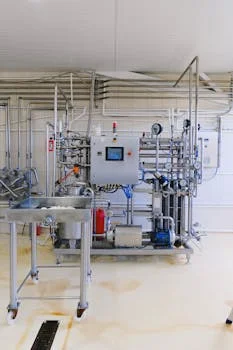
Activated-sludge plants in San Francisco del Rincón, Guanajuato, have cut 2,500 tons of CO2e annually with higher-efficiency aeration and pumping. That cut is about 550 passenger vehicles off the road. For a factory the same work shows up as a lower Comisión Federal de Electricidad bill. Variable-frequency drives on blowers, plus a real anoxic zone, can cut energy use by up to 30% versus a legacy plant.
Most blower retrofits we check save the 30% only after the night flow is no longer aerated as if it were the day peak.
Guanajuato solar irradiance averages 5.5 to 6.0 kWh/m²/day. A 100 m³/day A/O package plant for municipal sewage in Guanajuato can take part or all of its power from a dedicated array. That matters on remote industrial lots and on housing where the grid dips. Bids still cite CONAGUA support of up to 30% of the cost of energy-efficient upgrades under 2025 sustainability programs, if the job meets the stated GHG cut.
Treat that 30% as a program condition to verify on the current call, not as cash already awarded.
ROI Calculator for Solar-Integrated Package Plant (100 m³/day):
- Average Energy Consumption: 100 kWh/day
- Solar System Cost: $12,000 USD
- Annual Energy Savings: $4,800 USD (at $0.18/kWh average industrial rate)
- Payback Period: 2.5 Years (excluding maintenance and subsidies)
The arithmetic on that card is 100 kWh/day at $0.18/kWh. The stated savings are $4,800 USD a year against a $12,000 USD array, which is the 2.5-year payback before maintenance and before any subsidy. If the industrial tariff is not $0.18/kWh on the CFE bill in front of you, redo the card. Do not paste 2.5 years into a board paper from a different tariff.
Guanajuato Supplier Checklist
Buying a package plant in Guanajuato is a six-step check: soil, influent, technology, papers, permit, and a local crew. Prefabricated units still fail when the clay report or the NOM class is wrong. The steps below are the order procurement and process engineers actually use.
| Procurement Step | Key Requirement | Local Consideration |
|---|---|---|
| 1. Influent Characterization | 72-hour composite sampling | Check for high TDS in Guanajuato groundwater |
| 2. Technology Selection | MBR vs A/O vs DAF selection | Prioritize water reuse for aquifer relief |
| 3. Supplier Verification | ISO 9001 and NOM compliance | Request local references in Silao/Irapuato |
| 4. Site Assessment | Geotechnical report | Address expansive clay soil stability |
| 5. Permitting | CONAGUA/CEAG approval | Engage Ricardo Sandoval-Minero's office early |
| 6. Installation & O&M | Operator training program | Ensure 24/7 technical support in Guanajuato |
High TDS in Guanajuato groundwater is not a footnote. If chloride reaches 1,000 mg/L, the NOM-001 parameter table switches to total organic carbon instead of COD. Ask for that chloride number in the 72-hour composite before the supplier locks the instrument list. ISO 9001 and a NOM statement do not replace Silao or Irapuato references.
A contract should state a minimum 90% BOD removal and a spare-parts kit for the WSZ or DAF machines you actually bought. International membranes are fine. A crew that cannot reach Guanajuato the same day is not.
Firms that build in other states are listed with wastewater treatment plant builders mexico. Use that page for the Estado de México scope. Keep this specification on Guanajuato’s receiving body and clay.
Who Should Specify This Plant
This page is for a plant engineer, an EPC estimator, or a procurement lead placing a package plant in Guanajuato. You should have a flow, a 72-hour composite, and a named receiving body or a municipal sewer contract. Look elsewhere if the discharge is only stormwater, or if you need a full conventional civil plant above the package bands and already have a utility to take the load.
The next step is a quote built on that composite, the river-versus-reservoir class, and the clay report. Request a Guanajuato package-plant quote with those three attachments. A bid without them is a catalogue price, not a permit price.
Frequently Asked Questions
What is the difference between a package plant and a conventional plant in Guanajuato?
A package plant is a factory-built unit, such as the WSZ Series, shipped to the site, while a conventional plant is cast in place. Installation is 4–8 weeks for the package unit against 12–18 months for the conventional civil plant. Guanajuato industrial parks use the shorter path when the plot is tight and the discharge date is fixed. Most units we set this way still need a clay-soil pad under the tank.
Can a package plant handle high industrial loads in Celaya and Silao?
Yes, if the train matches the load and the front end matches the fat. Food and automotive wastewater in Guanajuato often needs DAF before biology, and a DAF can strip oils before a DF Series MBR takes COD up to 2,000 mg/L. Design-sheet influent of 600 – 1,500 mg/L COD fits that duty when the DAF is upstream. Most meat plants we see in Celaya blind a membrane inside a month if that DAF step is skipped.
How much does a 50 m³/day package plant cost in Guanajuato?
In 2025 a 50 m³/day system in Guanajuato typically costs $25,000 to $45,000 USD, installation included. MBR sits at the higher end and can make reuse-quality water. The capacity table puts 10 – 50 m³/day equipment at $15,000 – $40,000 before civil works of $5,000 – $12,000. Most plants we price at 50 m³/day land near the top once the clay pad and FOG pretreatment are included.
What permits does a package plant need in Guanajuato?
At minimum, plan on a CONAGUA discharge permit and a municipal construction permit. Above 50 m³/day, a federal or state environmental impact assessment from SEMARNAT is generally required, and CONAGUA review often runs 6 to 12 months. A discharge straight into a municipal sewer is a utility permit instead of a NOM-001 river file, because the norm stops at the sewer wall. Most files we see move faster when the 72-hour composite is fixed before the first submittal.
Are there local suppliers for package plants in Guanajuato?
Yes, several specialized firms operate in the region. Suppliers like HydropureWater partner with local Guanajuato contractors to provide installation, civil works, and ongoing operation and maintenance services, ensuring compliance with both NOM-001 and local CEAG standards. Ask any bidder for Silao or Irapuato references and a written service response time before signing. A distant workshop without a local crew turns every membrane fouling event into a week of downtime.