Define the Greywater Source and Intended Reuse
A commercial greywater recycling system in Eritrea should be selected based on the intended reuse endpoint rather than by simply choosing a filter. Greywater from showers, bathroom sinks, baths and laundry excludes toilet waste and can contain hair, lint, detergents, salts and other contaminants. Commercial systems commonly collect wastewater in a tank, filter and disinfect it, then pump it to toilet flushing or drip irrigation. The final design requires Eritrea-specific approval, site flow testing and an agreed reuse specification.
Start by separating every proposed discharge at the source. Bathtubs, showers, bathroom washbasins, clothes-washing machines and laundry tubs are normally within the greywater boundary. Toilet and urinal discharge remain blackwater and must not enter a greywater train unless the project is deliberately designed and approved as a combined-wastewater system. For context on how source selection affects treatment design, see this discussion of package-plant versus sewer decisions.
Treat kitchen-sink discharge cautiously. Greywater Action identifies food and grease as clogging concerns and notes that kitchen sinks are excluded under many greywater codes; its guidance also identifies salts, boron and chlorine bleach as substances that can damage plants or soil. Include kitchen wastewater only when the authority permits it, the equipment supplier has assessed the organic and grease load, and the proposed train includes appropriate solids and grease control.
Define the reuse endpoint before selecting equipment. Subsurface irrigation, toilet flushing, laundry, cooling and spray irrigation require different combinations of clarification, biological treatment, filtration and disinfection. Record the cleaning products, detergents, salts, boron and other relevant chemicals used at the facility, then link each source stream to its permitted destination.
Match Treatment to the Reuse Application
Commercial greywater systems generally collect the stream in a temporary tank, filter and disinfect it, then pump it to toilet flushing or drip irrigation, according to Greywater Action’s commercial-scale guidance. The appropriate route follows the endpoint: screening protects downstream equipment, biological treatment reduces dissolved organics, filtration controls suspended material, and disinfection manages pathogen risk.
For high-volume reuse, an integrated MBR wastewater treatment system is a credible candidate because HydropureWater cites 95–99% BOD and TSS removal, with membrane filtration typically at 0.03–0.4 microns. The same source describes an MBR range of 10–2,000 m³/day and near-reuse-quality effluent below 1 micron filtration. These are equipment-reference values, not a selected capacity for an Eritrean facility; final sizing must use measured source flows and demand.
An ultrafiltration system is a candidate only where its stated 0.03-micron PVDF membrane, 2,000–40,000 L/h capacity and removal of bacteria, colloids and suspended solids satisfy the feed and endpoint requirements. UF alone does not establish the biological treatment, disinfection or local approval needed for every reuse application.
Where greywater separation is impractical, a combined greywater-and-blackwater train may be operationally simpler, especially in an existing building where wastewater is already combined. That decision requires a separate project design and local discharge or reuse approval; it must not be presented as a conventional greywater package.
| Source and reuse decision | Route to evaluate | Information required before selection |
|---|---|---|
| Shower, washbasin, bath and laundry flow for subsurface irrigation | Collection, screening, solids control, treatment appropriate to the endpoint, disinfection and low-aerosol distribution | Source flows, cleaning chemicals, soil and irrigation details, approved effluent specification |
| Large-volume reuse including toilet flushing or sensitive reuse | Biological treatment with membrane filtration, followed by disinfection and reuse storage | Measured flow, peak demand, footprint, utilities, storage and failover route |
| Feed dominated by colloids and suspended solids where the specified endpoint accepts UF | UF filtration with supporting pretreatment and disinfection | Feed characterization, membrane compatibility and confirmed outlet quality |
| Toilet or urinal discharge included | Combined-wastewater treatment project | Complete wastewater flow and load, discharge route, authority approval and dedicated design |
Set Disinfection, Storage and Distribution Controls
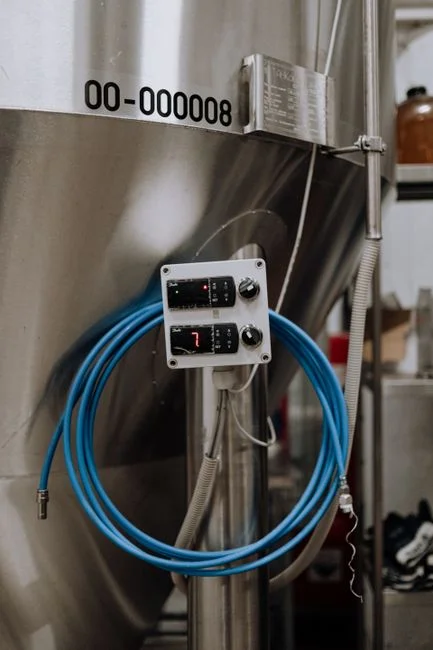
The reuse specification should control the complete route from treatment through storage and distribution, not just the treatment outlet. HydropureWater’s 2026 reuse guidance cites fecal coliform below 2.2 MPN/100 mL, TSS below 10 mg/L and BOD below 10 mg/L as reference values for unrestricted irrigation. These are international reference values, not verified Eritrea limits; the buyer must obtain the applicable local requirement and write it into the RFQ and acceptance criteria.
Distribution changes the required control level. HydropureWater states that commercial spray reuse requires tertiary filtration, high-level disinfection and the highest unrestricted treatment standard, while subsurface drip presents a lower aerosol risk. Laundry reuse also needs high clarity and pathogen control. Set the application, treatment standard and distribution method together rather than approving an outlet specification in isolation.
Storage needs an explicit retention and condition basis. HydropureWater cites untreated-greywater storage limits of 24–72 hours; confirm the applicable Eritrean requirement and design around the shortest feasible retention. The same source calls for sealed, vented tanks with overflow protection. For treated water, specify an opaque tank, access for cleaning and maintenance, and a method for preserving disinfectant residual throughout storage.
An on-site chlorine dioxide disinfection system can automate dosing. HydropureWater’s supplied product range extends from compact 50 g/h units to automated systems rated at 20,000 g/h, but generator size must follow measured flow, dose demand and water chemistry rather than reuse volume alone.
| Control point | Minimum information for the specification | Acceptance evidence to request |
|---|---|---|
| Disinfection | Approved pathogen target, residual requirement, dose-control method and monitoring point | Commissioning results and operating procedure |
| Storage | Retention basis, tank condition, venting, access and overflow destination | Tank drawings, volume calculation and inspection results |
| Distribution | Endpoint, pipe route, backflow protection, separation and non-potable identification | Piping schematic, valve schedule and cross-connection test |
| Automatic diversion | Failure conditions, alarm destinations, manual reset and safe discharge route | Simulated power, sensor and communications failure tests |
| Residual monitoring | Instrument type, location, calibration and operator response | Calibration certificates and alarm-response procedure |
Build an Eritrea Site-Data and Approval Pack
A binding proposal should begin with a site-data and approval pack, not an assumed unit capacity. Ask the facility team for a source-by-source flow survey, peak factors, wastewater sampling, reuse demand, available footprint, power supply, storage duration and maintenance capability. Include occupancy and operating schedules because commercial greywater flow and contaminant loads change with use.
Confirm with the relevant Eritrean authority which reuse applications and discharge routes are permitted, whether treatment certification or inspection is required, and which national or local standards apply. Ask for this position in writing and distinguish the permitted route from any reference standard used for preliminary design. If no treatment certification requirement is confirmed, state that explicitly rather than treating international certification as local approval.
Use ISO/WD 25446 as an international design and management reference for filtration, disinfection and maintenance, as identified by HydropureWater’s 2026 guidance. Confirm its current status and project applicability with the approving authority. NSF/ANSI 350 certification is increasingly mandatory for packaged systems in some jurisdictions and involves 26-week testing. Do not assume that a certified package establishes approval in Eritrea; obtain the local decision independently.
Give suppliers the reuse specification, measured feed data, applicable permit limits, piping interfaces, storage volume, utility requirements and acceptance tests. This approach is consistent with the site-specific due-diligence sequence in this wastewater due-diligence guide. A complete package also lets bidders identify conflicts without pricing an unverified compliance assumption.
Issue a Supplier RFQ with Acceptance Criteria
Comparable bids require the same technical boundary, source data and endpoint. Ask each bidder to state its design flow, included source streams, treatment train, recovery objective, footprint, utility demand, control philosophy, monitoring points, storage basis and expected O&M tasks. Require alternatives to be identified separately rather than hidden behind a generic “greywater treatment system” description.
State guaranteed effluent limits that match the verified reuse endpoint and the employer’s approved permit. Do not convert an international reference value into a local requirement without confirmation. Require the bidder to identify any reference value used in its design, state its scope, and explain how the final project specification changes the equipment, controls and guarantees.
Include automatic fail-to-sewer or another approved fail-to-safe diversion sequence, residual-disinfectant monitoring, alarm response, spare-parts availability and commissioning support. Where the installation depends on local service capability, ask bidders to identify the trained operator, response time and parts held in or reachable from Eritrea; these terms belong in the commercial offer rather than an unqualified compliance statement.
Request an on-site flow survey and influent-characterization plan before final sizing. The MBR capacity sizing and bid checklist provides a useful structure for comparing the capacity basis and missing design inputs.
| RFQ schedule | Supplier information required | Employer action |
|---|---|---|
| Design basis | Measured source flows, peak factors, wastewater characterization and reuse demand | Facility team to issue survey and sampling plan |
| Process train | Stage-by-stage duty, treatment route, disinfection and storage configuration | Engineer to check compatibility with the approved endpoint |
| Performance guarantee | Effluent parameters, monitoring method, test duration and remedy for non-compliance | Approving authority and buyer to confirm applicable limits |
| Controls and safety | Automation, diversion logic, alarms, backflow prevention and labelled piping | Witness functional tests during commissioning |
| Operations | Energy and chemical demand, consumables, sludge handling, operator hours and maintenance access | Compare against available facility capability |
| Commercial scope | Equipment, installation, commissioning, training, spares, exclusions and local support | Compare complete lifecycle scope, not equipment price alone |
Frequently Asked Questions
How should a commercial greywater recycling system in Eritrea be sized?
Size it from measured source flows, peak factors and reuse demand. Require a source-by-source survey and characterization before accepting a final capacity; do not select a universal unit size from occupancy alone.
Should we compare MBR, UF-only and combined-wastewater treatment?
Compare them against the same endpoint and feed data. MBR combines biological treatment and membrane filtration, UF addresses suspended material and colloids but requires a compatible feed and supporting disinfection, and combined treatment needs a dedicated design and approval for the expanded wastewater boundary.
What information is needed for a technically comparable supplier quotation?
Provide the approved reuse specification, measured feed data, permit limits, flow survey, storage requirements, utilities, footprint and acceptance tests. Require each bidder to state exclusions, controls, guarantees, commissioning tasks and O&M assumptions.
Are international reuse benchmarks already Eritrea’s legal limits?
No. They are reference values until the relevant Eritrean authority confirms the applicable requirements. The main cost drivers are treatment capacity, membranes or filters, disinfection, storage, utilities, operator time, consumables, sludge handling and local service support; request a priced lifecycle breakdown rather than relying on equipment price alone.