Start with the wastewater route, not the treatment brand
The practical choice for rural Sri Lanka depends first on whether a sewer is available or feasible, then on wastewater flow, land, groundwater, sludge handling, reuse goals and discharge conditions. Sewers extend only to about 12% of the urban population and less than 3% of the rural population, while 95% of households country-wide use below-ground on-site storage. Where a sewer is impractical, an on-site sanitation system or decentralized plant may be suitable.
The first screening step is service-boundary verification, not equipment selection. Record whether the site has a public sewer, an existing decentralized collection system or is a stand-alone property, and identify the owner and operator of the receiving infrastructure. This is the same basic distinction used in the public sewer versus package plant decision, although availability must be confirmed locally rather than assumed from a settlement map.
The national context makes on-site and decentralized routes more realistic starting points than centralized sewer assumptions. L’eau pour tous, citing UN Joint Monitoring Program data in 2020, reports that less than 3% of Sri Lanka’s rural population discharges toilet wastewater into sewers. It also reports that 95% of Sri Lankan households store toilet waste near its origin in below-ground tanks. That is evidence of the prevailing sanitation system, not proof that the existing tanks, collection services or discharge arrangements are adequate for a new project.
For a stand-alone property, document the wastewater-generating activities, the occupied building or development phase, the proposed reuse and the party responsible for operation. For a settlement, establish whether wastewater would enter an existing branch sewer, require a rural sewer extension, or need local collection and treatment. A receiving sewer with no available treatment capacity does not make the sewer route feasible.
Compare sewer, on-site sanitation and package treatment
Sewer connections, on-site sanitation systems and package plants are alternatives with different service boundaries and operating obligations. The feasible route is the one whose collection, treatment, sludge management, receiving environment and long-term operator responsibilities can be demonstrated at the specific site.
For a sewer route, test the availability of a connection, extension distance, required pumping, connection obligations and spare capacity at the receiving authority. The absence of a network is common in rural Sri Lanka, where high costs and lack of suitable land have constrained network expansion. Do not include a sewer in the shortlist until the responsible authority confirms the connection route and downstream treatment responsibility.
For on-site sanitation, request the tank design, applicable standards, chamber arrangement, emptying access, soakaway assessment and the organization responsible for desludging. L’eau pour tous notes that some brick tanks do not match mandatory Sri Lankan Standards dimensions and may fill rapidly, leak or overflow when soakaways become blocked. It also identifies gully-bowser services, operated by public and private providers, as the means of emptying stored sludge. The procurement scope must cover both the tank and the service chain, not merely tank construction.
For package treatment, assess hydraulic capacity, land and burial conditions, treatment process, automation, disinfection, sludge handling, reuse potential and maintainability. The WSZ underground package sewage treatment plant is a screening reference: its verified catalog specification combines A/O biological contact oxidation, sedimentation and disinfection in one buried unit, handles 1–80 m³/h, operates automatically and can also be trailer-mounted. Those characteristics do not establish suitability without site flow, soil, groundwater and effluent-route data.
| Decision factor | Sewer route | On-site sanitation | Package treatment |
|---|---|---|---|
| Collection | Branch sewer, extension and pumping may be required | Property tank and periodic emptying service | Local collection or gravity connections into the unit |
| Land and access | Route easement and receiving-system capacity | Tank footprint, tanker access and safe emptying point | Burial or surface footprint, access and delivery route |
| Sludge | Responsibility remains with sewer operator or authority | Owner must arrange and document desludging | Supplier must define residue removal and disposal responsibility |
| Discharge or reuse | Authority-defined receiving point | Soakaway performance and groundwater risk | Permitted discharge point or defined reuse destination |
| First evidence to request | Connection and treatment-capacity confirmation | Tank and service proposal | Design basis, process guarantee and commissioning tests |
Use site conditions to determine the feasible route
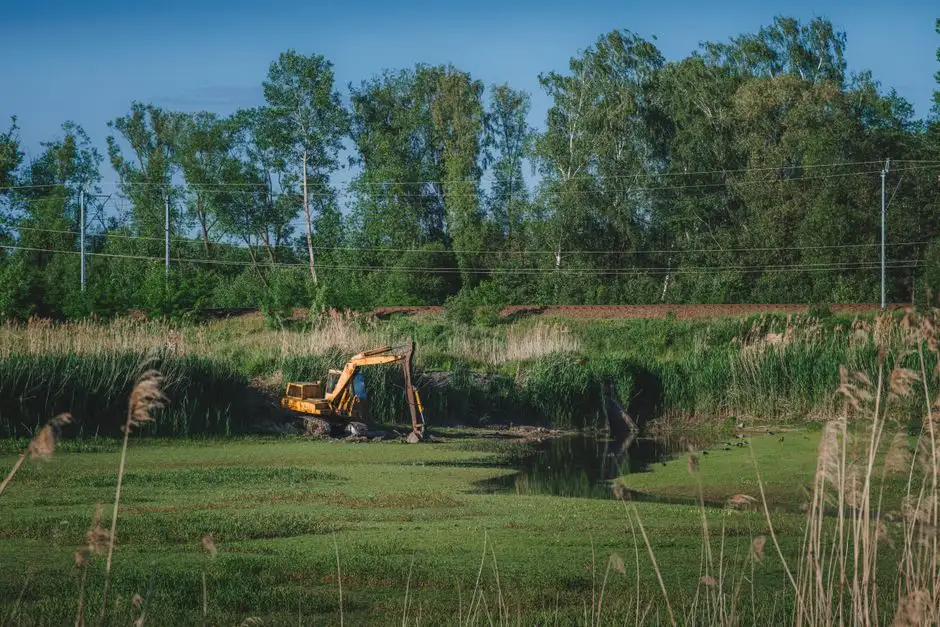
Groundwater, receiving waters, flooding, access and intended reuse can eliminate a treatment route before its equipment is priced. Map these constraints on the site and in the drainage catchment, then test each proposed discharge or infiltration point against them.
The site survey should cover seasonal groundwater level, nearby streams, wetlands and drains, flood exposure, soil conditions, vehicle access, tank-emptying access and any area proposed for irrigation or other reuse. The Water Science & Technology paper Water and wastewater related issues in Sri Lanka reports biological contamination of groundwater in Sri Lanka’s overcrowded cities and degradation of inland water resources, while also identifying distinct groundwater constraints in dry-zone and hard, rocky or alluvial areas. Those findings support site-specific investigation rather than a generic depth assumption.
Central Province examples show how existing assets can reduce new infrastructure. Arcadis reports that its team considered multiple treatment locations at the Srinagar settlement, proposed gravity-fed shallow channels to convey wastewater through older functional drains, and assessed rehabilitation of an existing plant at Haputale Hospital. Land availability remained a key siting constraint. The A/O package plant versus MBR comparison can be used as a technology-screening reference, but the site’s existing drainage and treatment assets must be assessed before selecting either.
| Site test | Evidence to obtain | Route affected |
|---|---|---|
| Groundwater protection | Survey level, seasonal variation and proposed infiltration or discharge point | On-site soakaways and subsurface package installation |
| Surface-water protection | Watercourse, wetland and drain mapping; authority confirmation of receiving point | All routes, especially package discharge |
| Flood exposure | Flood-risk mapping and an explanation of overflow or containment measures | Buried units, tanks and access routes |
| Service access | Vehicle dimensions, turning space and tanker access | On-site tank emptying and package maintenance |
| Reuse | Receiving area, proposed use, agronomic requirements and responsible operator | Treatment specification and effluent quality |
| Existing infrastructure | Condition, ownership, hydraulic capacity and upgrade feasibility | Potential sewer or plant rehabilitation |
Reuse must be treated as a designed receiving arrangement. The Wastewater use in agriculture in Sri Lanka case study reports that sewage and wastewater irrigation is common in rural and peri-urban areas, including because of water scarcity, and identifies controlled agricultural application as an alternative to uncontrolled dumping into lakes and streams. The buyer must obtain the receiving land’s requirements, intended crop use and applicable public-health conditions before including reuse in the project scope.
Build the technical and commercial selection matrix
A defensible selection compares whole-life service performance, not the lowest equipment quotation. Weight the factors that can change feasibility or operating cost, document the score, and retain the evidence used for each score.
- Assign weights for design flow, land, sewer access, groundwater protection, discharge route, reuse, automation, operator requirements and whole-life maintenance.
- Score each route against the same site evidence and commercial assumptions.
- Carry unresolved site or authority inputs forward as conditions rather than assigning them an assumed score.
- Require comparable supplier offers to state the design basis and all included civil, commissioning and operating responsibilities.
The WSZ specification provides one clearly defined reference point for package-plant bids: 1–80 m³/h treatment capacity, integrated A/O contact oxidation, sedimentation and disinfection, automatic operation and below-grade installation, according to the HydropureWater verified product catalog. The range is not a substitute for package wastewater plant sizing. Final selection still requires measured flow data, process calculations and confirmation that the treatment train fits the receiving route.
| Procurement input | Information required from bidder | Buyer check |
|---|---|---|
| Design basis | Average and peak flow, loading basis, occupancy scenario and treatment objectives | Calculations match the measured and forecast site flows |
| Process performance | Treatment stages, process guarantees and test methods | Guarantees are measurable and tied to the stated design basis |
| Civil works | Connections, excavation, access, controls, drainage and restoration | Quantity and responsibility are defined |
| Commissioning | Tests, witnessing, training, documentation and handover | Acceptance cannot be signed without completed tests |
| Maintenance | Schedule, operator tasks, remote support, consumables and spare parts | Responsibility remains clear after handover |
| Sludge and residuals | Storage, removal, testing, transport and disposal route | No residual-management obligation is left undefined |
| Commercial scope | Equipment, freight, installation, taxes, exclusions and lifecycle services | Offers use the same scope template |
Use the packaged wastewater treatment procurement checklist to structure the request for information. Each bid should identify civil works, commissioning tests, operator training, spare parts, maintenance intervals, sludge-disposal responsibilities and performance guarantees. If these remain exclusions, they are still project costs and risks; they should not disappear between quotation and handover.
Procure, verify and commission the selected system
No treatment system should be ordered before the project has a defensible design basis and confirmed destination for treated water and residuals. The procurement document should turn site information into conditions that bidders must price and verify.
Request measured peak and average flows, tank volumes, occupancy or population, land availability, groundwater level, soil characteristics, access arrangements, receiving-water details and proposed reuse requirements. Tank volumes and current occupancy can expose seasonal or intermittent storage requirements that a nominal daily flow does not capture. Where measurements do not exist, identify the monitoring period and responsible party required to obtain them rather than inserting an unsupported flow estimate.
Make each offer conditional on wastewater characterization, hydraulic loading checks, process sizing and confirmation of the final discharge or reuse route. These checks must reconcile with the selected route: a sewer proposal needs authority confirmation; an on-site proposal needs soil, groundwater, tank and desludging information; a package proposal needs incoming flow and effluent requirements.
Define commissioning tests before shipment. The acceptance schedule should state what is tested, who witnesses it, the required samples and instruments, the acceptance values, the retest procedure and the consequence of failure. It should also cover operator handover, maintenance intervals, emergency handling, spare-parts supply and residual removal. The applicable authority must confirm the receiving-water, discharge or reuse requirements before they are written into the contract.
Do not equate delivery with completion. Final acceptance should occur after installation and testing at site, including verification of the agreed flow condition, automation, alarms, sludge route and required operator training. Keep the approved drawings, process calculations, test records, manuals and warranty conditions in the handover package.
Frequently Asked Questions
Is a sewer connection realistic for a rural Sri Lankan property?
Not by default. L’eau pour tous, citing UN Joint Monitoring Program data in 2020, reports that less than 3% of Sri Lanka’s rural population discharges toilet wastewater into sewers. Confirm network availability, extension, pumping, connection conditions and receiving treatment capacity with the responsible authority before selecting this route.
How should a package wastewater plant be sized?
The WSZ range of 1–80 m³/h is a screening reference from the verified product catalog, not a site design. Final sizing requires measured peak and average flows, wastewater characterization, hydraulic loading checks and process verification against the final discharge or reuse route.
How much will the three options cost?
No comparable rural Sri Lankan prices exist for sewer extensions, on-site systems and package plants, so any project budget needs local quotations. Ask each bidder for the same scope: design, equipment, civil works, installation, commissioning, operator training, maintenance, sludge management and exclusions. Also request local excavation, transport, power and desludging inputs before comparing whole-life costs.
Which supplier should be selected?
Select against documented site fit and delivery responsibility, not process branding alone. Require a stated design basis, process guarantee, civil-work boundary, commissioning tests, training, spare-parts plan, maintenance schedule and residual-disposal responsibility. Confirm that the supplier will size and verify the unit against the site’s measured flow, land, groundwater, access and approved discharge or reuse conditions