Define the Portuguese project before selecting equipment
For an industrial effluent treatment plant in Portugal, the right equipment depends on the wastewater rather than a generic product list. Suspended solids, oil and grease may justify DAF pretreatment; processes requiring compact biological treatment or water reuse may point to MBR; and polishing needs may call for ultrafiltration or nanofiltration. HydropureWater’s relevant ranges are 4–300 m³/h for DAF, 10–2,000 m³/day for MBR and 2,000–40,000 L/h for ultrafiltration. A sound selection starts with a wastewater analysis, the applicable discharge or reuse criteria, flow and peak-load data, available footprint, and sludge-handling requirements.
The project definition determines whether a unit is pretreatment, the biological core, or a polishing barrier. Start by recording the industrial process, wastewater sources, normal flow, peak flow and operating schedule. Then obtain representative analytical data for suspended solids, oil and grease, organics, pH, metals and any process-specific contaminants. A generic description such as “industrial effluent” is not enough to size equipment or define guarantees.
Ask the Portuguese permitting authority or the client’s environmental adviser to identify the applicable discharge authorization, receiving-water conditions and any reuse requirements. The supplied research contains no Portugal-specific numeric discharge limits, so numeric compliance criteria must come from the project authorization or the confirmed reuse standard. For an industrial wastewater due-diligence framework, see the discussion of industrial wastewater due diligence before commercial commitment.
Use this fillable matrix before requesting a treatment-train proposal:
| Project input | Information to obtain | Decision affected | Status / source |
|---|---|---|---|
| Wastewater origin | Process, unit, batch or continuous discharge, and incompatible streams | Equalization and pretreatment | Complete / pending |
| Flow | Normal flow, peak flow, operating schedule and future expansion | Equipment sizing and storage | Complete / pending |
| Quality | Suspended solids, oil and grease, organics, pH, metals and process-specific contaminants | DAF, MBR, polishing and dosing | Complete / pending |
| Destination | Applicable Portuguese wastewater permit, receiving-water conditions or reuse standard | Final treatment and acceptance tests | Complete / pending |
| Site constraints | Available footprint, power, utilities, access and installation interfaces | Process configuration | Complete / pending |
| Residuals | Expected sludge characteristics, disposal route and dewatering requirement | Sludge handling | Complete / pending |
Match contaminants to the required treatment step
DAF, MBR and ultrafiltration perform different functions and should not be treated as interchangeable equipment. Suspended solids, oil and grease or colloidal material can justify DAF pretreatment, biological loading can justify MBR, and bacteria, colloids and residual suspended solids can justify ultrafiltration as a downstream barrier. The selected step must follow from the verified analysis rather than precede it.
HydropureWater offers 13 standard DAF machines covering 4–300 m³/h, with automatic skimming. This supports preliminary screening where floating and suspended material must be removed before biological or downstream treatment. Detailed DAF pretreatment selection criteria still need to be checked against the actual wastewater, because the presence of oil and grease alone does not establish the required operating configuration.
Evaluate an integrated MBR wastewater treatment system where biological treatment, compact installation and membrane separation below 1 μm are required. The stated MBR range is 10–2,000 m³/day. MBR combines activated-sludge treatment with submerged PVDF membrane filtration, but influent characteristics still determine whether biological treatment is appropriate and whether additional pretreatment or equalization is needed.
Ultrafiltration is a chemical-free polishing or reverse-osmosis pretreatment option where bacteria, colloids and suspended solids must be removed. The specified ultrafiltration polishing system handles 2,000–40,000 L/h, uses 0.03 μm PVDF membranes, accepts turbidity up to 300 ppm, and includes automatic backwash and air scour. Nanofiltration can also be investigated for advanced polishing or reclamation: the University of Twente’s Direct nanofiltration of wastewater treatment plant effluent thesis identifies nanofiltration as a technique for polishing treatment-plant effluent to EU Water Framework Directive standards and assessing reclamation potential. That research is not evidence that nanofiltration can replace industrial pretreatment.
| Verified need | Primary equipment candidate | Required check before inclusion | Possible next step |
|---|---|---|---|
| Oil and grease, floating material, suspended solids or colloids before treatment | DAF pretreatment | Wastewater analysis, flow range, skimming and downstream sludge route | Equalization or further biological treatment |
| Organic load requiring biological treatment, with compact separation | MBR | Biodegradability, loading, membrane feed conditions and footprint | Disinfection or polishing if required |
| Bacteria, colloids and suspended solids after primary or biological treatment | Ultrafiltration | Feed turbidity, flow, membrane configuration and cleaning strategy | RO pretreatment or final reuse preparation |
| Advanced effluent polishing or reclamation assessment | Nanofiltration | Wastewater-specific analysis and confirmed end-use standard | Pilot or project-specific validation |
Compare DAF, MBR, ultrafiltration and membrane polishing
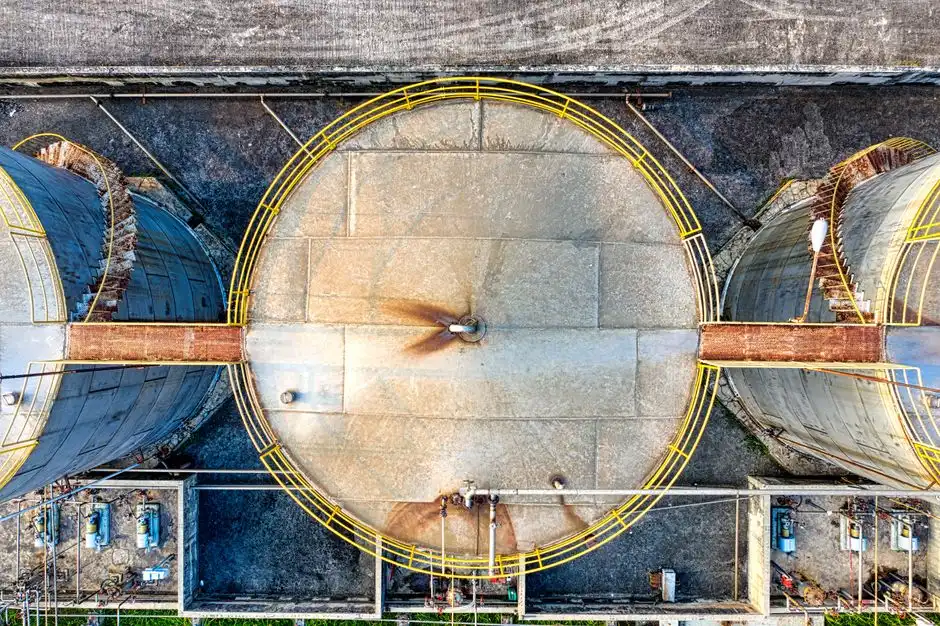
The preferred route changes with the contaminant target, available area and downstream obligations. DAF is positioned as physical pretreatment; MBR combines biological treatment and membrane separation; ultrafiltration provides a downstream barrier; and nanofiltration remains an advanced polishing option that requires project-specific validation.
HydropureWater specifies a 60% smaller footprint for its MBR systems than conventional systems and a capacity range of 10–2,000 m³/day. That comparison is useful for initial screening, but the final footprint still depends on the selected configuration, equalization, pretreatment, sludge handling, access and utilities. Ultrafiltration has a stated flow range of 2,000–40,000 L/h and uses automatic backwash and air scour. It removes bacteria, colloids and suspended solids without chemicals, but it does not remove dissolved contaminants that the selected barrier is not designed to reject.
Compare sludge production and disposal as part of equipment selection, not after award. DAF creates a skimmings stream; biological systems create excess sludge; membrane stages may require backwash and cleaning controls. The bidder must define each residual stream, its expected characteristics and the proposed route. For membranes, include the membrane-fouling prevention guide in the review of feed conditioning, cleaning and operating safeguards.
| Decision criterion | DAF | MBR | Ultrafiltration | Advanced membrane polishing |
|---|---|---|---|---|
| Primary function | Physical separation of floating and suspended material | Activated sludge treatment combined with submerged membrane separation | Chemical-free barrier against bacteria, colloids and suspended solids | Advanced polishing or reclamation assessment |
| Stated flow range | 4–300 m³/h | 10–2,000 m³/day | 2,000–40,000 L/h | To be established from the selected system |
| Best-supported application | Upstream removal of oil, grease, floating matter and solids | Biological treatment with compact separation | Polishing or RO pretreatment | Confirmed reuse or advanced polishing objective |
| Footprint implication | Needs additional equalization, biological or downstream treatment unless the objective is limited | Specified as 60% smaller than conventional systems | Additional membrane skid area | Depends on system and pretreatment |
| Control requirement | Automatic skimming; recycle and conditioning checks | Activated-sludge controls plus membrane operation | Automatic backwash and air scour | Project-specific membrane controls |
| Residual issue | Skimmings and sludge route | Excess sludge and membrane cleaning | Backwash, cleaning waste and reject management | Concentrate or reject management |
Build a treatment train and procurement checklist
A defensible industrial wastewater treatment plant is a sequence of verified functions, not a collection of named units. Prepare a process flow showing incoming wastewater, equalization, physical or chemical pretreatment, biological treatment where required, polishing, disinfection, final storage and sludge dewatering. Add each step only where the wastewater analysis, permit or reuse objective supports it.
Where pH adjustment, coagulation, flocculation or specialty chemicals are required, include automatic chemical dosing in the scope rather than treating it as an optional accessory. The proposed automatic chemical-dosing system must be matched to the chemical, required dose range, storage arrangement and control interface. Do not accept a generic dosing-system description without those inputs.
Where the selected train produces sludge requiring disposal, include dewatering. The offered plate-and-frame sludge dewatering equipment provides 1–500 m² filtration areas and manual, hydraulic or automatic PLC operation. The bidder should identify the selected configuration, feed basis, cake-discharge method, wash or cleaning provisions and compatibility with the residual stream.
Use the following procurement acceptance checklist:
| Bid item | Supplier response required | Buyer acceptance evidence |
|---|---|---|
| Guaranteed capacity | Normal and peak flow, operating schedule and duty cycle | Design basis tied to the client flow record |
| Analytical performance | Parameter, guarantee basis, sample point and test method | Commissioning test protocol tied to the permit or reuse standard |
| Utilities demand | Power, water, compressed air, chemicals and drainage | Verified against site infrastructure |
| Controls scope | PLC, instruments, alarms, interlocks, HMI and data requirements | Functional description and FAT or SAT plan |
| Installation | Civil interfaces, anchoring, access, lifting, drainage and utilities | General arrangement and site-interface schedule |
| Residuals | Sludge, skimmings, backwash and chemical waste routes | Mass-balance and disposal responsibility matrix |
| Commercial exclusions | Performance assumptions, excluded contaminants and caveats | Explicit wording in the accepted offer |
| Service and spares | Commissioning, training, local support and recommended spares | Named deliverables and delivery schedule |
Microplastic removal is a research-informed consideration, not a default specification. Sources, fate, effects, and analysis of microplastic in wastewater treatment plants: A review, published by Environmental Engineering Research, reports that more than 90% of microplastics can be removed in wastewater treatment plants. It does not establish the same result for every industrial treatment route, so require wastewater-specific evidence if this is an acceptance objective.
Frequently Asked Questions
What is the first check before ordering an industrial effluent treatment plant in Portugal?
Confirm the wastewater analysis, normal and peak flow, applicable Portugal wastewater permit, reuse objective and sludge route. Preliminary equipment selection can follow those inputs, but final sizing and performance guarantees cannot. Ask each bidder to reconcile its proposal with the same project basis.
How much should the equipment budget include?
Request an itemized quotation covering equipment, tanks, chemical storage, dosing, controls, civil interfaces, installation, commissioning, training, utilities, sludge handling and exclusions. The supplied research contains no verified project price, so do not infer a budget from a supplier directory or generic product range. Compare bids using the same treatment scope and acceptance criteria.
Which supplier-selection checks reduce delivery and compliance risk?
Ask bidders to provide the proposed equipment configuration, manufacturing and delivery schedule, commissioning responsibilities, local service arrangements, spare-parts list, references for comparable duties, and evidence against the project-specific Portuguese authorization. The RevenueBase directory records Portugal company matches and treatment capabilities, but the supplied excerpt does not verify supplier qualifications, local service coverage, pricing or project references; those items must be obtained directly.
Can one unit meet the entire wastewater treatment requirement?
Only if the verified objectives and contaminants fall within that unit’s demonstrated function. DAF is generally an upstream physical step, MBR combines biological treatment with membrane separation, and ultrafiltration provides downstream filtration. Equalization, pH control, biological treatment, disinfection, advanced polishing and sludge dewatering remain separate decisions unless the selected scope explicitly includes them.