Start with the discharge and reuse decision
For cooling tower blowdown and data-center wastewater in Bulgaria, the practical choice is between reuse with membrane treatment, controlled discharge to a sewer or receiving system, and ZLD where discharge volume or water recovery is critical. UF/RO protects downstream equipment and supports reuse; supplied CTBD evidence reports a commercial example achieving 90% water recovery, while the RO process removes over 99% of dissolved solids. The correct route depends on water analysis, flow, recovery target, discharge permit and local sewer acceptance. Treat Bulgaria-specific requirements as items to verify rather than confirmed limits.
Keep the streams separate. Cooling tower blowdown contains the concentrated fraction removed from a recirculating cooling system. Data-center wastewater may include cooling-tower discharge, reject water, cleaning water or other process streams. A combined stream can be treated only after confirming whether each constituent has the same reuse destination, chemistry and discharge constraint. The supplied research focuses on cooling-tower blowdown and power-sector water cycles rather than a universal data-center wastewater specification (Membranes, 2026).
The decision starts with four inputs: where the water must go, what quality it must have at that destination, how much water must be recovered, and whether discharge is legally and operationally available. A commercial Tutuka power-station example reports 90% water recovery and reduced effluent disposal, serving as a useful CTBD selection benchmark rather than a guaranteed project result (IDE, Cooling Tower Blowdown Treatment, 2026).
| Project input | What the buyer must establish | Route affected |
|---|---|---|
| Discharge destination | Municipal sewer, industrial sewer, receiving system or no planned discharge | Discharge, reuse or ZLD |
| Reuse destination | Cooling tower make-up, process water, boiler feed or another defined use | UF/RO and polishing |
| Recovery objective | Maximum acceptable discharge volume and required reuse rate | RO, high-recovery RO or ZLD |
| Permit status | Applicable permit, sewer conditions and unresolved authority questions | All routes |
| Stream definition | Separate flow and analysis for each wastewater type | All routes |
Compare reuse, discharge and zero liquid discharge
Reuse, controlled discharge and ZLD solve different problems: reuse reduces demand for new water, discharge addresses permitted effluent, and ZLD minimizes liquid reject at the cost of a more complex treatment train. Because the supplied research does not establish one route as the default for Bulgarian facilities, buyers must evaluate site-specific technical requirements.
For blowdown recycling, the cooling-tower study compares nanofiltration and reverse osmosis for treating blowdown before return to the cooling process (Office of Academic Resources, Chulalongkorn University, 2016). This supports membrane treatment as a reuse option, but it does not establish a universal permeate specification or a Bulgaria-wide recovery rate. The required product-water chemistry must follow the receiving process.
For higher recovery, IDE describes integrated high-recovery RO to reduce reject volumes and thermal ZLD to minimize the volume sent for disposal (IDE, 2026). Its Tutuka commercial example reports 90% recovery, while the RO process description states removal of over 99% of dissolved solids, leaving approximately 1% in the product water (IDE, 2026). These are source-specific statements; they are not guarantees for a buyer’s feed or recovery target.
ZLD consists of a train of ultrafiltration, reverse osmosis, evaporation or crystallization, and fractional electrodeionization (IDE, 2026). It requires a defensible route for the remaining concentrate and substantially more equipment, energy, controls and operator capability than a conventional discharge route. A facility with adequate sewer acceptance may not justify that complexity, while a site with strict discharge limits or a high reuse obligation may need to examine it.
| Decision factor | Reuse with membrane treatment | Controlled discharge | High recovery or ZLD |
|---|---|---|---|
| Primary objective | Produce water for a defined reuse application | Meet the receiving sewer or system’s stated conditions | Reduce liquid reject and maximize recovery |
| Typical treatment scope in supplied evidence | NF or RO for cooling-tower blowdown recycling | Treatment must be matched to sewer requirements, which are not supplied | High-recovery RO; or UF, RO, evaporation/crystallization and fractional electrodeionization for ZLD |
| Quality evidence | RO is described as removing over 99% of dissolved solids (IDE, 2026) | No Bulgarian numeric acceptance conditions supplied | ZLD is described as purifying and recycling the wastewater (IDE, 2026) |
| Main unresolved input | Reuse destination and required chemistry | Current permit and sewer pretreatment conditions | Concentrate destination, footprint and operator capability |
| Key commercial warning | The 90% Tutuka recovery figure is one commercial case, not a generic performance guarantee (IDE, 2026) | ||
Match the pretreatment train to the water analysis
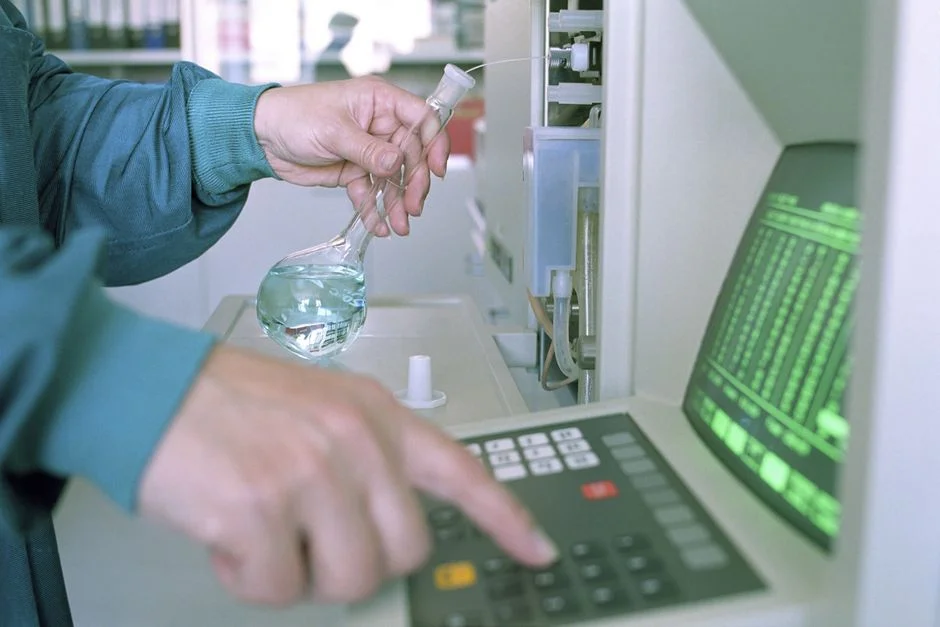
Water analysis determines whether UF, softening or chemical dosing is needed ahead of the selected primary process; no supplied source establishes a universal Bulgaria feed specification. The analysis should cover suspended solids, turbidity, colloids, hardness and other scaling indicators, dissolved salts, organic load, microbiological risk and the constituent concentration expected in the concentrate.
Use UF where suspended solids, colloids or bacteria could compromise downstream membranes. The supplied UF specification describes 0.03 micron PVDF membranes, automatic backwash and air scour, with feed turbidity up to 300 ppm. These are product attributes, not proof that an arbitrary industrial feed will be suitable. For the proposed application, ask the supplier to provide an industrial UF pretreatment system sized against the measured flow and analysis.
Use RO where dissolved-solids reduction is necessary for reuse. IDE describes the process as removing over 99% of dissolved solids, leaving approximately 1% in the product water (IDE, 2026). The buyer should specify the receiving application’s chemistry rather than treating dissolved-solids removal alone as sufficient. The proposed industrial RO blowdown treatment system should be assessed for membrane compatibility, scaling indicators, pretreatment and concentrate management.
Consider an industrial softener when hardness or scaling risk must be controlled before RO. The product catalogue specifies capacities from 1 to 45 T/h and alternating twin vessels, but site chemistry determines applicability. Request the analysis, design hardness, regeneration assumptions and confirmation that softening is compatible with the selected membrane train.
- Obtain representative analysis for each stream and define the recovery destination.
- Identify fouling, scaling and biological risks relevant to UF or RO.
- Select pretreatment from measured chemistry rather than catalogue assumptions.
- Define the concentrate destination and operating controls before equipment sizing.
Build the Bulgaria compliance and supplier brief
A procurement brief must separate verified technical evidence from Bulgarian site and regulatory inputs that remain unconfirmed. The supplied evidence contains no Bulgarian sewer pretreatment conditions, discharge limits or permit requirements, so a supplier’s general compliance statement cannot replace confirmation from the relevant authority or sewer operator.
Identify the municipal or industrial sewer recipient and obtain its current pretreatment and discharge conditions. If reuse is proposed, identify the equipment or process receiving the treated water and obtain the required quality specification. If no conventional discharge is available, include the concentrate-management constraint in the commercial basis of design.
Require each supplier to state the treatment route, design flow, recovery, permeate quality, concentrate destination, control philosophy, footprint and O&M assumptions in its quotation. The supplied recent data-center and CTBD comparisons can serve as a technical checklist, not as Bulgarian regulatory evidence. Relevant comparisons include the data-center wastewater and cooling-blowdown treatment comparison, the UF/RO versus ZLD decision for data-center wastewater and the reuse versus sewer-treatment decision for data-center blowdown.
HydropureWater industrial RO systems are specified at recovery rates up to 95%; this is a catalogue capability, not a guaranteed project recovery rate. The buyer should ask whether that figure applies to the proposed feed, recovery definition, system boundary and operating conditions. Performance guarantees should be tied to the submitted analysis and clarified operating envelope.
| Quotation item | Required buyer response |
|---|---|
| Design flow and water analysis | Provide measured flows and complete analyses for each stream |
| Treatment route | Identify UF, RO, high-recovery RO, ZLD or a defined combination |
| Recovery and product quality | State the basis of the guarantee and the required reuse-water specification |
| Concentrate destination | Provide the permitted outlet, expected composition and management method |
| Bulgarian compliance | Name the permit, sewer recipient and authority or operator contact used as basis |
| Controls, footprint and O&M | Provide operating assumptions, alarms, consumables and staff requirements |
| Performance evidence | Identify the source, date and scope of every material performance figure |
Frequently Asked Questions
What determines the cost of cooling tower blowdown and data-center water treatment in Bulgaria?
The available evidence does not support a universal cost calculation. The commercial case depends on water chemistry, required recovery, discharge destination, permit status, concentrate handling, footprint and operating requirements. Request an itemized quotation covering equipment, pretreatment, installation, controls, energy and consumables, concentrate disposal and O&M rather than comparing headline recovery rates alone.
How should a supplier demonstrate that its treatment system is suitable?
Require relevant membrane-system experience, guaranteed design parameters and the source of every key performance figure. The 90% CTBD recovery result is one commercial Tutuka power-station example, not a generic guarantee (IDE, 2026). The bidder should show how the proposed equipment responds to the submitted water analysis, recovery target and site constraints.
What information is needed before sizing UF/RO equipment?
Begin with measured flow for each stream and a complete water analysis, then define pretreatment, recovery and discharge constraints. HydropureWater’s product catalogue gives UF capacity ranges from 2,000 to 40,000 L/h and rates industrial RO at up to 95% recovery; these are catalogue figures, not a project selection. Verify applicability through the detailed analysis, pretreatment review and supplier design check.
How can Bulgarian compliance be confirmed before procurement?
Confirm requirements with the relevant authority or sewer operator. The supplied research contains no Bulgarian numeric discharge limits, sewer pretreatment conditions or permit criteria, so neither a generic supplier statement nor another country’s case can establish compliance. Record the authority contact, applicable permit and written discharge conditions in the procurement file before final equipment selection.