Define the Project Decision Before Selecting Equipment
An industrial effluent treatment and reverse osmosis plant in Equatorial Guinea should be selected only after the wastewater has been characterized and its pretreatment, recovery and concentrate routes are defined. Industrial RO uses pressure to separate permeate from dissolved salts and other contaminants; most industrial membranes can reject 95% to 99% of dissolved solids, depending on system design and source water (Kurita, The Splash, undated research excerpt). RO is usually one stage in a wider treatment train, while its concentrate stream requires a defined disposal or reuse route (ENCON, Reverse Osmosis Wastewater Treatment, undated research excerpt). Site-specific effluent data, reuse targets and current Equatorial Guinea approvals remain essential inputs before equipment selection.
The practical decision gate is straightforward: approve feasibility work only when the required permeate quality, feedwater characteristics, operating envelope and concentrate route can be stated. If any of these remains undefined, the project is not ready for sizing or comparison of equipment. A pretreatment–RO train may be suitable for industrial wastewater reuse, but suitability cannot be inferred from the country, industry name or generic membrane-rejection data.
The local context strengthens the need for a source-water-based assessment. Pure Aqua describes Equatorial Guinea as having about 1.36 million people, a mainland region and five inhabited islands, and highlights limited access to uncontaminated water and sanitation (Pure Aqua, Reverse Osmosis & Water Treatment in Equatorial Guinea, undated research excerpt). The supplied research does not establish current Equatorial Guinea discharge limits, sector permits, city-specific receiving-water conditions or the permit pathway for a particular facility. Those items must be confirmed locally rather than assumed from general water-treatment descriptions.
| Project input | Evidence required | Responsible party | Decision use |
|---|---|---|---|
| Effluent flow | Average, hourly peak, daily and seasonal variation | Plant operator | Determines hydraulic basis and membrane loading |
| Current treatment | Process flow diagram, operating logs, chemical use and existing discharge history | Plant operator | Establishes baseline performance and loads |
| End use | Permeate quality target and intended reuse or discharge point | Process owner | Defines required treatment performance |
| Operating conditions | Operating hours, temperature, pressure and power availability | Project team | Sets design and utility requirements |
| Site constraints | Available footprint, drainage, access and installation constraints | Project owner | Tests physical and constructability suitability |
| Approval scope | Permit, environmental and receiving-water requirements | Local authority or environmental adviser | Establishes whether the proposed route is approvable |
Characterize the Effluent and Set Acceptance Criteria
Wastewater characterization is the technical gate for RO feasibility because a membrane cannot be selected from flow and reuse targets alone. Require a representative analysis covering suspended solids, turbidity, organic loading, hardness, dissolved salts, scaling ions, oil and grease, and contaminants specific to the industrial process. The analysis must reflect normal operation and relevant production, batch-cleaning and upset conditions; one grab sample will not establish a defensible design envelope.
Kurita explains that industrial RO systems commonly pass through sediment and carbon filtration before the membrane, and that inadequate pretreatment is a common cause of fouling and shortened membrane life (Kurita, The Splash, undated research excerpt). The buyer should therefore reject any supplier offer that omits the feedwater envelope or assumes that pretreatment can be added after RO selection.
Set acceptance criteria before requesting prices. At minimum, define permeate quality, net permeate production, recovery, operating availability, limits for feed contaminants and the required route for concentrate. These criteria should be measurable through an agreed test protocol. The operator supplies process and chemical records; an accredited laboratory supplies representative analysis; the treatment vendor translates those inputs into a preliminary process basis and identifies any missing data.
| Parameter or input | Minimum information to obtain | Decision question |
|---|---|---|
| Flow and operating pattern | Average, peak, production and discharge schedules | Can the RO train handle the duty without unacceptable downtime? |
| Suspended solids and turbidity | Concentration, variability and particle characteristics | Is solids or colloidal pretreatment required? |
| Organic loading | COD or another applicable organic indicator, plus process identity | Will biological or equivalent upstream treatment be required? |
| Hardness and scaling ions | Calcium, magnesium, alkalinity, sulfate and relevant process ions | What recovery and scaling-control basis applies? |
| Dissolved salts | TDS and conductivity, including concentration range | Can RO meet the required recovery without unacceptable scaling? |
| Oil and grease | Concentration and whether emulsified or free oil is present | Is oil-removal pretreatment needed? |
| Process-specific contaminants | Metalloids, solvents, products or biocides relevant to the process | Which membranes, seals and downstream treatment are compatible? |
| Permeate acceptance | Required constituents, temperature and test method | Is RO alone sufficient, or is polishing needed? |
Match Pretreatment to the Contaminant Load
Pretreatment should be selected from the wastewater analysis, not from a standard package name. Kurita identifies sediment filtration for particles and suspended solids, carbon filtration for chlorine removal, and scale inhibitors or softening as source-dependent measures (Kurita, The Splash, undated research excerpt). Skipping pretreatment can cause RO membrane fouling, reduce membrane life and damage other equipment.
For suspended solids, turbidity or colloids, evaluate multi-media or sediment filtration before RO. The supplied multi-media-filter catalogue states that the equipment can achieve SDI values suitable for downstream RO protection. Require the supplier to demonstrate that claim against the measured feedwater and proposed cleaning cycle rather than accepting a generic equipment description.
For an ultrafiltration pretreatment system, the supplied catalogue covers 2,000 to 40,000 L/h, accepts feedwater turbidity up to 300 ppm and includes automatic backwash and air scour. Those specifications are selection inputs, not proof of suitability: the actual wastewater analysis must confirm particulate loading, flow, flux behavior and cleaning-water arrangements.
Use activated carbon where the source requires chlorine removal before RO. Use chemical dosing or softening only where the analysis demonstrates a corresponding need. Where suspended solids, oil and grease, FOG or colloidal matter are the principal load, evaluate dissolved air flotation; the supplied DAF catalogue covers 4 to 300 m³/h and 13 standard models.
| Measured condition | Evaluate | Required evidence |
|---|---|---|
| Suspended solids, turbidity or colloids | Multi-media or sediment filtration | Feed analysis, expected SDI and cleaning frequency |
| Fine particulate or microbiological barrier requirement | Ultrafiltration | Flow, turbidity, flux and validated permeate quality |
| Chlorine requiring removal | Activated carbon | Chlorine loading and contact requirements |
| Hardness or scale risk shown by analysis | Softening or chemical dosing | Scaling assessment and chemical-control basis |
| Oil, grease, FOG or colloidal load | DAF and associated separation | Oil characteristics, load, recovery and sludge route |
| Organic load unsuitable for direct RO | Upstream biological or other suitable treatment | Process trial or validated removal performance |
Size the RO Stage Against Recovery and Water Quality
RO should be sized from the feedwater envelope and required permeate flow, with recovery treated as a calculated operating condition rather than a sales headline. The supplied product statement says the industrial reverse osmosis system can deliver ultra-pure permeate at recovery rates up to 95%. That is conditional on feed analysis and process design, so it must not be copied into a specification as guaranteed site performance.
For comparison, Kurita states that most industrial RO membranes can reject 95% to 99% of dissolved solids, with actual rejection dependent on system design and water source (Kurita, The Splash, undated research excerpt). Use that range to frame expectations for dissolved-solids separation, not to waive site-specific testing. Process water recycling and reuse also require the permeate to meet the receiving process’s quality criteria, which may include constituents beyond a bulk TDS measurement.
Add polishing only when the end use requires it. Kurita identifies mixed-bed demineralization or a second RO pass as options for removing remaining trace ions in ultra-high-purity applications. Each bidder should state the feedwater envelope, permeate flow, recovery, reject flow, membrane type, pretreatment requirements and performance assumptions. Require a membrane-fouling and scaling assessment using the actual analysis.
| Supplier commitment | Required definition | Buyer check |
|---|---|---|
| Permeate production | Net flow at the stated operating basis | Confirm whether production is before or after downstream treatment |
| Recovery | Permeate flow divided by feed flow, with test conditions stated | Reject a percentage without feedwater and operating assumptions |
| Reject flow | Residual stream quantity derived from the water balance | Check consistency with recovery and bleed streams |
| Membrane selection | Membrane type, configuration and intended service | Confirm compatibility with the characterized feed |
| Pretreatment | Named equipment and performance duties | Compare against measured contaminants |
| Quality guarantee | Constituents, test method and operating conditions | Ensure the guarantee matches the reuse or discharge objective |
| Performance test | Acceptance protocol, sampling points and correction method | Require test conditions and remedies for non-compliance |
Design the Concentrate Route and Operational Controls
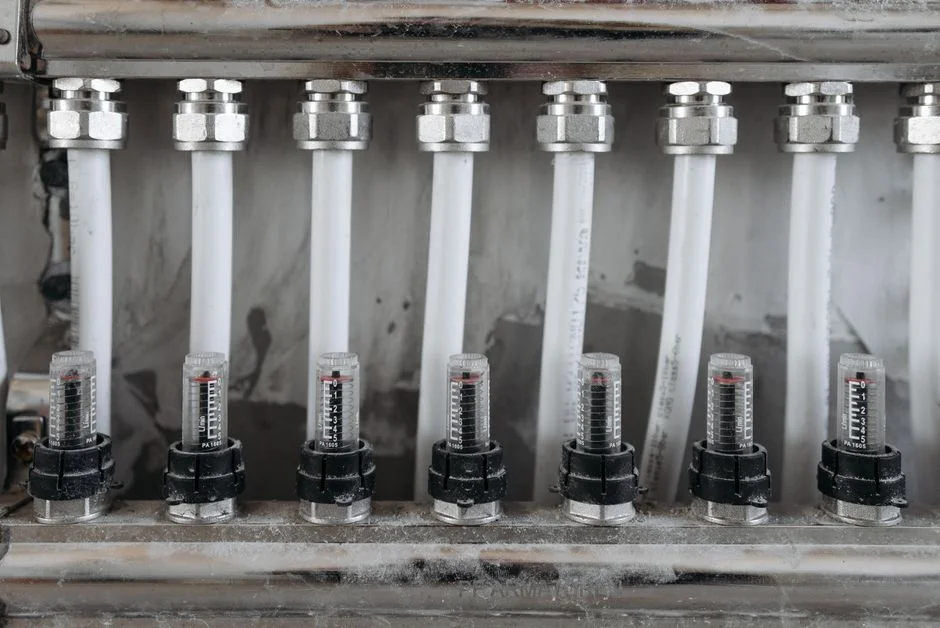
Every RO proposal needs a concentrate route because RO produces permeate and a rejected-contaminant stream. ENCON describes the reject as typically being evaporated or hauled away for disposal, while Kurita states that it must be managed or discharged appropriately (ENCON, Reverse Osmosis Wastewater Treatment, undated research excerpt; Kurita, The Splash, undated research excerpt). Neither source verifies which route is legally acceptable at a particular Equatorial Guinea site.
During feasibility, compare disposal, controlled discharge and further treatment. For each option, document the concentrate flow and composition, receiving point, applicable approval, infrastructure needs, operating responsibility and residual waste route. A proposal that names only a discharge point is incomplete unless the applicable local authorization has been verified.
Include membrane cleaning, cartridge or media replacement, permeate monitoring and operator access in the commercial scope. Kurita links membrane care with extending asset life, controlling operating costs, minimizing waste and maintaining consistent water quality (Kurita, The Splash, undated research excerpt). Require the supplier to identify energy use and concentrate-handling assumptions in the operating-cost comparison; a low membrane price does not establish the plant’s operating cost.
| Design item | Minimum submission | Approval or acceptance check |
|---|---|---|
| Concentrate quantity | Flow and mass balance at the stated recovery | Reconciles with feed, permeate, bleed and losses |
| Concentrate composition | Expected salts and process contaminants | Based on feed analysis and recovery assumptions |
| Discharge or reuse route | Named destination and operating description | Confirmed acceptable by the relevant authority or adviser |
| Further treatment | Process objective, equipment and residual waste route | Includes all residual streams, not only permeate |
| Cleaning | Method, chemicals, frequency basis and recovery | Matches membrane type and expected fouling |
| Monitoring | Feed, permeate and reject instruments and sampling points | Supports process control and acceptance testing |
| Operating cost | Energy, chemicals, media, membranes and concentrate handling | States assumptions and excludes no required residual-stream cost |
Issue a Supplier Brief and Verification Checklist
A comparable supplier brief begins with the design basis, not the requested flow. Attach the effluent analysis, hourly and daily flow data, reuse or discharge objective, available footprint, power supply and required local approvals. State the required permeate flow and quality, operating pattern, recovery basis, concentrate route and acceptance-test requirements.
Ask each bidder to present the treatment route, mass balance, preliminary recovery, reject route, pretreatment logic, controls, spare parts and acceptance tests. Require assumptions to be identified, especially where information is missing. A supplier should not cover an unknown feedwater condition with an unqualified performance guarantee.
The supplied research does not support project-specific price, delivery lead time or current Equatorial Guinea permit conditions. Request quotations and lead-time commitments from qualified suppliers only after the design basis is fixed. Make approval verification a procurement gate: confirm requirements with the relevant Equatorial Guinea authority or project environmental adviser.
| Checklist item | Bidder response required | Procurement status |
|---|---|---|
| Source-water evidence | Analysis, flow records and operating envelope | Complete / incomplete |
| Treatment route | Process diagram with pretreatment and any polishing | Complete / incomplete |
| Water balance | Feed, permeate, reject and bleed streams | Complete / incomplete |
| Performance basis | Recovery, reject flow and water-quality assumptions | Complete / incomplete |
| Residual-stream route | Discharge, reuse or treatment route for concentrate | Complete / incomplete |
| Local verification | Permit and authority confirmation | Confirmed / outstanding |
| Commercial comparability | Price, scope, exclusions and lead time | Complete / incomplete |
| Acceptance | Test protocol and remedy for non-compliance | Agreed / outstanding |
Frequently Asked Questions
How much does an industrial effluent RO plant cost in Equatorial Guinea?
The supplied research does not provide a defensible price for an industrial effluent treatment and reverse osmosis plant in Equatorial Guinea. Request itemized quotations after fixing effluent flow and analysis, permeate flow and quality, pretreatment, recovery, concentrate handling, controls, utilities and acceptance tests. Compare lifecycle operating assumptions as well as capital price; require suppliers to disclose exclusions.
Which wastewater parameters are needed to size an industrial RO plant?
Provide flow variability, suspended solids, turbidity, organic loading, hardness, scaling ions, TDS or conductivity, oil and grease, chlorine where relevant, and process-specific contaminants. Include representative operating and upset conditions. These inputs determine pretreatment, membrane selection, recovery and concentrate composition; the operator supplies operating records, an accredited laboratory supplies the analysis and the treatment vendor develops the preliminary design basis.
How should buyers compare RO suppliers in Equatorial Guinea?
Require each bidder to state the feedwater envelope, permeate flow and quality, recovery, reject flow, membrane type, pretreatment logic, controls, acceptance protocol, energy assumptions, spare parts and concentrate route. Check the water balance and pretreatment selection against the same effluent analysis. The UF/RO reuse and ZLD decision guide can support treatment-option review, but it does not replace site-specific analysis or Equatorial Guinea approval verification.
Can industrial RO reuse wastewater without a discharge permit?
Do not assume that reuse avoids a discharge permit. The supplied research does not verify current Equatorial Guinea permit requirements, and RO also produces a concentrate that requires an approved or otherwise acceptable route. Confirm the reuse destination, residual discharge, applicable authority and project-specific permit scope with the relevant Equatorial Guinea authority or environmental adviser before procurement.
What pretreatment is normally required before industrial RO?
The required sequence depends on measured contaminants. Suspended solids and colloids commonly justify sediment or multi-media filtration; ultrafiltration may be justified by the required barrier and wastewater characteristics; activated carbon is relevant where chlorine must be removed; and softening, chemical dosing or DAF should be tied to demonstrated hardness, scaling, oil or colloidal risks. Kurita identifies sediment filtration, carbon filtration, scale inhibitors and softening as source-dependent pretreatment measures (Kurita, The Splash, undated research excerpt).