Map the Greywater Sources Before Selecting Equipment
A commercial greywater recycling system in Bosnia and Herzegovina should be selected by tracing each source from fixture to reuse point. Bathroom sinks, showers, baths and washing machines can qualify as greywater, provided the water has not contacted feces or water used for washing diapers (Greywater Action, undated). Toilet wastewater must remain excluded. Kitchen sinks require a separate decision because food, grease and other organic matter can clog many systems (Greywater Action, undated). The supplier must also establish whether the building already has separate collection piping or whether a new greywater collection network is required. Hydraloop describes separate routing as straightforward in renovations and standard in new builds, though this depends on the condition of a particular property (Hydraloop, undated).
Request measured flow from each source and its operating schedule. A building-wide average can conceal simultaneous shower demand, laundry discharge or short peak flows that determine storage, pumping and treatment requirements. Record whether each flow can reach the proposed treatment train by gravity; if not, the design must include pumping, controls and a clear failure response.
| Selection field | Information to obtain | Procurement consequence |
|---|---|---|
| Included sources | Fixture-by-fixture flow and operating schedule | Sets treatment flow, storage and pump requirements |
| Excluded sources | Confirmation that toilet wastewater and contaminated wash water are separated | Defines the greywater boundary and treatment risk |
| Kitchen wastewater | Separate flow, solids and grease assessment | May require exclusion or a dedicated pretreatment route |
| Collection route | Existing separated pipework or new installation; available fall and routing | Determines excavation, pumping and construction scope |
| Source contaminants | Hair, lint, soaps, food residues, grease and cleaning products | Defines filtration, pretreatment and maintenance requirements |
The supplier should also explain how incoming material will be screened before it reaches sensitive treatment components. The rotary mechanical bar screen is a screening reference point, but it does not replace source separation or establish the correct treatment train for the building.
Match Treatment to the Intended Reuse
The permitted end use determines the required treatment, so the reuse destination must be fixed before equipment is selected. Selecting the right technology depends on whether the water is destined for irrigation, toilet flushing, or industrial cooling. Ion Exchange Global describes commercial greywater treatment in three stages: collection; filtration and treatment; then storage and reuse (Ion Exchange Global, undated). Its listed reuse destinations include landscape irrigation, toilet flushing, car washing, cleaning and industrial cooling, but the supplied research does not establish one treatment specification for all five applications.
Filtration addresses hair, lint, food particles and soaps. Depending on the reuse application, UV, chlorine or biofiltration may be added for disinfection (Ion Exchange Global, undated). An ultrafiltration treatment train can screen a proposed route, while UV disinfection for treated greywater addresses a different part of the treatment sequence. Neither should be included solely because the project is described as a non-potable system; the supplier must connect each barrier to the identified reuse and applicable authorization.
| Intended reuse | Minimum design questions | Treatment and operating implication |
|---|---|---|
| Site irrigation | Which surfaces or plants receive the water, and what restrictions apply? | Define solids removal, storage, pumping and application controls |
| Toilet flushing | Is the reuse route internal and what water-quality objective applies? | Assess filtration, disinfection, storage and sanitary controls |
| Car washing or cleaning | Will water be applied directly or held before use? | Define required treatment, storage and demand matching |
| Industrial cooling | What process-water quality and equipment constraints apply? | Check filtration, chemical control, storage and continuous supply |
Do not transfer the generic claim that a greywater system can reduce water consumption by 40–50% to a specific building without confirmation (Ion Exchange Global, undated). Ask the supplier to calculate expected freshwater savings from measured source flows and actual reuse demand, including seasonal and occupancy variation.
Hydraulic design is part of treatment selection. Gravity can reduce pumping requirements, while a pumped route adds electricity use, equipment cost and failure points (Greywater Action, undated). Storage must accommodate the mismatch between source production and reuse demand without creating an uncontrolled discharge route.
Compare Package, MBR and Reuse-Train Options
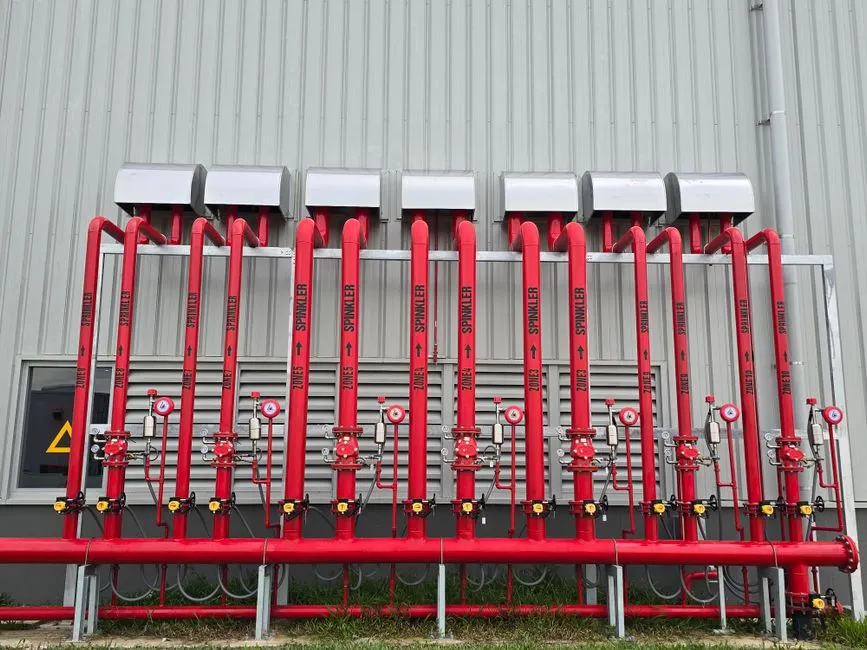
Package plants, membrane bioreactors and treatment trains are different procurement categories, not interchangeable product labels. Defining the specific category helps align the technology with the project's capacity requirements. The HydropureWater WSZ catalogue describes an integrated anoxic and aerobic treatment route for 1–80 m³/h, installable below grade, on a trailer or above ground. The MBR catalogue describes submerged membrane filtration below 1 μm in a compact system for municipal sewage, industrial process water or reuse, with a stated range of 10–2,000 m³/day. These catalogue values are screening parameters; they do not prove that either route can treat a building’s actual greywater.
The UF catalogue specifies 0.03 μm PVDF membranes, capacity from 2,000–40,000 L/h, removal of bacteria, colloids and suspended solids, and operation without chemicals (HydropureWater product catalogues, undated). That makes the UF option relevant to filtration and pretreatment screening, but the catalogue performance still requires confirmation against source quality and the selected reuse.
| Option | Catalogue scope | Use in initial screening | Decision still required |
|---|---|---|---|
| WSZ package plant | Integrated anoxic/aerobic route; 1–80 m³/h; below grade, trailer or above ground | Screen where a packaged biological treatment route and defined installation arrangement are required | Verify greywater applicability, hydraulic profile, treatment objectives and local approval |
| MBR system | Submerged filtration below 1 μm; compact; 10–2,000 m³/day; sewage, process water or reuse applications | Screen where compact membrane treatment is required and flow falls within catalogue scope | Confirm source characterization, pretreatment, membrane operation, reuse quality and permit |
| UF treatment train | 0.03 μm PVDF; 2,000–40,000 L/h; bacteria, colloids and suspended solids; no chemicals | Screen filtration or pretreatment duties within the stated capacity | Verify feed-water suitability, required disinfection, controls, maintenance and reuse criteria |
Compare bids against the same process basis. Ask each supplier to map the proposed route from source separation through treatment, storage, distribution and final disposal or reuse. A package reference can support comparison with the WSZ underground integrated treatment option or the MBR integrated treatment option, but the final choice requires project data and local confirmation.
Build a Bosnia and Herzegovina Procurement Checklist
A complete procurement brief needs source measurements, destination demand, utility conditions and confirmed local requirements before prices can be compared. Bosnia and Herzegovina’s wider wastewater infrastructure does not establish a project-specific greywater permit. The academic evidence reports that the country had only 20 wastewater treatment plants operating, many below design load and with limited maintenance and sludge management (OpenAlex, 2026). It also reports an estimated investment need of EUR 3.5 billion, about 15% of GDP as of 2024 (OpenAlex, 2026). These are national infrastructure conditions, not the price, market size or compliance route for a commercial reuse system.
| Fillable procurement item | Buyer or supplier response required | Status |
|---|---|---|
| Source flows | Measured flow and operating schedule for each included fixture | Not yet confirmed |
| Peak demand and storage | Peak reuse demand, storage duration and overflow arrangement | Not yet confirmed |
| Treatment objective | Guaranteed output requirements matched to the authorized reuse | Not yet confirmed |
| Utilities | Electricity, water, drainage, chemicals and access requirements | Not yet confirmed |
| Installation | Available area, excavation, levels, access and pipe-routing constraints | Not yet confirmed |
| Process documentation | Process flow, controls, commissioning tests and operating manual | Not yet confirmed |
| Service scope | Operator training, preventive maintenance, spares and response support | Not yet confirmed |
| Local authorization | Written confirmation from the relevant authority or permitted sewer operator | Not yet confirmed |
| Commercial comparison | Capital price, utilities, replacement items, service visits and lifecycle exclusions | Not yet confirmed |
Require each bidder to provide the process flow, guaranteed treatment objectives, controls, utility demand, commissioning tests, operator training, spare parts and maintenance schedule (Greywater Action, undated). Include chemical dosing only where the agreed process requires it and require the supplier to define its purpose, controls and operating demand. The automatic chemical dosing system is an equipment reference, not evidence that dosing is necessary for every greywater project.
Ask the local authority or permitted sewer operator to confirm discharge, reuse and equipment requirements. The supplied research does not establish a Bosnia and Herzegovina greywater permit or reuse standard. Use the wastewater limit values and standards guide to organize the supplier’s analytical requirements, then obtain the applicable local limits directly.
Frequently Asked Questions
How should a commercial greywater recycling system in Bosnia and Herzegovina be sized?
Size it from documented source flows, peak demand and reuse demand. Ask for fixture-by-fixture measurements and operating schedules, then calculate the treatment flow, storage requirement and pumping duty. A generic equipment category does not establish a defensible water reuse system sizing basis.
What should a buyer use to compare a package plant, MBR and UF treatment train?
Use one common process basis: source quality, target reuse, guaranteed treatment objectives, utilities, controls, installation conditions and maintenance obligations. The catalogue capacity figures are screening limits only. Do not select a larger system merely because its published range covers the estimated flow; verify pretreatment needs and the required reuse quality.
How should capital cost and operating cost be evaluated?
Request a written quotation that separates equipment, collection piping, installation, utilities, commissioning, training, filtration or membrane replacement, disinfection, pumping and service visits. No project price is supported by the supplied research, so the buyer must request a site-specific quotation using measured flows and the confirmed treatment scope.
Which local and supplier checks are essential before award?
Obtain written confirmation of the applicable discharge route, reuse authorization, sampling requirements and equipment approval from the relevant Bosnia and Herzegovina authority or permitted sewer operator. Evaluate suppliers on process design, performance guarantee, commissioning evidence, operator training, maintenance support, spare parts and service response. National infrastructure investment figures do not replace project-specific compliance confirmation.