Map the wastewater streams before choosing equipment
A Ujjain data center should select treatment by source, chemistry and end use, as available flow alone does not establish the required unit operations. The first step is to confirm whether the cooling design includes an evaporative or hybrid tower: closed-loop liquid cooling does not automatically create cooling tower blowdown, or CTBD. Each actual stream then needs a separate destination and sampling plan before equipment is sized.
| Site stream | What must be confirmed | Preliminary treatment direction |
|---|---|---|
| Evaporative or hybrid cooling-tower blowdown | Continuous flow, peak flow, cycles of concentration, cooling chemicals and representative chemistry | Solids filtration and UF before RO when permeate is required as cooling makeup; otherwise treatment matched to the permitted discharge route |
| Closed-loop leakage | Fluid identity, glycol type and concentration, incident history and contamination risk | Segregated collection; controlled treatment or authorized disposal after characterization |
| Maintenance drainage | Frequency, volume, glycol content, suspended solids and destination | Equalization and stream-specific treatment before reuse or discharge |
| Sanitary wastewater | COD, BOD, TSS, ammonia, pH and pathogen data | Separate biological and solids treatment; do not blend into the CTBD design basis |
| RO concentrate | Composition, volume, scaling constituents and disposal restriction | Concentrate management within the selected reuse, sewer or zero-liquid-discharge route |
The water balance should meter makeup, evaporation, blowdown, leakage, maintenance drainage, permeate, concentrate, reclaimed-water demand and final discharge as one connected system. HydropureWater’s 2026 Bokaro guidance states that a closed-loop leakage stream cannot automatically be diluted or returned to cooling service, while evaporative blowdown must be sampled across operating modes and representative IT loads. This separation is also central to a broader data-center wastewater route-selection framework.
Set the Ujjain discharge and reuse objectives
Cooling-tower makeup reuse is the preferred value route when it reduces both freshwater demand and discharge volume; the supplied Indian comparison reports 60–85% recovery for CTBD reuse treatment (HydropureWater, 2026, Pimpri-Chinchwad guidance). The alternative is not a generic “compliant ETP,” because reuse, sewer acceptance and zero liquid discharge impose different treatment and economic requirements.
| Decision objective | Selection condition | Evidence needed before sizing |
|---|---|---|
| CTBD reuse as cooling makeup | Freshwater reduction and lower discharge are primary; recovered water must fit the cooling-water chemistry and equipment constraints | Makeup demand, cycles of concentration, feed chemistry, required permeate quality, blending strategy and cooling-system acceptance |
| Sewer discharge | A permitted discharge route exists and the receiving authority accepts the proposed flow and chemistry | Written Ujjain authority criteria for TDS, residual treatment chemicals and other applicable parameters, plus the site consent conditions |
| Zero liquid discharge | Liquid discharge is effectively unavailable or freshwater alternatives cannot meet project needs | Permit position, freshwater-supply constraints, residual mass balance, brine or solids route and energy availability |
The supplied guidance places standard ZLD at 95–99% overall recovery and says it is justified where discharge is impossible or freshwater alternatives are unavailable (HydropureWater, 2026, Pimpri-Chinchwad guidance). No Ujjain-specific sewer limits were supplied, so an engineer should not infer acceptance from the Maharashtra discussion in the research. Obtain the applicable consent conditions and written sewer acceptance criteria; the cooling blowdown reuse versus sewer treatment comparison provides a useful evaluation structure.
Size the cooling-blowdown train from measured chemistry
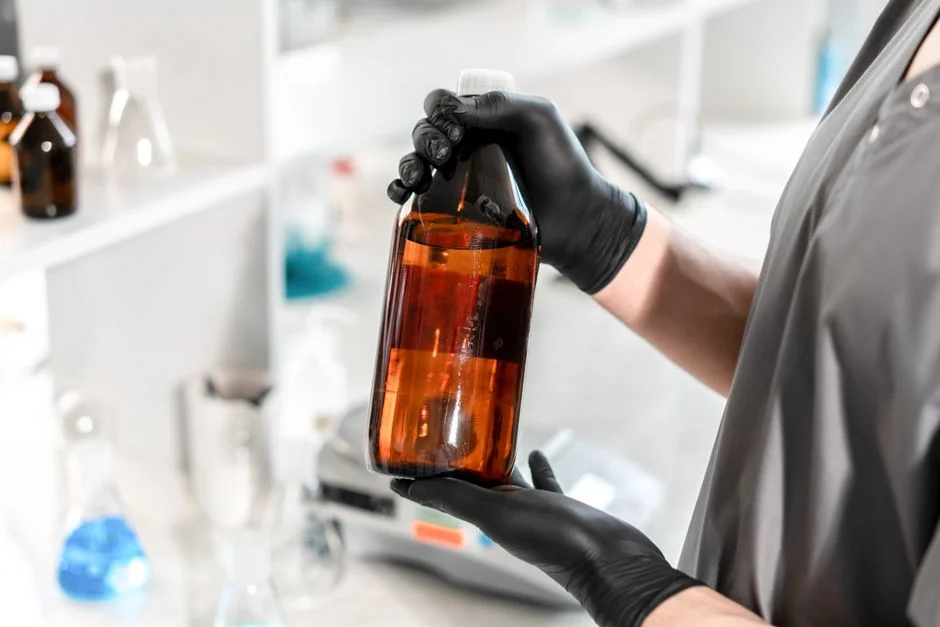
Cooling-blowdown equipment should be sized from the measured feed envelope, not from a generic brackish-water catalogue. The supplied CTBD envelope is 1,200–6,000 mg/L TDS and 10–50 mg/L suspended solids; silica, calcium sulfate and treatment chemicals can restrict conventional recovery and foul the treatment train (HydropureWater, 2026, Pimpri-Chinchwad guidance).
| Process step | Published scope | Engineering check for Ujjain |
|---|---|---|
| Feed characterization | Conductivity or TDS, pH, hardness, silica, TSS, chlorides, sulfate, alkalinity, temperature, cycles of concentration and residual chemicals | Collect representative samples across operating modes and representative IT loads |
| Standard RO | 95–99% dissolved-solids rejection and 50–85% recovery | Use site chemistry to establish feasible recovery; do not select from nominal membrane rejection alone |
| Controlled precipitation with dynamic RO | A cited case achieved about 95% recovery with approximately 1 mg/L permeate silica | Require scaling analysis, precipitation control and pilot recovery data for the actual feed |
| Evaporative polishing | 95–98% mechanical-vapour-compression recovery and distillate below 10 mg/L TDS | Use only where the required residue quality and waste route justify the final polishing stage |
Conventional brackish-water RO is generally limited to 75–80% recovery by silica and calcium-sulfate scaling (IDE Tech, 2026). Controlled precipitation of silica, calcium carbonate and calcium sulfate paired with dynamic RO produced the cited approximately 95% recovery and approximately 1 mg/L permeate silica in one industrial case. Where final evaporative polishing is required, the supplied guidance specifies 95–98% MVC recovery and distillate below 10 mg/L TDS (HydropureWater, 2026, Pimpri-Chinchwad guidance).
Request conductivity or TDS, pH, hardness, silica, TSS, chlorides, sulfate, alkalinity, temperature, cycles of concentration and residual chemical data across representative operating loads (HydropureWater, 2026, Bokaro guidance). The cooling-water chemical programme should also be reviewed for a non-phosphate, low-toxicity, membrane-compatible formulation before relying on RO performance (HydropureWater, 2026, Pimpri-Chinchwad guidance). The UF/RO versus ZLD decision for an Indian data center outlines the broader route comparison.
Build a Ujjain sizing and procurement package
Vendor quotations become comparable only when every bidder receives the same measured flows, chemistry, operating cases and acceptance criteria. Give suppliers peak and average blowdown, startup dumps, shutdown discharges, peak-cooling demand, maintenance events and the required emergency route; do not size the plant from average flow alone. HydropureWater’s 2026 Bokaro guidance identifies these conditions and requires the water balance to connect makeup, evaporation, blowdown, leakage, maintenance drainage, permeate, concentrate, reclaimed-water demand and final discharge.
Issue the following package:
- Site drawings and water balance: meter locations, cooling configuration, operating modes, storage, emergency routing and phase-one and ultimate demand.
- Measured feed data: representative and peak-period chemistry, temperature, flow, cycles of concentration, chemical residuals and expected future changes.
- End-use requirements: reclaimed-water specification, blending limits, sewer conditions or no-liquid-discharge constraint.
- Supplier technical package: feed-specific recovery projection, scaling analysis, pilot recovery data, permeate specification, cleaning method, redundancy and chemical compatibility.
- Commercial package: itemized INR landed cost, imported-equipment cost, import duty, freight, currency-movement assumptions, civil works, installation, commissioning, training, consumables and maintenance.
- Delivery commitment: named manufacturing, shipping, delivery and commissioning dates, together with clear responsibility for delays.
The only supplied CTBD RO cost benchmark is a US-context $250,000–500,000 installed cost and $1.50–3.00 per thousand gallons OPEX for 50,000 GPD (HydropureWater, 2026, Pimpri-Chinchwad guidance). These are not Ujjain quotations. Require an INR landed-cost quotation with import duty, freight, currency movement and civil works separated; also request site-specific energy and chemical consumption, as energy is often the largest OPEX swing factor.
Ask each bidder to demonstrate operation at the quoted recovery with the actual feed envelope, not merely membrane rejection in laboratory conditions. Confirm whether the cooling-water programme can be changed to a non-phosphate, low-toxicity, membrane-compatible formulation before relying on the proposed recovery. A supplier that cannot provide feed-specific recovery, scaling control, scheduled delivery and pilot or equivalent performance evidence should not be shortlisted.
Frequently Asked Questions
What will CTBD treatment cost for a data center in Ujjain?
No Ujjain quotation is available in the supplied research. The published benchmark for a 50,000 GPD CTBD RO system is $250,000–500,000 installed and $1.50–3.00 per thousand gallons OPEX in a US context (HydropureWater, 2026, Pimpri-Chinchwad guidance). For budgeting, ask vendors for an itemized INR landed cost covering equipment, import duty, freight, currency assumptions, civil works, membranes, chemicals, energy, maintenance and commissioning; do not convert the US benchmark into a Ujjain price without a supplier quotation.
Can the Ujjain data center discharge treated cooling blowdown to the sewer?
Feasibility depends on written Ujjain sewer-authority acceptance criteria and the site’s consent conditions. Request the limits for TDS, residual treatment chemicals and other applicable parameters, along with sewer capacity and any pretreatment or monitoring requirements. If acceptance is uncertain, retain UF/RO reuse as the primary route and use sewer discharge only as a conditional fallback.
Which treatment route should the vendor be selected for?
Select reuse where recovered CTBD can meet the cooling-makeup specification and reduce freshwater demand; select sewer-compliance treatment only where the receiving authority accepts the stream; select ZLD where residual liquid discharge is prohibited or freshwater alternatives are unavailable. Give each bidder the same measured feed envelope and end-use specification, then compare the proposed recovery, concentrate route, chemical programme and operating evidence.
What should a supplier demonstrate beyond nominal membrane rejection?
Require feed-specific recovery at the quoted site chemistry, a scaling analysis, pilot or equivalent recovery data, permeate quality, cleaning procedures, concentrate management and redundancy details. The supplier should also name delivery and commissioning dates and explain how the system will remain within those guarantees when feed chemistry changes. Membrane rejection alone does not demonstrate stable CTBD recovery or an operable water balance.