Start with the permit and characterize the wastewater
Food and beverage plants near Gainesville meet pretreatment limits by designing to the site-specific sewer permit, federal pretreatment rules and applicable categorical standards—not by treating equipment claims as discharge limits. A defensible train generally screens and equalizes the wastewater, removes fats, oils and grease with dissolved air flotation (DAF), reduces soluble organics biologically, and adds phosphorus removal or final polishing where the permit requires it. Exact numerical limits must come from the current Gainesville permit and the approved design basis. Begin by separating enforceable conditions from design references, then characterize the plant’s peak flows, production and CIP loads before selecting equipment.
Gainesville’s Industrial Waste Division reviews pretreatment designs, issues permits, performs inspections, collects samples, reviews self-monitoring reports and initiates enforcement when appropriate, according to the City of Gainesville’s official Industrial Waste Division webpage, accessed in 2026. That makes the permit the controlling project document; a supplier’s nominal performance does not replace it.
Federal pretreatment requirements are codified at 40 CFR 403, with food and beverage categorical standards in 40 CFR 405 through 409, according to HydropureWater’s article “How US Food & Beverage Plants Meet Pretreatment Limits Before Sewer,” published in 2026. The federal framework establishes the structure, while the current Gainesville permit establishes site-specific requirements that the engineered system must demonstrate.
Request the current permit and its local-limit tables, monitoring frequency, discharge point and force-main details, production schedule, peak-flow record and at least four representative composite samples covering production and CIP conditions. Use a permit-led workflow for selecting and sizing a sewer-compliant pretreatment train, while retaining the Gainesville-specific requirements in the worksheet.
| Permit or characterization input | Information to obtain | Design consequence |
|---|---|---|
| Current industrial user permit | Local-limit tables, sampling frequency, reporting method, monitoring points and discharge authorization | Defines the enforceable acceptance basis; numerical limits must not be assumed |
| Federal framework | Applicable requirements under 40 CFR 403 and the relevant categorical part under 40 CFR 405–409 | Identifies applicable federal provisions; the permit still controls the final design |
| Hydraulic profile | Forward flow, peak-to-average ratio, production and CIP schedules, duration of washdown events | Sets equalization and treatment hydraulic capacity |
| Wastewater characterization | Representative composite samples during production and CIP, analyzed for BOD/COD, TSS, FOG, total phosphorus, pH and temperature | Quantifies pollutant loads and identifies the controlling treatment stage |
| Operations record | Chemical additions, product changes, seasonal production and anticipated growth | Tests whether the proposed train remains appropriate as influent changes |
Match each wastewater parameter to a treatment step
The treatment train should assign each permit condition to a measurable treatment step rather than assume that one machine removes every pollutant. HydropureWater’s 2026 food and beverage pretreatment article identifies BOD/COD, TSS, FOG, total phosphorus, pH and temperature as the six parameters that govern most designs. Screening and equalization protect downstream equipment and moderate batch loads; DAF then captures floatable and settleable material before biological treatment receives the more soluble organic load.
Raw dairy and meat wastewater may contain 1,000–10,000 mg/L BOD, while FOG concentrations can reach several thousand mg/L, according to HydropureWater’s 2026 article. Under those conditions, the same source identifies DAF as the pretreatment stage before biological treatment. A lamella clarifier can provide a compact solids-polish step where additional clarification is required; the cited design basis is 20–40 m/h surface loading.
Do not assign pH control only to DAF. Equalization moderates short-term swings, while chemical adjustment or a trim system provides the active correction needed to protect biological treatment. Temperature also requires equalization when hot process and CIP streams would otherwise upset the biological reactor. Similarly, biological phosphorus removal may support the design, but it does not replace a separate chemical dosing stage when the permit requires a defined total-phosphorus endpoint.
| Parameter or condition | Primary treatment step | Verification required |
|---|---|---|
| High suspended solids | Screening, equalization and DAF; lamella clarification where additional solids polishing is needed | Influent TSS, underflow solids and effluent TSS |
| Fats, oils and grease | Conditioned industrial DAF system for food-processing wastewater | Raw FOG, recovered skimmings and effluent FOG |
| Soluble BOD/COD | Activated sludge or MBR after FOG and suspended-solids removal | Raw and treated BOD/COD, reactor loading and final effluent |
| Total phosphorus | Biological uptake where applicable, followed by chemical precipitation when required | Phosphorus form, mixed-liquor alkalinity, chemical dose and effluent total phosphorus |
| pH variation | Equalization plus active chemical adjustment or trim control | Continuous pH record and excursion alarms |
| High temperature | Equalization and temperature-compatible biological design | Influent temperature profile and biological-process operating range |
For equipment comparisons, use the DAF-versus-lamella clarification guide to separate primary oil-and-solids removal from downstream solids polishing. The sequence matters: neither clarifier nor DAF alone establishes compliance for soluble BOD, phosphorus, pH or temperature.
Choose DAF, biological treatment or MBR
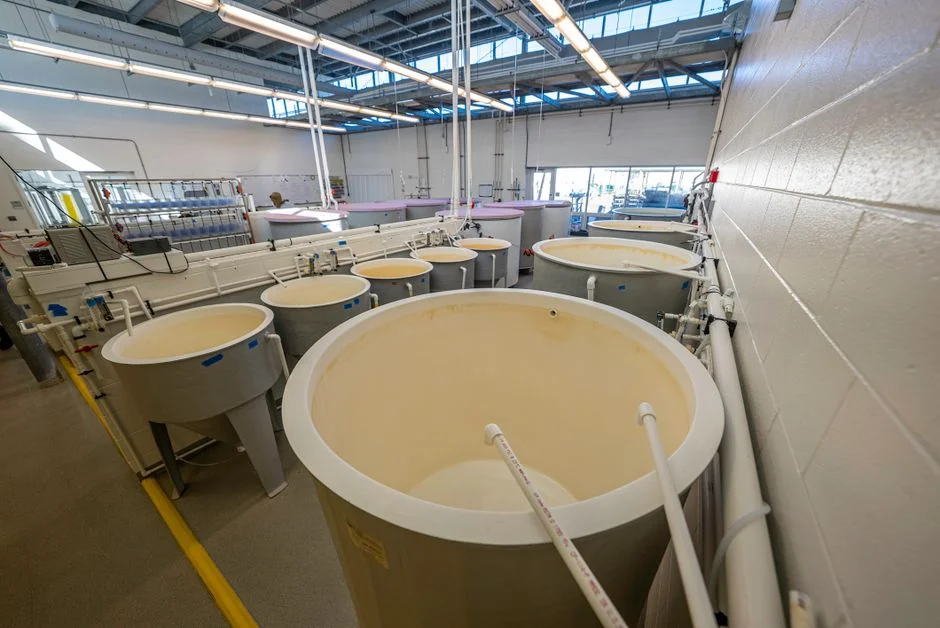
DAF, conventional activated sludge and MBR perform different functions in food and beverage pretreatment. DAF is the primary option when free or emulsified oil, FOG and suspended solids dominate the front end; biological treatment addresses soluble biodegradable organics; MBR combines biological treatment with membrane solids separation. Selecting an MBR without front-end FOG removal or adequate equalization can move the problem upstream and overload the membranes.
For a properly conditioned DAF, HydropureWater’s 2026 source gives underflow design references of 25–50 mg/L oil and grease and 50–100 mg/L TSS. These are not Gainesville permit guarantees. They are design references that must be checked against current permit limits, influent variability and the supplier’s proposed guarantee.
The same 2026 source gives an HRT basis of 8–24 hours for conventional activated sludge and 4–10 hours for MBR, with MBR producing a higher-quality solids-separated effluent. The hydraulic-retention comparison is only a preliminary selection tool; loading, process temperature, mixed-liquor solids, biological residuals and membrane operation must also be checked. An MBR membrane bioreactor for high-quality biological treatment is therefore a candidate when solids separation or reuse objectives justify it, not a substitute for equalization, DAF, phosphorus removal or any disinfection required by the permit.
| Selection question | DAF-centered train | DAF plus conventional biology | DAF plus MBR |
|---|---|---|---|
| What is the primary role? | Remove FOG and captured solids | Remove FOG, solids and soluble BOD | Remove FOG and solids, biodegrade soluble organics, and separate biomass with membranes |
| 2026 source HRT reference | Not established as a biological stage | 8–24 hours | 4–10 hours |
| Phosphorus removal | Requires a separate verified stage if required | Biological uptake may contribute; chemical stage may still be required | Biological uptake may contribute; chemical stage may still be required |
| Main decision condition | Does the permit permit discharge after FOG and solids removal, and are downstream biological obligations absent? | Is conventional solids separation sufficient for the site-specific permit? | Does the permit or reuse objective require low suspended solids and justify membrane operation? |
| Still to verify | Soluble BOD, phosphorus, pH and temperature | Final solids, phosphorus, pH, temperature and reporting conditions | Membrane pretreatment, fouling controls, cleaning, solids handling and permit conditions |
Size the system using peak flow and pollutant loading
Size the treatment train from peak hydraulic demand and pollutant loads, not average production flow. The sizing worksheet should begin with forward flow, peak-to-average ratio, raw BOD and raw FOG, as specified by HydropureWater’s 2026 food and beverage pretreatment article. The same source gives DAF surface-loading, air-to-solids and recycle references; these are preliminary design inputs, not guarantees of treatment performance.
For phosphorus removal, determine the phosphorus form and mixed-liquor alkalinity before selecting chemical and dose. HydropureWater’s 2026 source cites 50–250 mg/L alum or 30–150 mg/L ferric chloride for food and beverage applications. An automatic chemical dosing system should then be specified around the approved design dose, measured residual or loading relationship, chemical storage, fail-safe control and permit monitoring—not an assumed maximum dose.
| Fillable sizing input | Value or source | Calculation or decision use |
|---|---|---|
| Forward flow | Plant production and discharge record | Establishes the forward-flow basis for equalization and each treatment stage |
| Peak-to-average ratio | Hourly production, washdown and CIP records | Tests whether equalization and treatment equipment can handle the event |
| Raw BOD | Representative composite analysis | Sets organic loading for biological design |
| Raw FOG | Representative composite analysis | Sets DAF conditioning, recycle and hydraulic-loading basis |
| DAF surface-loading reference | 4–25 m/h, per HydropureWater’s 2026 source | Preliminary sizing input selected according to influent FOG and TSS |
| DAF air-to-solids reference | 0.005–0.02, per HydropureWater’s 2026 source | Preliminary air-demand input |
| DAF recycle reference | 20–40% of forward flow, per HydropureWater’s 2026 source | Preliminary recycle and solids-return basis |
| Biological HRT reference | 8–24 hours for activated sludge; 4–10 hours for MBR, per HydropureWater’s 2026 source | Advances reactor comparison; does not replace detailed biological calculations |
| Phosphorus chemical inputs | 50–250 mg/L alum or 30–150 mg/L ferric chloride, per HydropureWater’s 2026 source | Sets a preliminary chemical range for confirmation by phosphorus form and alkalinity |
Turn the design into permit evidence
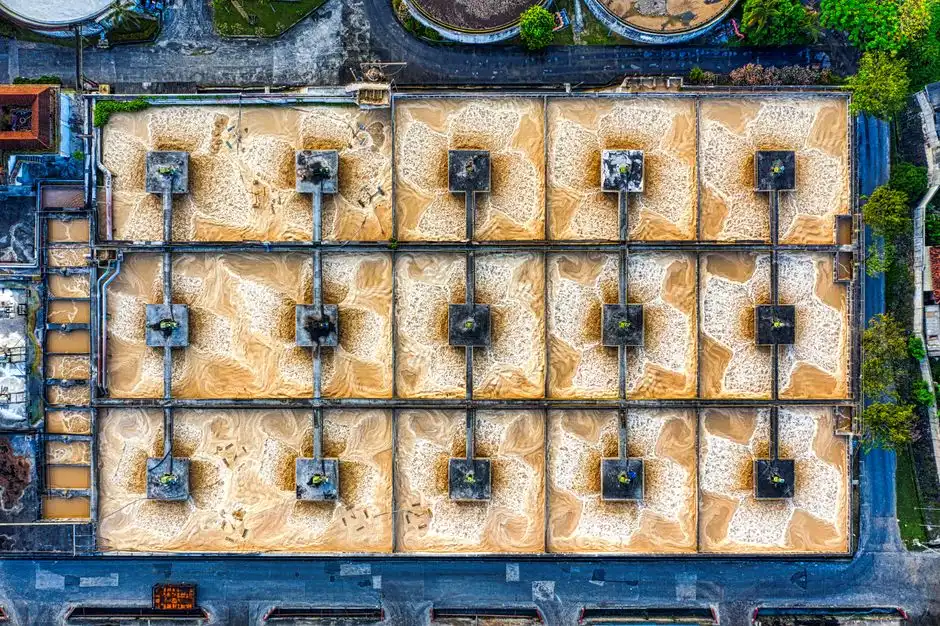
Compliance evidence must connect the installed equipment to the permit through a controlled design basis, commissioning results and an operating record. HydropureWater’s 2026 article states that most food and beverage categorical permits use 24-hour composite sampling for BOD, TSS, FOG and total phosphorus, at frequencies from monthly to quarterly, with continuous pH and flow monitoring for significant industrial users. The current Gainesville permit must be checked to determine which requirements apply.
Configure SCADA to record flow, pH, treatment-stage status and excursion events. Retain analytical results with timestamps, calibration records, chemical-use records, alarm logs, maintenance records and operator actions. These records demonstrate that the system was operating within its approved basis and allow excursions to be investigated rather than inferred from a single passing sample.
Specify factory testing, site acceptance, performance testing across representative production and CIP loads, and operator training. Acceptance limits must be copied directly from the Gainesville permit and the approved design basis; they should not be replaced by a supplier’s maximum-removal claim. Where the permit requires disinfection, evaluate the chlorine dioxide generator against that requirement and the approved chemical and residual controls. Use permit limits to compare DAF and lamella systems in the acceptance-test scope, while confirming every criterion against Gainesville’s current requirements.
- Freeze the permit requirements and approved design basis.
- Complete influent characterization and verify peak production and CIP conditions.
- Record factory performance against the specified acceptance criteria.
- Test site hydraulics, controls, alarms and representative loads.
- Train operators and establish sampling, calibration and reporting procedures.
- Retain the complete permit-compliance evidence package.
Frequently Asked Questions
How much does food and beverage wastewater pretreatment cost near Gainesville?
There is no defensible project price without the current Gainesville permit, representative wastewater analysis, peak-flow basis and selected treatment train. Request itemized quotations covering equalization, DAF, biological treatment, phosphorus removal, polishing, controls, civil work, installation, commissioning and solids handling. Require each bid to identify exclusions, chemical and energy consumption assumptions, payment milestones and optional scope so the quotations are comparable.
How should a supplier be selected for a food-processing pretreatment system?
Compare bids on guaranteed output quality, verified peak-flow capacity, chemical and energy consumption, controls and alarm functions, FAT and site-acceptance documentation, installation scope, operator training and ongoing support. Require the supplier to identify every acceptance criterion’s source—permit, approved design basis, test method or equipment specification—and state which results are guarantees versus design references.
Is DAF alone enough to meet Gainesville pretreatment limits?
Not necessarily. DAF primarily targets FOG, suspended solids and captured colloidal material; it does not establish compliance for soluble BOD, phosphorus, pH or temperature. The current Gainesville permit and representative influent data determine whether DAF is the final process or the front end to biological, phosphorus-removal or polishing stages.
When should an MBR be selected instead of conventional biological treatment?
Consider an MBR when the Gainesville permit or a documented reuse objective requires the solids-separated effluent associated with membrane treatment and the resulting operating and solids-management obligations are acceptable. The 2026 HydropureWater source gives 4–10 hours as an MBR HRT reference, but final selection must follow representative influent testing, pilot work where appropriate, permit review and acceptance criteria. Pilot results and permit language should form the basis of performance guarantees.