Make the first selection based on wastewater and site constraints
MBR is usually the stronger option for industrial organic-chemicals wastewater in Pasadena when compact equipment, high-quality effluent or process-water reuse justifies membrane operation and the influent can sustain biological treatment. Conventional activated sludge is often more attractive when land is available, dependable settling is achievable and operating cost is the priority. MBR retains more biomass and separates solids with membranes, but fouling controls, cleaning and aeration increase operating costs. Industrial chemical streams may require equalization, toxicity control or other pretreatment before either biological route can be selected.
Do not begin with a catalog selection. Begin with a wastewater-qualification gate. Document average and peak flow, production shifts, batch discharges, COD and nitrogen loading, pH, temperature, toxicity indicators and biodegradability. Identify each specific organic-chemical stream and whether its concentration or composition changes from batch to batch. Use a representative composite sample rather than relying only on clean production-water analysis.
Then confirm the required route: direct discharge, indirect discharge through the local sewer, process-water reuse or a more advanced treatment objective. Each objective changes the required separation performance, pretreatment intensity, monitoring and operating constraints.
Toxicity or unsuitable chemistry is a treatment gate, not a reason to assume either process will work. Request the applicable industrial-user limits, permit conditions and local sewer rules from the Pasadena pretreatment authority; the supplied research does not establish city-specific limits. The industrial effluent treatment plant selection method provides a useful general sequence, while the package-plant versus MBR comparison illustrates why site constraints must be considered alongside process selection.
| Qualification input | Evidence to obtain | Decision consequence |
|---|---|---|
| Flow and production pattern | Average flow, peak flow, flow-duration data, production shifts and batch-discharge events | Determine hydraulic loading, equalization needs and peak treatment capacity |
| Organic and nutrient load | COD, nitrogen and relevant stream-specific constituents across representative samples | Check whether the biological process can meet the intended removal objective |
| Process chemistry | pH, temperature, toxicity indicators, salinity, oils and grease, suspended solids and biodegradability | Define equalization, source control and pretreatment before comparing biological routes |
| Compliance or reuse route | Permit, sewer-pre-treatment requirements, reuse specification and future demand | Set the required effluent and separation performance |
| Site constraints | Available footprint, utility availability, staffing, access and future expansion boundary | Determine whether CAS or MBR is operationally practical |
Compare biological performance, footprint and operating burden
CAS and MBR differ primarily in how biological solids are separated from treated water, and that difference affects footprint, effluent quality and maintenance demand. In CAS, biological degradation is followed by floc aggregation and solid-liquid separation in a settling tank. In MBR, a physical membrane performs the separation. The plant-wide modelling comparison summarized by Mannina et al. in Water Research identifies higher SRT, lower cell yield, very high effluent quality and footprint reduction as MBR advantages.
MBR’s higher SRT can support degradation of more recalcitrant biodegradable material, while its physical barrier removes solids without relying on the settling behavior of the secondary clarifier. The same source reports that membrane fouling can reduce permeate flow or increase transmembrane pressure, and that chemical cleaning, physical cleaning and aeration increase energy demand and operating costs compared with CAS.
Use CAS as the lower-operating-cost route where land is available and secondary clarification is dependable. Use MBR where reuse quality, stringent solids separation, constrained land or more consistent effluent performance justify membrane maintenance and aeration. The evidence is not a universal industrial-chemical ranking: it describes the mechanisms and modelled comparison conditions. For the cited municipal plant model, direct greenhouse-gas emissions were 0.85 kgCO2eq/m³ for CAS and 0.91 kgCO2eq/m³ for MBR. Those are model results for the stated municipal scope, not an emissions guarantee for an industrial organic-chemicals stream in Pasadena.
HydropureWater’s integrated submerged-PVDF MBR system is specified in the verified product catalog as occupying 60% less footprint than conventional systems and providing below 1 μm filtration. Treat that as a catalog claim requiring confirmation against the site design basis, not as a Pasadena case-study result. The MBR cost per m³ and lifecycle guide should be used to structure operating-cost questions rather than as a substitute for a site-specific quotation.
| Decision factor | MBR | Conventional activated sludge | Evidence or required check |
|---|---|---|---|
| Solid-liquid separation | Physical membrane | Floc aggregation and settling tank | Mannina et al., Water Research, plant-wide modelling comparison |
| Biological solids retention | Higher SRT and lower cell yield identified as advantages | Conventional process with secondary clarification | Confirm SRT against biodegradability and loading |
| Effluent separation | Very high effluent quality identified as an advantage | Performance depends on settling and solids handling | Compare against the actual reuse or discharge specification |
| Footprint | Significant footprint reduction reported in the comparison; 60% smaller footprint is a HydropureWater catalog claim | Requires larger basin and settling-area allocation | Measure available site area and reserve access clearances |
| Operating burden | Higher energy and operating costs associated with fouling mitigation, cleaning and aeration | Recommended for lower operating cost where land and settling permit it | Compare life-cycle costs, not purchase price alone |
| Direct GHG model result | 0.91 kgCO2eq/m³ | 0.85 kgCO2eq/m³ | Mannina et al.; modelled municipal scope only, not an industrial guarantee |
Qualify the industrial stream before biological treatment
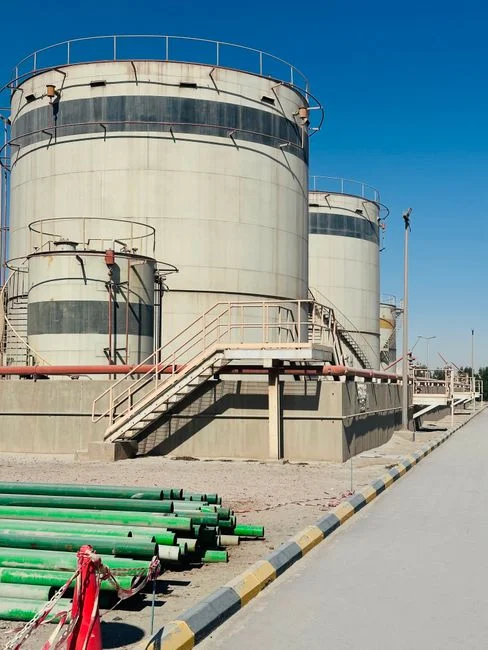
Pretreatment should be selected from measured contaminants and biological constraints, not from a standard treatment train. Separate the wastewater into equalization, biological-compatible and separately managed streams. Batch process discharges can destabilize biological treatment if they enter the biological reactor without sufficient equalization.
Evaluate the pretreatment train against pH, toxicity, suspended solids, oils and grease, salinity and other constituents identified during sampling. The purpose is to protect the biology from shock loads and compounds that inhibit or kill the microbial population. It is also to prevent membrane fouling from becoming a recurring operating-cost problem.
Use DAF when suspended solids, oil and grease, FOG or colloidal matter must be removed before the biological stage. The available industrial DAF pretreatment system handles 4–300 m³/h across 13 standard models, according to the supplied product information. That capacity range does not establish suitability for every wastewater composition; the required hydraulic and contaminant removal basis still has to be confirmed.
Use chemical dosing only after the required chemical, dose range and downstream compatibility have been defined. The available automatic chemical dosing system handles coagulants, flocculants, pH adjusters and specialty chemicals, but equipment capability does not replace a chemical-selection assessment.
For an MBR, request a membrane-compatibility assessment before placing chemical pretreatment upstream. The supplied research establishes fouling as an MBR operating constraint, but it does not establish a universal chemical limit. For CAS, assess how chemical residuals and altered pH or salinity affect settling, microbial activity and sludge handling. The decision table below separates the pretreatment purpose from the biological process it protects.
| Stream condition identified | Pretreatment action to evaluate | MBR-specific check | CAS-specific check |
|---|---|---|---|
| Batch concentration or flow surges | Equalization and controlled feed | Verify peak hydraulic loading and flux-control strategy | Verify basin and clarifier response to surge loads |
| Suspended solids, FOG or colloidal matter | Evaluate DAF or another solids/oil-removal step | Assess solids carryover and fouling potential | Assess sludge load and secondary-clarifier performance |
| pH outside biological operating conditions | pH adjustment before biological treatment | Confirm chemical compatibility with membrane materials | Confirm impact on mixed liquor and settling |
| Toxic or inhibitory compounds | Source control, segregation, detoxification or other validated treatment | Do not rely on membrane separation to solve biological inhibition | Do not assume settling improves biological toxicity |
| Salinity or stream-specific chemistry | Characterize and define a biological-compatible feed | Assess membrane material and cleaning chemistry | Assess organism response, sludge properties and settling |
Turn the preferred process into a sizing and procurement brief
A comparable proposal requires the same design basis for MBR and CAS. Provide suppliers with the wastewater characterization, flow-duration curve, temperature and pH range, required effluent specification, reuse demand, site boundary and utility constraints. Request that each proposal state its design assumptions, sizing equations, redundancy and performance guarantees.
For MBR, request membrane material, pore size or filtration rating, design-flux basis, SRT basis, aeration method, cleaning strategy, redundancy and expected cleaning interval. For CAS, request basin volume, SRT, hydraulic retention time, mixed-liquor suspended-solids target, secondary-clarifier loading and sludge-removal assumptions. These are required design inputs; the supplied research does not provide a universal sizing value for Pasadena industrial organic-chemicals wastewater.
Compare life-cycle proposals on membrane replacement, chemical cleaning, aeration, mixed-liquor wasting, sludge dewatering, operator labor, energy and disposal. The equipment purchase price is only one line item. This comparison should follow the operating-cost structure described in the MBR cost per m³ and lifecycle guide.
HydropureWater’s DF flat-sheet modules are specified at 0.1 μm with integrated aeration, individually replaceable elements and 80–225 m² configurations producing 32–135 m³/day. Treat these as catalog specifications to verify against the site’s actual design basis, not as a predesigned answer for the wastewater. The integrated MBR catalog entry is a screening reference for applications from 10–2,000 m³/day and below 1 μm filtration; vendor confirmation of suitability for the industrial stream remains necessary. The DF flat-sheet MBR module and plate-and-frame filter press should therefore be evaluated against the full treatment and solids-management objectives.
| Procurement package | Minimum information to request | Acceptance check |
|---|---|---|
| Wastewater characterization | Flow-duration curve, COD, nitrogen, pH, temperature, toxicity, biodegradability, suspended solids, oils and grease, salinity | Supplier calculations use the same measured basis and identify any missing input |
| MBR technical offer | Membrane material, filtration rating, flux basis, SRT, aeration, cleaning, redundancy and replacement assumptions | Performance basis matches the reuse or discharge requirement and chemical-pretreatment plan |
| CAS technical offer | Basin volume, SRT, hydraulic retention time, MLSS target, clarifier loading and sludge removal | Clarifier and biological capacity cover the documented peak and loading conditions |
| Life-cycle cost | Energy, aeration, cleaning, membrane replacement, wasting, dewatering, labor and disposal | All bidders use the same load, utility assumptions and disposal basis |
| Vendor evidence | Reference conditions, test results, operating data and proposed guarantees | Evidence is relevant to the proposed wastewater and design basis |
Apply the final MBR-or-CAS decision rule
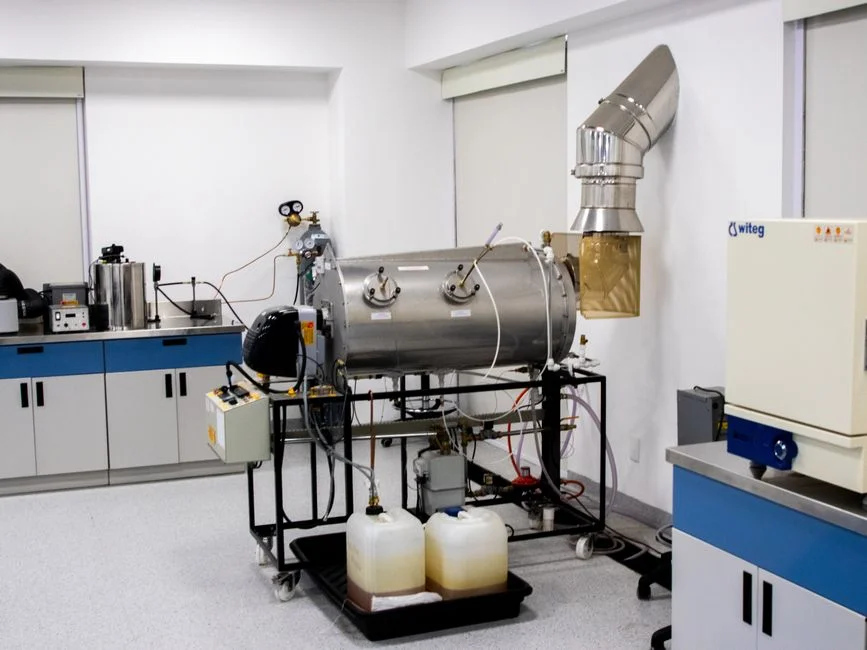
Select MBR when reuse or stringent solids-quality requirements, constrained land, higher SRT or consistently high-quality separation justify membrane-system operation and maintenance. Select CAS when adequate land, simpler separation, dependable settling and lower operating burden outweigh the value of compact equipment or more consistent effluent quality. Consider a hybrid route when biological treatment needs CAS economics but final solids separation or reuse quality requires MBR benefits. Make the final choice only after receiving site data, local permit and pretreatment requirements, and comparable life-cycle proposals. The location-specific MBR versus activated sludge comparison provides a useful review format, but its location-specific evidence should not be treated as a Pasadena requirement.
Frequently Asked Questions
Why might MBR cost more to operate than conventional activated sludge?
MBR operating costs can include membrane replacement, chemical cleaning, physical cleaning, membrane aeration and the additional aeration associated with fouling control. The supplied comparison identifies higher MBR energy demand and operating costs than CAS. Obtain a proposal that prices these items using the same flow, loading, utility and sludge-disposal assumptions.
What information is needed to size an MBR for an industrial organic-chemicals stream?
Request average and peak flow, a flow-duration curve, COD and nitrogen loading, biodegradability, pH and temperature ranges, toxicity indicators, pretreatment chemistry and the required effluent specification. Also provide the reuse demand, site footprint and utility constraints. Without those inputs, no defensible MBR sizing or performance guarantee can be evaluated.
How should a buyer evaluate an MBR supplier’s technical offer?
Check that the offer identifies membrane material, filtration rating, design flux, SRT, aeration method, cleaning strategy, redundancy, replacement provisions and acceptance criteria. Ask for reference operating conditions and test results relevant to the proposed stream. Treat catalog claims as screening information until confirmed against the site design basis.
Why must Pasadena discharge and pretreatment compliance be checked with the applicable authority?
General MBR-versus-CAS literature does not establish current Pasadena industrial-user limits, permit conditions or sewer rules. Request those requirements directly from the applicable Pasadena pretreatment authority and the permitting authority before selecting the discharge route. Compliance should be checked against the actual receiving destination and reuse objective rather than inferred from membrane performance.