
Select the Treatment Route From the Binding Constraint
For chemical process wastewater, a membrane bioreactor (MBR) is usually the stronger route when the required output is consistently low in solids, water reuse is a project objective, or a brownfield site cannot accommodate a secondary clarifier and downstream filtration. Conventional activated sludge (CAS) remains practical for readily biodegradable wastewater with stable flow, available land, and discharge limits that do not require reuse-grade solids separation. Both routes need equalization, pH control, and protection from toxic chemical slugs. The final selection should compare permit limits, reuse quality, sludge retention time, footprint, membrane fouling, energy, cleaning, downtime, and biosolids hauling rather than treatment cost alone.
Start with a five-factor screen. First, define the discharge limits and the authority having jurisdiction; the supplied research does not establish a La Porte-specific permit or regulation. Second, identify whether the water is intended for cooling, scrubber dilution, boiler feed, or another reuse application. Third, confirm available land and whether the existing biological basin is reusable. Fourth, examine influent variability, especially COD, pH, salinity or chloride, toxicity, surfactants, solvents, and batch slugs. Finally, obtain the actual sludge-hauling route, disposal basis, and current cost rather than relying on regional generalizations.
| Binding constraint | Preferred screening direction | Procurement check |
|---|---|---|
| Consistently low suspended solids or reuse | MBR | Define the receiving stream and required quality, including any downstream polishing. |
| Stable, readily biodegradable wastewater and available land | CAS | Confirm discharge headroom, clarifier area, and sludge settleability. |
| Brownfield site with usable biology but inadequate clarification | Hybrid retrofit | Verify hydraulic capacity, existing-basin condition, and membrane fouling risk. |
| Chemical slugs, salinity, or pH excursions | MBR or hybrid only after pretreatment | Require a time-series influent dataset and acceptance test using representative slugs. |
| Long biosolids-hauling distance | MBR may merit higher weighting | Obtain local hauling and disposal quotations before crediting a sludge-cost advantage. |
If reuse, clarification resilience, or footprint controls, specify an MBR. If stable low-complexity treatment, available land, and lower capital intensity control, specify CAS. If the existing activated-sludge equipment is usable but downstream solids separation or reuse quality must improve, evaluate a brownfield wastewater retrofit that retains the biological basin and adds membrane separation. The MBR cost per m3 guide is useful for framing the decision, but its Central US planning figures are not La Porte quotations.
Compare Biological Performance and Effluent Reliability
The MBR literature defines the membrane bioreactor as a suspended-growth activated-sludge process that uses microporous membranes for solid-liquid separation instead of secondary clarifiers, which supports more consistent solids separation and advanced treatment (Springer, 2008, “Membrane Bioreactor (MBR) as an Advanced Wastewater Treatment Technology”).
HydropureWater’s 2026 comparison reports MBR flux of 10–25 LMH, sludge retention time (SRT) of 20–60 days, and mixed liquor suspended solids (MLSS) of 8,000–15,000 mg/L, compared with CAS SRT of 5–15 days and hydraulic retention time of 6–12 hours (HydropureWater, 2026). The higher SRT can retain slow-growing organisms, while the membrane retains biomass independently of floc settleability. CAS depends on secondary clarification, so bulking, pinpoint floc, or hydraulic overload can affect solids separation and increase polymer use.
| Parameter | MBR screening basis | CAS screening basis | Buyer interpretation |
|---|---|---|---|
| Solids separation | Microporous membrane | Secondary clarifier | Clarifier failure and sludge washout are less direct constraints for MBR, but membrane fouling remains. |
| SRT | 20–60 days | 5–15 days | Values are HydropureWater 2026 planning comparisons, not site design values. |
| Hydraulic retention time | Not stated in supplied research | 6–12 hours | Obtain vendor design calculations for the selected flow and loading envelope. |
| Flux | 10–25 LMH | Not applicable | Confirm flux at design temperature and representative influent. |
| Filtration | Below 1 μm | Clarifier solids separation | HydropureWater’s integrated product catalog describes near-reuse-quality effluent and sub-1 μm filtration. |
| MLSS | 8,000–15,000 mg/L | Not stated in supplied research | Do not use this row as a local design assumption. |
The integrated MBR wastewater treatment system uses submerged PVDF membranes and is described in HydropureWater’s verified product catalog as producing near-reuse-quality effluent through filtration below 1 μm. That statement supports a solids-separation advantage; it does not establish compliance for a particular La Porte permit or reuse application.
Do not assume that physical membrane separation removes dissolved recalcitrant compounds, untreated PFAS, or every trace contaminant. Require representative chemical-wastewater testing and obtain the downstream treatment needed for the intended reuse. For example, the RO process and ROI for wastewater reuse can help evaluate polishing and reuse economics, but an MBR permeate should not be credited as boiler-feed water until its quality is verified for that service.
Test Chemical Wastewater Risks Before Buying Equipment
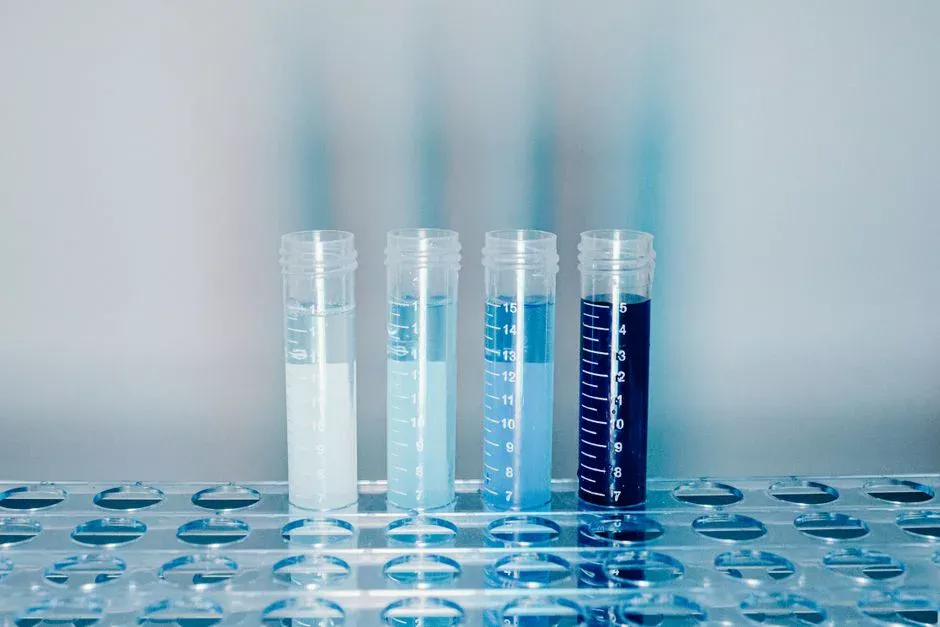
Chemical slugs, salinity, pH excursions, and toxicity must be treated as design inputs before comparing MBR and CAS; neither process removes the need for adequate pretreatment (HydropureWater, 2026).
Request a time-series influent dataset covering COD, pH, salinity or chloride, toxicity, surfactants, solvents, and batch-discharge slugs before selecting either route (HydropureWater, 2026). Include production schedules and clean-out events; an average COD value will conceal the short-duration loads that can damage biology, upset clarification, or foul membranes.
- Characterize the normal envelope: record flow, COD, pH, salinity or chloride, surfactants, solvents, and toxicity across representative production periods.
- Map batch slugs: identify peak load, duration, frequency, and the source of each discharge rather than relying on a daily average.
- Set pretreatment performance: define equalization, pH correction, and oil, grease, or toxicity protection requirements for each stream.
- Test biological and membrane effects: conduct representative testing for settleability, treatability, fouling tendency, and recovery after the specified slug.
- Write acceptance criteria: require sustained performance with representative influent, not only clean-water hydraulic testing.
Both MBR and CAS require equalization, pH control, and appropriate oil, grease, or toxicity protection; pretreatment remains necessary even though the membrane provides physical solids separation (HydropureWater, 2026). A membrane cannot make a toxic or foulant-rich influent biologically acceptable, and it does not remove a concentrated dissolved chemical simply by filtering it.
The DF-series flat-sheet MBR membrane module uses 0.1 μm PVDF flat-sheet elements with integrated aeration for continuous scouring. HydropureWater’s verified product catalog reports 10–20× lower energy use than external cross-flow systems for this module; that is a product-specific claim, not a universal MBR comparison.
Specify cleaning acceptance criteria, including the trigger for chemical cleaning, required recovery after cleaning, chemical dosage limits, cleaning frequency, membrane replacement conditions, and performance under representative chemical slugs. Require the supplier to state which performance guarantees apply to the complete treatment train rather than to clean-water module testing alone.
Compare Capital, Operating and Sludge Costs
HydropureWater’s 2026 directional estimates can screen MBR against CAS, but they are not La Porte bids: CAS operating cost is $0.15–$0.30/m³, MBR operating cost is $0.25–$0.50/m³, MBR capital cost is 1.4–1.8 times CAS, and MBR operating cost is 1.2–1.5 times CAS (HydropureWater, 2026).
Build the worksheet with actual site inputs and quotations. For each route, enter annual treated volume, then add electric energy, membrane replacement, cleaning chemicals, operator labor, planned and unplanned downtime, sludge dewatering, and actual biosolids hauling. Include separate CAS items for clarifier polymer, sludge recirculation, and secondary-clarifier maintenance. Include separate MBR items for scouring aeration, membrane cleaning, spare membranes, and membrane replacement. The supplied research does not provide La Porte energy rates, chemical prices, labor rates, disposal terms, or supplier quotations, so those cells must remain blank until documented inputs are obtained.
| 12-month worksheet input | CAS | MBR | Hybrid retrofit | Source required |
|---|---|---|---|---|
| Annual treated volume, m³ | Site meter | Site meter | Site meter | 12-month flow record and design forecast |
| Capital expenditure | Bid | Bid | Bid | Scope-matched vendor quotation |
| Energy cost | Meter × tariff | Meter × tariff | Meter × tariff | Power data, aeration profile, and current tariff |
| Cleaning and chemicals | Clarifier polymer and other consumables | Maintenance and recovery cleans | Existing biology plus membrane cleaning | Vendor cleaning plan and consumable quotations |
| Membrane replacement | Not applicable | Annualized allowance | Annualized allowance | Supplier replacement interval and membrane price |
| Operator labor | Shift-hour estimate | Shift-hour estimate | Shift-hour estimate | Staffing plan and labor rate |
| Downtime | Hours × lost production value | Hours × lost production value | Hours × lost production value | Availability guarantee and production impact |
| Sludge handling and hauling | Wet tons × disposal and haul cost | Wet tons × disposal and haul cost | Wet tons × disposal and haul cost | Yield estimate, dewatering output, and hauler quote |
| Reuse value credit | 0 unless quality qualifies | Verified displaced purchased-water volume × applicable value | Verified displaced purchased-water volume × applicable value | Reuse specification and purchased-water cost |
HydropureWater reports observed MBR yields of 0.10–0.25 kg VSS/kg COD and CAS yields of 0.30–0.45 kg VSS/kg COD, corresponding to 20–40% less waste activated sludge in its comparison (HydropureWater, 2026). Apply those factors only as screening assumptions. The decision should use site-specific COD load and predicted solids production, then verify the hauling rate and disposal basis.
Credit reused water only when MBR permeate meets the specific cooling, scrubber, or boiler-feed application. Any downstream polishing, energy, membrane replacement, and pumping must be included before calculating a net reuse benefit.
Issue a CAS, MBR or Hybrid Recommendation
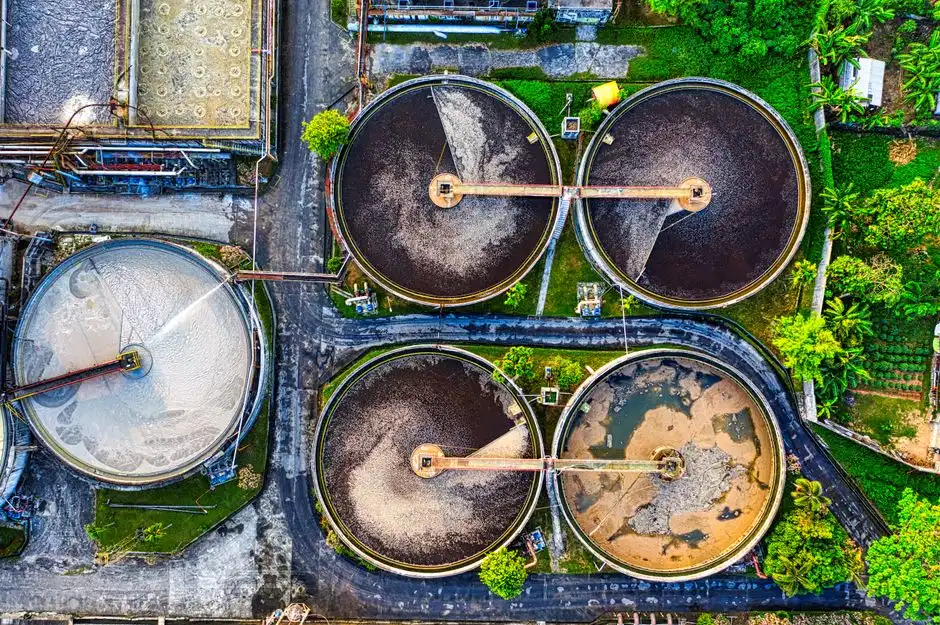
A documented MBR, CAS, or hybrid recommendation requires five site inputs, a weighted score, and vendor guarantees that cover the actual influent envelope (HydropureWater, 2026).
Use a weighted matrix rather than an unweighted technology list. Give each criterion a weight agreed by operations, environmental compliance, and procurement, then score CAS, MBR, and the hybrid retrofit against the same evidence. The five criteria should cover discharge quality, reuse potential, footprint, influent variability, and biosolids disposition. Record the scoring basis beside every score so the recommendation can be audited.
| Decision item | MBR | CAS | Hybrid retrofit |
|---|---|---|---|
| Discharge and reuse | Preferred when consistently low solids or advanced reuse quality controls | Preferred when stable discharge limits are comfortably met and no reuse-grade separation is required | Preferred when reuse or separation must improve without replacing biology |
| Site constraints | Preferred for a constrained brownfield footprint | Preferred when land and clarifier capacity are available | Requires verification of existing hydraulic and biological capacity |
| Influent risk | Requires equalization and slug protection despite membrane separation | Requires equalization, pH control, and protection from clarifier upsets | Requires the same pretreatment plus membrane-fouling verification |
| Ownership burden | Includes membrane cleaning, replacement, and scouring aeration | Includes clarifier operation, polymer, and sludge handling | Combines existing-basin costs with new membrane-service costs |
| Final recommendation | Issue when reuse quality, footprint, or clarification resilience controls | Issue when stable low-complexity treatment and available land control | Issue when retaining existing biology reduces shutdown risk and the retrofit passes design verification |
For the hybrid route, require a hydraulic review of the existing aeration basin and clarifier, a biological capacity check across the influent envelope, and a membrane-fouling assessment using representative chemical wastewater. Do not accept a conceptual retrofit without a defined tie-in sequence, shutdown plan, and performance test.
Request vendor guarantees for design flow, influent envelope, effluent quality, membrane flux, cleaning frequency, replacement interval, redundancy, and acceptance testing. HydropureWater’s integrated MBR is marketed for 10–2,000 m³/day applications (HydropureWater verified product catalog, 2026), so the screening flow must fall within the proposed supplier’s verified capacity. That catalog range does not replace hydraulic, biological, or membrane design.
Verify current La Porte-area discharge, pretreatment, and reuse requirements with the authority having jurisdiction. The supplied research contains no La Porte-specific permit, cost, or local regulation, so the procurement recommendation must remain conditional until those checks are documented.
Frequently Asked Questions
What is the lowest-risk way to compare MBR and CAS cost over 12 months?
Use the worksheet above with the same annual flow and site inputs for each route. Enter quotations for capital work, energy, chemicals, membrane replacement where applicable, labor, downtime, sludge handling, and hauling. HydropureWater’s 2026 figures—CAS at $0.15–$0.30/m³, MBR at $0.25–$0.50/m³, MBR capital at 1.4–1.8 times CAS, and MBR operating cost at 1.2–1.5 times CAS—are directional planning estimates, not La Porte bids.
How should the system be sized for a chemicals facility?
Size from the verified design flow, peak flow, COD loading, hydraulic retention requirements, temperature, and influent envelope. The integrated MBR’s 10–2,000 m³/day range is a product-catalog capacity claim and does not replace hydraulic, biological, or membrane design. Require the supplier to document the selected design point, redundancy, and treatment of batch slugs.
Which supplier qualifications matter most for MBR versus CAS?
Require evidence from representative chemical wastewater, not only clean-water testing. Check the proposed flux, cleaning method, replacement interval, redundancy, biological design, and acceptance criteria. For a hybrid retrofit, also ask how the supplier has verified the existing basin, clarifier, piping, controls, and shutdown sequence.
What compliance risks should be resolved before ordering?
Confirm the current discharge and reuse requirements with the La Porte-area authority having jurisdiction and test the actual chemical wastewater for relevant constituents. Do not assume that membrane separation removes dissolved recalcitrant compounds or untreated PFAS, and do not credit reuse until the specified application quality is demonstrated.