Start with the Treatment Train, Not a Generic Package Plant
The defensible hotel wastewater train begins with screening, then removes FOG and solids where testing justifies it, equalizes the flow, applies biological treatment, and finishes with the disinfectant required by the confirmed discharge or reuse route. For the supplied 2026 Najaf hotel precedent, that sequence is a rotary bar screen, DAF or grease-trap pretreatment, equalization, MBR, and chlorine dioxide; covered storage and drip irrigation are optional when reuse is permitted.
The GX rotary mechanical bar screen removes rags, plastics, fibrous material and food solids before they reach pumps and biological treatment. The screen aperture, solids holding arrangement and extracted-solids disposal route must be included in the specification.
DAF is not automatically required for every hotel. The Najaf precedent links its use to kitchen, laundry and pool-related FOG and solids, but the decision should follow influent sampling and a review of grease-interceptor performance. If those loads are significant, the dissolved air flotation unit can protect the downstream biological process; otherwise, a correctly sized grease-trap arrangement may be adequate.
The chlorine dioxide generator represents the precedent’s disinfection stage, but its selection depends on the confirmed residual-disinfection requirement. For Al Mawsil al Jadidah, the final route remains unverified, so neither reuse nor sewer discharge should be assumed.
| Stage | Protected objective | Design information to obtain |
|---|---|---|
| Fine screening | Protect pumps, membranes and biological equipment | Aperture, extracted-solids container and disposal route |
| FOG and solids pretreatment | Limit biological overload, foaming and fouling | Influent FOG, oil and TSS sampling; grease-interceptor records |
| Equalization | Buffer occupancy-driven peak flow and stabilize biological loading | Measured peak window, mixing requirement and available tank volume |
| Biological treatment | Remove dissolved and suspended organics | Influent COD/BOD, temperature, nutrients and selected process duty |
| Disinfection and discharge or reuse | Meet the confirmed microbiological requirement | Permit or reuse criteria, contact arrangement and residual-monitoring method |
Build the Hotel Flow and Load Basis
Hotel wastewater flow should be derived from measured occupancy and auxiliary uses before selecting equipment capacity. The supplied 2026 Najaf precedent provides preliminary room-based rates, but they are not verified design rules for Al Mawsil al Jadidah.
For initial comparison, the Najaf precedent gives 0.20–0.30 m³/room-day for a standard mid-scale hotel and 0.35–0.45 m³/room-day for a resort with pools, hammams and on-site irrigation draw. In its 300-room worked example, 300 rooms at 0.30 m³/room-day produce approximately 90 m³/day average flow. A 2.8× peak factor then gives approximately 250 m³/day hydraulic capacity, while 25–30% of daily flow is identified as the equalization-volume basis.
The same precedent identifies a 2.5–3.0× average-daily-flow peak over a 4–6 hour window. For the preliminary 300-room case, that produces the approximately 90 m³/day average flow, 250 m³/day peak capacity and 22–27 m³ equalization calculation described by the source.
- Record room count, published occupancy, expected event occupancy and seasonal occupancy rather than relying only on room count.
- Request metered or documented flows for occupied rooms, restaurants, kitchens, laundry, pool backwash, staff areas, irrigation return and any kitchen grease interceptor.
- Determine the measured or documented peak window, then agree the peak factor and equalization duration with the EPC.
- Sample the combined influent for flow pattern, BOD₅, COD, TSS, FOG, nutrients, surfactants and temperature.
- Freeze the design only after the municipality confirms the discharge or reuse route and the EPC confirms available utilities and layout constraints.
Room rates provide a useful screening basis because the hotel’s actual operating profile changes the result. Validate the selected rate against local water tariffs, occupancy records, laundry schedules, kitchen operation and site sampling. The A/O package plant versus MBR for a hotel analysis of the supplied precedent provides the worked basis, but it must not be transferred uncritically to another city.
| Sizing input | Supplied Najaf precedent | Al Mawsil al Jadidah action |
|---|---|---|
| Standard-hotel room flow | 0.20–0.30 m³/room-day | Use only for preliminary screening; validate with occupancy and water-use data |
| Resort room flow | 0.35–0.45 m³/room-day where pools, hammams and irrigation draw apply | Confirm which auxiliary facilities exist and are connected |
| 300-room worked case | Approximately 90 m³/day at 0.30 m³/room-day | Replace with the project’s verified average flow |
| Peak basis | 2.5–3.0× average daily flow over a 4–6 hour window; 2.8× in the worked case | Confirm the local peak profile and treatment response |
| Equalization volume | 25–30% of daily flow; 22–27 m³ in the 90 m³/day case | Recalculate from the verified peak and agreed detention time |
Choose MBR, A/O Package or a Hybrid
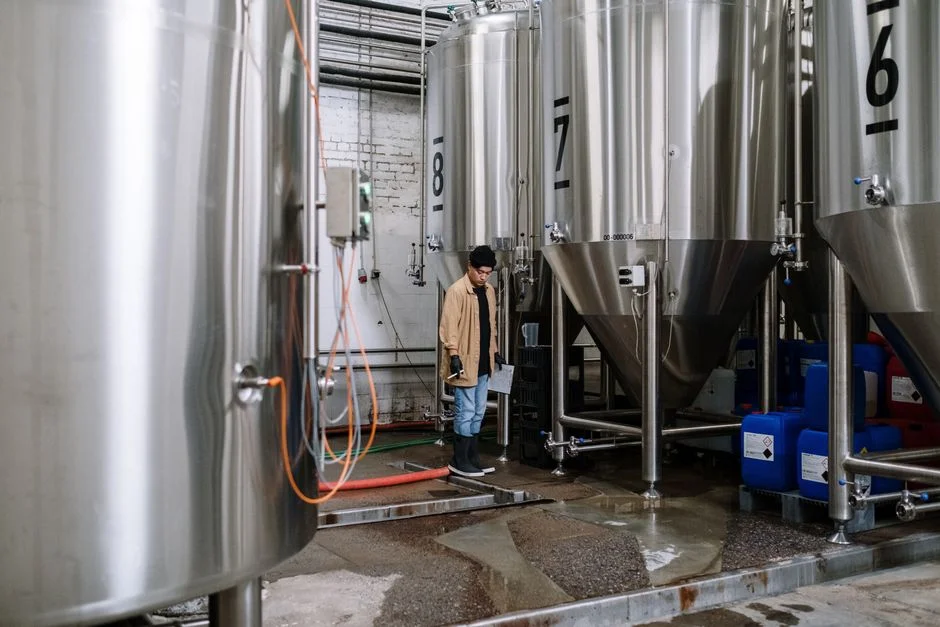
The technology choice follows the required effluent quality, available footprint and operating capability—not a generic assumption that MBR is the default. An integrated MBR membrane bioreactor is justified where reuse quality, compactness and automated solids separation have the highest value; a simpler buried treatment train may be adequate for direct sewer discharge.
The supplied MBR catalog covers 10–2,000 m³/day, combines submerged PVDF membrane filtration with activated sludge, and gives an approximately 60% smaller footprint than conventional systems. The supplied Najaf precedent associates this configuration with BOD₅ below 5 mg/L, TSS below 5 mg/L and turbidity below 1 NTU. Those values are precedent performance claims, not automatically transferable guarantees for an Al Mawsil al Jadidah hotel.
The underground A/O package plant covers 1–80 m³/h and integrates anoxic and aerobic biological contact oxidation, sedimentation and disinfection in one buried unit. It may suit a direct-discharge project where simpler integrated treatment and a buried installation are priorities. Require a project-specific effluent demonstration because the package description alone does not establish reuse-grade performance.
DAF is a pretreatment option rather than a substitute for biological treatment. The supplied DAF catalog range is 4–300 m³/h; because that range can exceed a preliminary hotel flow basis, the selected DAF duty must be matched to actual flow, FOG and solids loading. The broader hotel wastewater A/O, MBR and DAF comparison is useful for structuring that selection.
| Decision criterion | MBR route | Underground A/O package route | DAF-assisted hybrid |
|---|---|---|---|
| Primary selection trigger | High-quality reuse or constrained plot | Direct sewer discharge with simpler integrated treatment | Verified FOG, oil or solids load requiring pretreatment |
| Supplied capacity scope | 10–2,000 m³/day | 1–80 m³/h | 4–300 m³/h catalog range; flow matching required |
| Effluent basis | Najaf precedent claims BOD₅ and TSS below 5 mg/L and turbidity below 1 NTU | Require a project-specific effluent demonstration | Performance depends on the downstream biological and disinfection train |
| Footprint and configuration | Catalog states approximately 60% smaller footprint than conventional systems | Buried, integrated unit | Adds an upstream unit and its controls |
| Procurement focus | Membrane material, pore size, fouling control, cleaning and guarantees | Process stages, demonstrated effluent and buried-unit installation | Verified contaminant load, recoverable sludge and matched hydraulic capacity |
Account for Al Mawsil al Jadidah Site Conditions
No supplied source establishes a verified Al Mawsil al Jadidah discharge permit, sewer connection route, reuse standard, soil profile, flood level, power reliability or local contractor capacity. These are mandatory project inputs, not administrative details that can be closed after equipment selection.
The Iraq context reviewed by Enabling Peace identifies substantial national collection and treatment deficits, contamination risks and growing water scarcity. It also reports a compact mobile treatment demonstration unit capable of processing up to 5 m³ of raw sewage per day. Those findings justify defining the discharge or reuse route explicitly; they do not establish the required capacity or effluent limits for a private hotel.
The supplied Najaf precedent identifies summer temperatures above 45°C and grid instability as design risks. Use these as prompts to investigate local aeration requirements, tank shading, backup power and equipment restart controls, not as confirmed conditions in Al Mawsil al Jadidah. The A/O package plant versus MBR for a hotel discussion illustrates how these risks can change the comparison between technologies.
Obtain written confirmation from the municipality or approving authority covering permitted discharge, sewer availability, irrigation and toilet-flushing reuse criteria, sampling frequency, residual-disinfection limits and sludge-handling responsibility. Confirm flood level, soil conditions, underground installation constraints, backup-power arrangements, operator competency and commissioning support. The joint UNAMI and UNICEF wastewater treatment project demonstrates active infrastructure work in Iraq, but its UN-compound scope does not define the rule applicable to this hotel.
| Unverified local input | Evidence needed | Decision affected |
|---|---|---|
| Discharge or reuse route | Written municipality or authority confirmation and current permit | Final treatment quality, disinfection and storage |
| Soil, groundwater and flood level | Site investigation and survey | Buried or containerized arrangement, excavation and access |
| Power and standby arrangements | Utility records, load list and outage assessment | Automation, blowers, pumps and backup power |
| Site climate | Local temperature and process-temperature data | Aeration, tank shading and biological loading |
| Operator and contractor capability | Local service records, qualifications and commissioning references | Technology complexity, training and long-term maintenance |
Prepare the Supplier RFQ and Acceptance Checklist

A defensible RFQ should separate the verified design basis from assumptions and require each bidder to price the complete performance obligation. For the preliminary 300-room Najaf precedent, the comparison case is approximately 90 m³/day average flow, 250 m³/day peak capacity and 25–30% equalization. These are worked-selection values, not universal specifications for Al Mawsil al Jadidah.
Require suppliers to state design flow, average flow, peak factor, equalization volume, each process stage, hydraulic duty point, membrane material and pore size, automation scope, utilities, consumables, maintenance schedule and site-specific exclusions. For an MBR, also request fouling-control measures, cleaning provisions and membrane replacement responsibility. For a buried package plant, require civil-interface, access, lifting and underground-installation details.
Ask for guaranteed effluent values tied to the confirmed permit or reuse route, together with test methods, sampling protocol, start-up support, operator training, warranty scope and remote-monitoring options. The packaged MBR selection guide for hotels provides a useful structure for converting these requirements into measurable acceptance tests.
The supplied Najaf cost example states US$40,000–$60,000 ex-works for a 100-room five-stage train and US$80,000–$110,000 fully installed in Iraq. Require a site-specific quotation because freight, duty, installation, civil works and commissioning are not interchangeable costs. The bid comparison should separate equipment, local works, utilities, commissioning, training, consumables and performance risks.
| Responsible party | Required submission or decision | Acceptance evidence |
|---|---|---|
| Hotel or owner | Occupancy, auxiliary flows, reuse objectives and operating records | Accepted flow and load schedule |
| EPC | Hydraulic layout, utilities, civil interfaces and equipment duty points | Approved drawings, load list and battery limits |
| Laboratory | Influent and, where appropriate, effluent sampling | Accredited results using stated methods |
| Municipality or approving authority | Discharge or reuse requirements | Current written approval and sampling protocol |
| Supplier | Process design, guarantees, schedule and exclusions | Performance test, training records and warranty terms |
Frequently Asked Questions
What wastewater flow rate should be used for an Al Mawsil al Jadidah hotel?
Use the supplied 2026 Najaf precedent’s 0.20–0.30 m³/room-day for a standard hotel and 0.35–0.45 m³/room-day for a resort with pools, hammams and irrigation draw only for preliminary screening. Replace those rates with a verified project basis derived from occupancy records, metered auxiliary flows, influent sampling and local water-use data.
How is the 300-room hotel sizing example calculated?
The supplied Najaf precedent calculates approximately 90 m³/day average flow from 300 rooms at 0.30 m³/room-day. Applying its 2.8× peak factor gives approximately 250 m³/day hydraulic capacity, and its 25–30% equalization basis gives 22–27 m³ for that example. Recalculate every value after verifying the hotel’s average flow, peak window and auxiliary demands.
Should the hotel select MBR or an underground A/O package plant?
MBR generally carries the stronger case for high-quality reuse and a constrained plot, while the supplied WSZ A/O package plant is a practical alternative for direct discharge where simpler integrated treatment is preferred. Confirm the choice against the approved effluent specification, footprint, operating resources, automation and site utilities rather than comparing quoted equipment prices alone.
What should the hotel include in its wastewater treatment budget request?
Require separate pricing for equipment, freight, customs duty, taxes where applicable, civil works, installation, utilities connections, commissioning, operator training, initial consumables, maintenance and sludge disposal. The supplied Najaf precedent gives US$80,000–$110,000 fully installed in Iraq for a 100-room project, but that figure must be replaced by a site-specific quotation with an explicit scope and validity period.
How should the buyer check supplier capacity and compliance risk?
Check the supplier’s demonstrated duty point, process guarantees, test methods, local installation capability, commissioning resources and long-term parts support against the confirmed Al Mawsil al Jadidah permit or reuse criteria. No city-specific permit values were supplied, so the municipality, EPC and laboratory must verify the discharge route and sampling obligations before award.
When is DAF pretreatment justified for hotel sewage?
Specify DAF when influent testing and operating records show that FOG, oil or solids could overload the selected biological process or foul its equipment. Do not infer an industrial grease load solely from hotel occupancy, and require the DAF hydraulic capacity and solids-disposal route to match the verified hotel flow and pretreatment performance.