
Define the C R I Ranch treatment objective
For C R I Ranch, choose MBR when reliable solids separation, a compact installation or high-quality reuse is more important than lower equipment complexity; choose conventional activated sludge when land is available and simpler operation and maintenance dominate the business case. Neither process automatically removes dissolved metals, so pH adjustment, precipitation, adsorption or another dedicated treatment may still be required. The decision should follow site-specific testing of flow variability, suspended solids, pH, metals, salinity, organics, toxicity and temperature, followed by a like-for-life-cycle quotation and, where warranted, pilot testing.
Identify the controlling requirement for procurement, such as discharge compliance, process-water reuse or another documented water-quality objective. No C R I Ranch permit limit, receiving-water requirement or reuse specification was supplied, so neither process can yet be declared compliant. The buyer should obtain the applicable permit or reuse standard and require every candidate supplier to design against that same document.
Evaluate both alternatives using one C R I Ranch wastewater dataset. Municipal-sewage references or generic industrial examples cannot establish biological loading, equalization needs, pretreatment intensity or final treatment cost for this site.
| Site input | Evidence to request | Decision supported |
|---|---|---|
| Flow basis | Measured peak, low and average flows; sampling duration; mine dewatering and production scenarios; future operating cases | Reactor, membrane, equalization and redundancy sizing |
| Solids | Total suspended solids, particle characteristics, settleability and metal-bearing precipitate data | Clarifier performance, pretreatment and membrane-fouling risk |
| Metals and chemistry | Parameter-specific metals analyses, pH, hardness and salinity | Biological inhibition, precipitation demand and membrane compatibility |
| Organics and toxicity | Biological oxygen demand or another justified loading measure, toxicity assessment and compound identification | Treatability, loading and pretreatment requirements |
| Temperature | Seasonal and operating-temperature range | Reactor performance and design margins |
| Controlling objective | Discharge permit, reuse specification, receiving-water constraints and sampling-compliance requirements | Final effluent target and acceptance test |
Compare the treatment boundaries
Conventional activated sludge and MBR differ principally in solids separation: CAS uses an aerated biological reactor followed by gravity clarification, while MBR retains biomass and separates solids through membrane filtration. MBR replaces the secondary clarifier with membrane equipment rather than removing the biological reactor or eliminating the need to control pH, toxicity, organics, solids loading and variable flows.
Neither process automatically provides comprehensive dissolved-metals removal. Biological treatment can reduce biodegradable material, but dissolved metals and other non-biodegradable contaminants may still require upstream pH adjustment, precipitation, adsorption or another dedicated process. Treat MBR as a separation and biological-process configuration, not as a complete metals-removal train.
MBR is attractive where strong solids separation, high-quality effluent, reuse potential or a smaller combined installation governs the project. CAS remains credible where available land, familiar aeration and clarifier operations, and lower equipment complexity outweigh those considerations. The relevant mining-wastewater MBR versus activated sludge comparison provides a broader process background, but the C R I Ranch dataset must remain the sizing basis.
| Element | Conventional activated sludge | MBR |
|---|---|---|
| Biological treatment | Aerated biological reactor | Biological reactor integrated with membrane filtration |
| Solids separation | Gravity clarification and sludge removal | Membrane separation with biomass retained in the reactor |
| Principal concern | Clarifier settling, sludge loading, pumping and controls | Membrane material, fouling, backwashing, chemical cleaning and replacement |
| Site-priority fit | Lower equipment complexity and available land are priorities | Compact treatment, strong solids separation or reuse potential are priorities |
| Metals treatment | Dedicated pretreatment may still be required | Dedicated pretreatment may still be required |
The verified HydropureWater product catalog lists its integrated MBR wastewater treatment system from 10–2,000 m³/day and claims a 60% smaller footprint than conventional systems for that integrated configuration. This footprint claim is product-specific, not a universal saving for every mine-water installation, and the catalog capacity is not a C R I Ranch design guarantee.
Match pretreatment to the contaminants
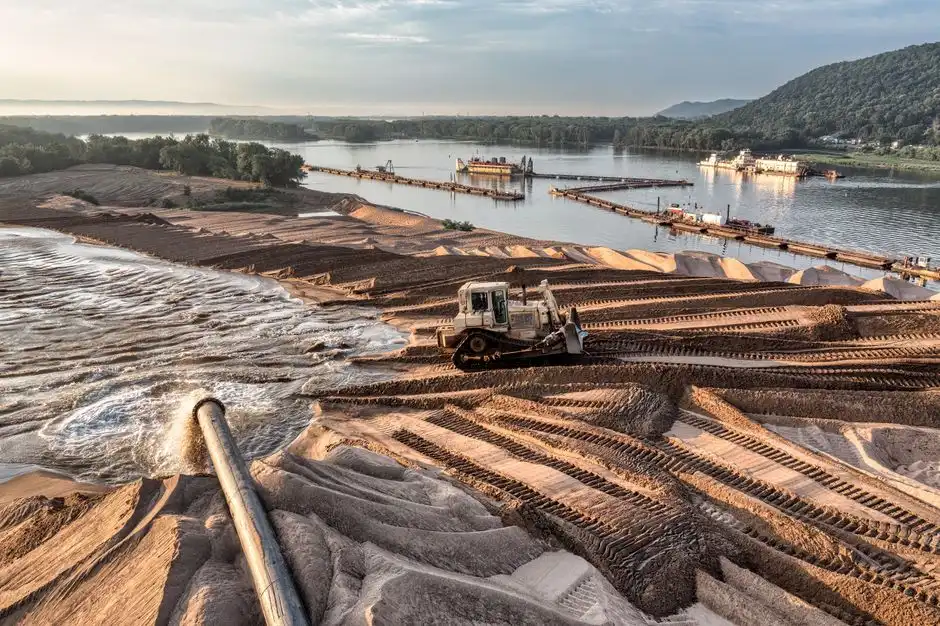
Suspended solids, colloids, metal-bearing precipitates and pH excursions must be screened before they compromise biological activity, clarifier performance or membrane condition. The question is not simply whether pretreatment can lower solids; it is whether the selected process will remove the foulants and contaminants expected at C R I Ranch under its actual operating envelope.
Screening should include particle characteristics and settleability, not suspended-solids concentration alone. Abrasive mine particulates, colloids, precipitated metals and residual treatment chemicals can affect solids handling, membrane fouling and downstream operations. The supplier should identify the expected foulants and explain why the proposed membrane and operating controls are compatible with them.
Where dissolved metals or other non-biodegradable contaminants require removal, evaluate pH adjustment, precipitation, adsorption or another dedicated metals-removal process upstream of the biological stage. The correct sequence depends on the contaminant species and the final objective. Metal-bearing solids generated for removal must then have a defined separation and sludge-handling route.
A DAF pretreatment for mining wastewater may be relevant where suspended solids and colloidal material create a significant separation or fouling risk. That suitability must be established through wastewater testing, not inferred from the equipment description. DAF performance, chemical demand, recovered-solids characteristics and downstream biological loading should be included in the comparison.
Do not transfer contaminant limits from refinery, coking, coal-processing or petrochemical examples to C R I Ranch. Those datasets may help identify analytical methods or contaminants to investigate, but the site’s own permit, reuse target and wastewater characterization must control the design.
Decide between MBR and conventional activated sludge
The preferred route follows the project priority, but unusual wastewater characteristics must override a preference based only on footprint or reuse potential. The decision sequence is:
- Define the controlling effluent or reuse objective.
- Confirm whether the wastewater is biologically treatable and which contaminants require dedicated removal.
- Determine whether suspended solids and colloids create a material fouling or clarification risk.
- Apply the priority-based route below.
- Require site-representative pilot or bench evidence when the outcome remains uncertain.
| If the governing priority is | And site evidence supports | Then evaluate | Required proof |
|---|---|---|---|
| Compact installation, reliable solids separation, high-quality effluent or reuse potential | Solids can be controlled before the membrane and biology can tolerate the wastewater | MBR as the preferred route | Fouling controls, cleaning strategy, redundancy and site-representative performance data |
| Lower equipment complexity, familiar operator duties and available land | Clarifiable solids and acceptable biological loading | Conventional activated sludge | Reactor and clarifier sizing, sludge removal, equalization and land requirements |
| Either route | Unusual metals, salinity, toxicity or rapidly changing solids | Both routes remain provisional | Pilot or bench testing before final sizing |
Generic municipal or industrial references are insufficient for final sizing where the wastewater contains unusual metals, salinity, toxicity or rapidly changing solids. Pilot work should use the same anticipated water chemistry and operating variation proposed for C R I Ranch, with pretreatment included; testing only the biological reactor would not demonstrate the full treatment train.
The DF flat-sheet catalog lists 80–225 m² configurations producing 32–135 m³/day, according to the verified HydropureWater product catalog cited in the 2026 guide. These are catalog configurations, not project capacities. The supplier must demonstrate that its selected membrane and reactor configuration fit the C R I Ranch flow, quality, pretreatment and reuse or discharge requirements.
Build a comparable supplier RFQ
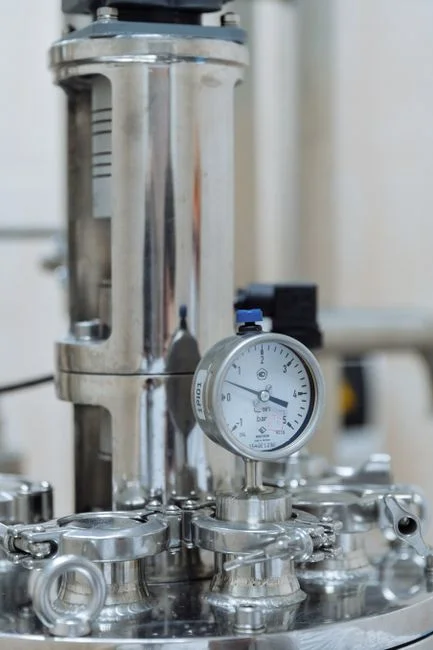
A comparable RFQ must price the complete treatment obligation, not only the main reactor package. Require each bidder to define the same design flow, wastewater characterization, biological loading basis, pretreatment, final effluent specification, aeration, controls, commissioning, training and redundancy. This prevents an MBR bid from omitting cleaning and replacement and a CAS bid from omitting the clarifier, sludge system or equalization.
For MBR, request the membrane material and configuration, expected foulants, backwash and chemical-cleaning triggers, spare-module strategy, membrane warranty and replacement assumptions. For CAS, request reactor and clarifier sizing, sludge-removal provisions, equalization, controls, maintenance access and land requirements. Do not allow either route to be compared from nominal bioreactor footprint alone.
Lifecycle scope should include energy, labor, membrane cleaning and replacement or clarifier and sludge systems, sludge handling, maintenance, spares, downtime and operator requirements. The MBR wastewater treatment cost per cubic metre can be used for screening the structure of the comparison, but it is not a C R I Ranch price.
| RFQ package | MBR information required | CAS information required |
|---|---|---|
| Design basis | Flow, wastewater characterization, loading basis, pretreatment and final effluent specification | Flow, wastewater characterization, loading basis, pretreatment and final effluent specification |
| Core equipment | Reactor, membrane material and configuration, aeration, pumping, backwashing, cleaning controls and redundancy | Aeration and reactor, clarifier, sludge removal, pumping, controls and equalization |
| Operating burden | Energy, membrane cleaning and replacement, spares, downtime and operator requirements | Energy, aeration, sludge handling, clarifier maintenance and land requirements |
| Commercial conditions | Scope, training, acceptance testing, technical support, spare parts and membrane warranty conditions | Scope, commissioning, training, acceptance testing, spares, clarifier maintenance and support |
| Pilot evidence | Site-representative solids, metals, salinity, toxicity and flow-variability data | Site-representative biological loading, settling and upset-response data |
Acceptance criteria should follow from the controlling requirement: demonstrate the specified flow and effluent quality across the agreed operating envelope; record solids, metals, pH and relevant reuse parameters; document cleaning, backwash and upset recovery; and demonstrate the proposed controls and operator procedures. The supplier must reconcile catalog capacities and footprint claims with the final C R I Ranch design before acceptance.
Frequently Asked Questions
What will an MBR cost compared with conventional activated sludge at C R I Ranch?
No universal MBR-to-CAS cost ratio or C R I Ranch price can be given without flow, wastewater characterization, pretreatment and the final treatment objective. Request like-for-like quotations covering equipment, pretreatment, aeration, pumping, membrane cleaning and replacement or clarifier and sludge systems, energy, labor, maintenance, spares, sludge handling and downtime. Then evaluate the supplier’s assumptions instead of comparing headline equipment prices.
When should C R I Ranch require pilot testing?
Require pilot or bench evidence when unusual metals, salinity, toxicity, rapidly changing solids or uncertain biological treatability could change reactor loading, fouling behavior or process stability. The test should represent the expected C R I Ranch wastewater and include the proposed pretreatment because an isolated biological test may not demonstrate the performance of the complete train.
Which documents and performance evidence should a supplier provide before selection?
Ask for the wastewater design basis, preliminary mass and hydraulic balance, biological loading calculation, pretreatment criteria, membrane and reactor sizing for MBR or reactor and clarifier sizing for CAS, control narrative, P&IDs, guarantees, commissioning plan, training scope, acceptance protocol, spare-parts list and warranty terms. Comparable mining-site pilot data should be provided where site-representative testing is required.
Does an MBR automatically meet the discharge or reuse requirement at C R I Ranch?
No. MBR improves biological solids separation but does not automatically remove dissolved metals or meet an undefined discharge or reuse specification. C R I Ranch must first identify the controlling permit or reuse requirement, determine which contaminants need dedicated treatment, and demonstrate compliance with the complete treatment train under site conditions.