Choose MBR or activated sludge using site conditions
For mining or metals wastewater in Jenkins, choose MBR when compact installation, membrane-based solids separation or high-quality reuse is the governing requirement; compare conventional activated sludge when simpler operation and available land matter more. Neither route automatically removes dissolved metals. The decision must use site-specific flow, suspended solids, pH, metals, hardness, salinity, organics, toxicity, temperature and variability. MBR replaces clarification with membrane separation but adds fouling, cleaning and replacement obligations. Require like-for-like proposals covering pretreatment, aeration, pumping, sludge handling, membrane replacement or clarifier systems, energy, labor and downtime.
The selection should begin with the wastewater and the reuse or discharge objective, not with a preference for a treatment acronym. Average flow, peak flow and variability affect reactor sizing, equalization, membrane loading and redundancy. Suspended solids, pH, metals, hardness, salinity, biodegradable organics, toxicity and temperature determine whether biological treatment is practical and what upstream protection is required.
Rank the project objectives in this order: the required discharge or process-reuse quality; the contaminant profile and whether dedicated metals treatment is needed; available land and operating staff; and maintainability over the planned operating period. If the project requires high-quality process-water reuse or has limited installation area, MBR merits detailed evaluation. If land is available and the treatment train can be operated with conventional process controls, conventional activated sludge should remain in the comparison.
A municipal pilot is useful for understanding equipment behavior, but it cannot establish the Jenkins design basis. Gurung and colleagues’ 2016 municipal pilot operated a submerged MBR at MLSS of 14,000 ± 1,800 mg L⁻¹, 21 ± 4°C and aeration intensities of 3–6 m³ h⁻¹. Those municipal conditions do not establish an appropriate MLSS, loading rate or membrane flux for mining water.
| Decision input | Information to obtain for Jenkins | Owner | Basis for selection |
|---|---|---|---|
| Flow | Average, peak, minimum and diurnal flow; sampling period; future operating scenarios | Process engineer | Reactor, membrane, aeration and equalization sizing |
| Wastewater characterization | TSS, pH, metals, hardness, salinity, organics, toxicity and temperature, with analytical methods | Environmental or laboratory lead | Biodegradability, inhibition, precipitation and membrane compatibility |
| Treatment objective | Permit conditions, process-reuse specification or other receiving requirement | Compliance lead | Treatment boundary and acceptance tests |
| Site constraints | Available footprint, installation access, utilities, operator availability | Plant manager | MBR versus clarifier-based layout |
| Evidence | Bench or pilot results using representative mining water where contaminants or variability are unusual | Project engineer | Confidence in biological and fouling assumptions |
Request bench or pilot evidence when unusual metals, salinity, toxicity or rapidly changing solids could impair biological activity or membrane performance. A generic municipal reference should be used to challenge design assumptions, not transferred directly to Jenkins. The MBR cost-per-m³ guide is useful for defining quotation boundaries, but it does not replace site data.
Separate biological treatment from metals removal
Both MBR and conventional activated sludge use biological treatment for biodegradable contaminants; MBR differs primarily because membrane filtration retains biomass and separates solids from treated liquid. That equipment distinction does not make MBR a complete metals-removal process. A mining-water treatment train may still require pH adjustment, precipitation, adsorption or another dedicated process for dissolved metals and other non-biodegradable contaminants.
Separate the wastewater into three treatment questions: which constituents are biodegradable; which are suspended or metal-bearing solids; and which remain dissolved after the intended biological and solids-separation steps. This prevents a membrane system from being selected as if membrane separation alone could meet a metals or reuse specification. It also prevents an unnecessary assumption that conventional activated sludge is inappropriate whenever the final objective requires more than basic biological treatment and clarification.
The municipal pilot by Gurung and colleagues, published in 2016, reported MBR removals of Cr 99.9% ± 0.01%, Pb 95% ± 10%, Ni 93% ± 3%, Cu 91% ± 12% and Zn 48% ± 22%. The same study did not analyze metals in retained or wasted sludge. These results describe the municipal pilot and do not establish performance for Jenkins mining water; they also cannot demonstrate that the removed metals were destroyed or immobilized.
The treatment boundary should follow the destination. For permitted discharge, ask bidders to identify every constituent covered by the permit and the proposed compliance method. For industrial wastewater reuse, define the receiving process, its water-quality requirements and the sampling method. DAF pretreatment for suspended and colloidal solids may form part of that boundary when solids separation is demonstrated to be necessary; it should not be assumed to provide comprehensive dissolved-metals removal.
Decision rule: select a biological route based on organic loading and solids-separation needs, then select the required metals-treatment unit based on the site-specific water analysis and final discharge or reuse specification.
Compare equipment, operating burden and site constraints
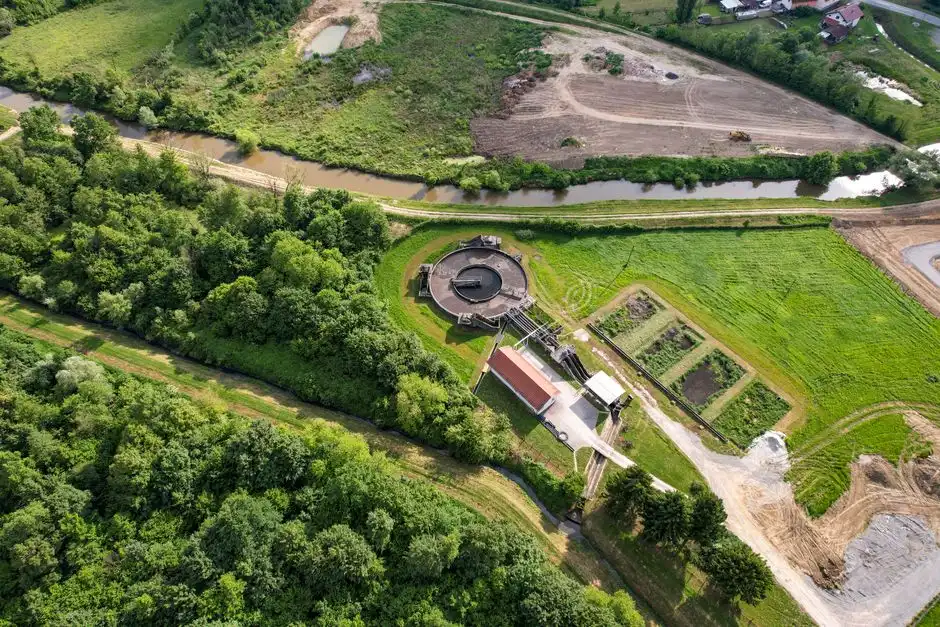
MBR replaces gravity clarification with membrane separation, while biological treatment remains in both routes. The comparison therefore starts with the solids-handling boundary: MBR transfers solids-retention risk to membrane condition, cleaning systems and sludge handling; conventional activated sludge retains the clarifier, aeration, sludge-removal and land requirements.
The equipment scopes differ. Conventional activated sludge requires an aerated reactor, secondary clarification, sludge removal, pumping, controls and sufficient layout area. MBR requires biological treatment, membranes, scouring air, permeate pumping, controls and sludge handling. Neither route should be selected from bioreactor footprint alone, because equalization, chemical dosing, access for maintenance, electrical service and future replacement space also affect the installation.
The HydropureWater verified product catalog states that its integrated submerged-PVDF MBR has a 60% smaller footprint than conventional systems. That is a product-specific catalog claim for the verified integrated configuration, not a general saving for every mining installation. A bidder must reconcile the comparison with the Jenkins layout, selected treatment boundary, access clearances and auxiliary equipment.
The catalog lists DF flat-sheet modules in 80–225 m² configurations producing 32–135 m³/day, with a 0.1 μm pore size and individually replaceable elements. These are catalog specifications, not project guarantees. The integrated submerged-PVDF MBR system and DF flat-sheet membrane bioreactor module should therefore be challenged against the required flow, wastewater composition, flux assumptions, fouling controls and redundancy.
| Comparison item | MBR | Conventional activated sludge | Information to request |
|---|---|---|---|
| Biological treatment | Biological reactor with membrane solids separation | Biological reactor followed by gravity clarification | Loading basis, MLSS/SRT assumptions and aeration calculations |
| Core equipment | Membranes, scouring air, permeate pumping, controls and sludge handling | Aeration, reactor, clarifier, sludge removal, pumping and controls | Complete equipment list, utilities and installed arrangement |
| Maintenance burden | Fouling monitoring, backwashing, chemical cleaning, element replacement and spare-module management | Aeration, settling, sludge removal, pumping and clarifier maintenance | Task frequency, competency, access, spares and downtime response |
| Catalog evidence | Integrated system listed at 60% smaller; DF modules listed at 80–225 m² and 32–135 m³/day | No equivalent footprint or project-capacity claim established by the supplied research | Reconciliation against the Jenkins design; catalog values are not guarantees |
| Commercial risk | Cleaning access, membrane warranty conditions, replacement cost and outage risk | Clarifier performance, sludge-system reliability and land-related cost | Written exclusions, lifecycle assumptions and support commitments |
Compare training, routine maintenance, spare modules, chemical-cleaning access, membrane warranty conditions, downtime and operator competency. Purchase price alone will not reveal which route has the lower lifecycle burden for the Jenkins operating team.
Build the pretreatment and fouling-control plan
Suspended solids, colloids, metal-bearing precipitates, pH excursions and abrasive particulates can impair biological activity or membrane performance before the main treatment step is reached. They must therefore be assessed before reactor loading and membrane selection are finalized, rather than treated as downstream consequences of equipment selection.
Require each bidder to identify expected foulants and explain why the proposed membrane material and configuration are compatible with them. The request should state whether the membrane is submerged, which polymer is used, how backwash and chemical-cleaning cycles are triggered, how recovery from upsets is managed, and how aeration and MLSS control protect membrane condition. The supplied research supports the general role of membrane selection, backwashing, chemical cleaning, MLSS control and aeration control; it does not establish a universal cleaning interval or membrane life for a Jenkins site.
Evaluate whether upstream solids removal, pH control and equalization are required. The appropriate decision depends on the measured solids, settleability, colloid behavior, precipitation demand and flow variability. Mining pretreatment process design provides a framework for comparing solids-removal duties, but the Jenkins decision must use its own wastewater data rather than transfer a project’s concentration or equipment selection.
- Characterize suspended solids, colloids, pH, metals and particle characteristics.
- Identify the foulants expected under normal, peak and upset conditions.
- Define the pretreatment duty and the operating envelope entering each biological route.
- Specify backwashing, chemical cleaning, MLSS control, aeration control and upset recovery.
- Require redundancy and an operating response for each identified failure mode.
Ask how variable flows affect aeration, MLSS control, membrane condition and redundancy. For MBR, include membrane conditioning, cleaning access, spare elements and recovery from loading excursions. For conventional activated sludge, include clarifier settling under variable solids loading, sludge removal and equalization performance. These are process requirements, not optional accessories.
Issue a comparable Jenkins procurement request
A like-for-like procurement request must give every bidder the same required flow, wastewater characterization, biological loading basis, pretreatment envelope, membrane configuration, effluent or reuse specification and installation constraints. Require each proposal to show how its design responds to those inputs rather than relying on a generic product description.
For MBR, require pricing that includes membranes, aeration, pumping, backwashing, chemical cleaning, energy, sludge handling, maintenance, replacement, spares and downtime assumptions. For conventional activated sludge, require aeration, pumping, reactor, clarifier, sludge removal, equalization, controls, maintenance and land-related costs. Pretreatment must be included in both scopes, whether it remains with another contractor or is supplied by the bidder.
State the commissioning, training, acceptance testing, technical support, spare-parts and membrane-warranty conditions. Also require the sizing calculations, proposed membrane configuration, fouling controls, cleaning strategy, redundancy and the data or pilot results supporting the proposal. Catalog capacities and footprint statements should be reconciled with the Jenkins flow, wastewater characteristics, selected configuration and final treatment objective before acceptance.
| Bid package input | Information every bidder must receive | Required supplier response |
|---|---|---|
| Flow and variability | Average, peak and minimum flow; sampling period; future scenario | Hydraulic and biological sizing, equalization and redundancy |
| Characterization | TSS, pH, metals, hardness, salinity, organics, toxicity and temperature | Loading basis, inhibition assessment, pretreatment and membrane compatibility |
| Objective | Discharge permit, process-reuse specification or other quality requirement | Treatment boundary, performance commitments and acceptance tests |
| MBR price scope | Common project basis and installation constraints | Membranes, aeration, pumping, cleaning, energy, sludge, maintenance, replacement, spares and downtime assumptions |
| Activated-sludge price scope | Same common project basis and installation constraints | Aeration, reactor, clarifier, sludge removal, equalization, pumping, controls, maintenance and land-related costs |
| Commercial and support terms | Required training, acceptance and support conditions | Commissioning plan, training scope, technical support, spares and warranty conditions |
Do not apply a universal MBR-versus-CAS cost ratio. The supplied research supports a project-specific lifecycle comparison, not a Jenkins price estimate. A useful bid comparison should state capital cost, energy, labor, chemicals, sludge handling, maintenance, replacement or clarifier systems, downtime and any land-related expenditure over the same evaluation period. The mining-wastewater MBR comparison can inform the scope of that request; the MBR cost-per-m³ guide should be treated as a screening reference rather than a Jenkins quotation.
Frequently Asked Questions
Is MBR always better than activated sludge for mining wastewater?
No. MBR is most relevant when membrane-based solids separation, compact installation or high-quality reuse is the controlling requirement. Conventional activated sludge remains a valid route when the wastewater is biologically treatable, available land is adequate and the plant can maintain aeration, sludge removal and clarifier operation. The decision must follow the site characterization and final treatment objective.
What data should be requested before sizing an MBR?
Request average and peak flow, flow variability, TSS, pH, metals, hardness, salinity, biodegradable organics, toxicity and temperature. Include sampling duration, analytical methods, particle characteristics, settleability data, pretreatment expectations and the discharge or reuse specification. If unusual metals, salinity, toxicity or rapidly changing solids are present, require representative bench or pilot evidence before accepting the sizing basis.
How should MBR and activated-sludge quotations be compared?
Use identical wastewater, flow, pretreatment, installation and effluent inputs. Require MBR quotations to include membrane replacement, cleaning, energy, sludge handling, spares and downtime assumptions. Require activated-sludge quotations to include clarifier, sludge removal, equalization, maintenance and land-related costs. Then compare the complete lifecycle scope rather than purchase price or an assumed cost ratio.
Can MBR alone remove dissolved metals from mining wastewater?
Not automatically. Evaluate dissolved metals against the Jenkins wastewater analysis and final discharge or reuse specification. Depending on the results, pH adjustment, precipitation, adsorption or another dedicated process may be required before or after biological treatment. The 2016 municipal pilot did not analyze metals in retained or wasted sludge, so its reported removal percentages are not a Jenkins metals-balance demonstration.