
Screen the wastewater before selecting a UASB reactor
A UASB reactor for poultry processing wastewater is technically credible only after the slaughterhouse stream has been characterized across its operating cycle and screened for solids, fat, pH and soluble organic load. The published poultry study sampled effluent after separation from feathers, bones and meat, then found BOD5 of 4,500–8,700 mg/L during 15 days of daily testing; its introduction gives a broader reported range of 4,500–12,000 mg/L (ScienceDirect, Poultry slaughter wastewater treatment with an up-flow anaerobic sludge blanket reactor). Those figures establish screening context, not a plant design basis.
Collect representative composite samples covering production and clean-in-place periods, then measure COD, BOD5, suspended solids, oil and grease, pH, temperature and flow. Identify reject streams from blood recovery, feather removal, carcass and bone separation, floor washing and chemical dosing. The same study identifies BOD5, pH, solids, clotted blood and fat as important wastewater characteristics that can increase organic load or impede treatment (ScienceDirect, Poultry slaughter wastewater treatment with an up-flow anaerobic sludge blanket reactor).
| Screen | Evidence or input required | Decision implication |
|---|---|---|
| Organic load | BOD5 of 4,500–8,700 mg/L in 15 days of daily testing; introduction range of 4,500–12,000 mg/L (ScienceDirect, poultry UASB study) | Promising anaerobic feed strength, but confirm the plant-specific diurnal and seasonal profile before sizing. |
| Physical contaminants | Feathers, bones, meat and clotted blood identified as relevant stream characteristics (ScienceDirect, poultry UASB study) | Require removal before the upflow anaerobic sludge blanket. |
| Fat and oil | Plant oil-and-grease measurements across the production cycle | Determine whether dedicated removal is required before reactor feed. |
| Flow and equalization | Flow hydrograph, batch discharges, clean-in-place water and reject-stream inventory | Check whether equalization can stabilize hydraulic and organic loading. |
Use a rotary bar screen for poultry wastewater headworks where larger solid residues must be intercepted, and evaluate a DAF system for poultry wastewater pretreatment where separated fats and floatable solids are material. If characterization shows that the UASB cannot consistently receive a stable, low-solids feed, the correct decision is no-go for this route or no-go until the upstream train is changed.
Use the poultry UASB evidence as a feasibility envelope
Laboratory experiments using 3 L reactors achieved 95% BOD5 removal at organic loading rates up to 31 kg BOD5 m−3 d−1 without loss of stability (ScienceDirect, Poultry slaughter wastewater treatment with an up-flow anaerobic sludge blanket reactor). This supports a pilot for a comparable poultry stream, but it does not establish the guaranteed loading rate, reactor volume or effluent quality of a commercial installation.
The laboratory reactors operated between 25 and 39 °C with hydraulic residence times of 3.5–4.5 h. The reported specific growth-rate constant was 0.054 h−1. The study concluded that cow-manure inoculum supplemented with nutrients and yeast extract supported 95% BOD5 removal at ambient temperatures within a 4 h hydraulic residence time (ScienceDirect, Poultry slaughter wastewater treatment with an up-flow anaerobic sludge blanket reactor). These findings should frame site-specific validation rather than be copied directly into procurement calculations.
| Parameter | Laboratory evidence | Correct engineering use |
|---|---|---|
| Reactor scale | 3 L reactors (ScienceDirect, poultry UASB study) | Use as feasibility evidence and pilot basis, not commercial sizing evidence. |
| BOD5 removal | 95% (ScienceDirect, poultry UASB study) | Test whether the plant feed can reproduce removal without process instability. |
| Organic loading rate | Up to 31 kg BOD5 m−3 d−1 (ScienceDirect, poultry UASB study) | Compare with measured site loading and validate through pilot operation. |
| Temperature | 25–39 °C (ScienceDirect, poultry UASB study) | Check the actual wastewater temperature and required heating or insulation. |
| Hydraulic residence time | 3.5–4.5 h (ScienceDirect, poultry UASB study) | Check hydraulics, upflow velocity and separation capacity at plant scale. |
| Specific growth-rate constant | 0.054 h−1 (ScienceDirect, poultry UASB study) | Retain as laboratory kinetic evidence; do not use it as a standalone scale-up factor. |
Use a three-stage go/no-go test to transition from feasibility to implementation. First, confirm that pretreatment produces a sufficiently stable feed. Second, run a representative pilot through startup, loading increase and shock periods while monitoring BOD5 removal, COD, alkalinity, volatile fatty acids, gas production and sludge behavior. Third, require the vendor to demonstrate that the proposed reactor hydraulics and control system can reproduce the intended performance envelope with the plant’s wastewater—not merely with a generic industrial wastewater.
Define pretreatment and reactor operating controls
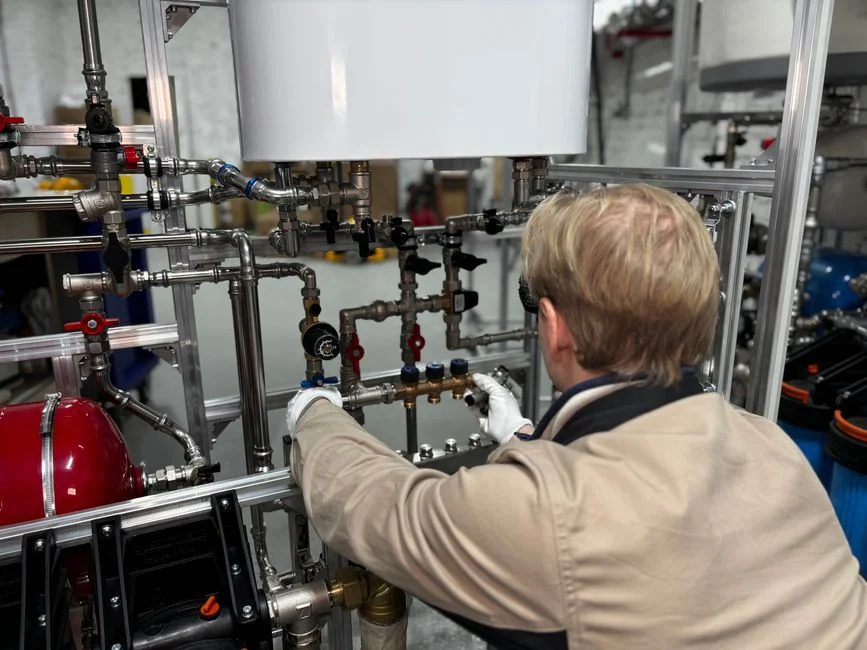
Physical separation of solids is a demonstrated process boundary rather than an optional refinement, given the poultry study removed larger residues before UASB evaluation. For a plant design, specify interception and removal of feathers, bones, meat and clotted blood before the wastewater enters the reactor. The study sampled effluent from the container where wastewater had already been separated from those larger residues (ScienceDirect, Poultry slaughter wastewater treatment with an up-flow anaerobic sludge blanket reactor).
Assess fat and oil as a separate pretreatment duty. The research identifies fat among the poultry-wastewater characteristics that contribute to organic load and treatment difficulty (ScienceDirect, Poultry slaughter wastewater treatment with an up-flow anaerobic sludge blanket reactor). A DAF unit can remove floatable material where plant testing shows that free oil or grease is present, but procurement should be based on measured oil-and-grease characteristics, separation trials and the resulting residual load—not on the presence of fat alone.
| Specification area | Required information | Acceptance basis |
|---|---|---|
| Solids protection | Screen and equalization performance; residual suspended solids after pretreatment | Measured at the design flow and across the operating cycle. |
| Fat and oil removal | Influent oil and grease, DAF removal performance and residual floatables | Plant-specific data; laboratory BOD5 results alone are insufficient. |
| Equalization | Flow hydrograph, batch-discharge controls and mixing provisions | Demonstrate control of hydraulic and organic shocks entering the UASB. |
| Startup | Inoculum source, development method and performance criteria | The study varied inoculum type, temperature and hydraulic residence time as principal variables (ScienceDirect, poultry UASB study). |
| Operating controls | Temperature, hydraulic residence time, organic loading rate, feed pH and gas handling | Defined control limits, alarms and operating procedures in the design basis. |
| pH adjustment | Influent pH range, alkalinity and chemical demand | Any automatic chemical dosing system must be selected from measured feed chemistry. |
The commissioning plan should sequence these controls: establish stable temperature and feed pH; develop and introduce the inoculum; ramp hydraulic retention time and organic loading while monitoring conversion indicators; then test the plant’s anticipated production shock. A UASB supplier should identify set points, alarm conditions, sampling points and corrective actions. If equalization, pretreatment or pH control cannot meet those duties, the reactor proposal is not ready for procurement.
Map the UASB effluent to downstream treatment
A UASB should be selected as one stage of an industrial wastewater treatment train, not judged as a complete compliance system. The poultry study measured performance by BOD5 removal and did not establish a universal poultry-process discharge or reuse limit (ScienceDirect, Poultry slaughter wastewater treatment with an up-flow anaerobic sludge blanket reactor). The buyer must therefore evaluate UASB effluent against the receiving requirements applicable to the specific jurisdiction and against any plant reuse specification.
Define the project objective before selecting the finishing process: discharge compliance, water reuse or resource recovery. If biological aeration follows anaerobic treatment, its purpose must be explicit. The 2026 Frontiers in Microbiology review on purple phototrophic bacteria emphasizes that reactor selection should integrate wastewater characteristics, target products, operating priorities and process integration; it identifies light management, biomass harvesting, nutrient control and integration as commercialization barriers for integrated UASB-PPB concepts (Shaikh and McKay, 2026-08-21).
Compare downstream equipment using measured UASB effluent properties rather than influent targets. For solids separation, evaluate a high-efficiency sedimentation tank against residual suspended solids and footprint requirements. Where the reuse specification requires tighter solids separation or membrane polishing, assess an MBR-integrated wastewater treatment system against the required effluent quality. These are process-selection checks, not claims that either device is required by every poultry plant.
The downstream comparison should include COD and BOD5, suspended solids, nutrients, pH, residual fats, biogas and dissolved methane requirements, odor, footprint, energy use and sludge handling. If the objective includes biogas utilization, complete the mass and energy balance from feed characteristics through gas collection, treatment and end use. If UASB effluent is reused, define the end use and its water-quality specification before selecting the polishing train.
Build a procurement-ready UASB selection package
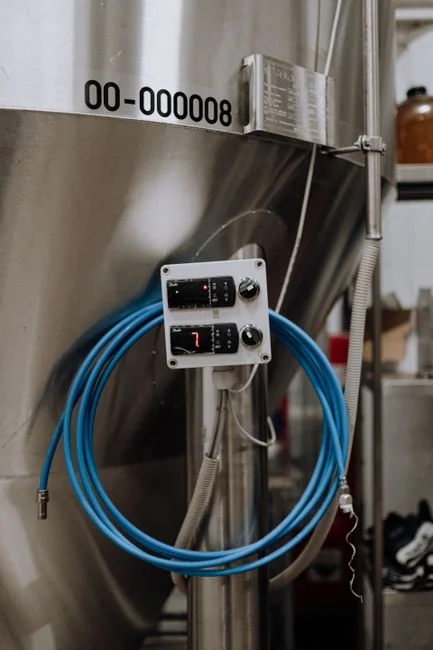
A procurement-ready design basis must separate measured site data, validated design calculations and unverified performance claims. The poultry research supplies a useful evidence envelope but cannot supply the missing commercial inputs (ScienceDirect, Poultry slaughter wastewater treatment with an up-flow anaerobic sludge blanket reactor). Ask each supplier to show the origin and status of every design value.
| Package item | Information to request | Supplier response required |
|---|---|---|
| Wastewater design basis | Representative characterization, flow hydrograph, equalization and reject streams | Identify measured site data and sampling periods. |
| Reactor calculations | Reactor volume, hydraulic retention time, organic loading rate and temperature basis | Show equations, assumptions and governing site values. |
| Pretreatment | Solids, fat and oil, blood, pH and flow-control requirements | State expected performance and remaining contaminant load. |
| Operations | Startup, inoculum, control set points, monitoring and upset recovery | Provide procedures and acceptance criteria. |
| Gas and integration | Gas generation, collection, treatment, utilization and safety provisions | Present a site-specific mass and energy balance. |
| Evidence status | Comparable installations, laboratory tests and proposed plant performance | Label each claim by evidence source; do not present laboratory performance as guaranteed plant output. |
For an integrated UASB-PPB resource-recovery quotation, also require the supplier to address the 2026 review’s scale-up concerns: light management, biomass harvesting, nutrient control and process integration (Shaikh and McKay, 2026-08-21). A commercial proposal remains incomplete until the buyer can trace every sizing value to site data, an explicit engineering calculation, or a clearly identified comparable installation. Performance derived from the 3 L poultry experiments must remain labelled as laboratory evidence.
Frequently Asked Questions
Can the 3 L poultry UASB results be used directly for commercial reactor sizing?
No. The 95% BOD5 removal, organic loading rate up to 31 kg BOD5 m−3 d−1, 25–39 °C range and 3.5–4.5 h hydraulic residence time came from 3 L reactors (ScienceDirect, Poultry slaughter wastewater treatment with an up-flow anaerobic sludge blanket reactor). Use them to define pilot questions and validation targets, then calculate commercial sizing from site data and verified scale-up criteria.
What pretreatment information should a supplier request before pricing a UASB?
Request measured suspended solids, fat and oil, clotted-blood contributions, pH, flow variability and equalization performance. Also ask for the equipment supplier’s expected removal performance and residual contaminant profile; use the plant’s own feed tests and operating cycle, not the poultry study’s laboratory values, to establish the design loads.
How should the supplier be selected for a poultry UASB?
Ask bidders to show which values are calculated from site data,