Confirm the Receiving Sewer and Industrial-User Status
Mining and metals plants near Guin must identify the receiving POTW, verify applicable industrial-user requirements, characterize every process wastestream, and match pretreatment to the pollutants and sewer conditions before discharge. Federal pretreatment requirements can be numeric limits, narrative prohibitions, or best management practices, according to the US EPA. The design basis must include the POTW’s local limits, monitoring requirements, prohibited discharges, and sampling protocol; no Guin-specific limits are established in the supplied research. Exact requirements must be confirmed with the receiving authority before equipment sizing.
The control authority is the POTW when it has an approved pretreatment program; otherwise, the Approval Authority performs that role. It identifies applicable standards and applies the most stringent requirement when multiple provisions govern the discharge (EPA, “Pretreatment Standards and Requirements-Applicability,” 2026 research snapshot). The industrial user should request the current sewer-use ordinance, industrial user permit or discharge authorization, monitoring requirements, prohibited discharges, sampling protocol, and all adopted local limits.
Do not assume that location alone determines either pretreatment limits or equipment needs. Establish the controlling authority, identify whether the plant is an industrial user or categorical industrial user, and document the basis for that classification. This gate also provides the structure for a mining pretreatment equipment comparison that begins with verified permit requirements rather than a preselected machine.
| Decision item | Evidence or document to obtain | Engineering consequence |
|---|---|---|
| Receiving authority | Name and contact information of the receiving POTW or Approval Authority | Identify which pretreatment requirements control. |
| Industrial-user status | Industrial user permit, POTW correspondence, and written status determination | Define monitoring, reporting, sampling, and fee obligations. |
| SIU screening | Process-wastewater flow and POTW capacity data | Screen the applicable industrial-user category before selecting treatment. |
| Local discharge conditions | Sewer-use ordinance, discharge authorization, local limits, and prohibited discharges | Establish the actual treatment objectives and acceptance criteria. |
| Federal applicability | Activity description and applicable categorical subpart | Determine whether categorical pretreatment standards apply. |
The EPA identifies significant industrial users through four routes: categorical standards subject to the definition, average process-wastewater discharge of 25,000 gallons per day or more, contribution of a process wastestream equal to 5 percent or more of the POTW’s average dry-weather hydraulic or organic capacity, or POTW designation based on a reasonable potential to affect POTW operation or violate pretreatment requirements (EPA, “Pretreatment Standards and Requirements-Applicability,” 2026 research snapshot). The 25,000-gallon threshold excludes sanitary wastewater, noncontact cooling water, and boiler blowdown. These are screening tests, not exemptions from other applicable requirements.
Map Every Mining and Metals Waste Stream
EPA effluent guidelines under 40 CFR Part 436 cover wastewater from mine drainage, mineral-processing operations, and stormwater runoff, with mineral processing including crushing, milling, washing, and chemical treatments (EPA, “Mineral Mining and Processing Effluent Guidelines,” 2026 research snapshot). Each discharge needs a defined source, flow basis, pollutant inventory, and categorical activity code before equipment can be selected.
Separate contact process water from noncontact streams, stormwater, washdown, floor washing, cooling or noncontact cooling, boiler blowdown, and sanitary flows. The distinction matters because sanitary, noncontact cooling, and boiler blowdown are excluded when applying the EPA’s 25,000-gallon-per-day significant-industrial-user threshold (EPA, “Pretreatment Standards and Requirements-Applicability,” 2026 research snapshot). This does not establish that those flows may be discharged without control.
For every stream, obtain flow records and variability, pH, suspended solids, oil and grease, metals, hardness or alkalinity, and any constituent specifically named by the POTW or categorical standard. Do not infer an unlisted pollutant or limit from the phrase “metals wastewater treatment.” Use the mining wastewater sewer-compliance workflow as an organizing method, but verify each site-specific requirement independently.
| Waste stream | Characterization record | Permit or standard mapping | Treatment decision |
|---|---|---|---|
| Mine drainage | Source, flow range, solids, pH, metals, and applicable constituents | Local limits and confirmed categorical subpart | Define whether solids removal, pH control, dissolved-metal removal, or another step is required. |
| Mineral-processing wastewater | Operation, flow variability, solids, pH, metals, oil and grease, hardness, and alkalinity | Process-specific standard and receiving-sewer conditions | Select the treatment objective before choosing equipment. |
| Stormwater | Origin, discharge frequency, flow basis, and sampled constituents | POTW authorization and applicable discharge conditions | Determine whether segregation, treatment, or another authorized route applies. |
| Washdown and floor washing | Cleaning chemicals, accumulated solids, slug potential, and destination | Prohibited-discharge provisions and monitoring conditions | Evaluate segregation, solids removal, pH control, and containment. |
| Noncontact cooling and boiler blowdown | Source, chemistry, flow, chemicals, and segregation status | Receiving-POTW acceptance conditions | Check eligibility for separate management or permitted pretreatment. |
EPA lists mining-related categorical subparts for dimension stone, lightweight aggregates, mica and sericite, trona, rock salt, mineral pigments, lithium, fire clay, attapulgite and montmorillonite, kyanite, shale and common clay, aplite, kaolin, ball clay, feldspar, talc, steatite, soapstone, pyrophyllite, and garnet (EPA, “Mineral Mining and Processing Effluent Guidelines,” 2026 research snapshot). Match the plant’s actual mineral and process to the applicable subpart; the category name alone is not enough to establish limits.
Select Pretreatment Steps from the Discharge Risks
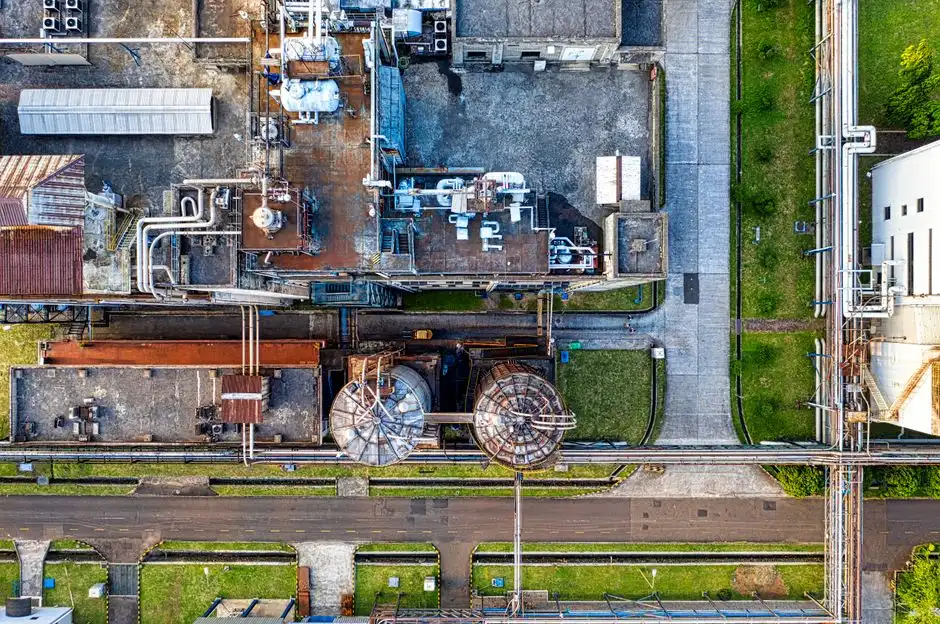
A defensible treatment train begins with a pollutant-specific objective for each stream: floatable-material recovery, settleable-solids removal, pH control, dissolved-metals removal, or toxicity reduction. DAF and lamella clarification are candidates only after the waste streams, permit conditions, and required effluent performance are documented.
| Verified need | First candidate evaluation | Required design inputs | Decision record |
|---|---|---|---|
| Oil, grease, floatable solids, or colloidal material | DAF | Flow range, load, solids characterization, chemical demand, and required removal objective | Record why DAF matches the stream and permit condition. |
| High-rate solids separation and sludge concentration | Lamella clarification | Design flow, solids loading, settling behavior, sludge route, and required effluent quality | Record the hydraulic and solids basis. |
| pH outside the authorized condition | pH adjustment | Influent range, target range, chemical demand, and discharge response | Tie control logic to the permit limit. |
| Dissolved metals require removal | Chemical reaction plus clarification and possible filtration | Metal species, concentration, precipitation or oxidation chemistry, solids loading, and residual target | Use a treatment demonstration or pilot basis. |
| Filtration, biological treatment, or another step is required | Add only after pollutant and permit review | Receiving-sewer effect, residual constituent, and performance target | Document why the added step is necessary. |
The supplied commercial power-plant case is process precedent only. Its documented train used chemical addition, sedimentation, filtration, biological selenium treatment, and ultrafiltration for flue-gas-desulfurization and coal-ash wastewater (WesTech, “Removing Heavy Metals From Power Plant Wastewater to Meet EPA Regulations,” 2026 research snapshot). It does not establish a verified mining or metals treatment standard. Apply its general sequence only when the site’s pollutant inventory and permit require the same unit operations.
Build the Compliance Verification File
Every design commitment should be traceable from the permit condition to the waste stream, treatment step, monitoring point, owner, and acceptance record. This converts a general pretreatment concept into a commissioning file that can be reviewed by plant personnel, the designer, and the receiving authority. A metal-plant pretreatment train selection provides a useful cross-reference structure, but the controlling evidence must be the Guin site’s documents and characterization data.
For each condition, record the parameter, limit or prohibited discharge, sampling location, frequency required by the permit, method, responsible person, and acceptance evidence. Confirm pH, metals, suspended solids, and other parameters specifically named by the receiving authority. The supplied research contains no numeric Guin-specific limits, so those values must come from the controlling permit, sewer-use ordinance, or written POTW determination.
| Permit condition | Waste stream | Treatment step | Monitoring point and method | Owner | Acceptance record |
|---|---|---|---|---|---|
| Insert exact authorized limit or prohibition | Identify source and segregation status | Name the unit operation and control | Specify sample location, timing, frequency, and method | Assign an operating and compliance owner | Reference the certificate, test, or signed result |
| Enter the monitoring requirement exactly as authorized | Reference the characterization record | Record equipment tag and design duty | Identify field instrument or laboratory method | Record calibration and laboratory responsibilities | Attach commissioning and performance-test results |
| Enter the monitoring requirement exactly as authorized | Reference the waste-stream inventory | Record standby, diversion, and failure-response provisions | Document alarm, sampling, and reporting arrangements | Assign the escalation owner | Retain operating log and corrective-action records |
For equipment acceptance, verify feed-capacity range, chemical-control range, solids or oily-solids removal objective, sludge withdrawal, standby provisions, controls, and operating documentation against the final design basis. Startup and performance testing must use the same flow and pollutant basis used for sizing; a generic equipment rate cannot replace a verified design flow or permit target.
Keep pretreatment distinct from the permitted final discharge route. EPA explains that mineral-mining requirements under 40 CFR Part 436 are incorporated into NPDES permits (EPA, “Mineral Mining and Processing Effluent Guidelines,” 2026 research snapshot). Sewer pretreatment approval does not replace the applicable NPDES authorization, and treatment success at the POTW connection does not by itself demonstrate compliance with the final discharge route.
Frequently Asked Questions
What does it cost to select pretreatment equipment for a mining or metals plant near Guin?
No defensible price can be stated from the supplied research because no quotation or site-specific cost basis is provided. Before requesting pricing, obtain the POTW limits, waste-stream inventory, average and peak flow basis, design influent, required removal objectives, chemical assumptions, sludge-handling route, and installation constraints. Ask bidders to separate equipment, foundations, utilities, chemical storage, controls, commissioning, monitoring, training, and contingency items so the proposals have comparable scopes.
Should the plant choose DAF or a lamella clarifier?
Choose DAF when the verified treatment objective involves floatable material, oil and grease, colloids, or solids that can be removed by flotation. Consider lamella clarification when the objective is high-rate solids separation with sludge concentration. Neither option should be selected by product description alone; compare both against the same stream inventory, flow range, influent loading, permit target, chemical demand, and sludge-disposal requirement. Equipment specifications provide a starting basis, not proof of compliance.
Which documents should be requested before ordering treatment equipment?
Request the current sewer-use ordinance, industrial user permit or discharge authorization, written industrial-user status determination, POTW pretreatment limits, prohibited-discharge list, monitoring and sampling protocol, applicable categorical subpart, and all adopted local requirements. Also provide each stream’s flow record and characterization results. For the mining wastewater sewer-compliance workflow, retain the sources, dates, and written interpretations used in the equipment basis.
Does a flow below 25,000 gallons per day exempt a mining plant from pretreatment requirements?
No. The EPA’s 25,000-gallon-per-day threshold is one route for significant-industrial-user classification, not a blanket exemption (EPA, “Pretreatment Standards and Requirements-Applicability,” 2026 research snapshot). Categorical status, contribution of 5 percent or more of POTW dry-weather capacity, POTW designation, and other applicable requirements remain separate considerations. The plant must obtain a written status determination rather than infer exemption from its flow or its proximity to Guin.