Start with the discharge route, not the package
A Fortaleza resort should select treatment from its discharge and reuse route, not from a generic hotel package. A buried A/O plant may suit an accepted sewer connection or less restrictive direct discharge; an MBR is stronger for on-site reuse, sensitive receiving waters or constrained sites. Add DAF when kitchen FOG and solids justify it, and screening where debris is a risk. For preliminary sizing, HydropureWater’s 2026 Brazil guide uses 150–250 L per guest per day, with 200 L as a default—not a statutory rate. Final selection requires peak-flow checks, wastewater characterization and confirmation of current federal, state and local permit conditions.
CAGECE covers Fortaleza and most municipalities in Ceará, according to the Urban Water Atlas profile of Fortaleza, published in December 2020. That establishes the relevant utility context, but it does not prove that a particular resort connection will be accepted. Before ordering a hotel wastewater treatment plant, ask the utility to confirm the proposed average and peak flow, solids load, connection point, pretreatment standard and any capacity reservation.
Direct discharge changes the approval basis. It requires a defined receiving-water assessment and site-specific permit conditions; a federal benchmark is not site approval. CONAMA Resolution 430/2011 is the federal reference identified by HydropureWater’s Hotel Resort Wastewater Treatment in Brazil: 2026 Guide, published in 2026. The resort must still confirm applicable state and local conditions with the responsible authority.
On-site reuse is a different engineering brief. Define the end use, required water quality, reliability and distribution restrictions before selecting membranes or polishing equipment. A bid that merely says “reuse-ready” is incomplete.
| Discharge route | Treatment screening | Buyer decision to close before selection |
|---|---|---|
| Accepted public sewer | A/O pretreatment may be suitable if the utility accepts the flow and load. | Obtain written confirmation of CAGECE connection and pretreatment requirements. |
| Direct receiving-water discharge | Select A/O or MBR against the site permit and receiving-water assessment. | Identify the licensing authority and applicable discharge conditions. |
| On-site reuse | MBR is the stronger starting candidate, followed by any required polishing. | Define the end use, quality specification, reliability and distribution controls. |
Build the hydraulic basis for a Fortaleza resort
HydropureWater’s 2026 Brazil guide gives 150–250 L per guest per day and identifies 200 L per guest per day as a conservative default for preliminary resort sizing. These are not universal Brazilian statutory rates. They are a starting basis that must be checked against occupancy, operating hours, fixtures, amenity flows and infiltration.
The guide also cites daytime loading of 2.5–3.0 times the daily average and banquet or event peaks of up to 4.0 times. Apply these checks to collection piping, equalization and temporary storage. Do not simply enlarge the biological reactor: a peak that cannot reach the plant, or an event load with no storage provision, remains an unresolved design defect.
For the guide’s worked example, 200 rooms multiplied by 1.8 guests per occupied room and 200 L per guest per day produces approximately 72 m³/day average. The cited daytime factors produce 180–216 m³/day during that period. This arithmetic demonstrates the sensitivity to operating assumptions; it does not replace hydraulic modelling or organic and solids loading checks.
- Establish daily flow from guest-night demand and separately quantify restaurant, laundry, pool, spa and other drains.
- Map occupancy and event schedules against collection-system operating hours.
- Apply the cited peak factors to test collection, equalization and temporary storage.
- Check the biological process using characterized flow, BOD and solids data rather than hydraulic volume alone.
Before final sizing, request fixture counts, occupancy profiles, operating hours, infiltration assumptions, pool and spa discharge, kitchen FOG, laundry flows, storage requirements, and measured or vendor-provided wastewater characteristics. The HydropureWater 2026 Brazil hotel and resort guide does not provide resort-specific pollutant concentrations, so suppliers must not substitute unsupported generic values.
| Design input | Supported preliminary basis | Scope and project action |
|---|---|---|
| Guest-day flow | 150–250 L per guest per day; 200 L conservative default | 2026 Brazil guide; preliminary design only, not a statutory rate. |
| Daytime peak | 2.5–3.0 times daily average | 2026 Brazil guide; check collection, equalization and temporary storage. |
| Banquet or event peak | Up to 4.0 times daily average | 2026 Brazil guide; use the property event schedule. |
| Worked resort case | Approximately 72 m³/day average; 180–216 m³/day cited daytime period | 200 rooms at 1.8 occupied guests per room and 200 L per guest per day. |
Match source streams to the pretreatment train
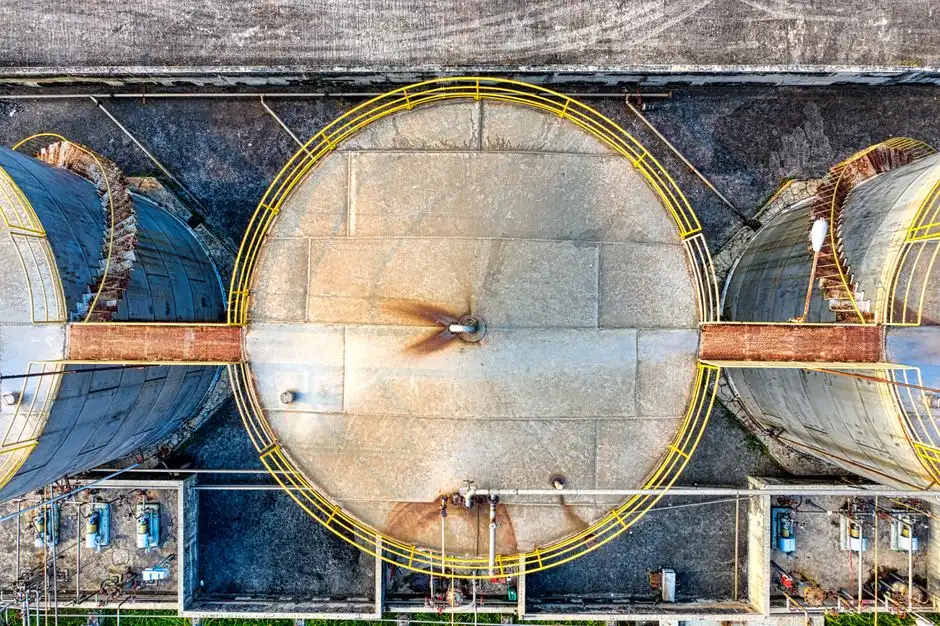
Do not blend domestic sewage blindly with kitchen, laundry, pool and spa wastewater. These streams have different solids, FOG, chemical and hydraulic patterns. HydropureWater’s 2026 Brazil guide therefore requires kitchen, laundry and spa flows to be characterized separately before final equipment selection.
Where significant FOG or solids loading is confirmed, evaluate DAF upstream of biology. The supplied DAF catalog covers 4–300 m³/h across 13 standard models and identifies suspended solids, FOG, oil and grease and colloidal matter as treatment targets. DAF should therefore be source-specific, not a default accessory. Review grease traps, kitchen waste control and the handling of recovered FOG and sludge.
Use rotary mechanical screening where a debris survey identifies rags, plastics, fibrous material or other solids that could obstruct pumps, valves or biological treatment. The applicable evidence is the supplied GX rotary mechanical bar-screen catalog. Its inclusion should follow from the debris survey, with screen aperture, hydraulic duty, extraction and maintenance access confirmed by suppliers.
Require current sampled and composite wastewater characterization. Do not assign unsupported concentrations to kitchen, laundry or spa discharge. The source survey should record fixtures, traps, grease traps, cleaning practices, chemical use, sampling points, discharge points and operating periods.
- Kitchen: identify where FOG enters, confirm grease-control performance and define residual sludge or FOG handling.
- Laundry and spa: check chemical, surfactant, solids and hydraulic effects before combining them with domestic sewage.
- Pool: establish a separate flow and quality basis, including the selected disinfection route.
- Domestic sewage: characterize its organic and solids load after the atypical streams have been identified.
This source-specific review is where a conventional A/O versus MBR hotel wastewater comparison becomes useful only after the streams and discharge route are defined.
Choose A/O or MBR against the design basis
The A/O-versus-MBR choice depends on the required effluent route, source characteristics, footprint and performance guarantees—not on the largest catalog capacity. The WSZ buried A/O package combines anoxic and aerobic contact oxidation, sedimentation and disinfection, with catalog capacity of 1–80 m³/h. It is a candidate where sewer disposal is accepted or direct-discharge conditions are less restrictive and a conventional biological process is appropriate.
The integrated MBR combines activated sludge with submerged PVDF membrane filtration. Its catalog capacity is 10–2,000 m³/day, filtration is below 1 μm and the stated footprint is 60% smaller than conventional systems. These catalog characteristics make it a stronger candidate for on-site reuse, sensitive receiving waters or constrained sites, but they do not replace project-specific design.
HydropureWater’s 2026 Brazil guide gives A/O comparison values of BOD 20–40 mg/L and TSS 20–30 mg/L. For MBR after disinfection, it gives BOD no more than 5 mg/L and TSS no more than 1 mg/L. These are guide comparison values, not automatic discharge guarantees. Require guarantees tied to documented flow, influent characteristics, operating mode and the applicable discharge or reuse condition.
For a direct comparison, ask each bidder to demonstrate how its configuration handles domestic sewage, kitchen FOG, laundry, spa, pool and event peaks. An MBR bidder should also provide membrane cleaning, replacement and recovery terms. An A/O bidder should define sludge removal, odor control and access. The MBR versus conventional activated-sludge comparison provides a useful technical frame, but resort source data must govern the resort decision.
| Basis | Buried A/O package | Integrated MBR |
|---|---|---|
| Process | Anoxic and aerobic contact oxidation, sedimentation and disinfection | Activated sludge with submerged PVDF membrane filtration |
| Catalog capacity | 1–80 m³/h | 10–2,000 m³/day |
| Comparison values from the 2026 Brazil guide | BOD 20–40 mg/L; TSS 20–30 mg/L | After disinfection: BOD no more than 5 mg/L; TSS no more than 1 mg/L |
| Best-supported screening position | Accepted sewer route or less restrictive direct-discharge condition | On-site reuse, sensitive discharge condition or constrained site |
| Required acceptance detail | Sludge removal, odor control and maintenance access | Project-specific effluent guarantees and membrane lifecycle terms |
Specify disinfection, reuse and complete the treatment train
A defensible train follows a clear sequence: source control and equalization; screening where justified; FOG or DAF pretreatment where justified; biological treatment; solids separation or membrane filtration; disinfection; and reuse polishing where required. Each step needs a defined duty, capacity, operating mode and maintenance access.
For the A/O route, the WSZ package includes biological treatment, sedimentation and disinfection. For the MBR route, the biological reactor and membrane stage can be followed by on-site disinfection. The supplied chlorine dioxide generator catalog covers 50–20,000 g/h, but that range is not a dosing recommendation. Required dose, source-water chemistry, safety provisions and permit conditions must control equipment selection.
For demanding reuse, HydropureWater’s 2026 Brazil guide identifies filtration followed by reverse osmosis for cooling towers, boiler make-up or unrestricted irrigation. The intended use and validated water quality must govern. Do not add reverse osmosis merely to label a package “reuse-ready.”
The commercial scope should also cover sludge and FOG handling, odor control, maintenance access, spare parts, membrane cleaning or replacement terms, automation, operator training and commissioning evidence. The supplied integrated MBR membrane bioreactor may fit the reuse branch, while the buried A/O package sewage treatment plant may fit the conventional-disposal branch.
Issue a supplier-ready design basis
A procurement package should begin with a written, resort-specific design basis. It must state average and peak flow, wastewater characteristics, discharge destination, reuse target, applicable federal and state requirements, design margins and treatment objectives. A generic “hotel wastewater package” description is not an auditable offer.
Do not use an unsupported Brazil-wide packaged-plant price. The supplied research does not establish a defensible price for a complete Fortaleza resort installation. Request project-specific quotations using verified flow, peak basis, treatment route, reuse target, site utilities, civil works, sludge handling, automation, commissioning and warranty scope.
- Issue the route, flow, source-stream and reuse requirements as a common bid basis.
- Require each supplier to identify departures, exclusions and assumptions.
- Normalize commercial boundaries before comparing prices.
- Attach measurable performance and commissioning acceptance criteria.
Performance guarantees must state the design flow, influent basis and applicable receiving or reuse condition. Generic catalog values cannot be treated as project acceptance criteria. Include commissioning evidence, operator training, automatic or remote controls, maintenance access, spare parts, membrane or sludge provisions, and ongoing monitoring in the comparison.
| Bid schedule | Information required from every bidder | Acceptance check |
|---|---|---|
| Design basis | Average and peak flow; source streams; destination; reuse target; applicable requirements. | Matches the owner’s approved resort basis. |
| Process configuration | A/O or MBR rationale; screening, DAF, disinfection and polishing duties. | Every source stream and event peak has an identified treatment path. |
| Performance | Project-specific hydraulic and effluent guarantees. | Guarantee states flow, influent basis and receiving or reuse condition. |
| Commercial scope | Civil works, utilities, sludge and FOG handling, automation, commissioning, training, spares and warranty. | Normalized scope before price comparison. |
| Operations | Access, cleaning, replacement, odor control, monitoring and maintenance support. | Responsibilities and lifecycle obligations are explicit. |
Frequently Asked Questions
What changes the A/O-versus-MBR choice for a Fortaleza resort?
Start with the discharge route. A buried A/O package may suit an accepted CAGECE sewer connection or less restrictive direct-discharge condition. An MBR becomes more compelling for on-site reuse, sensitive receiving waters or constrained sites. The 2026 Brazil guide’s A/O and MBR comparison values are not automatic project guarantees, so the route and source characterization must control the selection.
What sizing information should a supplier receive?
Provide occupancy profiles, fixture counts, operating hours, event schedules, infiltration assumptions, pool and spa discharge, kitchen FOG, laundry flows, storage requirements, and measured or vendor-provided wastewater characteristics. The guide’s 150–250 L per guest per day range, 200 L default and cited peak factors are preliminary inputs, not substitutes for site-specific hydraulic and load checks.
How should resort quotations be compared without using a misleading national price?
Request project-specific quotations and normalize them using the same verified flow, peak basis, treatment route, reuse target, civil works, utilities, sludge and FOG handling, automation, commissioning, training and warranty scope. The supplied research does not establish a defensible Brazil-wide complete-package price.
Does CONAMA Resolution 430/2011 by itself approve the plant?
No. The 2026 Brazil guide identifies CONAMA Resolution 430/2011 as the federal reference, but final site-specific permit conditions must be confirmed with the responsible authority. For a public sewer, obtain CAGECE acceptance; for direct discharge, establish the receiving-water assessment and permit basis; for reuse, define the end-use specification.